Important Details
IJCRT - International Peer Reviewed, Open Access Journal, Multidisciplinary, Monthly, Nominal(Low) Fees for Professional Research Services International Journal of Creative Research Thoughts - IJCRT Peer Review Journal, Refereed Journal, Peer Reviewed Journal , Referred Journal and Indexed Journal, Open access, Online and Print Journal,international Journal Open Access, Accepted by Indian and foreign university ,IJCRT Followed Norms, guidelines, requirement, listing criteria and methodology of score/point also applied from: Scopus , Web of Science , UGC Approved , UGC CARE, UGC-CARE .
UGC Approved Journal No: 49023 (18)
UGC approval Link
https://ijcrt.org/ugc%20approval.jpg
All Policy and Approval
Please Like Our Facebook Page | CrossRef DOI and Hard copy of Certificate Provide if required. | www.IJCRT.org | editor@IJCRT.org | IJCRT WhatsApp +91 94294 58311
Publication Details:
- Paper Submission : 31-Aug-2026. Call For Paper (Volume 14 | Issue 8 | Month- August 2026)
- Acceptance/Rejection Notification: Within 02-04 Days.
- Paper Publish: Within 02-04 Days after submitting all documents.
-
Submit Your Paper Any time There No deadline.
-
Publication fees : 1570 INR for Indian author & 59$ for foreign International author.
Please Like Our Facebook Page | CrossRef DOI and Hard copy of Certificate Provide if required.
Licence and Indexing
Indexing In Google Scholar, SSRN, ResearcherID-Publons, Semantic Scholar | AI-Powered Research Tool, Microsoft Academic, Academia.edu, arXiv.org, Research Gate, CiteSeerX, ResearcherID Thomson Reuters, Mendeley : reference manager, DocStoc, ISSUU, Scribd, and many more | High Impact Factor: 7.97 | Digital object identifier (DOI) and Hard Copy of certificate Provided.




























Licence
DOI
ISSN Approved impact factor: 7.97 
Creative Common 
Valid as per new UGC Gazette regulations 

INTERNATIONAL JOURNAL OF CREATIVE RESEARCH THOUGHTS - IJCRT (IJCRT.ORG)
International Peer Reviewed & Refereed Journals, Open Access Journal
IJCRT Peer-Reviewed (Refereed) Journal as Per New UGC Rules.
ISSN Approved Journal No: 2320-2882 | Impact factor: 7.97 | ESTD Year: 2013
Call For Paper - Volume 14 | Issue 8 | Month- August 2026
Scholarly open access journals, Peer-reviewed, and Refereed Journals, Impact factor 7.97 (Calculate by google scholar and Semantic Scholar | AI-Powered Research Tool) , Multidisciplinary, Monthly, Indexing in all major database & Metadata, Citation Generator, Digital Object Identifier(CrossRef DOI)
IJCRT WhatsApp Contact
IJCRT Search Xplore - Search all paper by Paper Name , Author Name, and Title
Volume 13 | Issue 4
Volume 13 | Issue 4 | Month
Downlaod After Publication 1) Table of content index in PDF
2) Table of content index in HTML 2)Table of content index in HTML
3) Front Page 3) Front Page
4) Back Page 4) Back Page
5) Editor Board Member 5)Editor Board Member
6) OLD Style Issue 6) OLD Style Issue
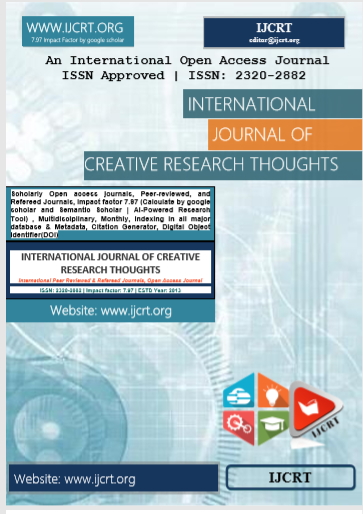 |
 |
|---|---|
| IJCRT Journal front page | IJCRT Journal Back Page |
Paper Title: DEMONSTRATION EFFECT IN BRANDED PRODUCTS AMONG COLLEGE STUDENTS: A CASE STUDY ON MANNARKKAD MUNICIPALITY
Publisher Journal Name: IJCRT
Your Paper Publication Details:
Published Paper ID: - IJCRT2504416
Register Paper ID - 281884
Title: DEMONSTRATION EFFECT IN BRANDED PRODUCTS AMONG COLLEGE STUDENTS: A CASE STUDY ON MANNARKKAD MUNICIPALITY
Author Name(s): Dr.Anu Joseph, Mufeeda P T, Dr.Nasiya V K
Publisher Journal name: IJCRT
Volume: 13
Issue: 4
Pages: d589-d594
Year: April 2025
Downloads: 255
Abstract
This study examines the impact of the demonstration effect on college students' preferences for branded products in Mannarkkad Municipality. The demonstration effect refers to the tendency of individuals to imitate the consumption habits and trends adopted by others. This phenomenon has long been used to influence consumer buying behavior. In this study, the demonstration effect is analysed for its role in raising awareness among college students about specific products. The research focuses on students who use different brands to assess how the demonstration effect influences their purchasing decisions, particularly in shaping their perceptions and awareness. The findings offer valuable insights into the factors that influence college students' consumption behavior, providing a deeper understanding of their preferences and choices. Marketers can leverage these insights to tailor their strategies to effectively engage with college students, a demographic known for its distinct preferences and behaviors. This study also contributes to the academic discourse on consumer behavior, with a particular focus on the demonstration effect and branded products. It empirically examines the demonstration effect theory proposed by Prof. Ragnar Nurkse and the hypothesis of Dusenberry, with specific reference to Mannarkkad Municipality
Licence: creative commons attribution 4.0
License
Creative Commons Attribution 4.0 and The Open Definition

Keywords
Demonstration effect, Buying behavior, College students, Branded products
License
Creative Commons Attribution 4.0 and The Open Definition
Paper Title: Mouth Ulcer Relief: Herbs Offer Natural Solution
Publisher Journal Name: IJCRT
Your Paper Publication Details:
Published Paper ID: - IJCRT2504415
Register Paper ID - 281795
Title: MOUTH ULCER RELIEF: HERBS OFFER NATURAL SOLUTION
Author Name(s): Sonal Phadatare, Jyoti Soundarmal, Madhavi Sathe
Publisher Journal name: IJCRT
Volume: 13
Issue: 4
Pages: d581-d588
Year: April 2025
Downloads: 248
Abstract
Mouth ulcers are a widespread and disabling illness occurring in millions across the globe. This review is intended to present an overview of the established knowledge regarding mouth ulcers, such as causes, symptoms, and treatment, at the present time. Mouth ulcers refer to painful sores that cause lesions on the mucosal lining of the mouth, resulting in pain and speaking and eating difficulty. This review indicates the possibilities of medicinal plants in their management. Traditional therapies such as topical creams and oral steroids are widely practiced, but increasing attention is being drawn to alternative forms of therapy, especially the utilization of herbal plants, because they have healing effects and very little side effect. Herbal medicines are a promising and natural remedy for the treatment of mouth ulcers, and flavonoids, essential oil, alkaloids are responsible for their therapeutic activity. Special emphasis is given to the use of medicinal plants in the management of mouth ulcers, citing their anti-inflammatory, analgesic, and antimicrobial activities. The plants have bioactive compounds that can speed up healing, alleviate pain, and inhibit secondary infections in the ulcer site.
Licence: creative commons attribution 4.0
License
Creative Commons Attribution 4.0 and The Open Definition
Keywords
Mouth ulcer, natural remedies, antiulcer activity, Medicinal plants
License
Creative Commons Attribution 4.0 and The Open Definition
Paper Title: Child Development: Supporting the Growth of Future Generation
Publisher Journal Name: IJCRT
Your Paper Publication Details:
Published Paper ID: - IJCRT2504414
Register Paper ID - 281852
Title: CHILD DEVELOPMENT: SUPPORTING THE GROWTH OF FUTURE GENERATION
Author Name(s): Patel Riddhi C, Parmar Harshad P, Parmar Rahul N, Khandla Shivam M, Khushbu Modi
Publisher Journal name: IJCRT
Volume: 13
Issue: 4
Pages: d565-d580
Year: April 2025
Downloads: 244
Abstract
The early years of a child's life represent one of the most critical periods for building the foundation of lifelong growth. From physical milestones to emotional, cognitive, and social development, each stage is shaped by a combination of nurturing relationships, enriched environments, and timely interventions. In today's fast-paced and digitally connected world, traditional models of child development must evolve to address emerging challenges-ranging from digital overexposure and unequal access to education, to the mental health pressures increasingly faced by young children. This paper presents a comprehensive and collaborative framework for supporting child development, grounded in both established theory and modern research. By integrating insights from neuroscience, global developmental policies, and community-driven practices, we propose a model built around six core pillars of growth: physical wellness, emotional and mental health, cognitive learning, social and moral values, digital environmental awareness, and future-readiness. The study uses a mixed-methods research approach, combining quantitative surveys, qualitative interviews, and secondary data analysis from global institutions. Findings emphasize the role of caregivers, educators, digital tools, and community collaboration in shaping positive developmental outcomes. Ultimately, this research advocates for a more holistic, inclusive, and technology-enabled approach to child development-one that empowers families and communities to raise resilient, empathetic, and capable future generations.
Licence: creative commons attribution 4.0
License
Creative Commons Attribution 4.0 and The Open Definition
Keywords
Child Development, Early Childhood, Neuroscience of Growth, Six Pillars of Development, Digital Tools in Learning, Emotional and Cognitive Development, Social Equity, Parenting, Community Engagement, Mixed-Methods Research, Holistic Education, Future Readiness, Environmental Awareness, Child Mental Health, Collaborative Ecosystems.
License
Creative Commons Attribution 4.0 and The Open Definition
Paper Title: Smart pressure power generation
Publisher Journal Name: IJCRT
Your Paper Publication Details:
Published Paper ID: - IJCRT2504413
Register Paper ID - 281900
Title: SMART PRESSURE POWER GENERATION
Author Name(s): Bhalerao. C.F., Tukaram Jadhav, Laxman Zingade, Aawez Shaikh, Umarfarukh Shaikh
Publisher Journal name: IJCRT
Volume: 13
Issue: 4
Pages: d548-d564
Year: April 2025
Downloads: 217
Abstract
: In last few decades, the need for electricity is increased exponentially and directly effects upon the economy of countries. Developing countries are facing load shedding issues. The natural ways of producing electricity are decreasing day by day. There is need of natural resources to produce and fulfill the needs of electricity. Currently, the solar panels are widely used for producing electricity from sunlight. But the main hurdle in the implementation of solar panel is that they need to fit in open spaces where the light of sun directly falls on it. World moving towards automation and various sensors available to sense and automate the daily life processes. Piezoelectric sensors are special type of sensors that produce energy by pressure, force or load. Smart cities and societies are key components of automation and main area of research. Street lights are essential part of smart streets. We have proposed an IoT based scheme for street light automation that uses the electricity produced from piezoelectric sensors. It will bring redemption from traditional electricity needs that lead to minimizing the load shedding.
Licence: creative commons attribution 4.0
License
Creative Commons Attribution 4.0 and The Open Definition
Keywords
Smart pressure power generation
License
Creative Commons Attribution 4.0 and The Open Definition
Paper Title: ANALYSIS OF SOCIAL MEDIA COMMENTS USING NLP
Publisher Journal Name: IJCRT
Your Paper Publication Details:
Published Paper ID: - IJCRT2504412
Register Paper ID - 280152
Title: ANALYSIS OF SOCIAL MEDIA COMMENTS USING NLP
Author Name(s): Meshineni Ram Bhupal, Gogada Venkata Sujitha, Battula Sai Sri Lakshmi Renuka, Damarla Rajya Lakshmi
Publisher Journal name: IJCRT
Volume: 13
Issue: 4
Pages: d538-d547
Year: April 2025
Downloads: 186
Abstract
Social media platforms have emerged as a vital source of customer input and public opinion in the current digital era. When trying to glean relevant data from the vast amount of unstructured comments on these sites, it may be quite difficult. Due to the inefficiency of traditional manual sentiment analysis techniques, more advanced methods are now required. Recent developments in Natural Language Processing (NLP), in particular the application of neural network architectures such as Gated Recurrent Units (GRU), Long Short-Term Memory (LSTM), and Bidirectional Encoder Representations from Transformers (BERT), have demonstrated significant promise in enhancing the precision and effectiveness of sentiment analysis. These models are perfect for large-scale comment analysis because they are very good at interpreting the mood, context, and subtleties of language used in social media comments. This study investigates the classification and analysis of social media comments using BERT, LSTM, and GRU, offering important insights into public opinion on a range of subjects. The results demonstrate how well these models capture trends, spot new problems, and support enterprises in making data-driven decisions. Additionally, by integrating these cutting-edge models, social media comments may be processed in real-time, empowering businesses to proactively address new trends or problems. The interpretability of intricate models and the scalability to manage very big datasets are still problems, though.
Licence: creative commons attribution 4.0
License
Creative Commons Attribution 4.0 and The Open Definition
Keywords
Machine learning, NLP, sentiment analysis, human language, BERT, LSTM, GRU.
License
Creative Commons Attribution 4.0 and The Open Definition
Paper Title: Hybrid Beamforming Strategies For MMwave Massive MIMO System For 6G Communications
Publisher Journal Name: IJCRT
Your Paper Publication Details:
Published Paper ID: - IJCRT2504411
Register Paper ID - 281138
Title: HYBRID BEAMFORMING STRATEGIES FOR MMWAVE MASSIVE MIMO SYSTEM FOR 6G COMMUNICATIONS
Author Name(s): B.VIJAYA LAXMI, D. S. D LAVANYA, M.V.R.HARIPRIYA, K. PRIYANKA, D. HIMA SRI
Publisher Journal name: IJCRT
Volume: 13
Issue: 4
Pages: d528-d537
Year: April 2025
Downloads: 297
Abstract
Licence: creative commons attribution 4.0
License
Creative Commons Attribution 4.0 and The Open Definition
Keywords
Beam forming, MIMO, Analog Beam forming, Digital Beam forming, Hybrid Beamforming, Wireless Communication, MATLAB Simulation, Spectral Efficiency, Signal Processing
License
Creative Commons Attribution 4.0 and The Open Definition
Paper Title: Study of "Occipital triangle of neck" in Human Anatomy and its importance -A Literature Review."
Publisher Journal Name: IJCRT
Your Paper Publication Details:
Published Paper ID: - IJCRT2504410
Register Paper ID - 281549
Title: STUDY OF "OCCIPITAL TRIANGLE OF NECK" IN HUMAN ANATOMY AND ITS IMPORTANCE -A LITERATURE REVIEW."
Author Name(s): Dr. Pritamsing Chandansing Takur, Dr. Sourbhee Koregave, Dr. Chhaya Trimbakrao Munde, Dr. Rajshri Suryavanshi
Publisher Journal name: IJCRT
Volume: 13
Issue: 4
Pages: d523-d527
Year: April 2025
Downloads: 228
Abstract
Occipital triangle of neck: The occipital triangle is located in the superior part of the posterior cervical triangle. The anterior and posterior borders of this triangle are the same as those of the posterior cervical triangle, but the inferior border is the inferior belly of the omohyoid. Its floor consists of the levator scapulae, splenius capitis, and middle and posterior scalene muscles. The semispinalis capitis muscle is sometimes observed at the apex as well as occipital lymph nodes. The triangle is bounded by the superficial and deep layers of the deep cervical fascia The occipital triangle contains within its floor vertebral muscles enclosed by the prevertebral fascia. Within these muscles the cervical plexus forms. More superficially the trunks of the brachial plexus, the accessory nerve (cranial nerve XI) and the external jugular vein can be found. This article focuses on Occipital triangle of neck in human anatomy and its importance in anatomy.
Licence: creative commons attribution 4.0
License
Creative Commons Attribution 4.0 and The Open Definition
Keywords
Occipital triangle of neck, Anatomy.
License
Creative Commons Attribution 4.0 and The Open Definition
Paper Title: EXPORT POLICY IMPLEMANTATION FOR GROWTH IN INDIA
Publisher Journal Name: IJCRT
Your Paper Publication Details:
Published Paper ID: - IJCRT2504409
Register Paper ID - 281897
Title: EXPORT POLICY IMPLEMANTATION FOR GROWTH IN INDIA
Author Name(s): KAMALESH YADAV, AKSHAY KHARE, ABHIMANYU GUPTA
Publisher Journal name: IJCRT
Volume: 13
Issue: 4
Pages: d514-d522
Year: April 2025
Downloads: 207
Abstract
Abstract Export policies have played a significant role in India's economic growth. Since the liberalization reforms in 1991, India's GDP growth rate has increased from around 3.5% to over 6%, with exports contributing more than 11% to the GDP. This growth can be attributed to free-trade policies, increased public spending, favorable taxation policies, growth in private investments, and financial sector reforms that boosted foreign direct investment (FDI). In recent years, India has set ambitious export targets, aiming to achieve $2 trillion inexports by 2030. This strategy focuses on leveraging India's demographic advantageboosting entrepreneurship, and enhancing technological growth. The government's calibrated trade policy aims to generate export-led economic growth and create jobs, which is crucial for India's economic development.
Licence: creative commons attribution 4.0
License
Creative Commons Attribution 4.0 and The Open Definition
Keywords
1. Export policy 2. Foreign trade 3. Trade liberalization 4. Export promotion 5. Government incentives 6. Economic growth 7. Make in India 8. Export competitiveness 9. Policy framework 10. Trade infrastructure 11. Export diversification 12. FDI (Foreign Direct Investment) 13. Global market access 14. WTO compliance 15. Ease of doing business 16. Customs reforms 17. Logistics efficiency 18. Sectoral exports 19. Tariff and non-tariff barriers 20. Export finance
License
Creative Commons Attribution 4.0 and The Open Definition
Paper Title: Effect of Nadishodhana Pranayama on Cardiovascular and Muscular Endurance among Undergraduate Students of Kuvempu University
Publisher Journal Name: IJCRT
Your Paper Publication Details:
Published Paper ID: - IJCRT2504408
Register Paper ID - 281886
Title: EFFECT OF NADISHODHANA PRANAYAMA ON CARDIOVASCULAR AND MUSCULAR ENDURANCE AMONG UNDERGRADUATE STUDENTS OF KUVEMPU UNIVERSITY
Author Name(s): Rekha. K, Dr. Shankara Murthy. K M
Publisher Journal name: IJCRT
Volume: 13
Issue: 4
Pages: d507-d513
Year: April 2025
Downloads: 216
Abstract
The present study investigates the effect of Nadishodhana Pranayama (alternate nostril breathing) on cardiovascular and muscular endurance among male undergraduate students. A total of 25 participants practiced Nadishodhana Pranayama for 30 days, with sessions lasting 20 minutes daily. Cardiovascular endurance was assessed using the Harvard Step Test, while muscular endurance was measured using the Burpee Test. The results demonstrated a significant reduction in immediate and one-minute post-exercise pulse counts (p < 0.001), indicating improved heart rate recovery and autonomic control. Additionally, muscular endurance scores showed a statistically significant improvement (p < 0.001), suggesting enhanced oxygen utilization and reduced fatigue. These findings highlight the potential of Nadishodhana Pranayama as a non-exhaustive, time-efficient technique for improving endurance. The study reinforces the role of controlled breathing in enhancing physiological functions, making it a valuable addition to fitness training programs.
Licence: creative commons attribution 4.0
License
Creative Commons Attribution 4.0 and The Open Definition
Keywords
Keywords: Nadishodhana Pranayama, cardiovascular endurance, muscular endurance, Harvard Step Test, Burpee Test.
License
Creative Commons Attribution 4.0 and The Open Definition
Paper Title: The Role of Non-State Actors in Shaping Regional Hegemony: The Case of Hezbollah in Lebanon and Iran's Influence.
Publisher Journal Name: IJCRT
Your Paper Publication Details:
Published Paper ID: - IJCRT2504407
Register Paper ID - 281591
Title: THE ROLE OF NON-STATE ACTORS IN SHAPING REGIONAL HEGEMONY: THE CASE OF HEZBOLLAH IN LEBANON AND IRAN'S INFLUENCE.
Author Name(s): Madiha Shakir, Dr. Shreesh Kumar Pathak
Publisher Journal name: IJCRT
Volume: 13
Issue: 4
Pages: d494-d506
Year: April 2025
Downloads: 206
Abstract
Traditional state-centric security paradigms have undergone major change, especially in the Middle East, as non-state actors have become more prominent in international affairs. Hezbollah, which was first established in the early 1980s as a resistance movement against Israeli occupation, has developed into a potent hybrid organization that functions in Lebanon as both a political force and a violent group. It has been able to expand its influence outside of Lebanon's boundaries and shape the geopolitical landscape of the region because to its strategic relationships, particularly with Iran and Syria. This paper examines Hezbollah's involvement in regional crises, and evaluates how Hezbollah has evolved from a regional resistance organization to a significant force in Middle Eastern geopolitics by closely examining its political tactics, military prowess, and ideological underpinnings. The analysis also takes into account Hezbollah's influence in asymmetric warfare tactics that oppose conventional military forces, its involvement in the larger Iran-Saudi rivalry, and its effect on internal politics in Lebanon. Through the integration of viewpoints from conflict studies, international relations theory, and regional geopolitics, this paper emphasizes Hezbollah's distinct status as a non-state actor with the ability to wield substantial political and military power. The ultimate goal of the research is to further the knowledge of how non-state actors, especially those with transnational linkages and military prowess, alter regional security frameworks and threaten state sovereignty in the modern Middle East. Hezbollah's complex role in influencing regional security dynamics is thoroughly examined in this paper. It contends that the distinction between state and non-state power is becoming increasingly hazy in Middle Eastern geopolitics due to Hezbollah's flexibility, ideological tenacity, and strategic partnerships. In order to evaluate future conflict trends, the regional power dynamics, and the likelihood of stability in a geopolitical context that is becoming more unstable, it is imperative to comprehend Hezbollah's trajectory.
Licence: creative commons attribution 4.0
License
Creative Commons Attribution 4.0 and The Open Definition
Keywords
Hezbollah, Lebanon, Hybrid Warfare, Proxy Warfare, Middle Eastern Geopolitics, Sectarianism, Asymmetric Warfare, Security Dilemma, Resistance Axis, Shia Crescent,
License
Creative Commons Attribution 4.0 and The Open Definition
Paper Title: Trend Analysis of PM 2.5 and PM 10 and Their Environmental Impact
Publisher Journal Name: IJCRT
Your Paper Publication Details:
Published Paper ID: - IJCRT2504406
Register Paper ID - 281839
Title: TREND ANALYSIS OF PM 2.5 AND PM 10 AND THEIR ENVIRONMENTAL IMPACT
Author Name(s): Sunil Ramnath Gupta, Sahil Rajesh Yadav, Amit Kumar Pandey, Omkar Singh
Publisher Journal name: IJCRT
Volume: 13
Issue: 4
Pages: d485-d493
Year: April 2025
Downloads: 211
Abstract
Licence: creative commons attribution 4.0
License
Creative Commons Attribution 4.0 and The Open Definition
Paper Title: WATER ACCESS PREDICT: ANALYSIS AND PREDICTION OF WATER ACCESS AND HYGIENE RESOURCES
Publisher Journal Name: IJCRT
Your Paper Publication Details:
Published Paper ID: - IJCRT2504405
Register Paper ID - 281816
Title: WATER ACCESS PREDICT: ANALYSIS AND PREDICTION OF WATER ACCESS AND HYGIENE RESOURCES
Author Name(s): SANTHOSH P, ASWANTH R, MANIKANDAN G, D.SURYAPRABHA
Publisher Journal name: IJCRT
Volume: 13
Issue: 4
Pages: d479-d484
Year: April 2025
Downloads: 197
Abstract
Access to clean water and proper hygiene facilities is a fundamental human right and a critical determinant of public health, economic stability, and social development. Despite global efforts, millions of people, especially in rural and underserved regions, continue to face significant challenges in accessing safe drinking water and adequate sanitation. Identifying and addressing these issues is complex due to varying geographical, demographic, and infrastructural factors that influence water availability and hygiene standards. This study presents an innovative machine learning-driven approach to analyze and predict water access and hygiene conditions based on a comprehensive dataset encompassing key determinants such as population density, geographical features, water source type, sanitation infrastructure, and socio-economic factors. By employing advanced data analytics and predictive modeling, our research aims to uncover patterns and relationships within these variables, enabling the proactive identification of regions at risk of water scarcity and poor sanitation. The system utilizes various machine learning algorithms, including decision trees, random forests, support vector machines (SVM), and deep learning models, to enhance prediction accuracy and provide actionable insights. These models are trained and validated using diverse real-world datasets, ensuring robustness and generalizability. The integration of machine learning in water resource management provides several advantages, including real-time monitoring, automated risk assessment, and data-driven decision-making. The findings from this study will assist policymakers, non-governmental organizations (NGOs), environmental agencies, and urban planners in making informed decisions regarding water infrastructure investments, hygiene awareness programs, and emergency response strategies. Furthermore, this research contributes to the United Nations' Sustainable Development Goal (SDG) 6, which aims to ensure clean water and sanitation for all by 2030.
Licence: creative commons attribution 4.0
License
Creative Commons Attribution 4.0 and The Open Definition
Keywords
water access,SVM, Algorithm
License
Creative Commons Attribution 4.0 and The Open Definition
Paper Title: Covid-19 and Ebola: Deadly Viruses Threatening the World
Publisher Journal Name: IJCRT
Your Paper Publication Details:
Published Paper ID: - IJCRT2504404
Register Paper ID - 281775
Title: COVID-19 AND EBOLA: DEADLY VIRUSES THREATENING THE WORLD
Author Name(s): Sakshi S. Khamkar, Sankalp V. Karande, Shruti B. Kamble, Seema S. Khot, Supriya S. Shete
Publisher Journal name: IJCRT
Volume: 13
Issue: 4
Pages: d459-d478
Year: April 2025
Downloads: 217
Abstract
The destructive effects of these newly developing infectious illnesses on public health systems, economics, and global health are highlighted by the COVID-19 pandemic and EVD. Despite being viral infections, they differ in terms of epidemiology, clinical appearance, and mode of transmission. In contrast to the Ebola virus, which is spread by direct contact with infected human or animal bodily fluids and causes an acute hemorrhagic fever with high mortality rates, COVID-19 droplet infection has caused a pandemic situation worldwide. Because COVID-19 will continue to be endemic, next-generation vaccine development, genomic surveillance, and booster vaccination campaigns will be necessary. Long COVID is still a huge challenge with economic implications. As preventive measures, we have vaccines, improved ventilation, and adaptable public health strategies.
Licence: creative commons attribution 4.0
License
Creative Commons Attribution 4.0 and The Open Definition
Keywords
Emerging infectious diseases, global health, economies, public health systems, viral infections, transmission, epidemiology, global pandemic, acute hemorrhagic fever,endemic phase, booster vaccines, genomic surveillance, preventive measures, vaccination, and public health strategies
License
Creative Commons Attribution 4.0 and The Open Definition
Paper Title: TRANSGENDER PERSONS IN INDIA : PROBLEMS & POLICIES
Publisher Journal Name: IJCRT
Your Paper Publication Details:
Published Paper ID: - IJCRT2504403
Register Paper ID - 281822
Title: TRANSGENDER PERSONS IN INDIA : PROBLEMS & POLICIES
Author Name(s): Monika, Dr.Babita
Publisher Journal name: IJCRT
Volume: 13
Issue: 4
Pages: d451-d458
Year: April 2025
Downloads: 251
Abstract
Transgender people in India, often referred to as hijras, kinners, or aravanis in different regions, have been a part of Indian society for centuries, with historical references in Hindu mythology, religious texts, and Mughal courts. Despite their cultural presence, they have long faced discrimination, social ostracization, and economic hardships. Traditionally, many transgender individuals in India have been associated with the hijra community, which has its own social structure, rituals, and traditions. However, not all transgender people identify as hijras; some live independently, while others undergo gender-affirming procedures and integrate into mainstream society. In recent years, there have been significant legal and social advancements for transgender rights in India. The landmark 2014 Supreme Court ruling in National Legal Services Authority (NALSA) v. Union of India recognized transgender individuals as a third gender and affirmed their fundamental rights, including access to education, employment, and healthcare. Following this, the Transgender Persons (Protection of Rights) Act, 2019, was enacted to prohibit discrimination and promote inclusion, although it has faced criticism from the transgender community for not adequately addressing their concerns. Despite these legal strides, transgender individuals in India still encounter societal stigma, lack of employment opportunities, and barriers in accessing healthcare and education. Many are forced into begging, sex work, or other informal sectors due to discrimination. Advocacy groups and NGOs continue to push for better policies, gender-affirming healthcare, and awareness campaigns to foster greater acceptance. Increasing representation in media, politics, and corporate spaces is slowly challenging stereotypes, but true equality remains an ongoing struggle for India's transgender community. The article below brings into discussion the significant challenges faced by the transgender population that further fuel their inability to uplift themselves in Indian society.
Licence: creative commons attribution 4.0
License
Creative Commons Attribution 4.0 and The Open Definition
Keywords
Trans gender, Education, Employment, Reservation
License
Creative Commons Attribution 4.0 and The Open Definition
Paper Title: Service Learning in LIS education
Publisher Journal Name: IJCRT
Your Paper Publication Details:
Published Paper ID: - IJCRT2504402
Register Paper ID - 281804
Title: SERVICE LEARNING IN LIS EDUCATION
Author Name(s): Dr. Ratna Nandi
Publisher Journal name: IJCRT
Volume: 13
Issue: 4
Pages: d442-d450
Year: April 2025
Downloads: 254
Abstract
The study aims to identify the necessity and exact provision of 'Service Learning' in LIS education. The universities offering Library & Information Science courses in the state of West Bengal, India, have been selected as the study population. The syllabi of the BLIS and MLIS programs from all universities offering LIS courses in West Bengal were collected and analyzed. A survey method was used, with a questionnaire on Google Forms, to gather information related to internships from alumni of the MLIS program at the University of North Bengal. The data collected was analyzed using Microsoft Excel. The experiences gained from monitoring interns who were given opportunities to work in our college library, providing services to users, were used to frame the nature and types of tasks to be included in the service learning. The study recommends incorporating internship/service learning as part of the curriculum with a considerable credit allocation and suggests implementing a uniform structure for the same across all LIS programs in the universities..
Licence: creative commons attribution 4.0
License
Creative Commons Attribution 4.0 and The Open Definition
Keywords
Service learning, internship, library and information science
License
Creative Commons Attribution 4.0 and The Open Definition
Paper Title: FPGA IMPLEMENTATION OF MBU DETECTION IN SIGNAL PROCESSING APPLICATIONS
Publisher Journal Name: IJCRT
Your Paper Publication Details:
Published Paper ID: - IJCRT2504401
Register Paper ID - 281663
Title: FPGA IMPLEMENTATION OF MBU DETECTION IN SIGNAL PROCESSING APPLICATIONS
Author Name(s): Dr.L.Malathi, P.G Aswathi, B.Kavinmalya, S.Nivetha, V.S.Miruthu bashini
Publisher Journal name: IJCRT
Volume: 13
Issue: 4
Pages: d433-d440
Year: April 2025
Downloads: 248
Abstract
SRAM-based FPGAs are vulnerable to radiation-induced errors, especially Multiple-Bit Upsets (MBUs), which can affect their reliability in space. Existing error correction methods often require too many resources or fail to handle burst errors effectively. Readback scrubbing is thought to be a useful technique for fixing mistakes in Field Programmable Gate Arrays (FPGAs) based on Static-RAM (SRAM). Nevertheless, the error correction %per unit area overhead of the existing systems is modest. In order to attain a high error correction %per unit area overhead, proposed work suggests two novel error detection/correction techniques that combines frame readback scrubbing with multi directionally applied Error Correction Codes (ECCs). According to experiments, the suggested approaches use up to 59.37% less area overhead than other state-of-the-art methods while having an excellent error correction percentage (above 99%), particularly for multi-bit upsets.
Licence: creative commons attribution 4.0
License
Creative Commons Attribution 4.0 and The Open Definition
Paper Title: Isolation and Characterization of Heavy Metal Tolerant Bacteria from Industrial Effluent
Publisher Journal Name: IJCRT
Your Paper Publication Details:
Published Paper ID: - IJCRT2504400
Register Paper ID - 281012
Title: ISOLATION AND CHARACTERIZATION OF HEAVY METAL TOLERANT BACTERIA FROM INDUSTRIAL EFFLUENT
Author Name(s): Kavita Paliwal, Khushbu Singhal, Jyautsana Gausianga, Akshima Rathi
Publisher Journal name: IJCRT
Volume: 13
Issue: 4
Pages: d424-d432
Year: April 2025
Downloads: 251
Abstract
Heavy metal contamination has recently become one of the most critical environmental problems. Hazardous heavy metal poisoning of the environment is spreading around the world with the advancement of industries. Microorganism-related technologies could offer an alternative or replacement for traditional metal recovery or removal techniques. This research focuses on the investigation of heavy metal-tolerant bacteria isolated from industrial effluent in the CLZS, Chanderiya, Chittorgarh, Rajasthan, and their characterization. Initially, A total of 237 isolates were screened as Zn-tolerant bacteria, and 29 isolates were screened as Pb-tolerant bacteria from an industrial effluent sample. The three isolates were selected for further analysis due to their high level of heavy metal tolerance. The isolates were determined to be Bacillus subtilis, Pseudomonas sp., and Bacillus flexus according to biochemical and morphological parameters. The identified isolates show high tolerance to heavy metals like Zn and Pb. They could be effective and useful as a potential bioremediation tool for heavy metals from industrial effluent.
Licence: creative commons attribution 4.0
License
Creative Commons Attribution 4.0 and The Open Definition
Keywords
Heavy Metals, Environment, Industrial Effluent, Bioremediation, Tolerant
License
Creative Commons Attribution 4.0 and The Open Definition
Paper Title: Rashtriy shiksha niti 2020 ki uddeshypoorti me doorasth shiksha kii bhumica
Publisher Journal Name: IJCRT
Your Paper Publication Details:
Published Paper ID: - IJCRT2504399
Register Paper ID - 281696
Title: RASHTRIY SHIKSHA NITI 2020 KI UDDESHYPOORTI ME DOORASTH SHIKSHA KII BHUMICA
Author Name(s): Sudhir Chandra Nautiyal, Dr. Shivkumar Srivastva
Publisher Journal name: IJCRT
Volume: 13
Issue: 4
Pages: d420-d423
Year: April 2025
Downloads: 218
Abstract
Rashtriy shiksha niti 2020 ki uddeshypoorti me doorasth shiksha kii bhumica
Licence: creative commons attribution 4.0
License
Creative Commons Attribution 4.0 and The Open Definition
Keywords
Rashtriy shiksha niti 2020 ki uddeshypoorti me doorasth shiksha kii bhumica
License
Creative Commons Attribution 4.0 and The Open Definition
Paper Title: ANALYSIS OF TRANSCRIPTOME EXPRESSION PROFILING IN ORAL CANCER: IDENTIFICATION OF KEY BIOMARKERS AND PATHWAYS
Publisher Journal Name: IJCRT
Your Paper Publication Details:
Published Paper ID: - IJCRT2504398
Register Paper ID - 281635
Title: ANALYSIS OF TRANSCRIPTOME EXPRESSION PROFILING IN ORAL CANCER: IDENTIFICATION OF KEY BIOMARKERS AND PATHWAYS
Author Name(s): Nikita Singh, Anshika Katiyar
Publisher Journal name: IJCRT
Volume: 13
Issue: 4
Pages: d408-d419
Year: April 2025
Downloads: 219
Abstract
OSCC ranks among the primary cancer types of oral tissues because people often get diagnosed too late while having few available treatment methods. Transcriptomic profiling allows effective gene expression modification studies of OSCC because it reveals essential molecular pathways along with biomarker candidates. Analyses focusing on single genes have typically produced unstable results which stem from variations in sample origin together with unique experimental techniques and study protocols. Data analysis of different research studies through transcriptomic assessment leads researchers to achieve better statistical evaluations and enhance the determination of differentially expressed genes. The review aggregates microarray meta-analysis results to determine persistently affected genes which play a role in developing OSCC. ANO1 Nucleotide Transporter (AE1/A2) demonstrated partnership with FADD Death Fas-Associated Domain and STAT1 Signal Transducer Activator and Transcription Factor and EGFR Epidermal Growth Factor Receptor and CPBP CPEB-Reacting Factor Protein as crucial proteins that drive OSCC progression through their effect on PI3K/AKT/mTOR signaling pathways and ECM remodeling and immune system functions. The synthesis of biomarker discoveries with literature review and wide transcriptional analysis led scientists to new therapeutic targets for managing OSCC. Scientific investigations should include the combination of next-generation sequencing (NGS) with machine learning methods to enhance accuracy when using oral cancer transcriptomic biomarkers.
Licence: creative commons attribution 4.0
License
Creative Commons Attribution 4.0 and The Open Definition
Keywords
Oral squamous cell carcinoma (OSCC), transcriptome profiling, meta-analysis, differentially expressed genes (DEGs), biomarker discovery, PI3K/AKT/mTOR signaling, extracellular matrix remodeling, immune response.
License
Creative Commons Attribution 4.0 and The Open Definition
Paper Title: ???????? ??? ??????? ??? ?? ????????? ???????? ??? ?? ?? ??????? ??? ?????????? ?????? ?? ??????
Publisher Journal Name: IJCRT
Your Paper Publication Details:
Published Paper ID: - IJCRT2504397
Register Paper ID - 281912
Title: ???????? ??? ??????? ??? ?? ????????? ???????? ??? ?? ?? ??????? ??? ?????????? ?????? ?? ??????
Author Name(s): Akanksha Mishra
Publisher Journal name: IJCRT
Volume: 13
Issue: 4
Pages: d399-d407
Year: April 2025
Downloads: 360
Abstract
??? (Abstract) ???? ?????? ?? ????? ??? ??????? ??? ?? ????????? ???????? ??? ?? ?? ??????? ?? ???????? ??? ??? ??, ?????? ??????, ???????, ?? ?????? ?????????? ?? ???? ?????? ?? ???? ???? ?? ??? ???? ???????? ?? ?????????? ?????? ?? ?????? ?? ???????? ???? ??, ?? ?? ??????? ????????? ??? ?????????? ?????? ???? ???? ??????? ??? (???? 10,000 ??? ????? ?? 5,000 ??? ?????) ??? ?????? ????????, ????, ?? ??????? ?? ?????? ???, ????? ?????????? ??? (???? 3,500 ??? ????? ?? 2,000 ??? ?????) ?? ??? ???? ????? ????? ?????????? ??? ??? ????? ?? ???-??? ????? ?? ?????? ?? ????? ???? ???, ?? ???? ??????? ?? ????????? ??????? ?? ????? ?? ?????? ??? ???????? ?? ?????? ?????????? ???? ???? ???????, ????, ??????, ?? ?????? ?? ??? ?? ???????-?????? ?????????? ?? ??????? ???? ??????? ??? ????? ?? ?????? ?? ?????-??????? ???????? ?? ?????, ???? ??? ????????? ??????? ?? ?????, ?????? ??? ?????? ?? ??????? ?? ???????, ?? ?????? ??? ???? ?????? ???????? ?? ?????? ?? ????? ???????? ?? ????? ???? ???? ?? ???? ????????? ????????, ????? ??? ?? ?????? ????????? ?? ????? ?? ???, ?? ????? ???? ?????? ???? ??????? ??????????? ?? ??? ?????? ?? ?????? ???????? ???? ???? ?? ???? ???? ???? ?? ?? ?????????? ?????? ?? ? ???? ?????? ?????? ?? ?????? ????, ????? ????????? ????? ?? ??????? ?? ?????? ?? ????????? ???????? ??? ?? ?? ??????? ?? ???? ?????? ???????? ?? ??????? ?????? ?? ?? ??????? ?? ?????? ?????? ????, ????? ?? ??????? ????????????? ?? ???????? ???????? ?? ?????? ?? ??? ?? ?????????? ?????? ?? ???? ?? ??? ?? ?????? ??, ?????????? ??? ?? ??????? ?? ????????? ???????? ??? ?? ??? ?? ???? ?? ??? ??? ??????? ???? ??? ??, ?? ???? ?????? ?? ?????? ????? ?? ????? ??? ????? ???
Licence: creative commons attribution 4.0
License
Creative Commons Attribution 4.0 and The Open Definition
Keywords
??????? ???, ?????????? ???, ????????, ???? ???????, ????????? ???????
License
Creative Commons Attribution 4.0 and The Open Definition
All Published Paper Details Search Through Above Search Option.
About IJCRT
The International Journal of Creative Research Thoughts (IJCRT) aims to explore advances in research pertaining to applied, theoretical and experimental Technological studies. The goal is to promote scientific information interchange between researchers, developers, engineers, students, and practitioners working in and around the world.
Indexing In Google Scholar, ResearcherID Thomson Reuters, Mendeley : reference manager, Academia.edu, arXiv.org, Research Gate, CiteSeerX, DocStoc, ISSUU, Scribd, and many more International Journal of Creative Research Thoughts (IJCRT) ISSN: 2320-2882 | Impact Factor: 7.97 | 7.97 impact factor and ISSN Approved. Provide DOI and Hard copy of Certificate. Low Open Access Processing Charges. 1500 INR for Indian author & 55$ for foreign International author. Call For Paper (Volume 14 | Issue 8 | Month- August 2026)
Call For Paper August 2026
Call For Papers
August 2026
Volume 14 | Issue 8
Last Date :
31-Aug-2026
Submit Manuscript Online Impact Factor: 7.97 Review Results : Within 02-03 Days Paper Publication : Within 02-03 Days
August 2026
Volume 14 | Issue 8
Last Date :
31-Aug-2026
Submit Manuscript Online Impact Factor: 7.97 Review Results : Within 02-03 Days Paper Publication : Within 02-03 Days
Published Issue Details
For Authors
Forms / Downloads
Other IMP Links
Indexing Partner
Research Area
LICENSE





ISSN and 7.97 Impact Factor Details
ISSN: 2320-2882 Impact Factor: 7.97 and ISSN APPROVED Journal Starting Year (ESTD) : 2013


ISSN and 7.97 Impact Factor Details
ISSN: 2320-2882 Impact Factor: 7.97 and ISSN APPROVED Journal Starting Year (ESTD) : 2013
DOI Details
CONFERENCE
CONFERENCE MANAGMENT & PUBLICATION CONFERENCE PROPOSAL
RECENT CONFERENCE

CONFERENCE PROPOSAL CONFERENCE PROCEEDINGS
CONFERENCE PROPOSAL CONFERENCE PROCEEDINGS
For Reviewer /Referral (RMS) Earn 500 per paper
Important Links
NEWS & Conference
Digital Library
IJCRT RMS | Earn 500 Per Paper.

Open Access


LICENSE
Indexing Partner
Scholarly open access journals, Peer-reviewed, and Refereed Journals, Impact factor 7.97 (Calculate by google scholar and Semantic Scholar | AI-Powered Research Tool) , Multidisciplinary, Monthly, Indexing in all major database & Metadata, Citation Generator, Digital Object Identifier(DOI)