Important Details
IJCRT - International Peer Reviewed, Open Access Journal, Multidisciplinary, Monthly, Nominal(Low) Fees for Professional Research Services International Journal of Creative Research Thoughts - IJCRT Peer Review Journal, Refereed Journal, Peer Reviewed Journal , Referred Journal and Indexed Journal, Open access, Online and Print Journal,international Journal Open Access, Accepted by Indian and foreign university ,IJCRT Followed Norms, guidelines, requirement, listing criteria and methodology of score/point also applied from: Scopus , Web of Science , UGC Approved , UGC CARE, UGC-CARE .
UGC Approved Journal No: 49023 (18)
UGC approval Link
https://ijcrt.org/ugc%20approval.jpg
All Policy and Approval
Please Like Our Facebook Page | CrossRef DOI and Hard copy of Certificate Provide if required. | www.IJCRT.org | editor@IJCRT.org | IJCRT WhatsApp +91 94294 58311
Publication Details:
- Paper Submission : 31-Aug-2026. Call For Paper (Volume 14 | Issue 8 | Month- August 2026)
- Acceptance/Rejection Notification: Within 02-04 Days.
- Paper Publish: Within 02-04 Days after submitting all documents.
-
Submit Your Paper Any time There No deadline.
-
Publication fees : 1570 INR for Indian author & 59$ for foreign International author.
Please Like Our Facebook Page | CrossRef DOI and Hard copy of Certificate Provide if required.
Licence and Indexing
Indexing In Google Scholar, SSRN, ResearcherID-Publons, Semantic Scholar | AI-Powered Research Tool, Microsoft Academic, Academia.edu, arXiv.org, Research Gate, CiteSeerX, ResearcherID Thomson Reuters, Mendeley : reference manager, DocStoc, ISSUU, Scribd, and many more | High Impact Factor: 7.97 | Digital object identifier (DOI) and Hard Copy of certificate Provided.




























Licence
DOI
ISSN Approved impact factor: 7.97 
Creative Common 
Valid as per new UGC Gazette regulations 

INTERNATIONAL JOURNAL OF CREATIVE RESEARCH THOUGHTS - IJCRT (IJCRT.ORG)
International Peer Reviewed & Refereed Journals, Open Access Journal
IJCRT Peer-Reviewed (Refereed) Journal as Per New UGC Rules.
ISSN Approved Journal No: 2320-2882 | Impact factor: 7.97 | ESTD Year: 2013
Call For Paper - Volume 14 | Issue 8 | Month- August 2026
Scholarly open access journals, Peer-reviewed, and Refereed Journals, Impact factor 7.97 (Calculate by google scholar and Semantic Scholar | AI-Powered Research Tool) , Multidisciplinary, Monthly, Indexing in all major database & Metadata, Citation Generator, Digital Object Identifier(CrossRef DOI)
IJCRT WhatsApp Contact
IJCRT Search Xplore - Search all paper by Paper Name , Author Name, and Title
Volume 13 | Issue 4
Volume 13 | Issue 4 | Month
Downlaod After Publication 1) Table of content index in PDF
2) Table of content index in HTML 2)Table of content index in HTML
3) Front Page 3) Front Page
4) Back Page 4) Back Page
5) Editor Board Member 5)Editor Board Member
6) OLD Style Issue 6) OLD Style Issue
 |
 |
|---|---|
| IJCRT Journal front page | IJCRT Journal Back Page |
Paper Title: CSR PRACTICES OF PUBLIC SECTOR UNITS IN INDIA- A CASE STUDY
Publisher Journal Name: IJCRT
Your Paper Publication Details:
Published Paper ID: - IJCRT25A4043
Register Paper ID - 282819
Title: CSR PRACTICES OF PUBLIC SECTOR UNITS IN INDIA- A CASE STUDY
Author Name(s): Dr. Radha Rani Kothakolla
Publisher Journal name: IJCRT
Volume: 13
Issue: 4
Pages: i840-i847
Year: April 2025
Downloads: 217
Abstract
Pandit Jawaharlal Nehru, first India's Prime Minister, called public sector units (PSU) as 'the temples of modern India'. Public Sector Enterprises play a crucial role in development of the nation's economy and many of these enterprises have taken the initiatives of Corporate Social Responsibility (CSR) practices which have met with varying needs of the society. The present study has made an attempt to diagnose the CSR practice in PSU of Maharatnas through the fund allocated and utilized before and after the companies act 2013. The study found that Maharatna enterprises have not been able to fully spend their CSR budget, the utilized amount is only 50% from their allocated amount. Finally this paper concluded that Maharatna enterprises are not taking much CSR initiatives as they don't see any support from the governments. Some kind of financial incentives should be given to PSUs so that they can feel motivated and undertake more and more CSR activities.
Licence: creative commons attribution 4.0
License
Creative Commons Attribution 4.0 and The Open Definition

Keywords
CSR, Funds, PSU and Maharatna Enterprises
License
Creative Commons Attribution 4.0 and The Open Definition
Paper Title: FOOD INSECURITY DURING COVID-19 PERIOD : AN ANALYSIS FOR ODISHA.
Publisher Journal Name: IJCRT
Your Paper Publication Details:
Published Paper ID: - IJCRT25A4042
Register Paper ID - 282891
Title: FOOD INSECURITY DURING COVID-19 PERIOD : AN ANALYSIS FOR ODISHA.
Author Name(s): Mr. Bishnu Toppo, Dr. Simanchal Bag, Dr. Uma Charan Pati
Publisher Journal name: IJCRT
Volume: 13
Issue: 4
Pages: i827-i839
Year: April 2025
Downloads: 170
Abstract
The present study examines and analyses the problem of food insecurity in Odisha during COVID-19. Odisha is one of the classical cases among Indian states, where the per capita net availability of food grains has remained at a higher level than that of all India for most of the years during 1961 to 2018. But, still there is highest percentage of Poverty, Malnutrition, Infant mortality and higher food deprivation in the state. These problems are most worsted during COVID-19 lockdown. Emerging as a public health crisis, the COVID-19 pandemic has ensured several negative effects, which have directly and indirectly threatened the food and nutrition security of vulnerable populations across the country, including Odisha. Hence, impact of COVID-19 on food insecurity (an already existing problem), it seems to be relevant to look in to the same problem. The present study is based on secondary data. We examine the impact of COVID-19 on the two pillars of Food Security (i.e., availability and accessibility) by taking GSVA data for all sectors of Odisha and India for the year 2012-13 to 2020-21 from DE & S Odisha and data on Per Capita Income and employment placement, inflation and employment generated under MGNREGA for the year 2011-12 to 2020-21 from DE & S Odisha, Directorate of Employment, GoI, Panchayati Raj & Drinking water Department, Govt of Odisha, and Economic Survey 2021 respectively. We also analyses the Public Distribution System (PDS) functioning of at micro level with respects to achieve the objectives food security (i.e., consumption) and economic distribution during COVID-19 by taking data from different published journals. As the PDS is one of the popularist welfare public policy adopted by the government of India since 1950. The impact of floods and cyclones on food insecurity are also discussed by taking data from Directorate of Agriculture and food Production for the last 10 years. The study found that COVID-19 has had an effect on the ability of vulnerable households to access enough quality food for their families. Lack of income, job losses and inflation are the main obstacle to access enough food during COVID-19lockdown. Simultaneously, disruptions in supply of food system, irregular of the Public Distribution System and Mid-day meals also affected the food security. The study suggests that, to increase the quantity of providing food and cash assistance to the vulnerable while exploring creative longer-term solutions, including strategies to reach the most vulnerable more efficiently and effectively.
Licence: creative commons attribution 4.0
License
Creative Commons Attribution 4.0 and The Open Definition
Keywords
Food Insecurity, Public Distribution System and COVID-19.
License
Creative Commons Attribution 4.0 and The Open Definition
Paper Title: A STUDY ON FINANCIAL PERFORMANCE OF STATE BANK OF INDIA
Publisher Journal Name: IJCRT
Your Paper Publication Details:
Published Paper ID: - IJCRT25A4041
Register Paper ID - 283057
Title: A STUDY ON FINANCIAL PERFORMANCE OF STATE BANK OF INDIA
Author Name(s): Srilakshman M, R. Mayilsamy
Publisher Journal name: IJCRT
Volume: 13
Issue: 4
Pages: i822-i826
Year: April 2025
Downloads: 323
Abstract
The study centers on the performance of the State Bank of India (SBI) on its financial performance relative to the most significant parameters of profitability, liquidity, and the solvency ratio. From the information presented through annual reports and financial statements, the study analyzes the performance of SBI on values of ratios such as Current Ratio (CR), Quick Ratio (QR), Non-Performing Assets (NPA), and Interest Coverage Ratio (ICR). The outcome is an indication of the well-being and development of SBI and ongoing issues with non-performing assets. The report suggests towards greater financial efficiency as well as performance.
Licence: creative commons attribution 4.0
License
Creative Commons Attribution 4.0 and The Open Definition
Keywords
Public Sector Banks, Profitability Analysis, Ratio Analysis .
License
Creative Commons Attribution 4.0 and The Open Definition
Paper Title: ICT and Library Automation: Revolutionizing Information Access and Management
Publisher Journal Name: IJCRT
Your Paper Publication Details:
Published Paper ID: - IJCRT25A4040
Register Paper ID - 283017
Title: ICT AND LIBRARY AUTOMATION: REVOLUTIONIZING INFORMATION ACCESS AND MANAGEMENT
Author Name(s): Srinivas Puala
Publisher Journal name: IJCRT
Volume: 13
Issue: 4
Pages: i815-i821
Year: April 2025
Downloads: 184
Abstract
The integration of Information and Communication Technology (ICT) into library systems has revolutionized the management and dissemination of information, marking a significant shift from traditional manual operations to automated, digital processes. Library automation, driven by ICT tools such as Integrated Library Management Systems (ILMS), online catalogs, RFID, and digital databases, has transformed how libraries organize, store, and provide access to resources. This paper explores the role of ICT in enhancing the efficiency, accessibility, and user engagement in modern libraries. It also highlights the benefits, such as improved service delivery and cost-effectiveness, alongside challenges including financial constraints, technological dependencies, and the digital divide. Ultimately, the integration of ICT and automation not only streamlines library operations but also redefines the library's role in a rapidly evolving digital information landscape.
Licence: creative commons attribution 4.0
License
Creative Commons Attribution 4.0 and The Open Definition
Keywords
Library Automation; Digital Libraries; RFID Technology; Information Access; Resource Management; User Engagement; Digital Transformation
License
Creative Commons Attribution 4.0 and The Open Definition
Paper Title: EMOTIONAL CHARACTERISTICS MATTERS OR ECONOMIC ADVANTAGES ATTRACT: A CASE STUDY OF DISTRESS MIGRANTS.
Publisher Journal Name: IJCRT
Your Paper Publication Details:
Published Paper ID: - IJCRT25A4039
Register Paper ID - 282892
Title: EMOTIONAL CHARACTERISTICS MATTERS OR ECONOMIC ADVANTAGES ATTRACT: A CASE STUDY OF DISTRESS MIGRANTS.
Author Name(s): Dr. Simanchal Bag, Mr. Bishnu Toppo, Dr. Uma Charan Pati
Publisher Journal name: IJCRT
Volume: 13
Issue: 4
Pages: i798-i814
Year: April 2025
Downloads: 190
Abstract
Distress migrants are moving towards nearby developed cities or town with the hope of getting better opportunities which can uplift their living standard. But, fact of the matter is that distress migration associated with number of drudgery and exploitations. There are number of schemes and policies taken up by government to check the distress type of migration but still distress migration is a perennial issue in the KBK region of Odisha. The present study tried to put light on importance of qualitative factor such as emotion while taking decision of migration. The study was based on primary data and the data are collected by using self-structured questionnaire. To measure Emotional Intelligence of distress migrants a standardised scale was adopted. Collected data are analysed by using descriptive statistics such as percentage and to understand the impact of emotional intelligence in the decision making capability of migrants, F-test has been used. The study find out that most of the migrants have higher emotional attachment with their family members but still they move out by leaving their family. Therefore, emotional characteristics of migrants do not put strong influence on their decision making because for them economic attraction is greater than family emotions.
Licence: creative commons attribution 4.0
License
Creative Commons Attribution 4.0 and The Open Definition
Keywords
Distress Migration, Push and Pull factors, Emotional Intelligence, qualitative factor, Exploitation
License
Creative Commons Attribution 4.0 and The Open Definition
Paper Title: VotEx Blockchain Portal
Publisher Journal Name: IJCRT
Your Paper Publication Details:
Published Paper ID: - IJCRT25A4038
Register Paper ID - 282985
Title: VOTEX BLOCKCHAIN PORTAL
Author Name(s): Manikandan Ashokkumar, Vembattimuthu Konar, Vignesh Gunasekaran, Krushi Trapasia
Publisher Journal name: IJCRT
Volume: 13
Issue: 4
Pages: i792-i797
Year: April 2025
Downloads: 160
Abstract
This document is a model and instructions for LATEX. Online voting is an emerging trend that offers significant advantages, such as reducing organizational costs, increasing voter turnout, and eliminating the need for physical polling stations. However, traditional digital voting systems face criti- cal challenges, including security vulnerabilities, lack of trans- parency, and susceptibility to manipulation. To address these concerns, blockchain technology presents a decentralized, secure, and transparent solution for electronic voting. This study explores blockchain-based voting systems, high- lighting their potential to enhance legitimacy, accuracy, safety, and convenience in elections. Blockchain's end-to-end verifica- tion, distributed architecture, and cryptographic security make it a strong alternative to traditional voting methods. The proposed system integrates a scalable blockchain framework with flexible consensus algorithms to ensure secure and efficient transactions. The Chain Security Algorithm enhances vote integrity, while smart contracts facilitate secure user interactions. Additionally, cryptographic hashing. Despite its advantages, blockchain voting faces challenges such as privacy protection and transaction speed, which must be optimized for large-scale adoption. This research presents a performance evaluation of the proposed system, demonstrating its feasibility for large-scale elections. By leveraging blockchain, this approach aims to restore trust in electoral processes, ensuring fairness, transparency, and the protection of democratic rights.
Licence: creative commons attribution 4.0
License
Creative Commons Attribution 4.0 and The Open Definition
Keywords
Blockchain Voting, Electronic Voting, E-Voting System, Secure Voting, Smart Contracts, Cryptographic Hashing, Consensus Algorithms, Election Security, Decentralized Systems, Voter Privacy, Digital Democracy, End-to-End Verification, Blockchain Scalability, Chain Security Algorithm, Transparent Elections
License
Creative Commons Attribution 4.0 and The Open Definition
Paper Title: SUBJECTIVE WELL-BEING AND ECONOMIC MAXIMISATION: A CROSS GENERATIONATIONAL EXPLORATION
Publisher Journal Name: IJCRT
Your Paper Publication Details:
Published Paper ID: - IJCRT25A4037
Register Paper ID - 282913
Title: SUBJECTIVE WELL-BEING AND ECONOMIC MAXIMISATION: A CROSS GENERATIONATIONAL EXPLORATION
Author Name(s): Ms. Smruti Pooja Dash, Dr. Uma Charan Pati
Publisher Journal name: IJCRT
Volume: 13
Issue: 4
Pages: i781-i791
Year: April 2025
Downloads: 208
Abstract
This study examines the relationship between life happiness and the maximisation tendency--a decision-making style that aims for the greatest possible outcome--across three generations with different economic behaviours: Millennials, Generation Z, and Baby Boomers. To determine the direction and intensity of this association, we perform independent regression analyses for each cohort using the Maximisation Inventory (MI) and the Satisfaction With Life Scale (SWLS). The research shows that there are considerable generational differences in the relationship between life happiness and maximisation, which has ramifications for financial decision-making. Although SWLS explains little of the variance in MI, baby boomers show a modest to moderate positive connection, indicating that better life satisfaction is weakly connected with larger maximisation inclinations in their economic choices (e.g., investing, purchasing). A similar but less noticeable trend is indicated by Generation Z's weak positive correlation. Interestingly, there is no discernible association among Millennials, indicating that variables other than general life satisfaction influence their maximisation behaviours. These generational disparities have consequences for targeted economic policy and marketing efforts geared at these cohorts, and they emphasise the significance of taking subjective well-being into account when predicting economic conduct.
Licence: creative commons attribution 4.0
License
Creative Commons Attribution 4.0 and The Open Definition
Keywords
Satisfaction with Life, Maximization Inventory, Happiness, Subjective Well-being.
License
Creative Commons Attribution 4.0 and The Open Definition
Paper Title: Development Of A Smart SOS Application For Real-Time Emergency Response
Publisher Journal Name: IJCRT
Your Paper Publication Details:
Published Paper ID: - IJCRT25A4036
Register Paper ID - 282918
Title: DEVELOPMENT OF A SMART SOS APPLICATION FOR REAL-TIME EMERGENCY RESPONSE
Author Name(s): AKANKSHA KADAM, ISHA INAMDAR, DNYANESHWARI VARAL, SAKSHI PARADKAR, RENUKA VAIDYA
Publisher Journal name: IJCRT
Volume: 13
Issue: 4
Pages: i770-i780
Year: April 2025
Downloads: 213
Abstract
The safety of women is a concern of increasing urgency in India and other countries. With increase in the crime rate against women, the rate of usage of technology also increases. Therefore, this research paper aims to find an approach where the increasing crime rate can be prevented. The best way is to give a technological way to this problem, and finally an android based App is designed and developed with title "NeedUNow app". This application tracks the location of the user through GPS and allows an individual to immediately request for help in disastrous situations with just a tap. It transmits the user's location and an alert message to the user's trusted and registered contacts when the user feels unsafe. These contacts can track the user's location in real time and provide the required help. The proposed system, NeedUNow, is a secure, smart, and reliable application designed to enhance women's safety by providing various advanced features. These include Emergency Alert & Incident Reporting Mechanism - Instantly sends distress signals and reports emergencies to trusted contacts or authorities. Live Location Tracking & Map View Mechanism - Displays real-time user location for emergency responders and trusted contacts.
Licence: creative commons attribution 4.0
License
Creative Commons Attribution 4.0 and The Open Definition
Keywords
Android applications, Emergency response systems, Medical Location tracking, Multilingual medical data , Offline gesture activation, Emergency safety, Flutter, Firebase.
License
Creative Commons Attribution 4.0 and The Open Definition
Paper Title: Advances In Analytical Methods For Chikungunya Vaccine Efficacy Studies
Publisher Journal Name: IJCRT
Your Paper Publication Details:
Published Paper ID: - IJCRT25A4035
Register Paper ID - 282966
Title: ADVANCES IN ANALYTICAL METHODS FOR CHIKUNGUNYA VACCINE EFFICACY STUDIES
Author Name(s): Apurva Shrenik Chougule
Publisher Journal name: IJCRT
Volume: 13
Issue: 4
Pages: i760-i769
Year: April 2025
Downloads: 172
Abstract
Chikungunya is a mosquito borne enfeebling disease caused by CHIK virus, an alphavirus belonging to family Togaviridae (Sudeep A. B and Parashar D., 2008). CHIKV infection presents itself as a febrile illness known as chikungunya fever (CHIKF) (De Lima Cavalcanti, T.Y.V.; 2022). Recent advances in analytical methods for assessing chikungunya vaccine efficacy have significantly enhanced our understanding of immune responses and clinical outcomes. More advanced techniques like high-throughput sequencing, multiplex assays, and advanced immunological profiling have replaced traditional methods like serological assays, allowing for a more thorough assessment of humoral and cellular immunity in response to vaccination. Interestingly, the use of bioinformatics tools has made it easier to analyze complex datasets, which has resulted in the identification of potential biomarkers for vaccine efficacy.(Tsetsarkin, K., et al., 2019; Cerny, T., & Munoz-Fontela, C. 2020)Additionally, the use of animal models and clinical trials using these new analytical techniques has given important insights into the mechanisms of protection provided by chikungunya vaccines, and as research continues, these developments will be essential in improving vaccine formulations and strategies for managing Chikungunya virus outbreaks ( Al-Muhammad, H., et al. 2021).
Licence: creative commons attribution 4.0
License
Creative Commons Attribution 4.0 and The Open Definition
Keywords
Chikungunya, vaccination, clinical development, computational methods, serological assays, vaccine development, machine learning, molecular methods.
License
Creative Commons Attribution 4.0 and The Open Definition
Paper Title: ATTITUDE OF CUSTOMERS TOWARDS SELECTED UPI APPLICATIONS, WITH SPECIAL REFERENCE TO COIMBATORE CITY
Publisher Journal Name: IJCRT
Your Paper Publication Details:
Published Paper ID: - IJCRT25A4034
Register Paper ID - 282921
Title: ATTITUDE OF CUSTOMERS TOWARDS SELECTED UPI APPLICATIONS, WITH SPECIAL REFERENCE TO COIMBATORE CITY
Author Name(s): DHARANEESH N.M, Dr. R. Mayilsamy
Publisher Journal name: IJCRT
Volume: 13
Issue: 4
Pages: i754-i759
Year: April 2025
Downloads: 182
Abstract
The Unified Payment Interface (UPI) has significantly transformed the digital payment ecosystem in India, especially in regions like Coimbatore that consist of both urban and semi-urban populations. This study aims to analyze customer attitudes toward selected UPI applications -- Google Pay, PhonePe, and Paytm -- by examining factors such as ease of use, security, transaction speed, reliability, user interface, and trust. It also explores how demographic variables like age, income, education, and occupation influence customer preferences and usage patterns. A descriptive research design was adopted, using a well-structured questionnaire to collect primary data from users in the Coimbatore district. Secondary data was sourced from journals, articles, and previous studies. Analytical tools including simple percentage analysis, Likert scale analysis, ranking analysis, chi-square analysis, and t-test were used to interpret the collected data. The study seeks to identify the reasons why customers prefer or avoid using specific UPI apps, the problems they face, and their suggestions for improvement. It also tests the hypothesis that there is no significant relationship between gender and frequency of app usage. The research was conducted over a period from December 2024 to April 2025. Findings from this study are intended to provide actionable insights for app developers, financial institutions, and policymakers to enhance UPI adoption rates, address user concerns, and optimize the overall digital payment experience. However, the study is geographically limited to Coimbatore and may be influenced by self-reported data biases and sample size constraints.
Licence: creative commons attribution 4.0
License
Creative Commons Attribution 4.0 and The Open Definition
Keywords
Unified Payment Interface (UPI), Customer Attitudes, Digital Payment, Demographic Variables.
License
Creative Commons Attribution 4.0 and The Open Definition
Paper Title: SERVQUAL Analysis of Public Sector Banks versus India Post Financial Services: A Comparative Study
Publisher Journal Name: IJCRT
Your Paper Publication Details:
Published Paper ID: - IJCRT25A4033
Register Paper ID - 282991
Title: SERVQUAL ANALYSIS OF PUBLIC SECTOR BANKS VERSUS INDIA POST FINANCIAL SERVICES: A COMPARATIVE STUDY
Author Name(s): NARENDRA
Publisher Journal name: IJCRT
Volume: 13
Issue: 4
Pages: i746-i753
Year: April 2025
Downloads: 188
Abstract
India's financial sector is pivotal for economic inclusion, with public sector banks (PSBs) and India Post Financial Services serving diverse populations. This study applies the SERVQUAL model to compare service quality between PSBs and India Post, focusing on five dimensions: tangibles, reliability, responsiveness, assurance, and empathy. The research aims to identify service gaps, compare performance, and propose improvement strategies. A quantitative survey was conducted with 200 customers (100 from each provider) in urban (Delhi, Mumbai) and semi-urban (Jaipur, Patna) areas in March 2025. Respondents rated expectations and perceptions on a 22-item SERVQUAL scale. Gap scores (perception minus expectation) were analyzed using descriptive statistics and t-tests to compare providers. Results reveal PSBs outperform India Post in tangibles (mean gap: -0.45 vs. -0.78) and assurance (-0.39 vs. -0.67), benefiting from advanced infrastructure and regulatory trust. India Post excels in empathy (-0.32 vs. -0.51) and responsiveness (-0.41 vs. -0.58), reflecting its community-oriented approach. Reliability gaps are similar for both (PSBs: -0.62, India Post: -0.65), indicating systemic delays. Urban customers reported larger gaps than semi-urban ones, suggesting expectation disparities. PSBs' technological edge contrasts with India Post's outdated facilities, though the latter's personalized service mitigates dissatisfaction. Recommendations include digital upgrades for India Post, process streamlining for PSBs, and staff training to enhance empathy and reliability. This study contributes to understanding service quality in India's public financial sector, highlighting the balance between modernization and human-centric service. Limitations include the exclusion of rural perspectives and cross-sectional design. Future research could explore longitudinal trends or rural dynamics. These findings inform policymakers and providers aiming to strengthen financial inclusion through improved service quality.
Licence: creative commons attribution 4.0
License
Creative Commons Attribution 4.0 and The Open Definition
Keywords
SERVQUAL, Public Sector Banks, India Post Financial Services, Service Quality, Customer Satisfaction, Financial Inclusion, Empathy
License
Creative Commons Attribution 4.0 and The Open Definition
Paper Title: STUDY ON THE BENEFITS AND CHALLENGES FACED OF AI ADOPTION IN SMALL BUSINESS WITH SPECIAL REFERENCE TO COIMBATORE DISTRICT
Publisher Journal Name: IJCRT
Your Paper Publication Details:
Published Paper ID: - IJCRT25A4032
Register Paper ID - 282942
Title: STUDY ON THE BENEFITS AND CHALLENGES FACED OF AI ADOPTION IN SMALL BUSINESS WITH SPECIAL REFERENCE TO COIMBATORE DISTRICT
Author Name(s): A. Ajay Ambrish, P. Maheshwari
Publisher Journal name: IJCRT
Volume: 13
Issue: 4
Pages: i742-i745
Year: April 2025
Downloads: 180
Abstract
In today's digital era, Artificial Intelligence (AI) has emerged as a powerful tool transforming how businesses operate. While large corporations are rapidly embracing AI to optimize operations and enhance customer experiences, small businesses still face several challenges in adopting such advanced technologies. This study focuses on analyzing the benefits and challenges of AI adoption among small businesses in Coimbatore District. It explores the level of awareness, industry- specific usage, key influencing factors, and the barriers faced by small business owners. The findings reveal a growing interest in AI, but highlight obstacles such as high costs, lack of skilled personnel, and data privacy concerns. The study also provides suggestions to increase AI adoption through training, cost-effective tools, and government support.
Licence: creative commons attribution 4.0
License
Creative Commons Attribution 4.0 and The Open Definition
Keywords
Artificial Intelligence, Small Business, AI Adoption, Digital Transformation.
License
Creative Commons Attribution 4.0 and The Open Definition
Paper Title: Problems Faced By Rural Policyholders In Agricultural Insurance Claims In Coimbatore District
Publisher Journal Name: IJCRT
Your Paper Publication Details:
Published Paper ID: - IJCRT25A4031
Register Paper ID - 283006
Title: PROBLEMS FACED BY RURAL POLICYHOLDERS IN AGRICULTURAL INSURANCE CLAIMS IN COIMBATORE DISTRICT
Author Name(s): Ms. Shobika L, Yaswanthkumar K P
Publisher Journal name: IJCRT
Volume: 13
Issue: 4
Pages: i734-i741
Year: April 2025
Downloads: 161
Abstract
This study explores the challenges encountered by rural policyholders during the agricultural insurance claims process in Coimbatore district, Tamil Nadu. Despite the existence of schemes such as PMFBY and NAIS, farmers often face issues such as a lack of awareness, documentation barriers, and delayed settlements. A structured questionnaire was administered to 100 respondents using convenience sampling. Simple percentage analysis was used to evaluate the data. Results indicate that while awareness of insurance schemes is relatively high, claim-related challenges such as delays and limited access to assistance remain significant. The study offers targeted recommendations for policymakers and insurers to enhance the effectiveness of agricultural insurance in rural India.
Licence: creative commons attribution 4.0
License
Creative Commons Attribution 4.0 and The Open Definition
Keywords
Agricultural Insurance, Rural Policyholders, Insurance Claims, Claim Settlement, PMFBY, NAIS
License
Creative Commons Attribution 4.0 and The Open Definition
Paper Title: Automated Attendance System Using Face Recognition
Publisher Journal Name: IJCRT
Your Paper Publication Details:
Published Paper ID: - IJCRT25A4030
Register Paper ID - 283047
Title: AUTOMATED ATTENDANCE SYSTEM USING FACE RECOGNITION
Author Name(s): Amol Jadhav, Tanvi Argade, Payal Darekar, Nishant Badhe, Sushant Badhe
Publisher Journal name: IJCRT
Volume: 13
Issue: 4
Pages: i725-i733
Year: April 2025
Downloads: 168
Abstract
In educational institutions and workplaces, traditional attendance systems based on manual entry, which are time-consuming and prone to errors or proxy attendance. To address these challenges, an Automated Attendance System using Face Recognition offers a contactless and efficient solution. This system utilizes machine learning and computer vision to detect and recognize faces, ensuring accurate and real-time attendance marking. By integrating facial recognition with a database, it automates the process, reducing administrative workload and preventing fraudulent attendance. Additionally, security measures such as encrypted data storage and access control ensure privacy and reliability. This technology enhances efficiency, accuracy, and security in attendance management.
Licence: creative commons attribution 4.0
License
Creative Commons Attribution 4.0 and The Open Definition
Keywords
Face Recognition, Automated Attendance, Machine Learning, Computer Vision, Security, Privacy
License
Creative Commons Attribution 4.0 and The Open Definition
Paper Title: Shah Abdul Aziz Dehlavi And His Jihad Movement: The foundation of Indian freedom struggle
Publisher Journal Name: IJCRT
Your Paper Publication Details:
Published Paper ID: - IJCRT25A4029
Register Paper ID - 283046
Title: SHAH ABDUL AZIZ DEHLAVI AND HIS JIHAD MOVEMENT: THE FOUNDATION OF INDIAN FREEDOM STRUGGLE
Author Name(s): Dr. Amanullah A
Publisher Journal name: IJCRT
Volume: 13
Issue: 4
Pages: i717-i724
Year: April 2025
Downloads: 359
Abstract
This study has been undertaken to investigate the attitude of the Muslim scholars when the British wrested power from the Muslim hands and its after effects in the relation between Muslims and British authority. The great scholar of India, Shah Abdul Aziz Dehlavi emerged as a determined opponent of British rule, issued a landmark fatwa declaring India under British control as Dar-ul-Harb (abode of war). Motivated by him, Sayyid Ahmad Barelvi and his followers started an armed struggle and it continued until 1857.
Licence: creative commons attribution 4.0
License
Creative Commons Attribution 4.0 and The Open Definition
Keywords
Indian freedom struggle, Muslim freedom struggle, British occupation of India, Indian Wahhabis, Waliullah, Tariqah Muhammadiyah, Shah Abdul Aziz Dehlavi, Sayyid Ahmad Barelvi
License
Creative Commons Attribution 4.0 and The Open Definition
Paper Title: NOVEL INNOVATION: FORMULATION AND EVALUATION OF MULTIPURPOSE HERBAL MARSHMALLOW WITH CANDY FORM
Publisher Journal Name: IJCRT
Your Paper Publication Details:
Published Paper ID: - IJCRT25A4028
Register Paper ID - 283095
Title: NOVEL INNOVATION: FORMULATION AND EVALUATION OF MULTIPURPOSE HERBAL MARSHMALLOW WITH CANDY FORM
Author Name(s): Mrs. Snehal S. Dhewale, Mr. Yash Kishor Pendharkar, Mr. Gurudatta Dnyaneshwar Rasne, Miss. Unnati Rajendrasingh Rajput, Mr. Kishor Champatrao Rathod
Publisher Journal name: IJCRT
Volume: 13
Issue: 4
Pages: i700-i716
Year: April 2025
Downloads: 206
Abstract
Licence: creative commons attribution 4.0
License
Creative Commons Attribution 4.0 and The Open Definition
Keywords
Herbal marshmallow candy; Indian Pharmacopoeia; Loss on Drying; Dissolution; Honey; Diabetic-friendly; Ashwagandha.
License
Creative Commons Attribution 4.0 and The Open Definition
Paper Title: Time Series Analysis Of Monkeypox Cases
Publisher Journal Name: IJCRT
Your Paper Publication Details:
Published Paper ID: - IJCRT25A4027
Register Paper ID - 283048
Title: TIME SERIES ANALYSIS OF MONKEYPOX CASES
Author Name(s): D Kevin Harris, T A Abubuckar Siddiq, C Muthu Priya, N Abdul Salam, S Jagan
Publisher Journal name: IJCRT
Volume: 13
Issue: 4
Pages: i695-i699
Year: April 2025
Downloads: 172
Abstract
This project presents a comprehensive time series analysis of Monkeypox case trends globally using the Facebook Prophet model. The analysis integrates all four types of analytics Descriptive, Diagnostic, Predictive, and Prescriptive (DDPP) to understand trends, identify hotspots, forecast future outbreaks, and optimize resource allocation. Unlike real-time systems, this is a one-time analysis based on historical WHO data. The results help policymakers design strategic interventions like vaccine prioritization, resource mobilization, and awareness campaigns.
Licence: creative commons attribution 4.0
License
Creative Commons Attribution 4.0 and The Open Definition
Keywords
Time Series Forecasting , Monkeypox Outbreak , Epidemiological Modeling , Facebook Prophet , ARIMA Model , Public Health Analytics , Predictive Analytics , Prescriptive Analysis , Disease Trend Prediction , Data-Driven Decision Making
License
Creative Commons Attribution 4.0 and The Open Definition
Paper Title: "STYLE'S SUSTAINABLE TOMORROW: TAPPING THE EFFECTIVENESS OF REUSE AND TECHNOLOGY"
Publisher Journal Name: IJCRT
Your Paper Publication Details:
Published Paper ID: - IJCRT25A4026
Register Paper ID - 283051
Title: "STYLE'S SUSTAINABLE TOMORROW: TAPPING THE EFFECTIVENESS OF REUSE AND TECHNOLOGY"
Author Name(s): Mrs.RAGHI THAZHATHUKUNNEL.
Publisher Journal name: IJCRT
Volume: 13
Issue: 4
Pages: i690-i694
Year: April 2025
Downloads: 169
Abstract
The fashion industry is under growing pressure to embrace sustainable practices due to its substantial environmental effect. This case study investigates the relationship among modern technology and conventional reuse practices to build an environmentally friendly fashion future. This study investigates how cutting-edge technologies like artificial intelligence (AI)-driven fashion, electronic fashion, and cryptocurrencies for supply chain transparency, when combined with reuse techniques like upcycling and textile-to-textile recycling, can minimise waste, cut carbon emissions, and develop a circular economy. An exhaustive investigation of well-known companies and creative startups is part of the report. The results show that although conventional approaches are still important, technology is becoming more and more important in helping to scale and improve the efficacy of environmentally friendly methods in the fashion industry. This study provides useful information to fashion industry stakeholders who want to promote sustainability by combining innovation and reuse in a balanced way.
Licence: creative commons attribution 4.0
License
Creative Commons Attribution 4.0 and The Open Definition
Keywords
1. Upcycling 2. Textile Recycling 3. AI driven fashion 4. Electronic fashion 5. Environmentally friendly fashion 6. Reduce waste
License
Creative Commons Attribution 4.0 and The Open Definition
Paper Title: Faulty Software Diagnosis Using Machine Learning
Publisher Journal Name: IJCRT
Your Paper Publication Details:
Published Paper ID: - IJCRT25A4025
Register Paper ID - 283053
Title: FAULTY SOFTWARE DIAGNOSIS USING MACHINE LEARNING
Author Name(s): Gopesh Khandelwal, Geetika Rathore, Kashish Bardeja, Shikha Gautam
Publisher Journal name: IJCRT
Volume: 13
Issue: 4
Pages: i682-i689
Year: April 2025
Downloads: 190
Abstract
Faulty software detection is a critical task in software development because it can highly impact the quality and reliability of software systems. In this paper, we propose a novel approach for faulty software detection using machine learning and the XGBoost algorithm. Our approach utilizes a dataset of Python code with control structures of basic such as if, else, and do while loops, and applies the XGBoost algorithm to diagnose faults in the code. We evaluate the performance of our approach using metrics such as accuracy, precision, recall, F1-score, and ROC AUC score, and compare it with existing research. Our results show that the XGBoost algorithm is highly effective in diagnosing faults in Python code, and our approach achieves state-of-the-art results on many machine learning challenges. We also provide insights on cache access patterns, data compression and sharding to build a scalable tree boosting system. By combining these insights, our approach scales beyond billions of examples using far fewer resources than existing systems.
Licence: creative commons attribution 4.0
License
Creative Commons Attribution 4.0 and The Open Definition
Keywords
LSTM, Machine Learning, XGBoost, Python, Fault software detection, Deep Learning
License
Creative Commons Attribution 4.0 and The Open Definition
Paper Title: Cybersecurity in Online Banking - Studying the effectiveness of multi-factor authentication.
Publisher Journal Name: IJCRT
Your Paper Publication Details:
Published Paper ID: - IJCRT25A4024
Register Paper ID - 283090
Title: CYBERSECURITY IN ONLINE BANKING - STUDYING THE EFFECTIVENESS OF MULTI-FACTOR AUTHENTICATION.
Author Name(s): Devakinandan Sanapala
Publisher Journal name: IJCRT
Volume: 13
Issue: 4
Pages: i665-i681
Year: April 2025
Downloads: 201
Abstract
Licence: creative commons attribution 4.0
License
Creative Commons Attribution 4.0 and The Open Definition
Keywords
Computer Science, Cyber Security
License
Creative Commons Attribution 4.0 and The Open Definition
All Published Paper Details Search Through Above Search Option.
About IJCRT
The International Journal of Creative Research Thoughts (IJCRT) aims to explore advances in research pertaining to applied, theoretical and experimental Technological studies. The goal is to promote scientific information interchange between researchers, developers, engineers, students, and practitioners working in and around the world.
Indexing In Google Scholar, ResearcherID Thomson Reuters, Mendeley : reference manager, Academia.edu, arXiv.org, Research Gate, CiteSeerX, DocStoc, ISSUU, Scribd, and many more International Journal of Creative Research Thoughts (IJCRT) ISSN: 2320-2882 | Impact Factor: 7.97 | 7.97 impact factor and ISSN Approved. Provide DOI and Hard copy of Certificate. Low Open Access Processing Charges. 1500 INR for Indian author & 55$ for foreign International author. Call For Paper (Volume 14 | Issue 8 | Month- August 2026)
Call For Paper August 2026
Call For Papers
August 2026
Volume 14 | Issue 8
Last Date :
31-Aug-2026
Submit Manuscript Online Impact Factor: 7.97 Review Results : Within 02-03 Days Paper Publication : Within 02-03 Days
August 2026
Volume 14 | Issue 8
Last Date :
31-Aug-2026
Submit Manuscript Online Impact Factor: 7.97 Review Results : Within 02-03 Days Paper Publication : Within 02-03 Days
Published Issue Details
For Authors
Forms / Downloads
Other IMP Links
Indexing Partner
Research Area
LICENSE





ISSN and 7.97 Impact Factor Details
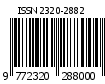
ISSN: 2320-2882 Impact Factor: 7.97 and ISSN APPROVED Journal Starting Year (ESTD) : 2013


ISSN and 7.97 Impact Factor Details
ISSN: 2320-2882 Impact Factor: 7.97 and ISSN APPROVED Journal Starting Year (ESTD) : 2013
DOI Details
CONFERENCE
CONFERENCE MANAGMENT & PUBLICATION CONFERENCE PROPOSAL
RECENT CONFERENCE

CONFERENCE PROPOSAL CONFERENCE PROCEEDINGS
CONFERENCE PROPOSAL CONFERENCE PROCEEDINGS
For Reviewer /Referral (RMS) Earn 500 per paper
Important Links
NEWS & Conference
Digital Library
IJCRT RMS | Earn 500 Per Paper.

Open Access


LICENSE
Indexing Partner
Scholarly open access journals, Peer-reviewed, and Refereed Journals, Impact factor 7.97 (Calculate by google scholar and Semantic Scholar | AI-Powered Research Tool) , Multidisciplinary, Monthly, Indexing in all major database & Metadata, Citation Generator, Digital Object Identifier(DOI)