Important Details
IJCRT - International Peer Reviewed, Open Access Journal, Multidisciplinary, Monthly, Nominal(Low) Fees for Professional Research Services International Journal of Creative Research Thoughts - IJCRT Peer Review Journal, Refereed Journal, Peer Reviewed Journal , Referred Journal and Indexed Journal, Open access, Online and Print Journal,international Journal Open Access, Accepted by Indian and foreign university ,IJCRT Followed Norms, guidelines, requirement, listing criteria and methodology of score/point also applied from: Scopus , Web of Science , UGC Approved , UGC CARE, UGC-CARE .
UGC Approved Journal No: 49023 (18)
UGC approval Link
https://ijcrt.org/ugc%20approval.jpg
All Policy and Approval
Please Like Our Facebook Page | CrossRef DOI and Hard copy of Certificate Provide if required. | www.IJCRT.org | editor@IJCRT.org | IJCRT WhatsApp +91 94294 58311
Publication Details:
- Paper Submission : 30-Sep-2026. Call For Paper (Volume 14 | Issue 8 | Month- August 2026)
- Acceptance/Rejection Notification: Within 02-04 Days.
- Paper Publish: Within 02-04 Days after submitting all documents.
-
Submit Your Paper Any time There No deadline.
-
Publication fees : 1570 INR for Indian author & 59$ for foreign International author.
Please Like Our Facebook Page | CrossRef DOI and Hard copy of Certificate Provide if required.
Licence and Indexing
Indexing In Google Scholar, SSRN, ResearcherID-Publons, Semantic Scholar | AI-Powered Research Tool, Microsoft Academic, Academia.edu, arXiv.org, Research Gate, CiteSeerX, ResearcherID Thomson Reuters, Mendeley : reference manager, DocStoc, ISSUU, Scribd, and many more | High Impact Factor: 7.97 | Digital object identifier (DOI) and Hard Copy of certificate Provided.




























Licence
DOI
ISSN Approved impact factor: 7.97 
Creative Common 
Valid as per new UGC Gazette regulations 

INTERNATIONAL JOURNAL OF CREATIVE RESEARCH THOUGHTS - IJCRT (IJCRT.ORG)
International Peer Reviewed & Refereed Journals, Open Access Journal
IJCRT Peer-Reviewed (Refereed) Journal as Per New UGC Rules.
ISSN Approved Journal No: 2320-2882 | Impact factor: 7.97 | ESTD Year: 2013
Call For Paper - Volume 14 | Issue 8 | Month- August 2026
Scholarly open access journals, Peer-reviewed, and Refereed Journals, Impact factor 7.97 (Calculate by google scholar and Semantic Scholar | AI-Powered Research Tool) , Multidisciplinary, Monthly, Indexing in all major database & Metadata, Citation Generator, Digital Object Identifier(CrossRef DOI)
IJCRT WhatsApp Contact
IJCRT Search Xplore - Search all paper by Paper Name , Author Name, and Title
Volume 13 | Issue 12
Volume 13 | Issue 12 | Month
Downlaod After Publication 1) Table of content index in PDF
2) Table of content index in HTML 2)Table of content index in HTML
3) Front Page 3) Front Page
4) Back Page 4) Back Page
5) Editor Board Member 5)Editor Board Member
6) OLD Style Issue 6) OLD Style Issue
 |
 |
|---|---|
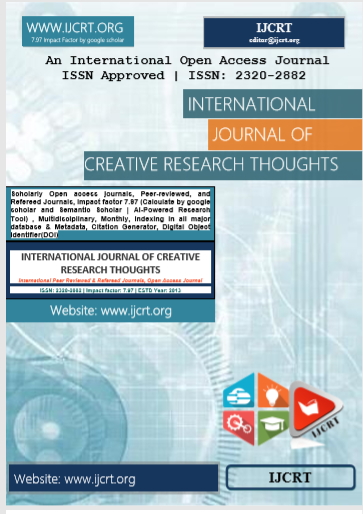
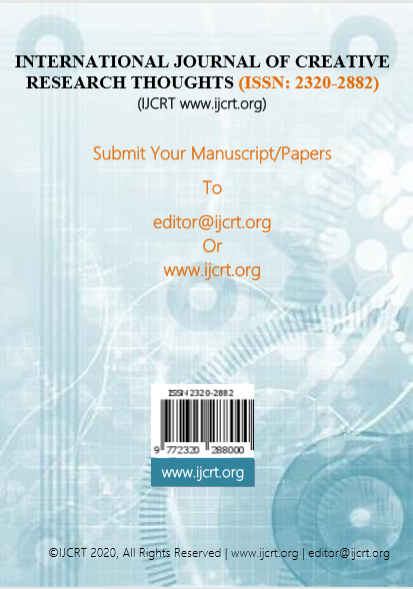
| IJCRT Journal front page | IJCRT Journal Back Page |
Paper Title: Artificial Intelligence Applications in Environmental Studies and Sustainability: A Review
Publisher Journal Name: IJCRT
Your Paper Publication Details:
Published Paper ID: - IJCRTBJ02002
Register Paper ID - 298201
Title: ARTIFICIAL INTELLIGENCE APPLICATIONS IN ENVIRONMENTAL STUDIES AND SUSTAINABILITY: A REVIEW
Author Name(s): Dr. V. Naga Padmavathi, Dr.N. Suneetha
Publisher Journal name: IJCRT
Volume: 13
Issue: 12
Pages: 5-8
Year: December 2025
Downloads: 317
Abstract
Artificial Intelligence (AI) has rapidly evolved into a transformative technology with broad applications across numerous fields, including environmental science. This review examines how AI is increasingly utilized in areas such as environmental monitoring, natural resource management, climate prediction, and sustainable development. By integrating data-driven techniques like machine learning (ML), deep learning (DL), and remote sensing analysis, AI introduces innovative approaches to addressing environmental challenges. The paper consolidates recent research progress, outlines major AI methodologies, evaluates their role in advancing sustainability objectives, and highlights existing limitations and prospects for future research.
Licence: creative commons attribution 4.0
License
Creative Commons Attribution 4.0 and The Open Definition

Keywords
Artificial Intelligence Applications in Environmental Studies and Sustainability: A Review
License
Creative Commons Attribution 4.0 and The Open Definition
Paper Title: Artificial Intelligence in Education: A Comprehensive Study
Publisher Journal Name: IJCRT
Your Paper Publication Details:
Published Paper ID: - IJCRTBJ02001
Register Paper ID - 298292
Title: ARTIFICIAL INTELLIGENCE IN EDUCATION: A COMPREHENSIVE STUDY
Author Name(s): Dr.D.Rajya Lakshmi,
Publisher Journal name: IJCRT
Volume: 13
Issue: 12
Pages: 1-4
Year: December 2025
Downloads: 229
Abstract
This study provides an in-depth exploration of the diverse roles played by Artificial Intelligence (AI) within the educational sector, examining its major applications, advantages, opportunities, challenges, and future directions. The central objective is to illustrate how AI-based systems support teachers in identifying learning gaps, offering individualized feedback, and enhancing overall academic performance. The study analyzes several AI-driven tools--including intelligent tutoring systems, adaptive learning platforms, chatbots, predictive analytics, automated assessment tools, and immersive virtual environments. Furthermore, it discusses how AI-enabled data analysis helps educators better understand students' learning patterns, strengthen instructional planning, and deliver targeted interventions. The paper also highlights how AI promotes inclusion by catering to diverse learning needs and styles. Alongside the benefits, the study also addresses ethical concerns and challenges such as data security, algorithmic bias, and the widening digital divide, emphasizing the importance of responsible and transparent AI adoption. Additionally, the study considers the future impact of AI in education and the evolving responsibilities of teachers in AI-enriched classrooms. Ultimately, this comprehensive analysis underlines AI's transformative influence on education while stressing the need for implementation strategies that prioritize equity, accessibility, and ethical integrity.
Licence: creative commons attribution 4.0
License
Creative Commons Attribution 4.0 and The Open Definition
Keywords
Artificial Intelligence in Education: A Comprehensive Study
License
Creative Commons Attribution 4.0 and The Open Definition
Paper Title: Synthetic Methodologies in Coordination Chemistry and Their Role in Catalysis, Medicine, and Materials Science
Publisher Journal Name: IJCRT
Your Paper Publication Details:
Published Paper ID: - IJCRTBI02031
Register Paper ID - 296882
Title: SYNTHETIC METHODOLOGIES IN COORDINATION CHEMISTRY AND THEIR ROLE IN CATALYSIS, MEDICINE, AND MATERIALS SCIENCE
Author Name(s): Harsh Pandey, Roshan Mishra, Vishal More, Kishor Nityanand, Subhash Singh
Publisher Journal name: IJCRT
Volume: 13
Issue: 12
Pages: 190-196
Year: December 2025
Downloads: 286
Abstract
Coordination chemistry has emerged as a central pillar in modern chemical science, providing versatile platforms for designing functional metal-ligand architectures with highly tunable structural and electronic properties. Over the decades, advancements in synthetic methodologies have revolutionized the field, enabling chemists to engineer coordination compounds with increasing precision, complexity, and sustainability. Classical solution-phase routes continue to serve as fundamental approaches; however, growing environmental concerns and demands for efficiency have accelerated the development of innovative techniques such as hydrothermal and solvothermal synthesis, microwave-assisted reactions, mechanochemical procedures, and electrochemical pathways. These methodologies not only enhance reaction control and product purity but also support the creation of unprecedented coordination motifs, supramolecular assemblies, and high-performance materials.This review provides an in-depth examination of major synthetic methodologies in coordination chemistry, critically evaluating their principles, advantages, limitations, and sustainability aspects. Furthermore, it highlights the transformative impact of coordination compounds across multiple scientific and technological fields, emphasizing the role of rational design, green chemistry, and computational modeling in shaping next-generation coordination systems. The continued integration of innovative synthetic strategies with application-driven design is expected to propel coordination chemistry toward even greater relevance in future technological advancements.
Licence: creative commons attribution 4.0
License
Creative Commons Attribution 4.0 and The Open Definition
Keywords
Coordination Chemistry; Synthetic Methodologies; Metal-Ligand Complexes; Catalysis; Metallodrugs; Diagnostic Imaging
License
Creative Commons Attribution 4.0 and The Open Definition
Paper Title: Review of "A Study on Impact of Artificial Intelligence in Accountancy: A Case Study of Small Scale Industries of Odisha"
Publisher Journal Name: IJCRT
Your Paper Publication Details:
Published Paper ID: - IJCRTBI02030
Register Paper ID - 296883
Title: REVIEW OF "A STUDY ON IMPACT OF ARTIFICIAL INTELLIGENCE IN ACCOUNTANCY: A CASE STUDY OF SMALL SCALE INDUSTRIES OF ODISHA"
Author Name(s): Mr. Satpal Sahoo
Publisher Journal name: IJCRT
Volume: 13
Issue: 12
Pages: 180-189
Year: December 2025
Downloads: 288
Abstract
The reviewed paper explores the transformative role of Artificial Intelligence (AI) in accounting, particularly within the small-scale industries (SSIs) of Odisha. The author emphasizes how AI and digitalization are reshaping accounting functions from manual book-keeping to technologically enhanced systems. The study combines both primary and secondary data to evaluate AI's influence on accountants, business efficiency, and skill requirements. Findings confirm a significant relationship between AI adoption and improvements in accounting efficiency among SSIs. The review critically evaluates the research methodology, findings, and implications while suggesting future directions for deeper inquiry into AI's integration in the accounting profession.
Licence: creative commons attribution 4.0
License
Creative Commons Attribution 4.0 and The Open Definition
Keywords
Artificial Intelligence, Digital Accounting, Automation, Small Scale Industries, Technological Transformation, Odisha.
License
Creative Commons Attribution 4.0 and The Open Definition
Paper Title: EFFECT OF CLIMATE CHANGE IN DAHANU GHOLVAD ON CHIKOO PRODUCTION
Publisher Journal Name: IJCRT
Your Paper Publication Details:
Published Paper ID: - IJCRTBI02029
Register Paper ID - 296884
Title: EFFECT OF CLIMATE CHANGE IN DAHANU GHOLVAD ON CHIKOO PRODUCTION
Author Name(s): Raut Sachin, Raut Asmita, Mali kamlesh
Publisher Journal name: IJCRT
Volume: 13
Issue: 12
Pages: 175-179
Year: December 2025
Downloads: 262
Abstract
Chikoo (Manilkara zapota) is an important tropical fruit that is widely grown in Dahanu Gholvad, a region located in the Indian state of Maharashtra. However, the effects of climate change on chikoo production in the region are not well understood. In this paper, we review the literature on the potential impacts of climate change on chikoo production in Dahanu Gholvad. We focus on the effects of temperature and rainfall patterns on chikoo growth, yield, and quality, as well as the potential impacts of climate change on chikoo diseases and pests. Our review indicates that climate change can have significant impacts on chikoo production in Dahanu Gholvad, with potential reductions in both quantity and quality of the fruit. To adapt to these changes, farmers may need to implement new strategies for disease and pest management, as well as improve irrigation and drainage systems and plant drought-resistant varieties.
Licence: creative commons attribution 4.0
License
Creative Commons Attribution 4.0 and The Open Definition
Paper Title: Digital Transformation and the Evolution of Global Commerce: An Analytical Secondary Research Study
Publisher Journal Name: IJCRT
Your Paper Publication Details:
Published Paper ID: - IJCRTBI02028
Register Paper ID - 296885
Title: DIGITAL TRANSFORMATION AND THE EVOLUTION OF GLOBAL COMMERCE: AN ANALYTICAL SECONDARY RESEARCH STUDY
Author Name(s): Dr. Seema Ajit Pillai
Publisher Journal name: IJCRT
Volume: 13
Issue: 12
Pages: 171-174
Year: December 2025
Downloads: 262
Abstract
Digital transformation has revolutionized the nature, structure, and scope of commerce across the world. From artificial intelligence-enabled marketing to blockchain-secured supply chains, technology has become the backbone of value creation and competitive advantage. This study adopts a secondary research design to synthesize academic, governmental, and corporate literature from 2019 to 2025, assessing how digital transformation influences productivity, consumer behavior, and sustainability in global trade. The research finds that while digital ecosystems have enhanced speed, transparency, and inclusivity in commerce, they also expose new vulnerabilities related to cybersecurity, data governance, and digital inequality. The paper concludes by proposing an adaptive framework linking innovation, ethical governance, and human capital development as the foundation of resilient digital commerce.
Licence: creative commons attribution 4.0
License
Creative Commons Attribution 4.0 and The Open Definition
Keywords
Digital Transformation, E-Commerce, FinTech, Artificial Intelligence, Blockchain, Sustainable Commerce, Global Trade
License
Creative Commons Attribution 4.0 and The Open Definition
Paper Title: EXAMINING THE RELATIONSHIP BETWEEN CIVIC SENSE AND AGGREGATE FINANCIAL WELL-BEING: A STUDY ON HIGHER EDUCATION STUDENTS IN SILVASSA
Publisher Journal Name: IJCRT
Your Paper Publication Details:
Published Paper ID: - IJCRTBI02027
Register Paper ID - 296886
Title: EXAMINING THE RELATIONSHIP BETWEEN CIVIC SENSE AND AGGREGATE FINANCIAL WELL-BEING: A STUDY ON HIGHER EDUCATION STUDENTS IN SILVASSA
Author Name(s): Mr. Devang S Padiya, Dr. Falguni Thakkar
Publisher Journal name: IJCRT
Volume: 13
Issue: 12
Pages: 164-170
Year: December 2025
Downloads: 306
Abstract
Civic sense is essential for maintaining public order, reducing government expenditure, and supporting community well- being. This study investigates civic habits among higher education students in Silvassa and examines their association with demographic factors and awareness of financial implications. The objectives were to measure civic sense, analyze variations across demographic groups, and assess the relationship between civic behavior and understanding of public spending. A structured questionnaire was administered to 204 students representing diverse academic streams and socio-economic backgrounds. Data analysis employed descriptive statistics, regression, and Pearson's correlation coefficient (r). The findings indicate that most students demonstrate strong civic sense, particularly in protecting public property and using dustbins, while participation in community drives remains limited. Regression analysis revealed that age, course of study, and family income significantly influence civic sense. Furthermore, correlation analysis confirmed a positive and statistically significant association (r = 0.55, p < .01) between civic sense and awareness of financial well- being.
Licence: creative commons attribution 4.0
License
Creative Commons Attribution 4.0 and The Open Definition
Keywords
Civic sense, financial well-being, higher education students, public expenditure, Silvassa.
License
Creative Commons Attribution 4.0 and The Open Definition
Paper Title: DETERMINANTS OF FINANCIAL STRESS AMONG MIDDLE-CLASS FAMILIES IN DADRA & NAGAR HAVELI
Publisher Journal Name: IJCRT
Your Paper Publication Details:
Published Paper ID: - IJCRTBI02026
Register Paper ID - 296887
Title: DETERMINANTS OF FINANCIAL STRESS AMONG MIDDLE-CLASS FAMILIES IN DADRA & NAGAR HAVELI
Author Name(s): Ms. Renu Rathore, Dr. Falguni Thakkar
Publisher Journal name: IJCRT
Volume: 13
Issue: 12
Pages: 156-163
Year: December 2025
Downloads: 290
Abstract
Licence: creative commons attribution 4.0
License
Creative Commons Attribution 4.0 and The Open Definition
Keywords
Financial stress; Middle-class households; Dadra & Nagar Haveli; Loan/EMI burden; Financial attitudes.
License
Creative Commons Attribution 4.0 and The Open Definition
Paper Title: SYNTHETIC IDENTITIES & DEEPFAKE THREATS IN ZERO TRUST ARCHITECTURE
Publisher Journal Name: IJCRT
Your Paper Publication Details:
Published Paper ID: - IJCRTBI02025
Register Paper ID - 296888
Title: SYNTHETIC IDENTITIES & DEEPFAKE THREATS IN ZERO TRUST ARCHITECTURE
Author Name(s): Manju Pillai
Publisher Journal name: IJCRT
Volume: 13
Issue: 12
Pages: 152-155
Year: December 2025
Downloads: 279
Abstract
The rapid spread of synthetic identities and AI-generated deepfake threats poses significant challenges to traditional enterprise security systems. Modern attack methods use fixed authentication system vulnerabilities to allow criminals to realistically mimic authorized users. The security framework Zero Trust Architecture (ZTA) has emerged as a powerful defensive model because it relies on "never trust, always verify" principles. This study evaluates the potential benefits of AI-based detection systems for improving Zero Trust Architecture's ability to tackle modern threats through adaptive and context-aware protection mechanisms. Centering on continuous authentication, behavioral biometrics, anomaly detection, and advanced identity verification, better identity assurance and fraud prevention are supported. This paper surveys the state-of-the-art methods while examining their existing challenges including model bias and adversarial evasion and scalability issues together with privacy risks and assesses their practical deployment potential. Future research directions presented in this paper focus on uniting AI-based defenses with Zero Trust frameworks to protect identities and sustain digital trust while preventing sophisticated fraud.
Licence: creative commons attribution 4.0
License
Creative Commons Attribution 4.0 and The Open Definition
Keywords
Zero Trust Architecture (ZTA), Artificial Intelligence, Continuous Authentication, Anomaly Detection, Deepfake threats, Synthetic identities, Digital trust, Cybersecurity
License
Creative Commons Attribution 4.0 and The Open Definition
Paper Title: Sustainable Development Goals and Green Library Research: A Bibliometric Insight into Global Contributions
Publisher Journal Name: IJCRT
Your Paper Publication Details:
Published Paper ID: - IJCRTBI02024
Register Paper ID - 296889
Title: SUSTAINABLE DEVELOPMENT GOALS AND GREEN LIBRARY RESEARCH: A BIBLIOMETRIC INSIGHT INTO GLOBAL CONTRIBUTIONS
Author Name(s): Sweta Chauhan, Satpal Sahoo, Anju Singh
Publisher Journal name: IJCRT
Volume: 13
Issue: 12
Pages: 145-151
Year: December 2025
Downloads: 292
Abstract
This study offers a bibliometric analysis of global research contributions at the intersection of sustainable development and green library initiatives from 2000 to 2025, with a focus on open-access literature. Drawing on data from the Scopus database, the study analyzed 1,008 open-access records across various document types, languages, and publication stages. The analysis revealed a significant growth in scholarly interest, particularly from 2020 onwards, with the highest number of contributions appearing in final-stage journal articles and conference proceedings. Prominent subject areas included Social Sciences, Computer Science, Arts and Humanities, and Business, highlighting the interdisciplinary nature of green library research. The United States, India, the United Kingdom, and South Africa emerged as leading contributing countries, supported by institutions such as the University of South Africa and the University of Illinois Urbana-Champaign. Key sponsoring bodies included the National Science Foundation, European Commission, and Horizon 2020 Programme. Frequently occurring keywords such as "Sustainable Development," "Digital Libraries," and "Library Services" underscored evolving themes aligned with Sustainable Development Goals (SDGs). The findings demonstrate a global shift toward sustainability-focused library services and the increasing role of academic institutions and funding bodies in shaping environmentally responsible library practices.
Licence: creative commons attribution 4.0
License
Creative Commons Attribution 4.0 and The Open Definition
Keywords
Sustainable Development, Digital Libraries, Library Services
License
Creative Commons Attribution 4.0 and The Open Definition
Paper Title: Holistic Innovation: A Transdisciplinary Approach Combining Technology and Culture Traditional Craft Challenge Game
Publisher Journal Name: IJCRT
Your Paper Publication Details:
Published Paper ID: - IJCRTBI02023
Register Paper ID - 296890
Title: HOLISTIC INNOVATION: A TRANSDISCIPLINARY APPROACH COMBINING TECHNOLOGY AND CULTURE TRADITIONAL CRAFT CHALLENGE GAME
Author Name(s): Mr. Divakar Prajapati, Ms. Shraddha Parab
Publisher Journal name: IJCRT
Volume: 13
Issue: 12
Pages: 139-144
Year: December 2025
Downloads: 266
Abstract
Traditional crafts embody the cultural identity, history, and artistic legacy of communities, yet many face the threat of extinction in our rapidly evolving, digital-focused era. This research introduces the Traditional Craft Challenge, a mobile gamified learning app aimed at preserving and promoting traditional crafts through engaging and interactive digital experiences. The application allows users, particularly younger generations, to discover, learn, and recreate various traditional crafts like Warli painting, Origami, African beadwork, and traditional pottery through step-by-step guides, gesture-based tools, and creative challenges. By accumulating points, badges, and rewards for precision, creativity, and task completion, users are motivated to strengthen their connection to cultural traditions while enjoying a game-like experience. The app enhances cultural appreciation, creativity, and global awareness through immersive digital storytelling and skill-building activities.By showcasing digital exhibitions, offering genuine crafts for sale, and linking users to in-person workshops, it also opens up avenues for local artisans. This initiative not only helps in preserving traditions that are at risk of disappearing but also transforms cultural education into a modern and easily accessible experience. In essence, this study demonstrates how gamified learning can be an innovative and sustainable method for protecting cultural heritage and motivating future cultural guardians.
Licence: creative commons attribution 4.0
License
Creative Commons Attribution 4.0 and The Open Definition
Keywords
Traditional crafts, Cultural identity, Gamified learning, Mobile app, Digital storytelling, Cultural preservation, Artisan empowerment
License
Creative Commons Attribution 4.0 and The Open Definition
Paper Title: Mathematical Analysis of Sustainable Water Conservation in Dadra and Nagar Haveli Using SCS-CN and GIS Fuzzy Modelling
Publisher Journal Name: IJCRT
Your Paper Publication Details:
Published Paper ID: - IJCRTBI02022
Register Paper ID - 296891
Title: MATHEMATICAL ANALYSIS OF SUSTAINABLE WATER CONSERVATION IN DADRA AND NAGAR HAVELI USING SCS-CN AND GIS FUZZY MODELLING
Author Name(s): Snehalata S. Narkhede
Publisher Journal name: IJCRT
Volume: 13
Issue: 12
Pages: 133-138
Year: December 2025
Downloads: 260
Abstract
The diminishing availability of water, coupled with a rising demand for this critical resource, presents a significant challenge. This research focuses on pinpointing ideal locations for water conservation interventions within Dadra and Nagar Haveli (DNH), a tribal-majority Union Territory in western India, by leveraging geospatial techniques. DNH experiences seasonal water deficits, even with 2000-2500 mm of annual rainfall, primarily because of high runoff, poor soil infiltration, and insufficient conservation infrastructure. This research employs the Soil Conservation Service-Curve Number (SCS-CN) model within a GIS environment to prioritize locations for structures such as check dams, percolation ponds, farm ponds, and contour bunds. Using thematic layers derived from a DEM, Landsat 8 imagery, LULC classifications, soil data, and recent (2020-2024) rainfall records, a weighted overlay analysis produced a Water Conservation Potential Index (WCPI). The findings delineate zones that are most suitable for either surface water harvesting or groundwater recharge, supporting targeted, data-driven interventions. The resulting framework offers a practical tool for policymakers to optimize water resource planning in DNH.
Licence: creative commons attribution 4.0
License
Creative Commons Attribution 4.0 and The Open Definition
Keywords
Geographic Information System (GIS), Runoff potential zones, SCS-CN method, Fuzzy Modelling, Water Conservation Potential Index (WCPI).
License
Creative Commons Attribution 4.0 and The Open Definition
Paper Title: From Classification to Cognition: AI & ML in Indian Library Science
Publisher Journal Name: IJCRT
Your Paper Publication Details:
Published Paper ID: - IJCRTBI02021
Register Paper ID - 296892
Title: FROM CLASSIFICATION TO COGNITION: AI & ML IN INDIAN LIBRARY SCIENCE
Author Name(s): Dr. Neha M. Joshi
Publisher Journal name: IJCRT
Volume: 13
Issue: 12
Pages: 126-132
Year: December 2025
Downloads: 235
Abstract
The Indian Library and Information Science (LIS) sector is experiencing a significant transformation, shifting from conventional rule-based classification systems such as the Dewey Decimal System and Colon Classification to AI-enhanced cognitive services that improve user discovery, automate metadata creation, and facilitate predictive and personalized information access. This research investigates the adoption of Artificial Intelligence (AI) and Machine Learning (ML) in Indian libraries, particularly in academic settings by analyzing national surveys, pilot initiatives, and policy documents. The study assesses current AI applications--including intelligent chatbot, multilingual OCR/NLP tools, and recommendation engines--while highlighting challenges related to professional skills, infrastructure, and ethical implementation. Additionally, the study addresses the deficiencies in LIS education and the lack of a cohesive policy framework for AI integration in libraries. Drawing on government initiatives like Digital India, NDLI, Indian, and NEP 2020, the paper provides actionable recommendations for incorporating AI/ML into LIS curricula, encouraging interdisciplinary collaboration, and fostering ethical, inclusive innovation in a multilingual environment. It establishes Indian libraries as crucial testing grounds for cognitive information services that support the country's goals of inclusive knowledge access and digital equity.
Licence: creative commons attribution 4.0
License
Creative Commons Attribution 4.0 and The Open Definition
Keywords
Artificial Intelligence, Machine Learning, Library and Information Science, India, Natural Language Processing, Multilingual Access, Cognitive Libraries, AI Ethics.
License
Creative Commons Attribution 4.0 and The Open Definition
Paper Title: The Valmiki Community of Mumbai: A Socio-Economic Analysis of 'Educate-Agitate-Organize'
Publisher Journal Name: IJCRT
Your Paper Publication Details:
Published Paper ID: - IJCRTBI02020
Register Paper ID - 296893
Title: THE VALMIKI COMMUNITY OF MUMBAI: A SOCIO-ECONOMIC ANALYSIS OF 'EDUCATE-AGITATE-ORGANIZE'
Author Name(s): Prof. Dr. Kanchan S. Fulmali, Dr. Samrat Ashok Gangurde
Publisher Journal name: IJCRT
Volume: 13
Issue: 12
Pages: 119-125
Year: December 2025
Downloads: 241
Abstract
This research report provides a socio-economic analysis of the Valmiki community in Santacruz (East), Mumbai, a group historically marginalized and linked to sanitation work. Using Dr. B.R. Ambedkar's framework of 'Educate, Agitate, Organize', the paper examines the community's journey from historical degradation to modern-day resilience. The analysis reveals a significant gap in the 'Educate' pillar, with the community lagging behind other marginalized groups in educational attainment due to a vicious cycle of poverty, occupational stigma, and a lack of awareness regarding government schemes. In contrast, the community has achieved remarkable success through 'Agitate' and 'Organize', as demonstrated by the Kachra Vahtuk Shramik Sangh (KVSS). The union's multi-decade legal battle ended in landmark (historical) court rulings. These decisions granted permanent employment and back wages to sanitation workers, highlighting that collective action (united effort) is the most effective tool for securing their rights. Despite these victories, the community faces persistent systemic barriers, including pervasive financial exploitation by moneylenders and institutional discrimination. The Brihanmumbai Municipal Corporation (BMC) addresses these issues by exploiting contractual labour to deny workers benefits and utilizes legal loopholes to bypass critical legislation, such as the Prohibition of Manual Scavengers Act, 2013. The study concludes that while the community's resilience and organized efforts have led to tangible gains, their progress is incomplete and fragile. The report recommends a multi-pronged approach to address these systemic issues, including abolishing the contract system, strengthening legal protections, implementing targeted educational and financial literacy programs, and providing sustained support to grassroots organizations like the KVSS. These recommendations aim to facilitate a holistic and dignified transformation for the Valmiki community.
Licence: creative commons attribution 4.0
License
Creative Commons Attribution 4.0 and The Open Definition
Keywords
Valmiki community, sanitation workers, Educate Agitate Organize, Mumbai, manual scavenging,
License
Creative Commons Attribution 4.0 and The Open Definition
Paper Title: DEVELOPING A DEEP LEARNING-FRIENDLY DATABASE FOR HINDI VOICE SIGNALS: A COMPREHENSIVE APPROACH
Publisher Journal Name: IJCRT
Your Paper Publication Details:
Published Paper ID: - IJCRTBI02019
Register Paper ID - 296894
Title: DEVELOPING A DEEP LEARNING-FRIENDLY DATABASE FOR HINDI VOICE SIGNALS: A COMPREHENSIVE APPROACH
Author Name(s): Ms. Sujata Kotian, Dr. Santosh Singh
Publisher Journal name: IJCRT
Volume: 13
Issue: 12
Pages: 115-118
Year: December 2025
Downloads: 220
Abstract
In the fast-evolving world of Artificial Intelligence (AI) and Machine Learning (ML), high-quality datasets are essential for building efficient models, particularly in speech processing. This study explores the creation of a deep learning-compatible database specifically designed for Hindi voice signals. Despite Hindi being spoken by over a billion people, existing voice datasets often lack diversity, quality, and accessibility. Our research outlines the methodology for collecting, annotating, and processing a large corpus of Hindi voice recordings. Representation is ensured across demographics, accents, and recording conditions. Using strict annotation standards, advanced pre-processing techniques, and a structured database architecture, the dataset is optimized for deep learning applications. The dataset is evaluated for linguistic coverage and tested on Automatic Speech Recognition (ASR) and Text-to-Speech (TTS) tasks, showing significant improvements in performance. This work aims to enrich Hindi speech technology and foster inclusive AI solutions
Licence: creative commons attribution 4.0
License
Creative Commons Attribution 4.0 and The Open Definition
Keywords
Hindi Speech Dataset, Data Pre-processing, Deep Learning, Speech Recognition, Speech Synthesis
License
Creative Commons Attribution 4.0 and The Open Definition
Paper Title: THE IMPACT OF DIGITAL TRANSFORMATION ON STRATEGIC HUMAN RESOURCE MANAGEMENT
Publisher Journal Name: IJCRT
Your Paper Publication Details:
Published Paper ID: - IJCRTBI02018
Register Paper ID - 296895
Title: THE IMPACT OF DIGITAL TRANSFORMATION ON STRATEGIC HUMAN RESOURCE MANAGEMENT
Author Name(s): Radhika.S, Dr.Shyamala.K
Publisher Journal name: IJCRT
Volume: 13
Issue: 12
Pages: 108-114
Year: December 2025
Downloads: 236
Abstract
This study explores the impact of digital transformation on Strategic Human Resource Management (SHRM), focusing on how evolving technologies are reshaping HR functions and strategies. The main objectives are to assist how digital tools influence HR decision making, talent management and organizational agility, and to understand the readiness of HR professionals to adapt these changes. A mixed-method approach was used by, combining surveys of HR managers with in-depth interviews from diverse industries. Findings reveal that digital transformation significantly enhances HR efficiency, fosters data driven decision making, and supports strategic alignment with business goals. However, challenges such as skill gap, resistance to change, and technological infrastructure remain. The study concludes that while digital transformation presents clear opportunities for SHRM, its success depends on continuous learning, leadership support, and a strategic approach to change management.
Licence: creative commons attribution 4.0
License
Creative Commons Attribution 4.0 and The Open Definition
Keywords
Digital transformation, strategic Human Resource Management, HR technology, Change Management, Organizational agility, talent management
License
Creative Commons Attribution 4.0 and The Open Definition
Paper Title: THE ROLE OF COLLEGE LIBRARIES IN INSTITUTIONAL BRANDING: A STUDY OF ARTS AND COMMERCE COLLEGES IN MUMBAI
Publisher Journal Name: IJCRT
Your Paper Publication Details:
Published Paper ID: - IJCRTBI02017
Register Paper ID - 296896
Title: THE ROLE OF COLLEGE LIBRARIES IN INSTITUTIONAL BRANDING: A STUDY OF ARTS AND COMMERCE COLLEGES IN MUMBAI
Author Name(s): Dr. Parita Desai
Publisher Journal name: IJCRT
Volume: 13
Issue: 12
Pages: 101-107
Year: December 2025
Downloads: 224
Abstract
The research focuses on role of college libraries of arts and commerce colleges in fostering the institutional branding. Now a days libraries are no longer repositories of mere books but they also contribute to achieve the objectives of colleges like academic excellence, student engagement and establishing community connections. In-depth interview were conducted of 15 college librarians to identify the functions of library in showcasing academic quality excellence, enhancing student experiences through, career guidance and mental health initiatives, creating community ties through various co-curricular and cultural events reflecting institutional values such as inclusive, sustainability, and innovation. The findings shows that libraries are the powerful branding assets, which helps the student in choosing the institution for their career through modern infrastructure, technology, and marketing efforts. Despite being a powerful branding assets libraries are facing challenges like budget constraints and staffing limitations. Recommendations include enhancing digital capabilities, leveraging alumni networks, and utilizing virtual tours and marketing strategies to maximize impact. The study emphasize that the college libraries are not the only academic support to the institution but also act as backbone for boosting a institutional identity and reputation in today's competitive higher education landscape.
Licence: creative commons attribution 4.0
License
Creative Commons Attribution 4.0 and The Open Definition
Keywords
College libraries, institutional branding, student engagement, academic excellence, community partnerships, library marketing
License
Creative Commons Attribution 4.0 and The Open Definition
Paper Title: Sustainability as a Core Business Strategy: A Pathway to Long-Term Competitiveness and Value Creation
Publisher Journal Name: IJCRT
Your Paper Publication Details:
Published Paper ID: - IJCRTBI02016
Register Paper ID - 296897
Title: SUSTAINABILITY AS A CORE BUSINESS STRATEGY: A PATHWAY TO LONG-TERM COMPETITIVENESS AND VALUE CREATION
Author Name(s): Dr. Seema Ajit Pillai
Publisher Journal name: IJCRT
Volume: 13
Issue: 12
Pages: 97-100
Year: December 2025
Downloads: 237
Abstract
In the 21st century, sustainability has transcended its identity as a peripheral social concern to become a cornerstone of corporate strategy. This paper explores how sustainability can be embedded into the core of business models, enhancing both competitive advantage and societal well-being. Drawing upon the Sustainable Value Integration Framework (SVIF), it analyses how global organisations such as Unilever, Patagonia, and the Tata Group have operationalised sustainability as a strategic driver of innovation and resilience. The findings reveal that firms integrating environmental, social, and governance (ESG) principles into their strategic DNA achieve measurable gains in operational efficiency, stakeholder trust, and long-term profitability. The paper concludes with pragmatic recommendations for embedding sustainability within strategic planning processes to future-proof enterprises in an era of rapid environmental and socio-economic transformation.
Licence: creative commons attribution 4.0
License
Creative Commons Attribution 4.0 and The Open Definition
Keywords
Sustainability, ESG, Strategic Management, Corporate Governance, Sustainable Value Integration Framework, Competitive Advantage, Circular Economy
License
Creative Commons Attribution 4.0 and The Open Definition
Paper Title: Bioactive Transition Metal Complexes: Mechanistic Insights and Applications Against Antibiotic-Resistant Pathogens
Publisher Journal Name: IJCRT
Your Paper Publication Details:
Published Paper ID: - IJCRTBI02015
Register Paper ID - 296899
Title: BIOACTIVE TRANSITION METAL COMPLEXES: MECHANISTIC INSIGHTS AND APPLICATIONS AGAINST ANTIBIOTIC-RESISTANT PATHOGENS
Author Name(s): Rishu Singh, Bhagyshree Patil, Tilottama Patil, Damini Sengar, Subhash Singh
Publisher Journal name: IJCRT
Volume: 13
Issue: 12
Pages: 92-96
Year: December 2025
Downloads: 249
Abstract
The increasing diversity and escalating drug resistance of bacterial pathogens have significantly compromised the efficacy of conventional antimicrobial agents, creating formidable challenges in modern infection control. Transition metal complexes (TMCs) have emerged as promising antimicrobial candidates due to their structural versatility, ability to adopt multiple oxidation states, and capacity to coordinate with a wide range of ligands. These complexes interact with bacterial membranes, disrupt enzymatic processes, induce oxidative stress, and target biomolecules such as DNA and proteins. Metals such as copper, silver, iron, and zinc exhibit enhanced antimicrobial properties when coordinated with stable ligand frameworks. Their propensity to generate reactive oxygen species (ROS) contributes to potent bactericidal activity against multidrug-resistant (MDR) strains. This review explores mechanisms, ligand design, therapeutic potential, applications, and future perspectives of TMCs in combating antibiotic resistance.
Licence: creative commons attribution 4.0
License
Creative Commons Attribution 4.0 and The Open Definition
Keywords
Metal complexes; Bioactivity; multidrug-resistant; Antibacterial activity
License
Creative Commons Attribution 4.0 and The Open Definition
Paper Title: TRADITIONAL CRAFT CHALLENGE GAME Holistic Innovation: A Transdisciplinary Approach Combining Technology and Culture
Publisher Journal Name: IJCRT
Your Paper Publication Details:
Published Paper ID: - IJCRTBI02014
Register Paper ID - 296900
Title: TRADITIONAL CRAFT CHALLENGE GAME HOLISTIC INNOVATION: A TRANSDISCIPLINARY APPROACH COMBINING TECHNOLOGY AND CULTURE
Author Name(s): Ms. Shraddha Parab, Mr. Divakar Prajapati
Publisher Journal name: IJCRT
Volume: 13
Issue: 12
Pages: 84-91
Year: December 2025
Downloads: 222
Abstract
Traditional crafts embody the cultural identity, history, and artistic legacy of communities, yet many face the threat of extinction in our rapidly evolving, digital-focused era. This research introduces the Traditional Craft Challenge, a mobile gamified learning app aimed at preserving and promoting traditional crafts through engaging and interactive digital experiences. The application allows users, particularly younger generations, to discover, learn, and recreate various traditional crafts like Warli painting, Origami, African beadwork, and traditional pottery through step-by-step guides, gesture-based tools, and creative challenges. By accumulating points, badges, and rewards for precision, creativity, and task completion, users are motivated to strengthen their connection to cultural traditions while enjoying a game-like experience. The app enhances cultural appreciation, creativity, and global awareness through immersive digital storytelling and skill-building activities.By showcasing digital exhibitions, offering genuine crafts for sale, and linking users to in-person workshops, it also opens up avenues for local artisans. This initiative not only helps in preserving traditions that are at risk of disappearing but also transforms cultural education into a modern and easily accessible experience. In essence, this study demonstrates how gamified learning can be an innovative and sustainable method for protecting cultural heritage and motivating future cultural guardians.
Licence: creative commons attribution 4.0
License
Creative Commons Attribution 4.0 and The Open Definition
Keywords
Traditional crafts, Cultural identity, Gamified learning, Mobile app, Digital storytelling, Cultural preservation, Artisan empowerment
License
Creative Commons Attribution 4.0 and The Open Definition
All Published Paper Details Search Through Above Search Option.
About IJCRT
The International Journal of Creative Research Thoughts (IJCRT) aims to explore advances in research pertaining to applied, theoretical and experimental Technological studies. The goal is to promote scientific information interchange between researchers, developers, engineers, students, and practitioners working in and around the world.
Indexing In Google Scholar, ResearcherID Thomson Reuters, Mendeley : reference manager, Academia.edu, arXiv.org, Research Gate, CiteSeerX, DocStoc, ISSUU, Scribd, and many more International Journal of Creative Research Thoughts (IJCRT) ISSN: 2320-2882 | Impact Factor: 7.97 | 7.97 impact factor and ISSN Approved. Provide DOI and Hard copy of Certificate. Low Open Access Processing Charges. 1500 INR for Indian author & 55$ for foreign International author. Call For Paper (Volume 14 | Issue 8 | Month- August 2026)
Call For Paper August 2026
Call For Papers
August 2026
Volume 14 | Issue 8
Last Date :
30-Sep-2026
Submit Manuscript Online Impact Factor: 7.97 Review Results : Within 02-03 Days Paper Publication : Within 02-03 Days
August 2026
Volume 14 | Issue 8
Last Date :
30-Sep-2026
Submit Manuscript Online Impact Factor: 7.97 Review Results : Within 02-03 Days Paper Publication : Within 02-03 Days
Published Issue Details
For Authors
Forms / Downloads
Other IMP Links
Indexing Partner
Research Area
LICENSE





ISSN and 7.97 Impact Factor Details
ISSN: 2320-2882 Impact Factor: 7.97 and ISSN APPROVED Journal Starting Year (ESTD) : 2013


ISSN and 7.97 Impact Factor Details
ISSN: 2320-2882 Impact Factor: 7.97 and ISSN APPROVED Journal Starting Year (ESTD) : 2013
DOI Details
CONFERENCE
CONFERENCE MANAGMENT & PUBLICATION CONFERENCE PROPOSAL
RECENT CONFERENCE

CONFERENCE PROPOSAL CONFERENCE PROCEEDINGS
CONFERENCE PROPOSAL CONFERENCE PROCEEDINGS
For Reviewer /Referral (RMS) Earn 500 per paper
Important Links
NEWS & Conference
Digital Library
IJCRT RMS | Earn 500 Per Paper.

Open Access


LICENSE
Indexing Partner
Scholarly open access journals, Peer-reviewed, and Refereed Journals, Impact factor 7.97 (Calculate by google scholar and Semantic Scholar | AI-Powered Research Tool) , Multidisciplinary, Monthly, Indexing in all major database & Metadata, Citation Generator, Digital Object Identifier(DOI)