Important Details
IJCRT - International Peer Reviewed, Open Access Journal, Multidisciplinary, Monthly, Nominal(Low) Fees for Professional Research Services International Journal of Creative Research Thoughts - IJCRT Peer Review Journal, Refereed Journal, Peer Reviewed Journal , Referred Journal and Indexed Journal, Open access, Online and Print Journal,international Journal Open Access, Accepted by Indian and foreign university ,IJCRT Followed Norms, guidelines, requirement, listing criteria and methodology of score/point also applied from: Scopus , Web of Science , UGC Approved , UGC CARE, UGC-CARE .
UGC Approved Journal No: 49023 (18)
UGC approval Link
https://ijcrt.org/ugc%20approval.jpg
All Policy and Approval
Please Like Our Facebook Page | CrossRef DOI and Hard copy of Certificate Provide if required. | www.IJCRT.org | editor@IJCRT.org | IJCRT WhatsApp +91 94294 58311
Publication Details:
- Paper Submission : 31-Aug-2026. Call For Paper (Volume 14 | Issue 8 | Month- August 2026)
- Acceptance/Rejection Notification: Within 02-04 Days.
- Paper Publish: Within 02-04 Days after submitting all documents.
-
Submit Your Paper Any time There No deadline.
-
Publication fees : 1570 INR for Indian author & 59$ for foreign International author.
Please Like Our Facebook Page | CrossRef DOI and Hard copy of Certificate Provide if required.
Licence and Indexing
Indexing In Google Scholar, SSRN, ResearcherID-Publons, Semantic Scholar | AI-Powered Research Tool, Microsoft Academic, Academia.edu, arXiv.org, Research Gate, CiteSeerX, ResearcherID Thomson Reuters, Mendeley : reference manager, DocStoc, ISSUU, Scribd, and many more | High Impact Factor: 7.97 | Digital object identifier (DOI) and Hard Copy of certificate Provided.




























Licence
DOI
ISSN Approved impact factor: 7.97 
Creative Common 
Valid as per new UGC Gazette regulations 

INTERNATIONAL JOURNAL OF CREATIVE RESEARCH THOUGHTS - IJCRT (IJCRT.ORG)
International Peer Reviewed & Refereed Journals, Open Access Journal
IJCRT Peer-Reviewed (Refereed) Journal as Per New UGC Rules.
ISSN Approved Journal No: 2320-2882 | Impact factor: 7.97 | ESTD Year: 2013
Call For Paper - Volume 14 | Issue 8 | Month- August 2026
Scholarly open access journals, Peer-reviewed, and Refereed Journals, Impact factor 7.97 (Calculate by google scholar and Semantic Scholar | AI-Powered Research Tool) , Multidisciplinary, Monthly, Indexing in all major database & Metadata, Citation Generator, Digital Object Identifier(CrossRef DOI)
IJCRT WhatsApp Contact
Published Paper Details:
Paper Title
Study on the Assessment of Night Eating Syndrome and its Association with Dietary Intake, Sleep Quality and Stress Scores in Young Adults Aged 18 to 26 Years
Authors
Hasti Vijay Shah, Dr. Nisha Bellare
Keywords
Night Eating Syndrome (NES), Sleep Quality, Perceived Stress, Dietary Intake, Circadian Eating Patterns, Young Adults
Abstract
Background: Night Eating Syndrome (NES) is a chrono-behavioral eating disorder characterized by a delayed circadian pattern of food intake, evening hyperphagia, and nocturnal ingestions. Despite its growing clinical relevance, NES remains under-diagnosed among urban young adults, particularly within the Indian context where lifestyle factors such as irregular sleep schedules, academic stress and 24-hour food availability are increasingly prevalent.
Methods: A cross-sectional study was conducted among 200 young adults (100 males, 100 females). Data collection included anthropometric measurements, the Night Eating Diagnostic Questionnaire (NEDQ), Pittsburgh Sleep Quality Index (PSQI), Perceived Stress Scale (PSS-10), and 3-day 24-hour dietary recall. Participants were classified into four NEDQ categories. Statistical analyses included Chi-square tests, independent samples t-test, one-way ANOVA with Bonferroni post-hoc correction, and Pearson's correlation.
Results: NES was highly prevalent, with 67% of participants exhibiting night eating behaviors and 24% meeting Full NES criteria. Increasing NEDQ severity was significantly associated with higher BMI (p=0.023), poorer sleep quality (p<0.001), and elevated perceived stress (p<0.001). Sleep quality and perceived stress were strongly correlated (r=0.520, p<0.001). Total energy and macronutrient intake did not differ significantly across categories; however, iron intake was significantly higher (p<0.001) and calcium intake significantly lower (p=0.007) in NES-positive groups.
Conclusion: NES is prevalent among urban Indian young adults and is significantly linked to poor sleep, elevated stress, and qualitative dietary disturbances, reinforcing its conceptualization as a circadian disorder within a stress-sleep-eating triad. Integrated multidisciplinary interventions addressing dietary timing, sleep hygiene, and stress management are warranted.
IJCRT's Publication Details
Unique Identification Number - IJCRT2606238
Paper ID - 310127
Page Number(s) - c133-c147
Pubished in - Volume 14 | Issue 6 | June 2026
DOI (Digital Object Identifier) -
Publisher Name - IJCRT | www.ijcrt.org | ISSN : 2320-2882
E-ISSN Number - 2320-2882
Cite this article
Hasti Vijay Shah, Dr. Nisha Bellare, "Study on the Assessment of Night Eating Syndrome and its Association with Dietary Intake, Sleep Quality and Stress Scores in Young Adults Aged 18 to 26 Years", International Journal of Creative Research Thoughts (IJCRT), ISSN:2320-2882, Volume.14, Issue 6, pp.c133-c147, June 2026, Available at :http://www.ijcrt.org/papers/IJCRT2606238.pdf
Article Preview
Indexing Partners




















Call For Paper August 2026
Call For Papers
August 2026
Volume 14 | Issue 8
Last Date :
31-Aug-2026
Submit Manuscript Online Impact Factor: 7.97 Review Results : Within 02-03 Days Paper Publication : Within 02-03 Days
August 2026
Volume 14 | Issue 8
Last Date :
31-Aug-2026
Submit Manuscript Online Impact Factor: 7.97 Review Results : Within 02-03 Days Paper Publication : Within 02-03 Days
Published Issue Details
For Authors
Forms / Downloads
Other IMP Links
Indexing Partner
Research Area
LICENSE





ISSN and 7.97 Impact Factor Details
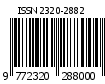
ISSN: 2320-2882 Impact Factor: 7.97 and ISSN APPROVED Journal Starting Year (ESTD) : 2013


ISSN and 7.97 Impact Factor Details
ISSN: 2320-2882 Impact Factor: 7.97 and ISSN APPROVED Journal Starting Year (ESTD) : 2013
DOI Details
CONFERENCE
CONFERENCE MANAGMENT & PUBLICATION CONFERENCE PROPOSAL
RECENT CONFERENCE

CONFERENCE PROPOSAL CONFERENCE PROCEEDINGS
CONFERENCE PROPOSAL CONFERENCE PROCEEDINGS
For Reviewer /Referral (RMS) Earn 500 per paper
Important Links
NEWS & Conference
Digital Library
IJCRT RMS | Earn 500 Per Paper.

Open Access


LICENSE
Indexing Partner
Scholarly open access journals, Peer-reviewed, and Refereed Journals, Impact factor 7.97 (Calculate by google scholar and Semantic Scholar | AI-Powered Research Tool) , Multidisciplinary, Monthly, Indexing in all major database & Metadata, Citation Generator, Digital Object Identifier(DOI)