Important Details
IJCRT - International Peer Reviewed, Open Access Journal, Multidisciplinary, Monthly, Nominal(Low) Fees for Professional Research Services International Journal of Creative Research Thoughts - IJCRT Peer Review Journal, Refereed Journal, Peer Reviewed Journal , Referred Journal and Indexed Journal, Open access, Online and Print Journal,international Journal Open Access, Accepted by Indian and foreign university ,IJCRT Followed Norms, guidelines, requirement, listing criteria and methodology of score/point also applied from: Scopus , Web of Science , UGC Approved , UGC CARE, UGC-CARE .
UGC Approved Journal No: 49023 (18)
UGC approval Link
https://ijcrt.org/ugc%20approval.jpg
All Policy and Approval
Please Like Our Facebook Page | CrossRef DOI and Hard copy of Certificate Provide if required. | www.IJCRT.org | editor@IJCRT.org | WhatsApp: 7990172303
Publication Details:
- Paper Submission : 31-Mar-2026. Call For Paper (Volume 14 | Issue 3 | Month- March 2026)
- Acceptance/Rejection Notification: Within 02-04 Days.
- Paper Publish: Within 02-04 Days after submitting all documents.
-
Submit Your Paper Any time There No deadline.
-
Publication fees : 1570 INR for Indian author & 59$ for foreign International author.
Please Like Our Facebook Page | CrossRef DOI and Hard copy of Certificate Provide if required.
Licence and Indexing
Indexing In Google Scholar, SSRN, ResearcherID-Publons, Semantic Scholar | AI-Powered Research Tool, Microsoft Academic, Academia.edu, arXiv.org, Research Gate, CiteSeerX, ResearcherID Thomson Reuters, Mendeley : reference manager, DocStoc, ISSUU, Scribd, and many more | High Impact Factor: 7.97 | Digital object identifier (DOI) and Hard Copy of certificate Provided.




























Licence
DOI
ISSN Approved impact factor: 7.97 
Creative Common 
Valid as per new UGC Gazette regulations 

INTERNATIONAL JOURNAL OF CREATIVE RESEARCH THOUGHTS - IJCRT (IJCRT.ORG)
International Peer Reviewed & Refereed Journals, Open Access Journal
IJCRT Peer-Reviewed (Refereed) Journal as Per New UGC Rules.
ISSN Approved Journal No: 2320-2882 | Impact factor: 7.97 | ESTD Year: 2013
Call For Paper - Volume 14 | Issue 3 | Month- March 2026
Scholarly open access journals, Peer-reviewed, and Refereed Journals, Impact factor 7.97 (Calculate by google scholar and Semantic Scholar | AI-Powered Research Tool) , Multidisciplinary, Monthly, Indexing in all major database & Metadata, Citation Generator, Digital Object Identifier(CrossRef DOI)
Contact Us Click Here
WhatsApp Contact Click Here
Published Paper Details:
Paper Title
ZERO TRUST ARCHITECTURE (ZTA) FOR HYBRID CLOUD AND MULTI-CLOUD ENVIRONMENTS: CONTINUOUS AUTHENTICATION AND MICRO-SEGMENTATION ACROSS AWS, AZURE AND PROVATE DATA CENTERS
Authors
SHAMEENA B
Keywords
Zero Trust Architecture (ZTA), Hybrid Cloud Security, Multi-Cloud Interoperability, Micro-segmentation, Continuous Authentication, User Behavioral Analytics (UBA), Identity Federation, Lateral Movement Prevention.
Abstract
The swift proliferation of hybrid and multi-cloud infrastructures has dramatically expanded the enterprise attack surface, rendering traditional perimeter-based security models obsolete in the face of distributed, dynamic systems. Organizations now routinely deploy workloads across disparate platforms--including Amazon Web Services (AWS), Microsoft Azure, Google Cloud Platform (GCP), and on-premises private data centers--introducing multifaceted security challenges such as fragmented identity management, inconsistent access controls, and heightened risks of lateral movement by adversaries exploiting trust relationships between environments.
This paper introduces a comprehensive Zero Trust Architecture (ZTA) framework tailored for hybrid and multi-cloud ecosystems, which dismantles implicit trust assumptions and mandates continuous, contextual verification of all users, devices, workloads, and network flows irrespective of location or network perimeter. The proposed architecture synergistically integrates three core pillars: (1) identity-centric access control leveraging federated identity providers (e.g., OAuth 2.0, OpenID Connect) with just-in-time (JIT) privilege elevation; (2) continuous authentication mechanisms that fuse multi-factor signals--including device posture assessments (e.g., compliance with endpoint detection and response tools), user behavioral analytics (UBA) via machine learning models detecting anomalies in access patterns, geolocation, and session risks--and real-time risk scoring to dynamically revoke or adapt privileges; and (3) granular micro-segmentation enforced through software-defined networking (SDN) and intent-based policies, creating ephemeral security zones that isolate workloads at the application, container, or workload level to preempt lateral movement. Cross-cloud enforcement is achieved via a centralized policy decision point (PDP) with distributed policy enforcement points (PEPs) that synchronize dynamic policies across providers using standardized APIs (e.g., AWS IAM, Azure AD, and Kubernetes NetworkPolicies). The framework also incorporates telemetry aggregation from cloud-native security tools (e.g., AWS GuardDuty, Azure Sentinel) for holistic threat visibility and automated response orchestration.
To evaluate efficacy, we conducted rigorous experimental evaluations in a simulated hybrid cloud testbed comprising AWS, Azure, and a Kubernetes-orchestrated private cluster, emulating real-world attack scenarios such as privilege escalation, container escapes, and lateral traversal using tools like Atomic Red Team and MITRE ATT&CK frameworks. Quantitative metrics-- including mean time to detect (MTTD) intrusions (reduced by 68%), successful lateral movement attempts blocked (92% efficacy), and policy evaluation latency (<50ms)--demonstrate superior performance over baseline models like VPN-centric perimeters and static firewalls. Qualitative analysis highlights enhanced security visibility through unified dashboards and adaptive resilience against evolving threats, with scalability tested up to 10,000 concurrent workloads. This framework offers enterprises a robust, vendor-agnostic blueprint for securing hybrid/multi-cloud deployments, paving the way for resilient operations in an era of pervasive cloud adoption while minimizing operational overhead.
IJCRT's Publication Details
Unique Identification Number - IJCRT2603193
Paper ID - 302656
Page Number(s) - b571-b582
Pubished in - Volume 14 | Issue 3 | March 2026
DOI (Digital Object Identifier) -
Publisher Name - IJCRT | www.ijcrt.org | ISSN : 2320-2882
E-ISSN Number - 2320-2882
Cite this article
SHAMEENA B, "ZERO TRUST ARCHITECTURE (ZTA) FOR HYBRID CLOUD AND MULTI-CLOUD ENVIRONMENTS: CONTINUOUS AUTHENTICATION AND MICRO-SEGMENTATION ACROSS AWS, AZURE AND PROVATE DATA CENTERS", International Journal of Creative Research Thoughts (IJCRT), ISSN:2320-2882, Volume.14, Issue 3, pp.b571-b582, March 2026, Available at :http://www.ijcrt.org/papers/IJCRT2603193.pdf
Article Preview
Indexing Partners




















Call For Paper March 2026
Call For Papers
March 2026
Volume 14 | Issue 3
Last Date :
31-Mar-2026
Submit Manuscript Online Impact Factor: 7.97 Review Results : Within 02-03 Days Paper Publication : Within 02-03 Days
March 2026
Volume 14 | Issue 3
Last Date :
31-Mar-2026
Submit Manuscript Online Impact Factor: 7.97 Review Results : Within 02-03 Days Paper Publication : Within 02-03 Days
Published Issue Details
For Authors
Forms / Downloads
Other IMP Links
Indexing Partner
Research Area
LICENSE





ISSN and 7.97 Impact Factor Details
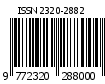
ISSN: 2320-2882 Impact Factor: 7.97 and ISSN APPROVED Journal Starting Year (ESTD) : 2013


ISSN and 7.97 Impact Factor Details
ISSN: 2320-2882 Impact Factor: 7.97 and ISSN APPROVED Journal Starting Year (ESTD) : 2013
DOI Details
CONFERENCE
CONFERENCE MANAGMENT & PUBLICATION CONFERENCE PROPOSAL
RECENT CONFERENCE

CONFERENCE PROPOSAL CONFERENCE PROCEEDINGS
CONFERENCE PROPOSAL CONFERENCE PROCEEDINGS
For Reviewer /Referral (RMS) Earn 500 per paper
Important Links
NEWS & Conference
Digital Library
IJCRT RMS | Earn 500 Per Paper.

Open Access


LICENSE
Indexing Partner
Scholarly open access journals, Peer-reviewed, and Refereed Journals, Impact factor 7.97 (Calculate by google scholar and Semantic Scholar | AI-Powered Research Tool) , Multidisciplinary, Monthly, Indexing in all major database & Metadata, Citation Generator, Digital Object Identifier(DOI)