Important Details
IJCRT - International Peer Reviewed, Open Access Journal, Multidisciplinary, Monthly, Nominal(Low) Fees for Professional Research Services International Journal of Creative Research Thoughts - IJCRT Peer Review Journal, Refereed Journal, Peer Reviewed Journal , Referred Journal and Indexed Journal, Open access, Online and Print Journal,international Journal Open Access, Accepted by Indian and foreign university ,IJCRT Followed Norms, guidelines, requirement, listing criteria and methodology of score/point also applied from: Scopus , Web of Science , UGC Approved , UGC CARE, UGC-CARE .
UGC Approved Journal No: 49023 (18)
UGC approval Link
https://ijcrt.org/ugc%20approval.jpg
All Policy and Approval
Please Like Our Facebook Page | CrossRef DOI and Hard copy of Certificate Provide if required. | www.IJCRT.org | editor@IJCRT.org | WhatsApp: 7990172303
Publication Details:
- Paper Submission : 31-Mar-2026. Call For Paper (Volume 14 | Issue 3 | Month- March 2026)
- Acceptance/Rejection Notification: Within 02-04 Days.
- Paper Publish: Within 02-04 Days after submitting all documents.
-
Submit Your Paper Any time There No deadline.
-
Publication fees : 1570 INR for Indian author & 59$ for foreign International author.
Please Like Our Facebook Page | CrossRef DOI and Hard copy of Certificate Provide if required.
Licence and Indexing
Indexing In Google Scholar, SSRN, ResearcherID-Publons, Semantic Scholar | AI-Powered Research Tool, Microsoft Academic, Academia.edu, arXiv.org, Research Gate, CiteSeerX, ResearcherID Thomson Reuters, Mendeley : reference manager, DocStoc, ISSUU, Scribd, and many more | High Impact Factor: 7.97 | Digital object identifier (DOI) and Hard Copy of certificate Provided.




























Licence
DOI
ISSN Approved impact factor: 7.97 
Creative Common 
Valid as per new UGC Gazette regulations 

INTERNATIONAL JOURNAL OF CREATIVE RESEARCH THOUGHTS - IJCRT (IJCRT.ORG)
International Peer Reviewed & Refereed Journals, Open Access Journal
IJCRT Peer-Reviewed (Refereed) Journal as Per New UGC Rules.
ISSN Approved Journal No: 2320-2882 | Impact factor: 7.97 | ESTD Year: 2013
Call For Paper - Volume 14 | Issue 3 | Month- March 2026
Scholarly open access journals, Peer-reviewed, and Refereed Journals, Impact factor 7.97 (Calculate by google scholar and Semantic Scholar | AI-Powered Research Tool) , Multidisciplinary, Monthly, Indexing in all major database & Metadata, Citation Generator, Digital Object Identifier(CrossRef DOI)
Contact Us Click Here
WhatsApp Contact Click Here
Published Paper Details:
Paper Title
Climate Resilience and Gender Perspective in Sustainable Development Goals (SDGs)
Authors
Dr. Tridibesh Tripathy, Prof. Rakesh Dwivedi, Dr. Anjali Mishra, Dr. Mohini Gautam
Keywords
UNFCCC, SDG, COP, GCF, IPV, iFOREST
Abstract
As we say climate resilience within the purview of gender perspective, the two issues are to be linked with each other in context. The paper views through the United Nations Framework Convention on Climate Change (UNFCCC), Conference of Parties (COP), Kyoto Protocol, Green Climate Fund (GCF), Paris agreement, International Forum for Environment, Sustainability & Technology (iFOREST) & finally the efforts of Ministry of Environment, Forests & Climate Change (MOEFCC) of Government of India.
On the other hand, regarding gender perspective, the paper focuses on the issue of preservation of indigenous seeds variety in the context of Genetically Modified Foods (GMF) that cover the preservation of indigenous variety of seeds as a challenge to the domain of GMF. Climate resilience and water stressed areas are interlinked. Here both the issues of GMF & water stress are interwoven with the lives of women.
Climate resilience efforts and water stress has put pressure on agricultural lands of joint families & leading to land distribution in the families. As a sequel to the familial land distribution and high cost of agricultural inputs, the income stresses in the families have escalated. As a result of the escalation, women's participation in the labor force has increased. Earlier, it was a thought process that working women will eventually lead to women empowerment.
Currently, empowered and working women are also under threat. Due to patriarchal mindset, insecurities among spouses have escalated if the women happen to earn more in cash or kind. This precarious situation has led to high prevalence of Intimate Partner Violence (IPV). The issue of IPV violates basic human rights, undermines economic potential, reduces productivity, negatively impacts future generations when children witness violence at home.
Besides the concept of interlinking issues, the resurge of geriatric population in the near future will also impact health care at domiciliary levels. Resurge of climatic temperature will lead to extra effort in reducing internal temperature at home. With a burden on the household economy to keep the home cool coupled with rising food prices, the working dividend male population will be under tremendous pressure to feed both the ends of demography.
The dependant population at the initial end of life through the U5 population & through the geriatrics at the distal end of life will become a burden at the national level that is culminated by burden at the family level. The geriatric population will need an extensive domiciliary care that is again going to put further burden on the women at the household level.
As way outs, the paper sees the role of the male gender to diversify skill set, develop risk taking capacity so that they sustain the income of the households. For the females, multi tasking is the way out in nuclear families. While being tech centric, both the genders need to be socio centric as well. Social cohesiveness coupled with spousal mutual respect will help us to improve the performances in various gender related indexes. Healthy behavior regarding household waste management & adoption of renewable sources of energy, rain water harvesting will not only add to climate resilience efforts for the current generation but also the future generations.
Similarly, efforts at mass level like focus on alternative energy sources, graduating from coal in a phased manner, reducing fossil fuels will bring the nation to better position in the progress of the Sustainable Development Goal number 13.12
IJCRT's Publication Details
Unique Identification Number - IJCRT25A4776
Paper ID - 284438
Page Number(s) - p158-p166
Pubished in - Volume 13 | Issue 4 | April 2025
DOI (Digital Object Identifier) -
Publisher Name - IJCRT | www.ijcrt.org | ISSN : 2320-2882
E-ISSN Number - 2320-2882
Cite this article
Dr. Tridibesh Tripathy, Prof. Rakesh Dwivedi, Dr. Anjali Mishra, Dr. Mohini Gautam, "Climate Resilience and Gender Perspective in Sustainable Development Goals (SDGs)", International Journal of Creative Research Thoughts (IJCRT), ISSN:2320-2882, Volume.13, Issue 4, pp.p158-p166, April 2025, Available at :http://www.ijcrt.org/papers/IJCRT25A4776.pdf
Article Preview
Indexing Partners




















Call For Paper March 2026
Call For Papers
March 2026
Volume 14 | Issue 3
Last Date :
31-Mar-2026
Submit Manuscript Online Impact Factor: 7.97 Review Results : Within 02-03 Days Paper Publication : Within 02-03 Days
March 2026
Volume 14 | Issue 3
Last Date :
31-Mar-2026
Submit Manuscript Online Impact Factor: 7.97 Review Results : Within 02-03 Days Paper Publication : Within 02-03 Days
Published Issue Details
For Authors
Forms / Downloads
Other IMP Links
Indexing Partner
Research Area
LICENSE





ISSN and 7.97 Impact Factor Details
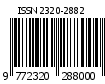
ISSN: 2320-2882 Impact Factor: 7.97 and ISSN APPROVED Journal Starting Year (ESTD) : 2013


ISSN and 7.97 Impact Factor Details
ISSN: 2320-2882 Impact Factor: 7.97 and ISSN APPROVED Journal Starting Year (ESTD) : 2013
DOI Details
CONFERENCE
CONFERENCE MANAGMENT & PUBLICATION CONFERENCE PROPOSAL
RECENT CONFERENCE

CONFERENCE PROPOSAL CONFERENCE PROCEEDINGS
CONFERENCE PROPOSAL CONFERENCE PROCEEDINGS
For Reviewer /Referral (RMS) Earn 500 per paper
Important Links
NEWS & Conference
Digital Library
IJCRT RMS | Earn 500 Per Paper.

Open Access


LICENSE
Indexing Partner
Scholarly open access journals, Peer-reviewed, and Refereed Journals, Impact factor 7.97 (Calculate by google scholar and Semantic Scholar | AI-Powered Research Tool) , Multidisciplinary, Monthly, Indexing in all major database & Metadata, Citation Generator, Digital Object Identifier(DOI)