Important Details
IJCRT - International Peer Reviewed, Open Access Journal, Multidisciplinary, Monthly, Nominal(Low) Fees for Professional Research Services International Journal of Creative Research Thoughts - IJCRT Peer Review Journal, Refereed Journal, Peer Reviewed Journal , Referred Journal and Indexed Journal, Open access, Online and Print Journal,international Journal Open Access, Accepted by Indian and foreign university ,IJCRT Followed Norms, guidelines, requirement, listing criteria and methodology of score/point also applied from: Scopus , Web of Science , UGC Approved , UGC CARE, UGC-CARE .
UGC Approved Journal No: 49023 (18)
UGC approval Link
https://ijcrt.org/ugc%20approval.jpg
All Policy and Approval
Please Like Our Facebook Page | CrossRef DOI and Hard copy of Certificate Provide if required. | www.IJCRT.org | editor@IJCRT.org | WhatsApp: 7990172303
Publication Details:
- Paper Submission : 31-Mar-2026. Call For Paper (Volume 14 | Issue 3 | Month- March 2026)
- Acceptance/Rejection Notification: Within 02-04 Days.
- Paper Publish: Within 02-04 Days after submitting all documents.
-
Submit Your Paper Any time There No deadline.
-
Publication fees : 1570 INR for Indian author & 59$ for foreign International author.
Please Like Our Facebook Page | CrossRef DOI and Hard copy of Certificate Provide if required.
Licence and Indexing
Indexing In Google Scholar, SSRN, ResearcherID-Publons, Semantic Scholar | AI-Powered Research Tool, Microsoft Academic, Academia.edu, arXiv.org, Research Gate, CiteSeerX, ResearcherID Thomson Reuters, Mendeley : reference manager, DocStoc, ISSUU, Scribd, and many more | High Impact Factor: 7.97 | Digital object identifier (DOI) and Hard Copy of certificate Provided.




























Licence
DOI
ISSN Approved impact factor: 7.97 
Creative Common 
Valid as per new UGC Gazette regulations 

INTERNATIONAL JOURNAL OF CREATIVE RESEARCH THOUGHTS - IJCRT (IJCRT.ORG)
International Peer Reviewed & Refereed Journals, Open Access Journal
IJCRT Peer-Reviewed (Refereed) Journal as Per New UGC Rules.
ISSN Approved Journal No: 2320-2882 | Impact factor: 7.97 | ESTD Year: 2013
Call For Paper - Volume 14 | Issue 3 | Month- March 2026
Scholarly open access journals, Peer-reviewed, and Refereed Journals, Impact factor 7.97 (Calculate by google scholar and Semantic Scholar | AI-Powered Research Tool) , Multidisciplinary, Monthly, Indexing in all major database & Metadata, Citation Generator, Digital Object Identifier(CrossRef DOI)
Contact Us Click Here
WhatsApp Contact Click Here
Published Paper Details:
Paper Title
Exploring the Impact of Corporate Social Responsibility (CSR) on Long-Term Financial Sustainability of Businesses
Authors
Rodras Mani Shankar, Dr. Challa Krishnaveer Abhishek, Sistu Anusha
Keywords
Corporate Social Responsibility, Financial Sustainability, ESG, Survey Analysis, Case Studies, Vizag, India.
Abstract
Corporate Social Responsibility (CSR) has transitioned from being a voluntary, philanthropic activity to a strategic imperative that drives competitiveness and ensures long-term financial sustainability. In the era of Environmental, Social, and Governance (ESG) accountability, CSR has emerged as a critical tool for businesses to create shared value, balance stakeholder expectations, and strengthen resilience against global uncertainties. This paper examines how CSR contributes to profitability, risk reduction, and innovation, while also generating socio economic and environmental value for communities. A mixed-method approach
was employed, with primary data collected through a structured Google Form survey of over 30 CSR and strategy professionals across IT, retail, consumer goods, and healthcare sectors, alongside secondary data from literature (2018-2024) and case study analysis of CSR initiatives in Visakhapatnam (Vizag), India, where companies invested INR114.04 crore in 2023-24 across education, healthcare, rural development, renewable energy, and afforestation. The survey findings revealed that CSR significantly enhances financial stability, customer loyalty, investor interest, and risk management (all averaging 5/5), while moderately reducing operational costs (4/5) and improving employee retention and satisfaction (4/5). Qualitative
insights emphasized CSR's role in brand differentiation, attracting ESG-conscious investors, and reducing reputational risks during crises, though barriers such as budget constraints, ROI justification, and leadership apathy persist. Case studies from Vizag reinforced these findings, with ICICI Foundation's INR550 crore Oncology Block at KGH improving healthcare equity and goodwill, AMNS Vizag's 120 kW solar project reducing energy costs, Coromandel International's community infrastructure strengthening social capital,
and Visakhapatnam Port Authority's afforestation of 31,800 saplings enhancing climate resilience. Overall, the evidence confirms that CSR should not be viewed as an expense but as a strategic investment in financial sustainability. Firms that integrate CSR into their core strategies achieve stronger brand equity, greater investor trust, and enhanced long-term viability compared to those treating it as peripheral. The study concludes by recommending the integration of CSR Key Performance Indicators (KPIs) into financial planning, the adoption of digital tools such as AI and blockchain for ROI measurement, and sector-specific longitudinal studies to strengthen the CSR-finance nexus in emerging economies.
IJCRT's Publication Details
Unique Identification Number - IJCRT2509112
Paper ID - 293449
Page Number(s) - a929-a953
Pubished in - Volume 13 | Issue 9 | September 2025
DOI (Digital Object Identifier) - https://doi.org/10.56975/ijcrt.v13i9.293449
Publisher Name - IJCRT | www.ijcrt.org | ISSN : 2320-2882
E-ISSN Number - 2320-2882
Cite this article
Rodras Mani Shankar, Dr. Challa Krishnaveer Abhishek, Sistu Anusha, "Exploring the Impact of Corporate Social Responsibility (CSR) on Long-Term Financial Sustainability of Businesses", International Journal of Creative Research Thoughts (IJCRT), ISSN:2320-2882, Volume.13, Issue 9, pp.a929-a953, September 2025, Available at :http://www.ijcrt.org/papers/IJCRT2509112.pdf
Article Preview
Indexing Partners




















Call For Paper March 2026
Call For Papers
March 2026
Volume 14 | Issue 3
Last Date :
31-Mar-2026
Submit Manuscript Online Impact Factor: 7.97 Review Results : Within 02-03 Days Paper Publication : Within 02-03 Days
March 2026
Volume 14 | Issue 3
Last Date :
31-Mar-2026
Submit Manuscript Online Impact Factor: 7.97 Review Results : Within 02-03 Days Paper Publication : Within 02-03 Days
Published Issue Details
For Authors
Forms / Downloads
Other IMP Links
Indexing Partner
Research Area
LICENSE





ISSN and 7.97 Impact Factor Details
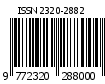
ISSN: 2320-2882 Impact Factor: 7.97 and ISSN APPROVED Journal Starting Year (ESTD) : 2013


ISSN and 7.97 Impact Factor Details
ISSN: 2320-2882 Impact Factor: 7.97 and ISSN APPROVED Journal Starting Year (ESTD) : 2013
DOI Details
CONFERENCE
CONFERENCE MANAGMENT & PUBLICATION CONFERENCE PROPOSAL
RECENT CONFERENCE

CONFERENCE PROPOSAL CONFERENCE PROCEEDINGS
CONFERENCE PROPOSAL CONFERENCE PROCEEDINGS
For Reviewer /Referral (RMS) Earn 500 per paper
Important Links
NEWS & Conference
Digital Library
IJCRT RMS | Earn 500 Per Paper.

Open Access


LICENSE
Indexing Partner
Scholarly open access journals, Peer-reviewed, and Refereed Journals, Impact factor 7.97 (Calculate by google scholar and Semantic Scholar | AI-Powered Research Tool) , Multidisciplinary, Monthly, Indexing in all major database & Metadata, Citation Generator, Digital Object Identifier(DOI)