Important Details
IJCRT - International Peer Reviewed, Open Access Journal, Multidisciplinary, Monthly, Nominal(Low) Fees for Professional Research Services International Journal of Creative Research Thoughts - IJCRT Peer Review Journal, Refereed Journal, Peer Reviewed Journal , Referred Journal and Indexed Journal, Open access, Online and Print Journal,international Journal Open Access, Accepted by Indian and foreign university ,IJCRT Followed Norms, guidelines, requirement, listing criteria and methodology of score/point also applied from: Scopus , Web of Science , UGC Approved , UGC CARE, UGC-CARE .
UGC Approved Journal No: 49023 (18)
UGC approval Link
https://ijcrt.org/ugc%20approval.jpg
All Policy and Approval
Please Like Our Facebook Page | CrossRef DOI and Hard copy of Certificate Provide if required. | www.IJCRT.org | editor@IJCRT.org | IJCRT WhatsApp +91 94294 58311
Publication Details:
- Paper Submission : 31-Aug-2026. Call For Paper (Volume 14 | Issue 8 | Month- August 2026)
- Acceptance/Rejection Notification: Within 02-04 Days.
- Paper Publish: Within 02-04 Days after submitting all documents.
-
Submit Your Paper Any time There No deadline.
-
Publication fees : 1570 INR for Indian author & 59$ for foreign International author.
Please Like Our Facebook Page | CrossRef DOI and Hard copy of Certificate Provide if required.
Licence and Indexing
Indexing In Google Scholar, SSRN, ResearcherID-Publons, Semantic Scholar | AI-Powered Research Tool, Microsoft Academic, Academia.edu, arXiv.org, Research Gate, CiteSeerX, ResearcherID Thomson Reuters, Mendeley : reference manager, DocStoc, ISSUU, Scribd, and many more | High Impact Factor: 7.97 | Digital object identifier (DOI) and Hard Copy of certificate Provided.




























Licence
DOI
ISSN Approved impact factor: 7.97 
Creative Common 
Valid as per new UGC Gazette regulations 

INTERNATIONAL JOURNAL OF CREATIVE RESEARCH THOUGHTS - IJCRT (IJCRT.ORG)
International Peer Reviewed & Refereed Journals, Open Access Journal
IJCRT Peer-Reviewed (Refereed) Journal as Per New UGC Rules.
ISSN Approved Journal No: 2320-2882 | Impact factor: 7.97 | ESTD Year: 2013
Call For Paper - Volume 14 | Issue 8 | Month- August 2026
Scholarly open access journals, Peer-reviewed, and Refereed Journals, Impact factor 7.97 (Calculate by google scholar and Semantic Scholar | AI-Powered Research Tool) , Multidisciplinary, Monthly, Indexing in all major database & Metadata, Citation Generator, Digital Object Identifier(CrossRef DOI)
IJCRT WhatsApp Contact
Published Paper Details:
Paper Title
Hydrophobic Encapsulation Strategies for Controlling Drug Release Profiles
Authors
Deepa T Vasudevan, Sreekanth Sudhan Kaithavalappil
Keywords
Hydrophobic encapsulation, Controlled drug release, Lipid-based matrices,
Abstract
Hydrophobic encapsulation presents a versatile and effective strategy for modulating drug release profiles in pharmaceutical formulations. This review examines the design principles, mechanisms, materials, techniques, and applications of hydrophobic matrix systems, focusing on their ability to achieve sustained or controlled drug release. Hydrophobic matrices, composed of lipophilic polymers, waxes, or lipid-based compounds, form physical barriers around active pharmaceutical ingredients (APIs), impeding water penetration and slowing drug diffusion. Drug release from these systems typically follows diffusion-controlled or erosion-mediated mechanisms, governed by factors such as matrix composition, drug solubility, and particle morphology. Synthetic polymers like ethyl cellulose, polycaprolactone (PCL), and PLGA, alongside natural waxes and lipids, are widely used to construct these matrices due to their biocompatibility and chemical stability. Various encapsulation techniques--such as solvent evaporation, melt granulation, spray drying, and compression coating--enable the tailoring of drug release kinetics and improve drug stability. Hydrophobic matrices are particularly advantageous for delivering poorly water-soluble drugs and for applications requiring prolonged therapeutic action, such as in the management of chronic diseases, implantable systems, transdermal patches, and paediatric or geriatric formulations. Despite challenges such as initial burst release, low drug loading, and scalability limitations, recent advances in material science and nanotechnology continue to improve the efficiency and applicability of these systems. Mathematical modelling using Higuchi, Korsmeyer-Peppas, and zero-order kinetics supports the optimization of release behaviour. Overall, hydrophobic encapsulation strategies represent a robust platform for enhancing drug delivery, improving patient compliance, and achieving consistent therapeutic outcomes across diverse clinical and pharmaceutical scenarios.
IJCRT's Publication Details
Unique Identification Number - IJCRT2508039
Paper ID - 291830
Page Number(s) - a299-a305
Pubished in - Volume 13 | Issue 8 | August 2025
DOI (Digital Object Identifier) - https://doi.org/10.56975/ijcrt.v13i8.291830
Publisher Name - IJCRT | www.ijcrt.org | ISSN : 2320-2882
E-ISSN Number - 2320-2882
Cite this article
Deepa T Vasudevan, Sreekanth Sudhan Kaithavalappil, "Hydrophobic Encapsulation Strategies for Controlling Drug Release Profiles", International Journal of Creative Research Thoughts (IJCRT), ISSN:2320-2882, Volume.13, Issue 8, pp.a299-a305, August 2025, Available at :http://www.ijcrt.org/papers/IJCRT2508039.pdf
Article Preview
Indexing Partners




















Call For Paper August 2026
Call For Papers
August 2026
Volume 14 | Issue 8
Last Date :
31-Aug-2026
Submit Manuscript Online Impact Factor: 7.97 Review Results : Within 02-03 Days Paper Publication : Within 02-03 Days
August 2026
Volume 14 | Issue 8
Last Date :
31-Aug-2026
Submit Manuscript Online Impact Factor: 7.97 Review Results : Within 02-03 Days Paper Publication : Within 02-03 Days
Published Issue Details
For Authors
Forms / Downloads
Other IMP Links
Indexing Partner
Research Area
LICENSE





ISSN and 7.97 Impact Factor Details
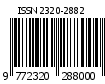
ISSN: 2320-2882 Impact Factor: 7.97 and ISSN APPROVED Journal Starting Year (ESTD) : 2013


ISSN and 7.97 Impact Factor Details
ISSN: 2320-2882 Impact Factor: 7.97 and ISSN APPROVED Journal Starting Year (ESTD) : 2013
DOI Details
CONFERENCE
CONFERENCE MANAGMENT & PUBLICATION CONFERENCE PROPOSAL
RECENT CONFERENCE

CONFERENCE PROPOSAL CONFERENCE PROCEEDINGS
CONFERENCE PROPOSAL CONFERENCE PROCEEDINGS
For Reviewer /Referral (RMS) Earn 500 per paper
Important Links
NEWS & Conference
Digital Library
IJCRT RMS | Earn 500 Per Paper.

Open Access


LICENSE
Indexing Partner
Scholarly open access journals, Peer-reviewed, and Refereed Journals, Impact factor 7.97 (Calculate by google scholar and Semantic Scholar | AI-Powered Research Tool) , Multidisciplinary, Monthly, Indexing in all major database & Metadata, Citation Generator, Digital Object Identifier(DOI)