Important Details
IJCRT - International Peer Reviewed, Open Access Journal, Multidisciplinary, Monthly, Nominal(Low) Fees for Professional Research Services International Journal of Creative Research Thoughts - IJCRT Peer Review Journal, Refereed Journal, Peer Reviewed Journal , Referred Journal and Indexed Journal, Open access, Online and Print Journal,international Journal Open Access, Accepted by Indian and foreign university ,IJCRT Followed Norms, guidelines, requirement, listing criteria and methodology of score/point also applied from: Scopus , Web of Science , UGC Approved , UGC CARE, UGC-CARE .
UGC Approved Journal No: 49023 (18)
UGC approval Link
https://ijcrt.org/ugc%20approval.jpg
All Policy and Approval
Please Like Our Facebook Page | CrossRef DOI and Hard copy of Certificate Provide if required. | www.IJCRT.org | editor@IJCRT.org | WhatsApp: 7990172303
Publication Details:
- Paper Submission : 31-Mar-2026. Call For Paper (Volume 14 | Issue 3 | Month- March 2026)
- Acceptance/Rejection Notification: Within 02-04 Days.
- Paper Publish: Within 02-04 Days after submitting all documents.
-
Submit Your Paper Any time There No deadline.
-
Publication fees : 1570 INR for Indian author & 59$ for foreign International author.
Please Like Our Facebook Page | CrossRef DOI and Hard copy of Certificate Provide if required.
Licence and Indexing
Indexing In Google Scholar, SSRN, ResearcherID-Publons, Semantic Scholar | AI-Powered Research Tool, Microsoft Academic, Academia.edu, arXiv.org, Research Gate, CiteSeerX, ResearcherID Thomson Reuters, Mendeley : reference manager, DocStoc, ISSUU, Scribd, and many more | High Impact Factor: 7.97 | Digital object identifier (DOI) and Hard Copy of certificate Provided.




























Licence
DOI
ISSN Approved impact factor: 7.97 
Creative Common 
Valid as per new UGC Gazette regulations 

INTERNATIONAL JOURNAL OF CREATIVE RESEARCH THOUGHTS - IJCRT (IJCRT.ORG)
International Peer Reviewed & Refereed Journals, Open Access Journal
IJCRT Peer-Reviewed (Refereed) Journal as Per New UGC Rules.
ISSN Approved Journal No: 2320-2882 | Impact factor: 7.97 | ESTD Year: 2013
Call For Paper - Volume 14 | Issue 3 | Month- March 2026
Scholarly open access journals, Peer-reviewed, and Refereed Journals, Impact factor 7.97 (Calculate by google scholar and Semantic Scholar | AI-Powered Research Tool) , Multidisciplinary, Monthly, Indexing in all major database & Metadata, Citation Generator, Digital Object Identifier(CrossRef DOI)
Contact Us Click Here
WhatsApp Contact Click Here
Published Paper Details:
Paper Title
A Study on Representation of Indian Culture and Heritage in the Works of R.K. Narayan
Authors
Shiv Shankar Mahto, Dr. Carlus Toppo
Keywords
R.K. Narayan, Indian culture, Indian heritage, Malgudi, Tradition vs. modernity, Indianness, Social realism, Indian values, Colonial impact, Spirituality, Everyday life, Family and community, Indian festivals, Cultural identity, Indian English literature.
Abstract
R.K. Narayan, one of the most celebrated Indian novelists writing in English, is renowned for his profound representation of Indian culture and heritage through his fictional works, particularly those set in the imaginary town of Malgudi. His novels and short stories offer a vivid portrayal of traditional Indian life, values, customs, and spiritual beliefs, making his narratives both regionally rooted and universally appealing. Narayan's writing captures the essence of middle-class South Indian society, highlighting the everyday experiences of common people while subtly reflecting broader social and cultural themes.
One of the most significant aspects of Narayan's work is his depiction of Indianness in its myriad forms. He presents characters who are deeply embedded in their social and religious contexts, often struggling to reconcile tradition with modernity. Works such as The Guide, Swami and Friends, and The English Teacher provide insights into Indian family life, guru-shishya relationships, religious faith, education, and the impact of colonialism. Through these themes, Narayan explores the cultural richness of India, including its festivals, rituals, languages, food and clothing, offering an authentic window into Indian heritage.
Moreover, Narayan's use of humor, irony, and gentle satire allows him to critique societal norms while maintaining affection for his characters and their traditions. His narratives often celebrate Indian resilience and adaptability, showing how traditional values evolve without losing their essence. Characters like Raju in The Guide reflect the transformation of identity and the spiritual undertone of Indian culture, where redemption and self-realization play central roles.
Narayan's language, simple yet profound, enables him to bridge the cultural gap between Indian readers and global audiences. He often integrates Indian idioms, names, and expressions into English, preserving the flavor of the original context. This technique contributes to a unique literary voice that conveys the complexity and richness of Indian life without exoticizing it.
In conclusion, R.K. Narayan's works serve as a literary mirror reflecting the heritage, traditions, and socio-cultural fabric of India. Through his portrayal of Malgudi and its inhabitants, he immortalizes a segment of Indian society during the transitional phase of the 20th century. His ability to represent Indian culture with authenticity, humor and empathy has ensured his lasting legacy in Indian English literature and global literary discourse. Narayan does not merely tell stories; he preserves and interprets the spirit of India for generations of readers.
IJCRT's Publication Details
Unique Identification Number - IJCRT2505510
Paper ID - 285798
Page Number(s) - e477-e489
Pubished in - Volume 13 | Issue 5 | May 2025
DOI (Digital Object Identifier) -
Publisher Name - IJCRT | www.ijcrt.org | ISSN : 2320-2882
E-ISSN Number - 2320-2882
Cite this article
Shiv Shankar Mahto, Dr. Carlus Toppo, "A Study on Representation of Indian Culture and Heritage in the Works of R.K. Narayan", International Journal of Creative Research Thoughts (IJCRT), ISSN:2320-2882, Volume.13, Issue 5, pp.e477-e489, May 2025, Available at :http://www.ijcrt.org/papers/IJCRT2505510.pdf
Article Preview
Indexing Partners




















Call For Paper March 2026
Call For Papers
March 2026
Volume 14 | Issue 3
Last Date :
31-Mar-2026
Submit Manuscript Online Impact Factor: 7.97 Review Results : Within 02-03 Days Paper Publication : Within 02-03 Days
March 2026
Volume 14 | Issue 3
Last Date :
31-Mar-2026
Submit Manuscript Online Impact Factor: 7.97 Review Results : Within 02-03 Days Paper Publication : Within 02-03 Days
Published Issue Details
For Authors
Forms / Downloads
Other IMP Links
Indexing Partner
Research Area
LICENSE





ISSN and 7.97 Impact Factor Details
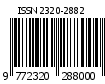
ISSN: 2320-2882 Impact Factor: 7.97 and ISSN APPROVED Journal Starting Year (ESTD) : 2013


ISSN and 7.97 Impact Factor Details
ISSN: 2320-2882 Impact Factor: 7.97 and ISSN APPROVED Journal Starting Year (ESTD) : 2013
DOI Details
CONFERENCE
CONFERENCE MANAGMENT & PUBLICATION CONFERENCE PROPOSAL
RECENT CONFERENCE

CONFERENCE PROPOSAL CONFERENCE PROCEEDINGS
CONFERENCE PROPOSAL CONFERENCE PROCEEDINGS
For Reviewer /Referral (RMS) Earn 500 per paper
Important Links
NEWS & Conference
Digital Library
IJCRT RMS | Earn 500 Per Paper.

Open Access


LICENSE
Indexing Partner
Scholarly open access journals, Peer-reviewed, and Refereed Journals, Impact factor 7.97 (Calculate by google scholar and Semantic Scholar | AI-Powered Research Tool) , Multidisciplinary, Monthly, Indexing in all major database & Metadata, Citation Generator, Digital Object Identifier(DOI)