Important Details
IJCRT - International Peer Reviewed, Open Access Journal, Multidisciplinary, Monthly, Nominal(Low) Fees for Professional Research Services International Journal of Creative Research Thoughts - IJCRT Peer Review Journal, Refereed Journal, Peer Reviewed Journal , Referred Journal and Indexed Journal, Open access, Online and Print Journal,international Journal Open Access, Accepted by Indian and foreign university ,IJCRT Followed Norms, guidelines, requirement, listing criteria and methodology of score/point also applied from: Scopus , Web of Science , UGC Approved , UGC CARE, UGC-CARE .
UGC Approved Journal No: 49023 (18)
UGC approval Link
https://ijcrt.org/ugc%20approval.jpg
All Policy and Approval
Please Like Our Facebook Page | CrossRef DOI and Hard copy of Certificate Provide if required. | www.IJCRT.org | editor@IJCRT.org | WhatsApp: 7990172303
Publication Details:
- Paper Submission : 31-May-2026. Call For Paper (Volume 14 | Issue 5 | Month- May 2026)
- Acceptance/Rejection Notification: Within 02-04 Days.
- Paper Publish: Within 02-04 Days after submitting all documents.
-
Submit Your Paper Any time There No deadline.
-
Publication fees : 1570 INR for Indian author & 59$ for foreign International author.
Please Like Our Facebook Page | CrossRef DOI and Hard copy of Certificate Provide if required.
Licence and Indexing
Indexing In Google Scholar, SSRN, ResearcherID-Publons, Semantic Scholar | AI-Powered Research Tool, Microsoft Academic, Academia.edu, arXiv.org, Research Gate, CiteSeerX, ResearcherID Thomson Reuters, Mendeley : reference manager, DocStoc, ISSUU, Scribd, and many more | High Impact Factor: 7.97 | Digital object identifier (DOI) and Hard Copy of certificate Provided.




























Licence
DOI
ISSN Approved impact factor: 7.97 
Creative Common 
Valid as per new UGC Gazette regulations 

INTERNATIONAL JOURNAL OF CREATIVE RESEARCH THOUGHTS - IJCRT (IJCRT.ORG)
International Peer Reviewed & Refereed Journals, Open Access Journal
IJCRT Peer-Reviewed (Refereed) Journal as Per New UGC Rules.
ISSN Approved Journal No: 2320-2882 | Impact factor: 7.97 | ESTD Year: 2013
Call For Paper - Volume 14 | Issue 5 | Month- May 2026
Scholarly open access journals, Peer-reviewed, and Refereed Journals, Impact factor 7.97 (Calculate by google scholar and Semantic Scholar | AI-Powered Research Tool) , Multidisciplinary, Monthly, Indexing in all major database & Metadata, Citation Generator, Digital Object Identifier(CrossRef DOI)
Contact Us Click Here
WhatsApp Contact Click Here
Published Paper Details:
Paper Title
PRENUPITAL AGREEMENT AND LIVE-IN RELATIONSHIP
Authors
Mohammed K. Ujjainwala, Dr. S. Mukundrajan
Keywords
Prenuptial agreement, Live-in relationship.
Abstract
A pre-nuptial agreement is one of the legal agreements that every Indian marriage must have, and it should be made mandatory. Protecting one's rights prior to marriage is one of the most powerful tools at a couple's disposal to prevent the terrible effects of marriage, such as divorce, domestic abuse, rape, and dowry. As we've already seen, the majority of western countries, particularly those in Europe, have relatively common and basic pre-nuptial agreements. That is uncommon, though, and not many people in India are aware of it. Wealthy and capitalist families frequently experience it.
Marital parties believe that a prearranged agreement covers any unintended obstacles that may arise and lowers their likelihood of experiencing problems in their marriage. Pre-nuptial agreements must be recognised to have little that goes against Indian culture or public policy, and it is in the public interest to grant these "need of the time" agreements legal effect. In India, prenuptial agreements are not as common, although they do have benefits. In instances where severance and division, a prenuptial declaration saves both parties from having to fight through court proceedings, deal with irksome additions or flaws, or fight for payment as provision or paying a higher sum as divorce settlement. In this situation, the prenuptial agreement is not only a more effective tool but also easier to carry out.
Marital laws support female partners in the majority of maintenance cases, which in turn protects the financial standing of the male partners. Moreover, the female partner in life will ultimately be held accountable in the end. However, because of a prenuptial agreement, the financial obligations are pre-arranged, preventing bias on the part of either party at the time of separation.
Prenuptial agreements provide financial transparency, allowing both partners to be aware of one other's financial situation. There is no possibility for any kind of deception to result from this.
The researcher has started the current investigation to find out if individuals are prepared and willing to accept this unfamiliar idea of live-in relationships. To do this, it is necessary to assess the people's awareness level. Since the researcher lives in Nagpur, the same has been selected to gather replies. The researcher used interviewing techniques to obtain primary data. A set of pertinent questions was prepared and distributed to the participants via Google Mail and in-person meetings. In this study, responses that have been recorded have been examined and evaluated. Research has incorporated the set of questions posed and documented answers.
The majority of them support legalisation, according to the empirical survey, on the whole. Furthermore, children from cohabiting couples should be considered the legal offspring of their biological parents and have the same rights to inheritance or succession. Additionally, they need to be entitled to maintenance from their biological parents. However, conservative viewpoints oppose cohabitation because they believe it will undermine the fundamental principles of marriage. The majority of people believe that in order to define the rights and responsibilities of each partner, whether they are married or not, the prenuptial agreement should be written for both types of relationships.
The world of today is not identical as the world of just a few years ago. Everything changes as time goes on, and people mature as well. It is absolutely necessary for everyone to have a fundamental comprehension of concepts like marriage, friendship, sexuality, and companionship in order to discuss the state of the community today. They should also have a thorough understanding of both the history and the present state of the world. given that the present is a product of the past.
IJCRT's Publication Details
Unique Identification Number - IJCRT2406120
Paper ID - 263220
Page Number(s) - b101-b113
Pubished in - Volume 12 | Issue 6 | June 2024
DOI (Digital Object Identifier) -
Publisher Name - IJCRT | www.ijcrt.org | ISSN : 2320-2882
E-ISSN Number - 2320-2882
Cite this article
Mohammed K. Ujjainwala, Dr. S. Mukundrajan, "PRENUPITAL AGREEMENT AND LIVE-IN RELATIONSHIP", International Journal of Creative Research Thoughts (IJCRT), ISSN:2320-2882, Volume.12, Issue 6, pp.b101-b113, June 2024, Available at :http://www.ijcrt.org/papers/IJCRT2406120.pdf
Article Preview
Indexing Partners




















Call For Paper May 2026
Call For Papers
May 2026
Volume 14 | Issue 5
Last Date :
31-May-2026
Submit Manuscript Online Impact Factor: 7.97 Review Results : Within 02-03 Days Paper Publication : Within 02-03 Days
May 2026
Volume 14 | Issue 5
Last Date :
31-May-2026
Submit Manuscript Online Impact Factor: 7.97 Review Results : Within 02-03 Days Paper Publication : Within 02-03 Days
Published Issue Details
For Authors
Forms / Downloads
Other IMP Links
Indexing Partner
Research Area
LICENSE





ISSN and 7.97 Impact Factor Details
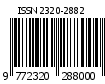
ISSN: 2320-2882 Impact Factor: 7.97 and ISSN APPROVED Journal Starting Year (ESTD) : 2013


ISSN and 7.97 Impact Factor Details
ISSN: 2320-2882 Impact Factor: 7.97 and ISSN APPROVED Journal Starting Year (ESTD) : 2013
DOI Details
CONFERENCE
CONFERENCE MANAGMENT & PUBLICATION CONFERENCE PROPOSAL
RECENT CONFERENCE

CONFERENCE PROPOSAL CONFERENCE PROCEEDINGS
CONFERENCE PROPOSAL CONFERENCE PROCEEDINGS
For Reviewer /Referral (RMS) Earn 500 per paper
Important Links
NEWS & Conference
Digital Library
IJCRT RMS | Earn 500 Per Paper.

Open Access


LICENSE
Indexing Partner
Scholarly open access journals, Peer-reviewed, and Refereed Journals, Impact factor 7.97 (Calculate by google scholar and Semantic Scholar | AI-Powered Research Tool) , Multidisciplinary, Monthly, Indexing in all major database & Metadata, Citation Generator, Digital Object Identifier(DOI)