Important Details
IJCRT - International Peer Reviewed, Open Access Journal, Multidisciplinary, Monthly, Nominal(Low) Fees for Professional Research Services International Journal of Creative Research Thoughts - IJCRT Peer Review Journal, Refereed Journal, Peer Reviewed Journal , Referred Journal and Indexed Journal, Open access, Online and Print Journal,international Journal Open Access, Accepted by Indian and foreign university ,IJCRT Followed Norms, guidelines, requirement, listing criteria and methodology of score/point also applied from: Scopus , Web of Science , UGC Approved , UGC CARE, UGC-CARE .
UGC Approved Journal No: 49023 (18)
UGC approval Link
https://ijcrt.org/ugc%20approval.jpg
All Policy and Approval
Please Like Our Facebook Page | CrossRef DOI and Hard copy of Certificate Provide if required. | www.IJCRT.org | editor@IJCRT.org | WhatsApp: 7990172303
Publication Details:
- Paper Submission : 31-Mar-2026. Call For Paper (Volume 14 | Issue 3 | Month- March 2026)
- Acceptance/Rejection Notification: Within 02-04 Days.
- Paper Publish: Within 02-04 Days after submitting all documents.
-
Submit Your Paper Any time There No deadline.
-
Publication fees : 1570 INR for Indian author & 59$ for foreign International author.
Please Like Our Facebook Page | CrossRef DOI and Hard copy of Certificate Provide if required.
Licence and Indexing
Indexing In Google Scholar, SSRN, ResearcherID-Publons, Semantic Scholar | AI-Powered Research Tool, Microsoft Academic, Academia.edu, arXiv.org, Research Gate, CiteSeerX, ResearcherID Thomson Reuters, Mendeley : reference manager, DocStoc, ISSUU, Scribd, and many more | High Impact Factor: 7.97 | Digital object identifier (DOI) and Hard Copy of certificate Provided.




























Licence
DOI
ISSN Approved impact factor: 7.97 
Creative Common 
Valid as per new UGC Gazette regulations 

INTERNATIONAL JOURNAL OF CREATIVE RESEARCH THOUGHTS - IJCRT (IJCRT.ORG)
International Peer Reviewed & Refereed Journals, Open Access Journal
IJCRT Peer-Reviewed (Refereed) Journal as Per New UGC Rules.
ISSN Approved Journal No: 2320-2882 | Impact factor: 7.97 | ESTD Year: 2013
Call For Paper - Volume 14 | Issue 3 | Month- March 2026
Scholarly open access journals, Peer-reviewed, and Refereed Journals, Impact factor 7.97 (Calculate by google scholar and Semantic Scholar | AI-Powered Research Tool) , Multidisciplinary, Monthly, Indexing in all major database & Metadata, Citation Generator, Digital Object Identifier(CrossRef DOI)
Contact Us Click Here
WhatsApp Contact Click Here
Published Paper Details:
Paper Title
Arbitrability Of Intellectual Property Disputes In India
Authors
HIMA JOSEPH, Dr Avishek Chakraborthy
Keywords
Arbitrability, Intellectual property, dispute settlement, public policy,
Abstract
The subject of arbitrability has become a central concern in the constantly changing field of intellectual property (IP) law, capturing the interest of academics, practitioners, and legislators in equal measure. Parties involved in intellectual property issues have an alternative to traditional litigation: arbitration, a private dispute settlement process. Nonetheless, there has been much discussion and disagreement about whether arbitration is compatible with the complexities of intellectual property rights, legal requirements, and public policy issues.
In the global economy, intellectual property is becoming more and more important. The fact that no nation is self-sufficient in technology adds to the intellectual property's globalization. Because of this, industrialized nations buy and export large amounts of technology, which contributes significantly to the volume of global intellectual property transactions. A trademark's capacity to safeguard and enhance a market image across linguistic and cultural distributors of goods and services has increased, even as the demand for patent protection has increased due to a growing reliance on technology in the production of goods and the rise of high-tech industries. This paper establishes the background by outlining the core ideas of intellectual property law and arbitration. Based on the ideas of procedural efficiency and party autonomy, arbitration enables opposing parties to settle their differences out of court, frequently more quickly and discreetly. Conversely, intellectual property law covers a wide range of rights, including as trade secrets, copyrights, patents, and trademarks, and it is intended to balance the conflicting interests of consumers, artists, and the general public while encouraging innovation and creativity.
Unique opportunities and problems arise when arbitration and intellectual property are combined. These include concerns concerning the preservation of statutory rights, the enforcement of arbitral rulings, and how to strike a balance between the demands of public policy and private interests. The arbitrability question has many facets, including legal, economic, and sociological aspects, as this introduction demonstrates.
The goals and structure of this research paper, is mainly to offer a thorough examination of the arbitrability of intellectual property conflicts. By analyzing academic literature, legal precedents, and comparative jurisprudence, this study aims to clarify how various countries are changing in their views about the arbitrability of intellectual property issues. In addition, it looks at how arbitration could affect parties' substantive rights and remedies in practice as well as how it might affect the IP ecosystem's innovation, competitiveness, and accessibility to justice. This paper aims to provide a deeper understanding of the arbitrability of intellectual property disputes by exploring these complexities, controversies, and emerging trends. The insights provided will be useful for scholars, legal practitioners, and policymakers who are tackling the difficulties of deciding IP rights in the twenty-first century.
IJCRT's Publication Details
Unique Identification Number - IJCRT2404140
Paper ID - 255100
Page Number(s) - b245-b252
Pubished in - Volume 12 | Issue 4 | April 2024
DOI (Digital Object Identifier) -
Publisher Name - IJCRT | www.ijcrt.org | ISSN : 2320-2882
E-ISSN Number - 2320-2882
Cite this article
HIMA JOSEPH, Dr Avishek Chakraborthy, "Arbitrability Of Intellectual Property Disputes In India", International Journal of Creative Research Thoughts (IJCRT), ISSN:2320-2882, Volume.12, Issue 4, pp.b245-b252, April 2024, Available at :http://www.ijcrt.org/papers/IJCRT2404140.pdf
Article Preview
Indexing Partners




















Call For Paper March 2026
Call For Papers
March 2026
Volume 14 | Issue 3
Last Date :
31-Mar-2026
Submit Manuscript Online Impact Factor: 7.97 Review Results : Within 02-03 Days Paper Publication : Within 02-03 Days
March 2026
Volume 14 | Issue 3
Last Date :
31-Mar-2026
Submit Manuscript Online Impact Factor: 7.97 Review Results : Within 02-03 Days Paper Publication : Within 02-03 Days
Published Issue Details
For Authors
Forms / Downloads
Other IMP Links
Indexing Partner
Research Area
LICENSE





ISSN and 7.97 Impact Factor Details
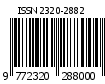
ISSN: 2320-2882 Impact Factor: 7.97 and ISSN APPROVED Journal Starting Year (ESTD) : 2013


ISSN and 7.97 Impact Factor Details
ISSN: 2320-2882 Impact Factor: 7.97 and ISSN APPROVED Journal Starting Year (ESTD) : 2013
DOI Details
CONFERENCE
CONFERENCE MANAGMENT & PUBLICATION CONFERENCE PROPOSAL
RECENT CONFERENCE

CONFERENCE PROPOSAL CONFERENCE PROCEEDINGS
CONFERENCE PROPOSAL CONFERENCE PROCEEDINGS
For Reviewer /Referral (RMS) Earn 500 per paper
Important Links
NEWS & Conference
Digital Library
IJCRT RMS | Earn 500 Per Paper.

Open Access


LICENSE
Indexing Partner
Scholarly open access journals, Peer-reviewed, and Refereed Journals, Impact factor 7.97 (Calculate by google scholar and Semantic Scholar | AI-Powered Research Tool) , Multidisciplinary, Monthly, Indexing in all major database & Metadata, Citation Generator, Digital Object Identifier(DOI)