Important Details
IJCRT - International Peer Reviewed, Open Access Journal, Multidisciplinary, Monthly, Nominal(Low) Fees for Professional Research Services International Journal of Creative Research Thoughts - IJCRT Peer Review Journal, Refereed Journal, Peer Reviewed Journal , Referred Journal and Indexed Journal, Open access, Online and Print Journal,international Journal Open Access, Accepted by Indian and foreign university ,IJCRT Followed Norms, guidelines, requirement, listing criteria and methodology of score/point also applied from: Scopus , Web of Science , UGC Approved , UGC CARE, UGC-CARE .
UGC Approved Journal No: 49023 (18)
UGC approval Link
https://ijcrt.org/ugc%20approval.jpg
All Policy and Approval
Please Like Our Facebook Page | CrossRef DOI and Hard copy of Certificate Provide if required. | www.IJCRT.org | editor@IJCRT.org | IJCRT WhatsApp +91 94294 58311
Publication Details:
- Paper Submission : 31-Aug-2026. Call For Paper (Volume 14 | Issue 8 | Month- August 2026)
- Acceptance/Rejection Notification: Within 02-04 Days.
- Paper Publish: Within 02-04 Days after submitting all documents.
-
Submit Your Paper Any time There No deadline.
-
Publication fees : 1570 INR for Indian author & 59$ for foreign International author.
Please Like Our Facebook Page | CrossRef DOI and Hard copy of Certificate Provide if required.
Licence and Indexing
Indexing In Google Scholar, SSRN, ResearcherID-Publons, Semantic Scholar | AI-Powered Research Tool, Microsoft Academic, Academia.edu, arXiv.org, Research Gate, CiteSeerX, ResearcherID Thomson Reuters, Mendeley : reference manager, DocStoc, ISSUU, Scribd, and many more | High Impact Factor: 7.97 | Digital object identifier (DOI) and Hard Copy of certificate Provided.




























Licence
DOI
ISSN Approved impact factor: 7.97 
Creative Common 
Valid as per new UGC Gazette regulations 

INTERNATIONAL JOURNAL OF CREATIVE RESEARCH THOUGHTS - IJCRT (IJCRT.ORG)
International Peer Reviewed & Refereed Journals, Open Access Journal
IJCRT Peer-Reviewed (Refereed) Journal as Per New UGC Rules.
ISSN Approved Journal No: 2320-2882 | Impact factor: 7.97 | ESTD Year: 2013
Call For Paper - Volume 14 | Issue 8 | Month- August 2026
Scholarly open access journals, Peer-reviewed, and Refereed Journals, Impact factor 7.97 (Calculate by google scholar and Semantic Scholar | AI-Powered Research Tool) , Multidisciplinary, Monthly, Indexing in all major database & Metadata, Citation Generator, Digital Object Identifier(CrossRef DOI)
IJCRT WhatsApp Contact
Published Paper Details:
Paper Title
Access control system using Raspberry Pi and RFID
Authors
Bhoodevi Bhandare, Sunita Kheman
Keywords
Index Terms - Access Control System, Raspberry Pi, RFID Technology, Embedded Systems, Security Systems, Authentication, Authorization, IoT-Based Security, Contactless Access, Smart Door Lock, RFID Reader, Solenoid Lock, Relay Module, Python Programming, Real-Time Monitoring, Data Logging, Automation, Smart Infrastructure, Digital Security, User Identification.
Abstract
Abstract: In the present digital era, security has become one of the most critical concerns across various domains such as educational institutions, corporate offices, research laboratories, industrial environments, residential complexes, and government organizations. Conventional access control mechanisms based on physical keys, passwords, or manual verification methods are increasingly proving to be inefficient, unreliable, and vulnerable to unauthorized access, duplication, theft, and human error. These traditional systems also lack flexibility, scalability, and real-time monitoring capabilities. To overcome these challenges, there is a growing need for intelligent, automated, and secure access control systems that can provide accurate authentication with minimal human intervention.
This paper presents the design and implementation of an Access Control System using Raspberry Pi and Radio Frequency Identification (RFID) technology. The proposed system offers a contactless, reliable, and cost-effective solution for managing access to restricted areas. RFID technology is used for user identification and authentication, where each authorized user is provided with a unique RFID card or tag containing a distinct identification number. The Raspberry Pi acts as the central processing unit, responsible for reading RFID data, validating credentials, controlling access mechanisms, and maintaining entry logs.
When an RFID card is scanned near the reader, the system captures the unique identification code and sends it to the Raspberry Pi for verification. The Raspberry Pi compares the scanned data with a pre-stored database of authorized users. If the credentials match, access is granted by activating the door locking mechanism through a relay module, and a visual or audio indication is provided. In case of unauthorized access attempts, the system denies entry and displays an alert message. This real-time decision-making process ensures high accuracy and improved security.
The experimental results demonstrate that the proposed access control system is efficient, reliable, and responsive. It successfully authenticates authorized users within a short time and effectively blocks unauthorized access attempts. The system operates with low power consumption and minimal hardware complexity, making it suitable for small-scale as well as large-scale deployments. Overall, the proposed solution provides a secure, scalable, and user-friendly access control mechanism that can significantly enhance safety and automation in modern infrastructures.
IJCRT's Publication Details
Unique Identification Number - IJCRT2106910
Paper ID - 301343
Page Number(s) - h687-h697
Pubished in - Volume 9 | Issue 6 | June 2021
DOI (Digital Object Identifier) - https://doi.org/10.56975/ijcrt.v9i6.301343
Publisher Name - IJCRT | www.ijcrt.org | ISSN : 2320-2882
E-ISSN Number - 2320-2882
Cite this article
Bhoodevi Bhandare, Sunita Kheman, "Access control system using Raspberry Pi and RFID", International Journal of Creative Research Thoughts (IJCRT), ISSN:2320-2882, Volume.9, Issue 6, pp.h687-h697, June 2021, Available at :http://www.ijcrt.org/papers/IJCRT2106910.pdf
Article Preview
Indexing Partners




















Call For Paper August 2026
Call For Papers
August 2026
Volume 14 | Issue 8
Last Date :
31-Aug-2026
Submit Manuscript Online Impact Factor: 7.97 Review Results : Within 02-03 Days Paper Publication : Within 02-03 Days
August 2026
Volume 14 | Issue 8
Last Date :
31-Aug-2026
Submit Manuscript Online Impact Factor: 7.97 Review Results : Within 02-03 Days Paper Publication : Within 02-03 Days
Published Issue Details
For Authors
Forms / Downloads
Other IMP Links
Indexing Partner
Research Area
LICENSE





ISSN and 7.97 Impact Factor Details
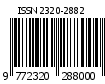
ISSN: 2320-2882 Impact Factor: 7.97 and ISSN APPROVED Journal Starting Year (ESTD) : 2013


ISSN and 7.97 Impact Factor Details
ISSN: 2320-2882 Impact Factor: 7.97 and ISSN APPROVED Journal Starting Year (ESTD) : 2013
DOI Details
CONFERENCE
CONFERENCE MANAGMENT & PUBLICATION CONFERENCE PROPOSAL
RECENT CONFERENCE

CONFERENCE PROPOSAL CONFERENCE PROCEEDINGS
CONFERENCE PROPOSAL CONFERENCE PROCEEDINGS
For Reviewer /Referral (RMS) Earn 500 per paper
Important Links
NEWS & Conference
Digital Library
IJCRT RMS | Earn 500 Per Paper.

Open Access


LICENSE
Indexing Partner
Scholarly open access journals, Peer-reviewed, and Refereed Journals, Impact factor 7.97 (Calculate by google scholar and Semantic Scholar | AI-Powered Research Tool) , Multidisciplinary, Monthly, Indexing in all major database & Metadata, Citation Generator, Digital Object Identifier(DOI)