Important Details
IJCRT - International Peer Reviewed, Open Access Journal, Multidisciplinary, Monthly, Nominal(Low) Fees for Professional Research Services International Journal of Creative Research Thoughts - IJCRT Peer Review Journal, Refereed Journal, Peer Reviewed Journal , Referred Journal and Indexed Journal, Open access, Online and Print Journal,international Journal Open Access, Accepted by Indian and foreign university ,IJCRT Followed Norms, guidelines, requirement, listing criteria and methodology of score/point also applied from: Scopus , Web of Science , UGC Approved , UGC CARE, UGC-CARE .
UGC Approved Journal No: 49023 (18)
UGC approval Link
https://ijcrt.org/ugc%20approval.jpg
All Policy and Approval
Please Like Our Facebook Page | CrossRef DOI and Hard copy of Certificate Provide if required. | www.IJCRT.org | editor@IJCRT.org | IJCRT WhatsApp +91 94294 58311
Publication Details:
- Paper Submission : 31-Aug-2026. Call For Paper (Volume 14 | Issue 8 | Month- August 2026)
- Acceptance/Rejection Notification: Within 02-04 Days.
- Paper Publish: Within 02-04 Days after submitting all documents.
-
Submit Your Paper Any time There No deadline.
-
Publication fees : 1570 INR for Indian author & 59$ for foreign International author.
Please Like Our Facebook Page | CrossRef DOI and Hard copy of Certificate Provide if required.
Licence and Indexing
Indexing In Google Scholar, SSRN, ResearcherID-Publons, Semantic Scholar | AI-Powered Research Tool, Microsoft Academic, Academia.edu, arXiv.org, Research Gate, CiteSeerX, ResearcherID Thomson Reuters, Mendeley : reference manager, DocStoc, ISSUU, Scribd, and many more | High Impact Factor: 7.97 | Digital object identifier (DOI) and Hard Copy of certificate Provided.




























Licence
DOI
ISSN Approved impact factor: 7.97 
Creative Common 
Valid as per new UGC Gazette regulations 

INTERNATIONAL JOURNAL OF CREATIVE RESEARCH THOUGHTS - IJCRT (IJCRT.ORG)
International Peer Reviewed & Refereed Journals, Open Access Journal
IJCRT Peer-Reviewed (Refereed) Journal as Per New UGC Rules.
ISSN Approved Journal No: 2320-2882 | Impact factor: 7.97 | ESTD Year: 2013
Call For Paper - Volume 14 | Issue 8 | Month- August 2026
Scholarly open access journals, Peer-reviewed, and Refereed Journals, Impact factor 7.97 (Calculate by google scholar and Semantic Scholar | AI-Powered Research Tool) , Multidisciplinary, Monthly, Indexing in all major database & Metadata, Citation Generator, Digital Object Identifier(CrossRef DOI)
IJCRT WhatsApp Contact
Published Paper Details:
Paper Title
REINVENTING INTERMEDIATION: THE CHANGING ROLE OF BROKERS IN INDIA'S CAPITAL MARKETS
Authors
DR. ARUN KUMAR JAIN
Keywords
Capital markets, Stock exchanges, Brokers, Intermediation, SEBI (Securities and Exchange Board of India), Regulatory framework, Transparency, Investor confidence, Electronic trading, Dematerialization, Settlement cycles, Retail investors, Discount brokers, Fintech, Algorithmic trading, AI-driven advisory, Blockchain settlement, Market efficiency, Liquidity, Compliance, Cybersecurity, Data analytics, Portfolio management, Robo-advisory, Risk management, Investor protection, Policy support, Hybrid
Abstract
India's capital markets have undergone a significant transformation, shaped by technological advancements, regulatory reforms, and evolving investor behaviour. Historically, brokers played a crucial role as intermediaries, facilitating transactions, providing market intelligence, and ensuring liquidity. However, the rise of electronic trading platforms, algorithmic trading, and fintech innovations has redefined their traditional functions. The historical evolution of India's stock market traces its origins to informal trading under a banyan tree in 1855, leading to the establishment of the Bombay Stock Exchange (BSE) in 1875. Until the 1990s, trading was largely manual, with brokers acting as essential conduits for investors. The introduction of electronic trading by the National Stock Exchange (NSE) in 1992 marked a turning point, enhancing efficiency and accessibility. The SEBI Act of 1992 played a pivotal role in regulating brokerage services, enforcing transparency, and protecting investor interests. SEBI's reforms led to the dematerialization of shares, faster trade settlements, and the rise of discount brokers offering low-cost trading solutions. The technological transformation of the brokerage industry further accelerated with the advent of mobile trading, algorithmic strategies, and AI-driven advisory services. As brokerage services evolved, traditional brokers faced challenges in adapting to digitalization, competing with tech-first entrants like Zerodha and Upstox, and complying with stringent regulatory requirements. The changing role of brokers saw a shift from advisory-based models to execution-focused services, with firms diversifying into research, financial education, and portfolio management. The impact on investors has been profound, with increased retail participation, democratization of market access, and enhanced trading efficiency. However, the rise of self-directed trading also introduced risks, requiring stronger investor education and regulatory safeguards. Looking ahead, the future of broking in India will likely be shaped by AI-driven advisory, blockchain-based settlements, and hybrid models combining technology with personalized financial guidance. Sustaining innovation with integrity will require policy support, ethical standards, and continuous adaptation to market dynamics.
In conclusion, while the brokerage industry has transformed significantly, brokers remain integral to India's capital markets. Their evolving role underscores the need for strategic adaptation, balancing technological advancements with investor trust and regulatory compliance.
IJCRT's Publication Details
Unique Identification Number - IJCRT1136040
Paper ID - 288790
Page Number(s) - 266-277
Pubished in - Volume 5 | Issue 3 | September 2017
DOI (Digital Object Identifier) -
Publisher Name - IJCRT | www.ijcrt.org | ISSN : 2320-2882
E-ISSN Number - 2320-2882
Cite this article
DR. ARUN KUMAR JAIN, "REINVENTING INTERMEDIATION: THE CHANGING ROLE OF BROKERS IN INDIA'S CAPITAL MARKETS", International Journal of Creative Research Thoughts (IJCRT), ISSN:2320-2882, Volume.5, Issue 3, pp.266-277, September 2017, Available at :http://www.ijcrt.org/papers/IJCRT1136040.pdf
Article Preview
Indexing Partners




















Call For Paper August 2026
Call For Papers
August 2026
Volume 14 | Issue 8
Last Date :
31-Aug-2026
Submit Manuscript Online Impact Factor: 7.97 Review Results : Within 02-03 Days Paper Publication : Within 02-03 Days
August 2026
Volume 14 | Issue 8
Last Date :
31-Aug-2026
Submit Manuscript Online Impact Factor: 7.97 Review Results : Within 02-03 Days Paper Publication : Within 02-03 Days
Published Issue Details
For Authors
Forms / Downloads
Other IMP Links
Indexing Partner
Research Area
LICENSE





ISSN and 7.97 Impact Factor Details
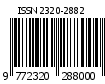
ISSN: 2320-2882 Impact Factor: 7.97 and ISSN APPROVED Journal Starting Year (ESTD) : 2013


ISSN and 7.97 Impact Factor Details
ISSN: 2320-2882 Impact Factor: 7.97 and ISSN APPROVED Journal Starting Year (ESTD) : 2013
DOI Details
CONFERENCE
CONFERENCE MANAGMENT & PUBLICATION CONFERENCE PROPOSAL
RECENT CONFERENCE

CONFERENCE PROPOSAL CONFERENCE PROCEEDINGS
CONFERENCE PROPOSAL CONFERENCE PROCEEDINGS
For Reviewer /Referral (RMS) Earn 500 per paper
Important Links
NEWS & Conference
Digital Library
IJCRT RMS | Earn 500 Per Paper.

Open Access


LICENSE
Indexing Partner
Scholarly open access journals, Peer-reviewed, and Refereed Journals, Impact factor 7.97 (Calculate by google scholar and Semantic Scholar | AI-Powered Research Tool) , Multidisciplinary, Monthly, Indexing in all major database & Metadata, Citation Generator, Digital Object Identifier(DOI)