Important Details
IJCRT - International Peer Reviewed, Open Access Journal, Multidisciplinary, Monthly, Nominal(Low) Fees for Professional Research Services International Journal of Creative Research Thoughts - IJCRT Peer Review Journal, Refereed Journal, Peer Reviewed Journal , Referred Journal and Indexed Journal, Open access, Online and Print Journal,international Journal Open Access, Accepted by Indian and foreign university ,IJCRT Followed Norms, guidelines, requirement, listing criteria and methodology of score/point also applied from: Scopus , Web of Science , UGC Approved , UGC CARE, UGC-CARE .
UGC Approved Journal No: 49023 (18)
UGC approval Link
https://ijcrt.org/ugc%20approval.jpg
All Policy and Approval
Please Like Our Facebook Page | CrossRef DOI and Hard copy of Certificate Provide if required. | www.IJCRT.org | editor@IJCRT.org | WhatsApp: 7990172303
Publication Details:
- Paper Submission : 30-Apr-2026. Call For Paper (Volume 14 | Issue 4 | Month- April 2026)
- Acceptance/Rejection Notification: Within 02-04 Days.
- Paper Publish: Within 02-04 Days after submitting all documents.
-
Submit Your Paper Any time There No deadline.
-
Publication fees : 1570 INR for Indian author & 59$ for foreign International author.
Please Like Our Facebook Page | CrossRef DOI and Hard copy of Certificate Provide if required.
Licence and Indexing
Indexing In Google Scholar, SSRN, ResearcherID-Publons, Semantic Scholar | AI-Powered Research Tool, Microsoft Academic, Academia.edu, arXiv.org, Research Gate, CiteSeerX, ResearcherID Thomson Reuters, Mendeley : reference manager, DocStoc, ISSUU, Scribd, and many more | High Impact Factor: 7.97 | Digital object identifier (DOI) and Hard Copy of certificate Provided.




























Licence
DOI
ISSN Approved impact factor: 7.97 
Creative Common 
Valid as per new UGC Gazette regulations 

INTERNATIONAL JOURNAL OF CREATIVE RESEARCH THOUGHTS - IJCRT (IJCRT.ORG)
International Peer Reviewed & Refereed Journals, Open Access Journal
IJCRT Peer-Reviewed (Refereed) Journal as Per New UGC Rules.
ISSN Approved Journal No: 2320-2882 | Impact factor: 7.97 | ESTD Year: 2013
Call For Paper - Volume 14 | Issue 4 | Month- April 2026
Scholarly open access journals, Peer-reviewed, and Refereed Journals, Impact factor 7.97 (Calculate by google scholar and Semantic Scholar | AI-Powered Research Tool) , Multidisciplinary, Monthly, Indexing in all major database & Metadata, Citation Generator, Digital Object Identifier(CrossRef DOI)
Contact Us Click Here
WhatsApp Contact Click Here
IJCRT Search Xplore - Search all paper by Paper Name , Author Name, and Title
Volume 13 | Issue 7
Volume 13 | Issue 7 | Month
Downlaod After Publication 1) Table of content index in PDF
2) Table of content index in HTML 2)Table of content index in HTML
3) Front Page 3) Front Page
4) Back Page 4) Back Page
5) Editor Board Member 5)Editor Board Member
6) OLD Style Issue 6) OLD Style Issue
 |
 |
|---|---|
| IJCRT Journal front page | IJCRT Journal Back Page |
Paper Title: BLOOD GROUP DETECTION USING FINGER PRINT
Publisher Journal Name: IJCRT
Your Paper Publication Details:
Published Paper ID: - IJCRTBE02074
Register Paper ID - 289427
Title: BLOOD GROUP DETECTION USING FINGER PRINT
Author Name(s): MamathaC, P Audeep, E Durga Maitri, Harshitha P, Madhusri PM
Publisher Journal name: IJCRT
Volume: 13
Issue: 7
Pages: 549-551
Year: July 2025
Downloads: 259
Abstract
Fingerprints are essential for blood group identification. to diagnose a patient without waiting for traditional medical formalities and to anticipate the patient's blood type in emergency situations. concentrating on obtaining accurate and good results for everyday medical use in hospitals. It will be more beneficial to avoid time-consuming techniques throughout the critical time of medication. In this study, the only correlation between gender and finger print patterns was that females were more likely than males to have loops and arches, and males were more likely than females to have whorls. For a long time, fingerprint identification has been considered one of the most reliable ways to identify someone, especially in court. Fingerprints are believable because, with the exception of severe skin injuries, the patterns we create while still in the womb don't change throughout our lives.
Licence: creative commons attribution 4.0
License
Creative Commons Attribution 4.0 and The Open Definition

Keywords
Blood Group, Machine Learning, Finger print, Medical Field.
License
Creative Commons Attribution 4.0 and The Open Definition
Paper Title: GAMIFIED LEARNING FOR PROGRAMMING
Publisher Journal Name: IJCRT
Your Paper Publication Details:
Published Paper ID: - IJCRTBE02073
Register Paper ID - 289429
Title: GAMIFIED LEARNING FOR PROGRAMMING
Author Name(s): Sushma A, Chaitra P, Saakshi V Jatti, Pranathi M G, Shravani B G
Publisher Journal name: IJCRT
Volume: 13
Issue: 7
Pages: 545-548
Year: July 2025
Downloads: 252
Abstract
Due in large part to the difficulties of learning programming, engagement and retention are ongoing issues in computer science education. Adopting cutting-edge teaching techniques that improve learning results and maintain student interest is essential as the need for coding abilities expands across all industries. Gamification is one such strategy that introduces game-like components into educational environments, including badges, leaderboards, points, and accomplishment milestones. Programming-related gamification turns routine coding tasks into engaging and participatory experiences. Through increasingly difficult assignments, this approach fosters critical thinking, increases student engagement, and promotes problem-solving. Learning and skill improvement are reinforced by immediate rewards and real-time feedback. Additionally, gamification fosters a growth mentality by assisting kids in accepting difficulties, growing from mistakes, and persevering through hardship. Gamified learning environments provide a potent tool to boost motivation and academic achievement in computer science education by making coding more accessible and pleasurable.
Licence: creative commons attribution 4.0
License
Creative Commons Attribution 4.0 and The Open Definition
Keywords
Game-based learning, motivation, engagement, gamification, educational technology
License
Creative Commons Attribution 4.0 and The Open Definition
Paper Title: BIO-ACTIVITY PREDICTION USING MACHINE LEARNING
Publisher Journal Name: IJCRT
Your Paper Publication Details:
Published Paper ID: - IJCRTBE02072
Register Paper ID - 289430
Title: BIO-ACTIVITY PREDICTION USING MACHINE LEARNING
Author Name(s): Himanshu sharma, Nimesh Kumar Singh, Rahul P Trivedi, Hrushikesh R, Dr. Surekha Byakod
Publisher Journal name: IJCRT
Volume: 13
Issue: 7
Pages: 541-544
Year: July 2025
Downloads: 254
Abstract
Bioactivity forecast may be a basic errand in sedate revelation and advancement, empowering the recognizable proof of potential medicate candidates with tall viability and negligible poisonous quality. By leveraging endless chemical datasets, ML models can learn complex structure-activity connections (SARs) and make exact expectations almost compound intelligent with natural targets Different ML strategies, counting profound learning, irregular woodlands, bolster vector machines, and gathering models, are utilized to improve prescient exactness. Also, progressions in logical AI (XAI) contribute to way better show interpretability, helping chemists in levelheaded medicate plan. This paper investigates later improvements in ML-based bioactivity forecast, challenges such as information quality and show generalizability, and future headings, counting the integration of generative AI and multi-omics information. In this field, machine learning (ML) has grown as an effective tool for promoting data-driven methods that predict the unplanned behaviour of chemical molecule.
Licence: creative commons attribution 4.0
License
Creative Commons Attribution 4.0 and The Open Definition
Keywords
BIO-ACTIVITY PREDICTION USING MACHINE LEARNING
License
Creative Commons Attribution 4.0 and The Open Definition
Paper Title: MULTITRANS:AN INDIAN LANGUAGE TRANSLATOR
Publisher Journal Name: IJCRT
Your Paper Publication Details:
Published Paper ID: - IJCRTBE02071
Register Paper ID - 289431
Title: MULTITRANS:AN INDIAN LANGUAGE TRANSLATOR
Author Name(s): D Likitha Raju, M Vaishnavi, Nandigam Sravitha, Varshini B S, Sneha Girish
Publisher Journal name: IJCRT
Volume: 13
Issue: 7
Pages: 533-540
Year: July 2025
Downloads: 286
Abstract
The Multilingual Translator has the ability to regulate a range of input formats, consisting of speech, images, documents and text. By offering precise and effective translations between several Indian languages, the objective is to remove linguistic obstacles and promote international contact. To accomplish its goals, the project makes use of already existing machine translation technology and APIs. With text translation, users can enter text in a specific language and get an output in the language of their choice. When translating images, text is first extracted from the images using optical character recognition (OCR), then the translated text is displayed below the original image. Users can upload documents in supported formats (such as txt) in .txt form for translation using document translation. The system processes the document, extracts text, translates it, and presents the translated text. Audio translation allows users to speak in one language, and the system converts the speech to text, translates it, and outputs both the translated text and synthesized speech.
Licence: creative commons attribution 4.0
License
Creative Commons Attribution 4.0 and The Open Definition
Keywords
Text, Image, Audio, Document, Streamlit, Google Translator APIs, Optical Character Recognition (OCR).
License
Creative Commons Attribution 4.0 and The Open Definition
Paper Title: Fungus and Bacterial Disease Detection on Leaves using CNN Based Approach
Publisher Journal Name: IJCRT
Your Paper Publication Details:
Published Paper ID: - IJCRTBE02070
Register Paper ID - 289432
Title: FUNGUS AND BACTERIAL DISEASE DETECTION ON LEAVES USING CNN BASED APPROACH
Author Name(s): Suresh M B, Ganashree K N, Keerthana Y N, Pallavi G, Soudamini H S
Publisher Journal name: IJCRT
Volume: 13
Issue: 7
Pages: 524-532
Year: July 2025
Downloads: 238
Abstract
Leaf diseases in rice and wheat pose a significant threat to global food security by reducing crop yields and quality. Diseases such as leaf rust, bacterial blight, blast, and many more--caused by fungi, bacteria, and viruses--spread rapidly under favourable environmental conditions, leading to severe economic losses. Traditional detection methods, which rely on visual inspection, are often labour-intensive and prone to errors. However, advancements in machine learning, molecular biology, and remote sensing have revolutionized disease detection and management. This paper focuses on the implementation of a technology-driven approach for identifying and classifying leaf diseases in rice and wheat. It examines the causes, symptoms, detection methods, and control strategies while highlighting the role of artificial intelligence and image processing in promoting sustainable agriculture.
Licence: creative commons attribution 4.0
License
Creative Commons Attribution 4.0 and The Open Definition
Keywords
Deep Learning, Leaf Disease, Convolutional Neural Network (CNN), Precision Agriculture, Image Processing.
License
Creative Commons Attribution 4.0 and The Open Definition
Paper Title: ANIMATED MULTI-LINGUAL VOICE & TEXT BOT FOR SEAMLESS INTERACTION
Publisher Journal Name: IJCRT
Your Paper Publication Details:
Published Paper ID: - IJCRTBE02069
Register Paper ID - 289433
Title: ANIMATED MULTI-LINGUAL VOICE & TEXT BOT FOR SEAMLESS INTERACTION
Author Name(s): Mrudula S R, Adithi R, Arvind N, G C Sambram, Lakshmi K K
Publisher Journal name: IJCRT
Volume: 13
Issue: 7
Pages: 518-523
Year: July 2025
Downloads: 237
Abstract
With the advancement of artificial intelligence (AI) and natural language processing (NLP), chatbots have evolved into essential tools for multilingual and multi-modal communication. This paper presents an animated multilingual voice and text bot that integrates real-time language translation and speech synthesis for seamless human-computer interaction. The proposed system leverages neural machine translation (NMT) and deep learning-based text-to-speech (TTS) synthesis, ensuring accurate, real-time conversational experiences. The inclusion of animated facial expressions enhances user engagement, particularly for diverse linguistic users. This research explores the architecture, methodology, and implementation of the bot and discusses experimental results demonstrating its effectiveness in bridging language barriers.
Licence: creative commons attribution 4.0
License
Creative Commons Attribution 4.0 and The Open Definition
Keywords
Multilingual Chatbot, Neural Machine Translation, Text-to-Speech, Animated Conversational Agents, Natural Language Processing.
License
Creative Commons Attribution 4.0 and The Open Definition
Paper Title: An AI-Powered Audio-Based Examination and Proctoring System for Inclusive Online Assessments
Publisher Journal Name: IJCRT
Your Paper Publication Details:
Published Paper ID: - IJCRTBE02068
Register Paper ID - 289434
Title: AN AI-POWERED AUDIO-BASED EXAMINATION AND PROCTORING SYSTEM FOR INCLUSIVE ONLINE ASSESSMENTS
Author Name(s): Mr. Vijay Kashyap, Anushree R, Jayashree P.R, Samana M.B, K Jahnavi
Publisher Journal name: IJCRT
Volume: 13
Issue: 7
Pages: 510-517
Year: July 2025
Downloads: 252
Abstract
The rapid shift to online education has underscored the need for accessible and secure examination systems, particularly for Individuals with disabilities who face barriers in traditional, visually oriented platforms. This paper presents an innovative audio-based online examination and proctoring system leveraging artificial intelligence (AI) to ensure inclusivity and integrity. By integrating speech recognition, text-to-speech synthesis, and real-time video monitoring, the proposed system enables visually impaired and disabled students to participate in assessments seamlessly. The AI-driven proctoring mechanism detects irregularities through audio and visual analysis, ensuring a fair evaluation process. Testing results indicate high accuracy in speech recognition (>90%) and robust quiz management, demonstrating the system's potential to enhance accessibility in digital education environments.
Licence: creative commons attribution 4.0
License
Creative Commons Attribution 4.0 and The Open Definition
Keywords
Audio-based examination, artificial intelligence, speech recognition, text-to-speech, proctoring, accessibility, inclusivity.
License
Creative Commons Attribution 4.0 and The Open Definition
Paper Title: Dynamic Image Encryption Using Chaotic Maps and Scanning
Publisher Journal Name: IJCRT
Your Paper Publication Details:
Published Paper ID: - IJCRTBE02067
Register Paper ID - 289435
Title: DYNAMIC IMAGE ENCRYPTION USING CHAOTIC MAPS AND SCANNING
Author Name(s): Dr. Sahana Salagare, Avinash P, Chethan N, Nithish Gowda K J, Vinith P
Publisher Journal name: IJCRT
Volume: 13
Issue: 7
Pages: 504-509
Year: July 2025
Downloads: 271
Abstract
The superior breadth of data transmission through the internet is rapidly increasing in the current scenario. The images are really critical in Banking, Military, Medicine, etc, especially, in the medical field as people are unable to travel to different locations, they rely on telemedicine facilities available. All these areas hold equal importance vulnerable to intruders. So, to prevent such an act, encryption of these data can be accomplished through images. using chaos encryption. Chaos Encryption has made significant strides in the realm of Secure Communication. Its distinctive features provide a level of security that surpasses traditional algorithms. Numerous straightforward chaotic maps can be utilized for encryption purposes. In this study, we initially employ the Henon chaotic map for encryption. A comparison of this algorithm with standard algorithms is also presented. Additionally, a security assessment is conducted to demonstrate the algorithm's strength. Various existing versions, along with some novel combinations, are compared to determine if a new configuration could yield improved results. The simulation findings indicate that the proposed algorithm is both robust and user-friendly for this application. Moreover, a new combination of the map has been identified for use in this application.
Licence: creative commons attribution 4.0
License
Creative Commons Attribution 4.0 and The Open Definition
Keywords
Data Transmission, Chaotic Encryption, Scan Pattern, Security Analysis
License
Creative Commons Attribution 4.0 and The Open Definition
Paper Title: IMPLEMENTATION OF REAL TIME SKIN CANCER DETECTION USING AI
Publisher Journal Name: IJCRT
Your Paper Publication Details:
Published Paper ID: - IJCRTBE02066
Register Paper ID - 289436
Title: IMPLEMENTATION OF REAL TIME SKIN CANCER DETECTION USING AI
Author Name(s): Dr. Sahana Salagare, Revanth N Mithra, Manoj H P, Anush R, Prashanth T
Publisher Journal name: IJCRT
Volume: 13
Issue: 7
Pages: 496-503
Year: July 2025
Downloads: 234
Abstract
This study explores the integration of artificial intelligence (AI) in the early detection and diagnosis of skin cancer, with a focus on convolutional neural networks (CNNs), transfer learning, and hybrid learning methods. The use of pre-trained models such as VGG16, coupled with advanced data augmentation and optimization techniques, demonstrates significant improvement in classifying skin lesions with high accuracy. The proposed system incorporates an enhanced CNN model, a validation module to eliminate irrelevant inputs, and an appointment scheduling feature, making it a practical and scalable tool for clinical use. Mobile AI deployment and lightweight model architectures are highlighted as effective strategies for expanding access in resource-constrained environments. Furthermore, the research addresses critical challenges in clinical adoption, including algorithmic bias, data diversity, and ethical concerns such as patient privacy. This work underscores the transformative potential of AI in dermatology by enabling early diagnosis, personalized care, and expanded access to diagnostic support in underserved regions.
Licence: creative commons attribution 4.0
License
Creative Commons Attribution 4.0 and The Open Definition
Keywords
Skin Cancer Detection, Convolutional Neural Networks (CNN), Transfer Learning, VGG16, Deep Learning, Dermoscopic Images, Artificial Intelligence in Healthcare, Medical Image Classification, Clinical Integration, Ethical AI, Mobile AI, Data Augmentation, Patient Privacy, Real-time Diagnostics, Hybrid Models
License
Creative Commons Attribution 4.0 and The Open Definition
Paper Title: Scenario Based Image Generation
Publisher Journal Name: IJCRT
Your Paper Publication Details:
Published Paper ID: - IJCRTBE02065
Register Paper ID - 289437
Title: SCENARIO BASED IMAGE GENERATION
Author Name(s): Dr Vijay Kashyap, Nabiha Shariff, Rakshita S, Zuha Suhail
Publisher Journal name: IJCRT
Volume: 13
Issue: 7
Pages: 491-495
Year: July 2025
Downloads: 246
Abstract
Licence: creative commons attribution 4.0
License
Creative Commons Attribution 4.0 and The Open Definition
Paper Title: Cyberbullying Detection system using Advance Natural Language Processing and Machine Learning techniques
Publisher Journal Name: IJCRT
Your Paper Publication Details:
Published Paper ID: - IJCRTBE02064
Register Paper ID - 289438
Title: CYBERBULLYING DETECTION SYSTEM USING ADVANCE NATURAL LANGUAGE PROCESSING AND MACHINE LEARNING TECHNIQUES
Author Name(s): Lakshmi K K, G Vinay Kumar, Harshitha A, Lokaranjan B S, Sai Neha DP
Publisher Journal name: IJCRT
Volume: 13
Issue: 7
Pages: 483-490
Year: July 2025
Downloads: 269
Abstract
The increasing prevalence of cyberbullying on social media has necessitated the development of advanced detection mechanisms. Machine learning (ML) and natural language processing (NLP) techniques provide an effective means to analyze vast amounts of text data and identify cyberbullying patterns. This paper explores the application of ML and NLP techniques in detecting cyberbullying behavior. The methodology involves preprocessing social media comments, extracting relevant linguistic features, and training classification models to distinguish between bullying and non-bullying content. Various machine learning algorithms, such as logistic regression, decision trees, random forest, gradient boosting, and K-nearest neighbors, are employed. The experimental results indicate that the random forest classifier outperforms other models in accuracy, demonstrating the efficacy of the proposed system in detecting cyberbullying. Additionally, the paper discusses challenges such as detecting sarcasm, handling multilingual text, and mitigating bias in training datasets. Future work involves enhancing model adaptability using transformer-based architectures and integrating explainable AI techniques for improved interpretability. Moreover, considerations for real-time deployment, ethical concerns, and user privacy are addressed to ensure responsible AI-driven moderation. The results highlight the potential for real-time applications and automated moderation tools.
Licence: creative commons attribution 4.0
License
Creative Commons Attribution 4.0 and The Open Definition
Keywords
Machine learning (ML), natural language processing (NLP), sentiment analysis, classification models, explainable AI, transformer models, real-time monitoring, ethical AI, automated moderation
License
Creative Commons Attribution 4.0 and The Open Definition
Paper Title: APTITUDE TEST GENERATOR
Publisher Journal Name: IJCRT
Your Paper Publication Details:
Published Paper ID: - IJCRTBE02063
Register Paper ID - 289440
Title: APTITUDE TEST GENERATOR
Author Name(s): Vijay Kashyap, Chandana V, Ranjitha S, Siri Gowri R, Srushtitha S
Publisher Journal name: IJCRT
Volume: 13
Issue: 7
Pages: 477-482
Year: July 2025
Downloads: 232
Abstract
An aptitude test generator is a software application designed to create, customize, and administer aptitude tests for various purposes, such as recruitment, academic assessments, and skill evaluations. This method creates questions on the fly in a variety of areas, including as verbal ability, numeric aptitude, logical reasoning, and domain-specific knowledge. An aptitude test generator is an automated system made to effectively develop, administer, and assess aptitude tests. The platform offers a dual-access system that allows students to take tests, check results, and monitor their progress, while administrators may create tests, alter question banks, establish difficulty levels, and analyse student performance. Randomisation, adaptive testing, and real-time evaluation are all incorporated into the system to guarantee a uniform and equitable evaluation procedure. The system's features, which include automatic grading, question shuffling, and comprehensive performance analytics, improve accuracy, lessen administrative burden, and guarantee an impartial and enjoyable testing experience for teachers and students.
Licence: creative commons attribution 4.0
License
Creative Commons Attribution 4.0 and The Open Definition
Paper Title: AI-Powered Spam Call Detection Using Speech-to-Text and NLP
Publisher Journal Name: IJCRT
Your Paper Publication Details:
Published Paper ID: - IJCRTBE02062
Register Paper ID - 289441
Title: AI-POWERED SPAM CALL DETECTION USING SPEECH-TO-TEXT AND NLP
Author Name(s): Lakshmi K K, Shreeganesh Nayak, Sherwin J, Sahitya Prabhu, Shreya S Jain
Publisher Journal name: IJCRT
Volume: 13
Issue: 7
Pages: 470-476
Year: July 2025
Downloads: 268
Abstract
Spam calls have become a widespread nuisance, leading to wasted time, privacy concerns, and potential financial scams. To address this issue, we present Callnsight, an automated spam call detection system that leverages speech-to-text conversion and natural language processing. The system processes audio input from phone calls, converts it into text using AWS Transcribe, and analyzes the transcript using Google Gemini API to determine whether the call is spam. The API's output, structured in JSON format, enables easy extraction of relevant insights for classification. Callnsight provides a scalable and efficient approach to spam detection, offering real-time analysis and improving user security. This paper details the system architecture, implementation process, and potential improvements for enhancing spam detection accuracy.
Licence: creative commons attribution 4.0
License
Creative Commons Attribution 4.0 and The Open Definition
Keywords
Spam call detection, speech-to-text, AWS Transcribe, Google Gemini API, natural language processing (NLP), call classification, JSON, automated spam filtering, AI-driven spam detection, real-time call analysis
License
Creative Commons Attribution 4.0 and The Open Definition
Paper Title: THE INNOVATIVE IMPLEMENTATION OF HAND GESTURE RECOGNITION AND EMOTION DETECTION
Publisher Journal Name: IJCRT
Your Paper Publication Details:
Published Paper ID: - IJCRTBE02061
Register Paper ID - 289442
Title: THE INNOVATIVE IMPLEMENTATION OF HAND GESTURE RECOGNITION AND EMOTION DETECTION
Author Name(s): Renuka Patil, Anvitha S Badiger, S Karuna, Sanjay B, Guru Kiran K R
Publisher Journal name: IJCRT
Volume: 13
Issue: 7
Pages: 463-469
Year: July 2025
Downloads: 240
Abstract
In order to facilitate intuitive and touchless control of brightness and volume, this article focuses on the creative application of hand gesture recognition and emotion detection through facial recognition. The technology uses machine learning algorithms and sophisticated computer vision techniques to identify particular hand motions and dynamically change the screen's brightness and audio levels, offering a practical and effective substitute for conventional physical controls. Furthermore, by analyzing facial expressions and adjusting environmental settings--such as turning down the lights or volume when melancholy is detected or turning up the brightness and volume for happy moods--the system's incorporation of emotion recognition enables it to customize the user experience. The hands-free interface provided by this initiative, which emphasizes inclusivity and accessibility, can help people with disabilities or those in sterile settings where touchless contact is crucial. Through adaptive brightness adjustments, the technology optimizes energy utilization and further advances sustainability. In addition to improving user comfort and interaction, this study shows the potential for human-centric smart automation by fusing gesture recognition and emotional intelligence. This could lead to applications in home automation, healthcare, education, and entertainment.
Licence: creative commons attribution 4.0
License
Creative Commons Attribution 4.0 and The Open Definition
Keywords
Brightness, Volume, Detection, Emotion, OpenCV, Python, Facial, TensorFlow, MediaPipe
License
Creative Commons Attribution 4.0 and The Open Definition
Paper Title: AN INTEGRATED APPROACH TO SPEECH-TO-SIGN LANGUAGE CONVERSION AND SIGN LANGUAGE TO TEXT RECOGNITION USING DEEP LEARNING
Publisher Journal Name: IJCRT
Your Paper Publication Details:
Published Paper ID: - IJCRTBE02060
Register Paper ID - 289443
Title: AN INTEGRATED APPROACH TO SPEECH-TO-SIGN LANGUAGE CONVERSION AND SIGN LANGUAGE TO TEXT RECOGNITION USING DEEP LEARNING
Author Name(s): Shivani Uppin, P Lalit Shekhar, Bhuvan Gowda, Suhas R, Renuka Patil
Publisher Journal name: IJCRT
Volume: 13
Issue: 7
Pages: 459-462
Year: July 2025
Downloads: 275
Abstract
Although modern technology has made significant progress, a considerable number of people with hearing and speech impairments still face communication challenges. Many existing tools are either incomplete or fail to be truly inclusive. This study proposes a comprehensive deep learning-based system that integrates sign language-to-text recognition with text-to-speech capabilities. Utilizing YOLO NAS and Recurrent Neural Networks (RNNs), along with techniques from natural language processing and machine learning, the system facilitates smooth, real-time communication--enhancing accessibility and social inclusion.
Licence: creative commons attribution 4.0
License
Creative Commons Attribution 4.0 and The Open Definition
Keywords
Communication gaps, hearing loss, speech disabilities, deep learning, sign-to-text conversion, speech-to-sign conversion, YOLO NAS, RNN, NLP, inclusivity, real-time interaction.
License
Creative Commons Attribution 4.0 and The Open Definition
Paper Title: Remote Sensing-Based Agriculture Monitoring and Crop Yield Prediction
Publisher Journal Name: IJCRT
Your Paper Publication Details:
Published Paper ID: - IJCRTBE02059
Register Paper ID - 289444
Title: REMOTE SENSING-BASED AGRICULTURE MONITORING AND CROP YIELD PREDICTION
Author Name(s): Suresh M.B, Likitha K, Punyashree T S, Ananya B Gowda
Publisher Journal name: IJCRT
Volume: 13
Issue: 7
Pages: 454-458
Year: July 2025
Downloads: 250
Abstract
This paper presents a practical implementation framework to address the challenges in text-to-image synthesis using generative models. We propose a hybrid architecture com- binning Generative Adversarial Networks (GANs) and diffusion models to balance image fidelity, diversity, and computational efficiency. Additionally, we introduce multilingual support by leveraging pre-trained language models for cross-lingual textual understanding. Our system is evaluated on multiple datasets, demonstrating improvements in semantic accuracy, computational efficiency, and multilingual capabilities this paper presents a remote sensing-based framework for agricultural monitoring and crop yield prediction, addressing the challenges of traditional methods, which are often labor-intensive, costly, and prone to inaccuracies. By leveraging satellite imagery and advanced data analytics, the proposed system enables real-time monitoring and precise yield estimation. The integration of remote sensing technologies with machine learning algorithms, such as Random Forest Regress or and Gradient Boosting, allows for accurate modeling of the complex relationships between environmental factors and crop growth. This approach enhances decision-making in agriculture, improves data reliability, and reduces operational costs. Furthermore, the system's scalability and efficiency make it a viable solution for modern precision agriculture, promoting sustainability and trust in agricultural data.
Licence: creative commons attribution 4.0
License
Creative Commons Attribution 4.0 and The Open Definition
Keywords
Crop Yield Prediction, Agricultural Monitoring, Precision Agriculture, Remote Sensing, Hyper spectral Imaging, Machine Learning in Agriculture, Weather Data Analysis, Soil Analysis, Big Data in Agriculture, Geospatial Analysis, Vegetation Indices (e.g., NDVI, EVI).
License
Creative Commons Attribution 4.0 and The Open Definition
Paper Title: SymptoAI: Chatbot Powered by Retrieval-Augmented Generation (RAG)
Publisher Journal Name: IJCRT
Your Paper Publication Details:
Published Paper ID: - IJCRTBE02058
Register Paper ID - 289445
Title: SYMPTOAI: CHATBOT POWERED BY RETRIEVAL-AUGMENTED GENERATION (RAG)
Author Name(s): Tanushree S, Pavan. A, MD. Zeeshan, Syed Aasim, Renuka Patil
Publisher Journal name: IJCRT
Volume: 13
Issue: 7
Pages: 447-453
Year: July 2025
Downloads: 271
Abstract
This paper presents the implementation of a healthcare chatbot powered by Retrieval-Augmented Generation (RAG), designed to provide accurate, reliable, and multilingual health assistance. The chatbot integrates natural language processing (NLP), image recognition, and speech processing technologies to offer personalized and accessible medical sup-port. It leverages open-access health databases for contextually relevant responses and includes computer vision capabilities for analyzing skin conditions. The system supports multilingual voice interactions, enhancing global accessibility to healthcare information. Our implementation demonstrates significant improvements over traditional rule-based healthcare chatbots, particularly in accuracy, multimodal interactions, and accessibility. Keywords--Healthcare, Chatbot, Retrieval-Augmented Generation, Natural Language Processing, Computer Vision, Multi-lingual Support, Artificial Intelligence.
Licence: creative commons attribution 4.0
License
Creative Commons Attribution 4.0 and The Open Definition
Keywords
SymptoAI: Chatbot Powered by Retrieval-Augmented Generation (RAG)
License
Creative Commons Attribution 4.0 and The Open Definition
Paper Title: URBAN FLOOD DETECTION, PREDICTON AND STREET VIEW VISUALIZATION IN BENGALURU
Publisher Journal Name: IJCRT
Your Paper Publication Details:
Published Paper ID: - IJCRTBE02057
Register Paper ID - 289446
Title: URBAN FLOOD DETECTION, PREDICTON AND STREET VIEW VISUALIZATION IN BENGALURU
Author Name(s): Sudha M, Neha KB, Meghana M, Chirag S
Publisher Journal name: IJCRT
Volume: 13
Issue: 7
Pages: 441-446
Year: July 2025
Downloads: 249
Abstract
Floods are among the most devastating natural disasters, caus- ing loss of life, property damage, and economic disruptions. Accurate flood prediction is crucial for disaster preparedness and mitigation. This study implements machine learning algorithms, including XGBoost regression-model and K-Nearest Neighbors (KNN), combined with geospatial data to predict flood occurrences. The approach integrates hydrological, meteorological, and land-use factors to enhance prediction accuracy. The results demonstrate that machine learning models effectively analyze flood risks by identifying patterns in environmental data. The study further explores exposure assessment and land-use mapping techniques to refine predictions. The proposed system can assist authorities in proactive decision-making, minimizing flood-related damages.
Licence: creative commons attribution 4.0
License
Creative Commons Attribution 4.0 and The Open Definition
Keywords
Flood Prediction, Flood Detection, Street View Visualization, Google Maps, Machine Learning
License
Creative Commons Attribution 4.0 and The Open Definition
Paper Title: Simulation, Analysis of DC Microgrid Using Bi-directional DC-DC converter
Publisher Journal Name: IJCRT
Your Paper Publication Details:
Published Paper ID: - IJCRTBE02056
Register Paper ID - 289542
Title: SIMULATION, ANALYSIS OF DC MICROGRID USING BI-DIRECTIONAL DC-DC CONVERTER
Author Name(s): Monish K V, Sachin M, Yashas N, Kruthi Jayaram
Publisher Journal name: IJCRT
Volume: 13
Issue: 7
Pages: 431-440
Year: July 2025
Downloads: 233
Abstract
Microgrids are small-scale energy systems that may function both separately and in tandem with the larger power grid. They are made up of dispersed sources of energy, such as photovoltaics, wind, battery and traditional generators, along with advanced control systems. Although microgrids been accessible for many years, the military and college campuses were the main users until recently. Thus, while still relatively modest, the overall number of microgrids is increasing. By 2028, Guide House (formerly Navigant) predicts that the market will be close to $39.4 billion. The DC microgrid is designed to manage energy generation, storage, and distribution efficiently. A bidirectional converter is employed to facilitate seamless energy exchange between the grid and solutions for energy storage, guaranteeing the best energy utilization and storage. The simulation phase involves analyzing the microgrid's performance under varying load and generation conditions using MATLAB/Simulink.
Licence: creative commons attribution 4.0
License
Creative Commons Attribution 4.0 and The Open Definition
Keywords
DC Microgrid, Boost Converter Design, Bi-directional Converter Integration, MPPT Implementation, Dynamic Load Management, Simulation and Validation
License
Creative Commons Attribution 4.0 and The Open Definition
Paper Title: SOLAR ENERGY BASED AIR QUALITY MONITOR AND PURIFIER FOR AUTOMOTIVE APPLICATION
Publisher Journal Name: IJCRT
Your Paper Publication Details:
Published Paper ID: - IJCRTBE02055
Register Paper ID - 289544
Title: SOLAR ENERGY BASED AIR QUALITY MONITOR AND PURIFIER FOR AUTOMOTIVE APPLICATION
Author Name(s): Manu D K, Arun Kumar M, Gopalakrishnamurthy C R, Dinesh kumar D S
Publisher Journal name: IJCRT
Volume: 13
Issue: 7
Pages: 422-430
Year: July 2025
Downloads: 246
Abstract
The article discusses the solar photo voltaic-based air purifier system for automotive application. In this system, impure air is drawn through layers of pre-filters consisting of HEPA and carbon filters. To kill the germs present in the cabin air it is passed through ultraviolet lights. The system successfully filters the particulate matter of size 2.5 micrometres to 10 micrometres. The system also reduces the pungent smell present in the impure air inside the cabin. The system uses solar energy to charge the batteries independently used for solar air purifier. The solar panels are placed on the roof top of the vehicle. This makes sure that the vehicle energy source does not have the additional load to power the air purifier system. The solar energy is used for charging the batteries. The energy from the charged batteries is used for powering suction and blower pumps. The proposed system is very successful in reducing particulate matter, germs, CO2, NOX, and pungent smell from the impure air in the vehicle cabin environment. The system is environmentally friendly since it uses solar energy as a power source.
Licence: creative commons attribution 4.0
License
Creative Commons Attribution 4.0 and The Open Definition
Keywords
DC Motors, ESP32, Sensors, Micro-controller, Bluetooth.
License
Creative Commons Attribution 4.0 and The Open Definition
All Published Paper Details Search Through Above Search Option.
About IJCRT
The International Journal of Creative Research Thoughts (IJCRT) aims to explore advances in research pertaining to applied, theoretical and experimental Technological studies. The goal is to promote scientific information interchange between researchers, developers, engineers, students, and practitioners working in and around the world.
Indexing In Google Scholar, ResearcherID Thomson Reuters, Mendeley : reference manager, Academia.edu, arXiv.org, Research Gate, CiteSeerX, DocStoc, ISSUU, Scribd, and many more International Journal of Creative Research Thoughts (IJCRT) ISSN: 2320-2882 | Impact Factor: 7.97 | 7.97 impact factor and ISSN Approved. Provide DOI and Hard copy of Certificate. Low Open Access Processing Charges. 1500 INR for Indian author & 55$ for foreign International author. Call For Paper (Volume 14 | Issue 4 | Month- April 2026)
Call For Paper April 2026
Call For Papers
April 2026
Volume 14 | Issue 4
Last Date :
30-Apr-2026
Submit Manuscript Online Impact Factor: 7.97 Review Results : Within 02-03 Days Paper Publication : Within 02-03 Days
April 2026
Volume 14 | Issue 4
Last Date :
30-Apr-2026
Submit Manuscript Online Impact Factor: 7.97 Review Results : Within 02-03 Days Paper Publication : Within 02-03 Days
Published Issue Details
For Authors
Forms / Downloads
Other IMP Links
Indexing Partner
Research Area
LICENSE





ISSN and 7.97 Impact Factor Details
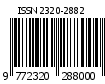
ISSN: 2320-2882 Impact Factor: 7.97 and ISSN APPROVED Journal Starting Year (ESTD) : 2013


ISSN and 7.97 Impact Factor Details
ISSN: 2320-2882 Impact Factor: 7.97 and ISSN APPROVED Journal Starting Year (ESTD) : 2013
DOI Details
CONFERENCE
CONFERENCE MANAGMENT & PUBLICATION CONFERENCE PROPOSAL
RECENT CONFERENCE

CONFERENCE PROPOSAL CONFERENCE PROCEEDINGS
CONFERENCE PROPOSAL CONFERENCE PROCEEDINGS
For Reviewer /Referral (RMS) Earn 500 per paper
Important Links
NEWS & Conference
Digital Library
IJCRT RMS | Earn 500 Per Paper.

Open Access


LICENSE
Indexing Partner
Scholarly open access journals, Peer-reviewed, and Refereed Journals, Impact factor 7.97 (Calculate by google scholar and Semantic Scholar | AI-Powered Research Tool) , Multidisciplinary, Monthly, Indexing in all major database & Metadata, Citation Generator, Digital Object Identifier(DOI)