Important Details
IJCRT - International Peer Reviewed, Open Access Journal, Multidisciplinary, Monthly, Nominal(Low) Fees for Professional Research Services International Journal of Creative Research Thoughts - IJCRT Peer Review Journal, Refereed Journal, Peer Reviewed Journal , Referred Journal and Indexed Journal, Open access, Online and Print Journal,international Journal Open Access, Accepted by Indian and foreign university ,IJCRT Followed Norms, guidelines, requirement, listing criteria and methodology of score/point also applied from: Scopus , Web of Science , UGC Approved , UGC CARE, UGC-CARE .
UGC Approved Journal No: 49023 (18)
UGC approval Link
https://ijcrt.org/ugc%20approval.jpg
All Policy and Approval
Please Like Our Facebook Page | CrossRef DOI and Hard copy of Certificate Provide if required. | www.IJCRT.org | editor@IJCRT.org | WhatsApp: 7990172303
Publication Details:
- Paper Submission : 31-Jan-2026. Call For Paper (Volume 14 | Issue 1 | Month- January 2026)
- Acceptance/Rejection Notification: Within 02-04 Days.
- Paper Publish: Within 02-04 Days after submitting all documents.
-
Submit Your Paper Any time There No deadline.
-
Publication fees : 1570 INR for Indian author & 59$ for foreign International author.
Please Like Our Facebook Page | CrossRef DOI and Hard copy of Certificate Provide if required.
Licence and Indexing
Indexing In Google Scholar, SSRN, ResearcherID-Publons, Semantic Scholar | AI-Powered Research Tool, Microsoft Academic, Academia.edu, arXiv.org, Research Gate, CiteSeerX, ResearcherID Thomson Reuters, Mendeley : reference manager, DocStoc, ISSUU, Scribd, and many more | High Impact Factor: 7.97 | Digital object identifier (DOI) and Hard Copy of certificate Provided.




























Licence
DOI
ISSN Approved impact factor: 7.97 
Creative Common 
Valid as per new UGC Gazette regulations 

INTERNATIONAL JOURNAL OF CREATIVE RESEARCH THOUGHTS - IJCRT (IJCRT.ORG)
International Peer Reviewed & Refereed Journals, Open Access Journal
IJCRT Peer-Reviewed (Refereed) Journal as Per New UGC Rules.
ISSN Approved Journal No: 2320-2882 | Impact factor: 7.97 | ESTD Year: 2013
Call For Paper - Volume 14 | Issue 1 | Month- January 2026
Scholarly open access journals, Peer-reviewed, and Refereed Journals, Impact factor 7.97 (Calculate by google scholar and Semantic Scholar | AI-Powered Research Tool) , Multidisciplinary, Monthly, Indexing in all major database & Metadata, Citation Generator, Digital Object Identifier(CrossRef DOI)
Contact Us Click Here
WhatsApp Contact Click Here
IJCRT Search Xplore - Search all paper by Paper Name , Author Name, and Title
Volume 13 | Issue 7
Volume 13 | Issue 7 | Month
Downlaod After Publication 1) Table of content index in PDF
2) Table of content index in HTML 2)Table of content index in HTML
3) Front Page 3) Front Page
4) Back Page 4) Back Page
5) Editor Board Member 5)Editor Board Member
6) OLD Style Issue 6) OLD Style Issue
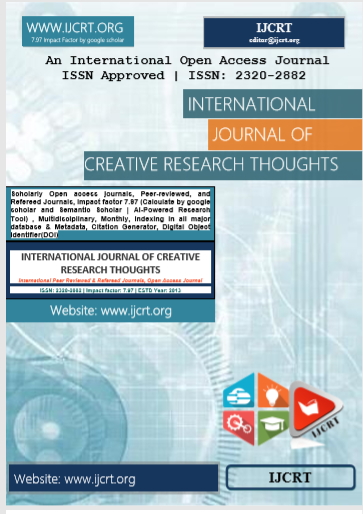 |
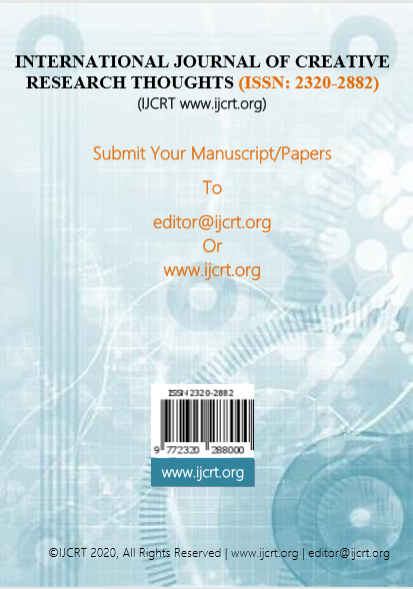 |
|---|---|
| IJCRT Journal front page | IJCRT Journal Back Page |
Paper Title: "A Comparative Study of Job Satisfaction among the Secondary School Teachers of Government and Private Institutions of the Kurukshetra District"
Publisher Journal Name: IJCRT
Your Paper Publication Details:
Published Paper ID: - IJCRT2507288
Register Paper ID - 290988
Title: "A COMPARATIVE STUDY OF JOB SATISFACTION AMONG THE SECONDARY SCHOOL TEACHERS OF GOVERNMENT AND PRIVATE INSTITUTIONS OF THE KURUKSHETRA DISTRICT"
Author Name(s): Amita Saini
Publisher Journal name: IJCRT
Volume: 13
Issue: 7
Pages: c535-c545
Year: July 2025
Downloads: 149
Abstract
Job satisfaction is the product of numerous attitudes employees develop toward various parts of their work. It strengthens emotional bonds and increases productivity in instructional processes, it has a significant impact on teachers' academic performance as it boosts their productivity in teaching and reinforces emotional connections. The current study aims to examine the job satisfaction of secondary school teachers in the Kurukshetra district by examining the effects of gender, school type, age, experience, and workplace location. The study was designed using the descriptive method. Teachers working in secondary schools in the Kurukshetra region of Haryana, India, make up the study's population. The study conducted on 160 secondary school teachers that are taken through a random sampling. The Job Satisfaction Scale, created by Dr. Parmod Kumar and D.N. Mutha in 1988, is the instrument used to collect data. The t-test and standard deviation are statistical methods used to analyse data. According to the study, Compared to instructors at public schools, private school teachers are happier in their positions. Additionally, it has been discovered that compared to their urban counterparts, teachers at secondary school in rural regions are happier in their jobs. Moreover, there is no significant variation in the job satisfaction of male and female secondary school teachers. Furthermore, studies reveal that teachers with less than 15 years of experience are happier in their positions than those with more than 15 years. In addition, the survey shows that teachers under 40 are more satisfied with their jobs than instructors over 40. The study looked at what needs to be done to address secondary education teachers' work satisfaction.
Licence: creative commons attribution 4.0
License
Creative Commons Attribution 4.0 and The Open Definition

Keywords
Job satisfaction, Teachers at secondary school, gender, experience, workplace
License
Creative Commons Attribution 4.0 and The Open Definition
Paper Title: Accuracy Enhancement in Network Anomaly Detection Using Machine Learning Techniques
Publisher Journal Name: IJCRT
Your Paper Publication Details:
Published Paper ID: - IJCRT2507287
Register Paper ID - 290863
Title: ACCURACY ENHANCEMENT IN NETWORK ANOMALY DETECTION USING MACHINE LEARNING TECHNIQUES
Author Name(s): Varad Krishna Marawar, Lokesh Pramod Meshram, Hanuman Gajanan Limbalkar, Kaif Mulla
Publisher Journal name: IJCRT
Volume: 13
Issue: 7
Pages: c521-c534
Year: July 2025
Downloads: 171
Abstract
Network anomaly detection is an essential element of contemporary cybersecurity infrastructure, especially as organizations encounter more and more sophisticated and changing cyber threats. Conventional intrusion detection systems, which rely intensely on static signature databases and preconfigured rule sets, exhibit clear shortcomings in discovering new attack patterns and responding to dynamic threat environments. This research explores the optimization and utilization of conventional machine learning models for improved network anomaly detection, filling the research gap in which deep learning methods have dominated the potential that classical ML strategies can offer. With in-depth scrutiny of the UNSW-NB15 dataset comprising contemporary attack patterns in nine unique categories, this study compares six supervised machine learning classifiers: Logistic Regression, Decision Trees, Random Forests, Gaussian Naive Bayes, K-Nearest Neighbors (KNN), and LightGBM. The approach utilizes stringent data preprocessing pipelines, systematic feature engineering, and strenuous performance analysis across diverse metrics such as accuracy, precision, recall, and F1-score. Experimental findings show outstanding performance attainment, as Decision Trees, Random Forests, and LightGBM each recorded perfect accuracy at 100% and precision at 1.000, while KNN recorded 99.68% accuracy with 0.9968 precision and Gaussian Naive Bayes recorded 97.54% accuracy with 0.9764 precision. These results undermine the common belief that deep learning architectures of high complexity are required for successful anomaly detection, as it is shown that conventional ML models, if they are well optimized, can perform better with benefits in computational efficiency, interpretability, and deployment practicability. The work provides substantial practical implications for cybersecurity applications, especially in resource-limited settings and edge computing environments where light, interpretable models are desired. This research lays the groundwork for future-generation intrusion detection systems that strike a balance between outstanding detection rates and operational efficiency, offering actionable intelligence for security professionals while propelling the science of intelligent network security through evidence-based optimization of standard machine learning techniques.
Licence: creative commons attribution 4.0
License
Creative Commons Attribution 4.0 and The Open Definition
Keywords
Network Anomaly Detection, Intrusion Detection System (IDS), Machine Learning, Supervised Learning, UNSW-NB15 Dataset, Feature Engineering, Class Imbalance, SMOTE, Random Forest, LightGBM, Decision Tree, K-Nearest Neighbors, Gaussian Naive Bayes, Cybersecurity
License
Creative Commons Attribution 4.0 and The Open Definition
Paper Title: ANATOMY OF KURPARA SANDHI W.S.R. TO ELBOW JOINT: AN AYURVEDA OVERVIEW
Publisher Journal Name: IJCRT
Your Paper Publication Details:
Published Paper ID: - IJCRT2507286
Register Paper ID - 289794
Title: ANATOMY OF KURPARA SANDHI W.S.R. TO ELBOW JOINT: AN AYURVEDA OVERVIEW
Author Name(s): Dr. T. Nandita
Publisher Journal name: IJCRT
Volume: 13
Issue: 7
Pages: c516-c520
Year: July 2025
Downloads: 190
Abstract
The knowledge of anatomy in Ayurveda has been poorly understood in today's era. The lack of sufficient literatures regarding the subject has hindered its development. Despite the hurdles, still the concept of anatomy in Ayurveda is in depth and seeking for scientific exploration. The increasing incidence of joint diseases leading towards chronicity are best being treated through Ayurveda, but the concepts behind the results are not well understood due to lack of proper knowledge in anatomy. The description of various anatomical entities has been clearly mentioned in Samhitas in Ayurveda. Sushruta Samhita, the pioneer text of Ayurveda surgery, in its Shareera Sthana primarily has described about the human body anatomy. Apart from this, Charaka Samhita, the text of medicine has also lightened regarding the anatomy. In this article, the anatomical concepts of Kurpara Sandhi (elbow joint) are extracted from Sushruta Samhita and Charaka Samhita in order to organize the knowledge systematically. The concepts are correlated with the view of contemporary medical science and illustrated in best possible way.
Licence: creative commons attribution 4.0
License
Creative Commons Attribution 4.0 and The Open Definition
Keywords
Kurpara Sandi, Elbow Joint, Ayurveda Surgery, Ayurveda Anatomy
License
Creative Commons Attribution 4.0 and The Open Definition
Paper Title: Performance of Copper Slag on Strength as Partial Replacement of Fine Aggregate in Concrete
Publisher Journal Name: IJCRT
Your Paper Publication Details:
Published Paper ID: - IJCRT2507285
Register Paper ID - 290163
Title: PERFORMANCE OF COPPER SLAG ON STRENGTH AS PARTIAL REPLACEMENT OF FINE AGGREGATE IN CONCRETE
Author Name(s): Ms. Varsha Balu Kamble, Prof. G. N. Shete
Publisher Journal name: IJCRT
Volume: 13
Issue: 7
Pages: c505-c515
Year: July 2025
Downloads: 165
Abstract
ABSTRACT Concrete is extensively used in the civil engineering sector worldwide due to its superior strength and durability. Fine aggregate, typically derived from natural river sand, plays a vital role in concrete production. However, excessive sand mining has led to serious environmental issues, including the depletion of natural resources, increased scour depth, and a heightened risk of flooding. To address these concerns and promote sustainability, industrial by-products such as copper slag--generated in large quantities by the copper industry--can be utilized as alternative materials. This study explores the potential of copper slag as a partial replacement for fine aggregate in M30 grade concrete. The experimental program involved replacing river sand with copper slag at varying proportions of 0%, 4%, 8%, 12%, and 16%. The mechanical properties, including compressive strength, tensile strength, and flexural strength, were assessed at 7 and 28 days. Results were analyzed and compared with conventional concrete to evaluate the impact of copper slag on the performance of concrete mixtures. The findings support the feasibility of using copper slag in concrete production, contributing to waste utilization and environmental sustainability.
Licence: creative commons attribution 4.0
License
Creative Commons Attribution 4.0 and The Open Definition
Keywords
Keywords- Cement, Fine Aggregate, Coarse Aggregate, Copper Slag, Concrete, Compressive Strength, Split Tensile Strength, Flexural Strength.
License
Creative Commons Attribution 4.0 and The Open Definition
Paper Title: Ecological Burden and Human Numbers: The Need for Population Control within a Sustainable Legal Framework
Publisher Journal Name: IJCRT
Your Paper Publication Details:
Published Paper ID: - IJCRT2507284
Register Paper ID - 290984
Title: ECOLOGICAL BURDEN AND HUMAN NUMBERS: THE NEED FOR POPULATION CONTROL WITHIN A SUSTAINABLE LEGAL FRAMEWORK
Author Name(s): ABDUL KALAM.VM
Publisher Journal name: IJCRT
Volume: 13
Issue: 7
Pages: c490-c504
Year: July 2025
Downloads: 166
Abstract
This article critically examines the urgent need to address population growth as a pivotal factor contributing to environmental degradation. It explores the demographic-ecological nexus through legal, constitutional, and international frameworks. The analysis draws upon judicial precedents, environmental statutes, and comparative policy approaches. The article proposes the establishment of a sustainable, rights-based legal framework that respects reproductive autonomy while addressing ecological pressures. Through a comprehensive doctrinal and policy-based review, the paper advances the argument that population control must be a central concern in environmental governance for the 21st century.
Licence: creative commons attribution 4.0
License
Creative Commons Attribution 4.0 and The Open Definition
Keywords
Demographic Impact Assessment (DIA), Demographic-Ecological Nexus, Population Stabilization, Environmental Governance, Reproductive Rights, Sustainable Development, Rights-Based Legal Framework, Climate Change Mitigation, Environmental Impact Assessment (EIA), Population and Environmental Sustainability Act
License
Creative Commons Attribution 4.0 and The Open Definition
Paper Title: Exploring the Psychosocial Dynamics of Remittance: A TPB Framework-Based Study from Kerala
Publisher Journal Name: IJCRT
Your Paper Publication Details:
Published Paper ID: - IJCRT2507283
Register Paper ID - 290909
Title: EXPLORING THE PSYCHOSOCIAL DYNAMICS OF REMITTANCE: A TPB FRAMEWORK-BASED STUDY FROM KERALA
Author Name(s): Nisha S, R Jayaraman
Publisher Journal name: IJCRT
Volume: 13
Issue: 7
Pages: c480-c489
Year: July 2025
Downloads: 156
Abstract
This study explores the behavioural dynamics underlying remittance decisions among international migrants from Kerala, using the Theory of Planned Behaviour (TPB) as its central framework. Applying a mixed-method approach, the research integrates quantitative data from structured surveys with qualitative insights from interviews and focus group discussions. The study examines how behavioural beliefs, normative pressures, and control perceptions shape migrants' intention to remit and how this intention translates into actual remittance behaviour. Empirical findings--supported by chi-square, regression, and structural equation modelling--reveal that remittance practices are strongly influenced by psychological drivers such as emotional fulfilment, familial responsibility, and financial aspirations, alongside demographic variables like income and employment type. The validated TPB framework confirms intention as a significant mediator between belief systems and remittance actions. These insights offer concrete implications for designing behaviourally informed remittance products, reducing transaction costs, and fostering financial inclusion among migrant populations.
Licence: creative commons attribution 4.0
License
Creative Commons Attribution 4.0 and The Open Definition
Keywords
Remittance behaviour, migrant intention, Kerala migration, Theory of Planned Behaviour (TPB), structural equation modelling (SEM), behavioural finance
License
Creative Commons Attribution 4.0 and The Open Definition
Paper Title: Artificial Intelligence: Importance in Academic Libraries
Publisher Journal Name: IJCRT
Your Paper Publication Details:
Published Paper ID: - IJCRT2507282
Register Paper ID - 290899
Title: ARTIFICIAL INTELLIGENCE: IMPORTANCE IN ACADEMIC LIBRARIES
Author Name(s): Dr.A D Suneetha
Publisher Journal name: IJCRT
Volume: 13
Issue: 7
Pages: c475-c479
Year: July 2025
Downloads: 145
Abstract
Artificial Intelligence (AI) is revolutionizing various sectors, including education and academic libraries. AI technologies have become essential tools for enhancing library services by enabling automation, improving information retrieval, personalizing user experiences, and supporting decision-making processes. This paper explores the critical role of AI in academic libraries, highlighting its benefits, applications, challenges, Advantages, disadvantage of AI in Academic Libraries and future potential. It also examines how AI tools like chat bots, machine learning algorithms, and recommended systems contribute to transforming traditional libraries into intelligent knowledge hubs.
Licence: creative commons attribution 4.0
License
Creative Commons Attribution 4.0 and The Open Definition
Keywords
benefits, applications, challenges, Advantages, disadvantage of AI in Academic Libraries
License
Creative Commons Attribution 4.0 and The Open Definition
Paper Title: A Comprehensive Review on Text-to-Speech (TTS) Synthesis: Advances, Challenges, and Future Directions
Publisher Journal Name: IJCRT
Your Paper Publication Details:
Published Paper ID: - IJCRT2507281
Register Paper ID - 289940
Title: A COMPREHENSIVE REVIEW ON TEXT-TO-SPEECH (TTS) SYNTHESIS: ADVANCES, CHALLENGES, AND FUTURE DIRECTIONS
Author Name(s): Aniket Kalane, Suhas Mache
Publisher Journal name: IJCRT
Volume: 13
Issue: 7
Pages: c469-c474
Year: July 2025
Downloads: 168
Abstract
Text-to-Speech (TTS) synthesis has undergone significant progress, advanc- ing from initial rule-based and concatenative approaches to powerful deep learning-based architectures. This overview is a thorough coverage of the history, present methods, and potential future directions of TTS systems. We survey cutting-edge models like WaveNet, Tacotron, FastSpeech, and Flowtron, underscoring their advances in making speech more natural, intel- ligible, and efficient to synthesize. The combination of transformer models and self-supervised learning has also further improved TTS performance, particularly in multilingual and low-resource conditions. End-to-end, neu- ral vocoding, and adversarial training have greatly enhanced the quality of speech, and as a result, real-time solutions are applied everywhere from acces- sibility platforms to virtual assistants, audiobooks, and entertainment sites. Yet there is still some problem in prosody modeling, emotion expressiveness, and coping with various linguistic environments. In this paper, those limita- tions and their necessity in considering hybrid models, multimodal TTS sys- tems, and reinforcement training are explored. We also examine the ethical aspects of synthetic speech, including misuse threats and biases, highlight- ing the demand for secure, equitable, and responsible deployment. Overall, this review summarizes the key breakthroughs and upcoming trends in TTS synthesis while envisioning future research directions to develop resilient, adaptive, and human-like speech systems for diverse global applications.
Licence: creative commons attribution 4.0
License
Creative Commons Attribution 4.0 and The Open Definition
Keywords
Text-to-Speech, Deep Learning, WaveNet, Tacotron, FastSpeech, Transformer-TTS, Self-Supervised Learning, Speech Synthesis
License
Creative Commons Attribution 4.0 and The Open Definition
Paper Title: AI-Powered Cognitive Twin for Personalized Mental Health Interventions
Publisher Journal Name: IJCRT
Your Paper Publication Details:
Published Paper ID: - IJCRT2507280
Register Paper ID - 290930
Title: AI-POWERED COGNITIVE TWIN FOR PERSONALIZED MENTAL HEALTH INTERVENTIONS
Author Name(s): Jyoti mayur nirmal, Sonali rahul vikhe
Publisher Journal name: IJCRT
Volume: 13
Issue: 7
Pages: c463-c468
Year: July 2025
Downloads: 150
Abstract
The intersection of artificial intelligence (AI) and mental health presents unprecedented opportunities to transform how mental illnesses are understood, diagnosed, and treated. This research explores the development of an AI-powered Cognitive Twin--a dynamic digital model that mirrors an individual's psychological and behavioral states using multi-modal data sources such as speech patterns, wearable sensor data, smartphone usage, and social media activity. By applying machine learning, natural language processing, and behavioral analytics, the Cognitive Twin can continuously learn from a person's digital footprint to detect early signs of anxiety, depression, and stress. The goal is to personalize mental health interventions by simulating various therapeutic strategies and predicting their outcomes for a specific individual before actual clinical implementation. The system also incorporates privacy-preserving AI techniques such as federated learning and differential privacy to ensure data security and ethical compliance. This research aims to support mental health professionals in making data-driven, individualized treatment plans, and to empower patients with real-time self-awareness tools. Ultimately, the project aspires to bridge the gap between traditional mental healthcare and intelligent, responsive digital therapeutics.
Licence: creative commons attribution 4.0
License
Creative Commons Attribution 4.0 and The Open Definition
Keywords
Artificial Intelligence (AI), Cognitive Twin, Personalized Intervention, Mental Health
License
Creative Commons Attribution 4.0 and The Open Definition
Paper Title: "P.V.R. Sivakumar's stories portray the environment"
Publisher Journal Name: IJCRT
Your Paper Publication Details:
Published Paper ID: - IJCRT2507279
Register Paper ID - 290979
Title: "P.V.R. SIVAKUMAR'S STORIES PORTRAY THE ENVIRONMENT"
Author Name(s): Katta Satya Harish, Acharya Nemani Sarada, Dr. V.S. Krishna, Acharya Jarra Apparao
Publisher Journal name: IJCRT
Volume: 13
Issue: 7
Pages: c456-c462
Year: July 2025
Downloads: 149
Abstract
"P.V.R. Sivakumar's stories portray the environment"
Licence: creative commons attribution 4.0
License
Creative Commons Attribution 4.0 and The Open Definition
Keywords
"P.V.R. Sivakumar's stories portray the environment"
License
Creative Commons Attribution 4.0 and The Open Definition
Paper Title: A Study of Financial Literacy for Self Help Groups in Rajasthan
Publisher Journal Name: IJCRT
Your Paper Publication Details:
Published Paper ID: - IJCRT2507278
Register Paper ID - 290865
Title: A STUDY OF FINANCIAL LITERACY FOR SELF HELP GROUPS IN RAJASTHAN
Author Name(s): Bhawana Meena, Dr. Bindu Jain
Publisher Journal name: IJCRT
Volume: 13
Issue: 7
Pages: c445-c455
Year: July 2025
Downloads: 156
Abstract
Using different research methods, this study investigates how self-help groups (SHGs) impact the empowerment of women in eight districts of the Jaipur Division in Rajasthan. Determining the link between SHGs and economic, social, and political empowerment oriented towards leadership, earning more through business, and decision-making was the main goal. FGD sessions and formal questionnaires were carried out to get information from 240 women who are part of SHGs. Stratified random sampling was used to make sure there were individuals from all age groups and districts in the SHG. Quantitative analysis using ANOVA, correlation, and multiple regressions was carried out to study the link between empowerment, SHG length, training, education, and income. The study found that SHGs greatly boost women's empowerment, and for those staying in SHGs longer, there is a clear relationship between more income from business, livestock, and agriculture. Being educated and gaining training made people feel more empowered. Members' stories demonstrated that they became more financially secure, valued themselves more, and got involved in helping others in the community. Patriarchal attitudes, a lack of internet knowledge, and little visibility of SHG goods in the market were also noticed in the survey. The study reveals SHGs have the capacity to bring about transformation in society, especially if supported by government groups, digital progress, and training. The outcome of this study contains solutions and guidance for policies that can improve the inclusion of women and fair development in rural Rajasthan. It concludes that if SHGs are well managed and backed by funds, they can work as a good example of helping women in local areas.
Licence: creative commons attribution 4.0
License
Creative Commons Attribution 4.0 and The Open Definition
Keywords
Self-Help Groups, Women Empowerment, Economic Development, Leadership, Digital Literacy, Rural Rajasthan.
License
Creative Commons Attribution 4.0 and The Open Definition
Paper Title: Aahar:Image To Recipe Generation
Publisher Journal Name: IJCRT
Your Paper Publication Details:
Published Paper ID: - IJCRT2507277
Register Paper ID - 290907
Title: AAHAR:IMAGE TO RECIPE GENERATION
Author Name(s): Vaibhavi Pawar, Dr.Reshma Totare, Mrunal Kshirsagar, Yash Satbhaiya, Rutuja Ilag
Publisher Journal name: IJCRT
Volume: 13
Issue: 7
Pages: c434-c444
Year: July 2025
Downloads: 139
Abstract
For most individuals, cooking is a daily ritual. However, the same query arises again and time again: "What are we going to cook today?" Often, people get into a situation where they want to bake, cook or try something delicious, but lack the ingredients at home. Many times, people see an image of a delicious looking dish, but they don't know it's recipe. To address these challenges, this paper offers a summary of Machine Learning strategies that aim to generate recipes using only a list of desired ingredients as input, or even create them from scratch, in order to respond to that inquiry! Providing a user-friendly interface, nutrition, proteins, fats, carbohydrates value & a YouTube video link for easy understanding This project aims to alert the user to different dishes that can be cooked from the available ingredient sets, or to an input image entered by the user.
Licence: creative commons attribution 4.0
License
Creative Commons Attribution 4.0 and The Open Definition
Keywords
Cooking, Natural Language Processing, Recipe Creation and Machine Learning.
License
Creative Commons Attribution 4.0 and The Open Definition
Paper Title: Literature Review on Early Intervention Strategies to Address Student Attrition with Predictive Analytics
Publisher Journal Name: IJCRT
Your Paper Publication Details:
Published Paper ID: - IJCRT2507276
Register Paper ID - 290983
Title: LITERATURE REVIEW ON EARLY INTERVENTION STRATEGIES TO ADDRESS STUDENT ATTRITION WITH PREDICTIVE ANALYTICS
Author Name(s): Rupali Ambalal Jadhav, Dr. Rupal Parekh
Publisher Journal name: IJCRT
Volume: 13
Issue: 7
Pages: c428-c433
Year: July 2025
Downloads: 146
Abstract
Student attrition, the premature withdrawal of students from educational programs, poses a significant challenge to higher education institutions globally. This research This study examines the application of predictive analytics, leveraging machine learning and data mining techniques, to identify at-risk students and implement timely interventions aimed at improving retention and academic success. We systematically review existing literature on predictive learning analytics (PLA) in higher learning, examining various methodological approaches, predictive models, and the factors influencing student attrition. The analysis highlights the advantages and disadvantages of various prediction models, emphasizing the need for responsible AI frameworks to address ethical concerns and ensure equitable outcomes. Furthermore, we discuss the integration of PLA with motivational interventions and the role of data warehousing in facilitating data-driven decision-making for enhanced student support. Finally, we identify key research gaps and propose future directions for refining PLA strategies to create more effective and inclusive learning environments
Licence: creative commons attribution 4.0
License
Creative Commons Attribution 4.0 and The Open Definition
Keywords
Predictive analytics, student attrition, early intervention, student retention strategies, higher education, machine learning, data mining, responsible AI, educational outcomes, data-driven decision-making
License
Creative Commons Attribution 4.0 and The Open Definition
Paper Title: Climate induced social vulnerability of the Paharia community in Santhal Pargana, Jharkhand
Publisher Journal Name: IJCRT
Your Paper Publication Details:
Published Paper ID: - IJCRT2507275
Register Paper ID - 290911
Title: CLIMATE INDUCED SOCIAL VULNERABILITY OF THE PAHARIA COMMUNITY IN SANTHAL PARGANA, JHARKHAND
Author Name(s): Dr. Anita Chakraborty, Dr. Sanjay Kumar Sinha
Publisher Journal name: IJCRT
Volume: 13
Issue: 7
Pages: c418-c427
Year: July 2025
Downloads: 146
Abstract
The State of Jharkhand is bestowed with 32 scheduled tribal communities segregated on the basis of their culture and living habits. Their population in the state as per 2001 census is estimated at 7,087,068 constituting of 26.3 per cent of the total population (26,945,829) of the entire State. The 2011 Census reported a count of 8,645,042 Scheduled tribes of a total population of 32,988,134 showing an emerging population in the state. The Tribes are primarily rural inhabitant consisting of 91.7 per cent of the village population. Among all the other Indian States Jharkhand holds rank 6th in terms of the congregation of the Scheduled tribal communities. Amongst the 32 enlisted tribes Paharia are treated as Scheduled Tribe by the governments of West Bengal, Bihar and Jharkhand. Primarily they represent the Dravidian ethnic linage who were socially and educationally of highly backward status in the State. This tribe preserves protoastroloid species. They are the original inhabitants of the than Rajmahal Hills, now popularly known as Santhal Pargana Division of Jharkhand.
Licence: creative commons attribution 4.0
License
Creative Commons Attribution 4.0 and The Open Definition
Keywords
Jharkhand, Protoastroloid, Santhal Pargana, Rajmahal Hills, Pahari, Tribes, Climate Change, Migration, Adaptation, Mitigation
License
Creative Commons Attribution 4.0 and The Open Definition
Paper Title: Role of Dashmool Ksheer Basti in Management of Udavartini Yonivyapad w.s.r.to Primary Dysmenorrhea-A case study
Publisher Journal Name: IJCRT
Your Paper Publication Details:
Published Paper ID: - IJCRT2507274
Register Paper ID - 290960
Title: ROLE OF DASHMOOL KSHEER BASTI IN MANAGEMENT OF UDAVARTINI YONIVYAPAD W.S.R.TO PRIMARY DYSMENORRHEA-A CASE STUDY
Author Name(s): Vd.Rinkal Sarkarsing Rajput, Vd.Dilip Vitthal Katare
Publisher Journal name: IJCRT
Volume: 13
Issue: 7
Pages: c415-c417
Year: July 2025
Downloads: 149
Abstract
Primary dysmenorrhea refers to painful menstrual cramps that occur without any underlying pelvic disease. It is the most common type of menstrual pain, especially in adolescents and young women. Dysmenorrhoea can be correlated with Udavartini Yonivyapad in Ayurveda. Aacharya charak has mentioned that among Tridosha main cause of pain is Vatadosha. And particularly Basti is the main Chikitsa of Vatadosha. Aacharya charak mentioned Dashmool Ksheer Basti is treatment for Udavartini Yonivyapad.Dashmool and Ksheer are vatshamak. I this study Dashmool Ksheer Basti given for 5 days 10-12 days before menstrual cycle for 3 consecutive cycles.
Licence: creative commons attribution 4.0
License
Creative Commons Attribution 4.0 and The Open Definition
Keywords
Dysmenorrhea, Udavartini Yonivyapad, Dashmool,Ksheer Basti
License
Creative Commons Attribution 4.0 and The Open Definition
Paper Title: A STUDY TO ASSESS THE PERCEPTION OF AI CHATBOTS AS A HEALTH EDUCATION TOOL AMONG NURSING STUDENTS IN HOSUR, TAMIL NADU
Publisher Journal Name: IJCRT
Your Paper Publication Details:
Published Paper ID: - IJCRT2507273
Register Paper ID - 290964
Title: A STUDY TO ASSESS THE PERCEPTION OF AI CHATBOTS AS A HEALTH EDUCATION TOOL AMONG NURSING STUDENTS IN HOSUR, TAMIL NADU
Author Name(s): Prof. Dr. Sumathi Sampath, Prof. C. Deepa, Mrs. Arthi R
Publisher Journal name: IJCRT
Volume: 13
Issue: 7
Pages: c405-c414
Year: July 2025
Downloads: 159
Abstract
ABSTRACT AI chatbots are being used more and more in the fields of education and healthcare since they enable self-directed learning and offer 24/7 access to health information. The purpose of this study was to evaluate how nursing students viewed AI chatbots as a tool for health education. OBJECTIVES OF THE STUDY 1. To assess the perception of nursing students regarding the use of AI chatbots for health education. 2. To determine the association between perception levels and selected demographic variables. Methodology A descriptive cross-sectional study was conducted among 100 B.Sc. Nursing students (1st and 4th year) at St. Peter's Nursing College and Research Institute, Hosur. A structured questionnaire comprising demographic data and a 20-item Likert scale was used to assess perceptions. Convenience sampling was adopted. Data were analyzed using descriptive and inferential statistics, including Chi-square tests. Results: Out of 100 students, 64% had a positive perception, 35% had a neutral perception, and 1% had a negative perception of AI chatbots in health education. A significant association was found between access to technology (p < 0.05) and the use of AI chatbots for educational purposes (p < 0.05), as well as perception levels. No significant association was found with other demographic variables. Conclusion: The findings suggest that AI chatbots are generally well accepted as effective educational tools among nursing students. With appropriate integration into the curriculum and training on digital literacy, AI chatbots can enhance nursing education.
Licence: creative commons attribution 4.0
License
Creative Commons Attribution 4.0 and The Open Definition
Keywords
Assess, Perception, Artificial Intelligence, Chatbot, Health Education, Nursing Students, Structured questionnaire
License
Creative Commons Attribution 4.0 and The Open Definition
Paper Title: Svatantrata Purv Svatantryottar Kal Mein Mahila Aandolan: Ek Vishleshan
Publisher Journal Name: IJCRT
Your Paper Publication Details:
Published Paper ID: - IJCRT2507272
Register Paper ID - 290316
Title: SVATANTRATA PURV SVATANTRYOTTAR KAL MEIN MAHILA AANDOLAN: EK VISHLESHAN
Author Name(s): Rashmi Gupta
Publisher Journal name: IJCRT
Volume: 13
Issue: 7
Pages: c398-c404
Year: July 2025
Downloads: 170
Abstract
Rashmi Gupta
Licence: creative commons attribution 4.0
License
Creative Commons Attribution 4.0 and The Open Definition
Paper Title: A Literary Political Allegory: Metaphors of Captivity to Dravidian Identity, Consciousness and Tamil Cultural Assertion in Reflection by Muthamizh Arignar Kalaignar Dr. Muthuvel Karunanidhi
Publisher Journal Name: IJCRT
Your Paper Publication Details:
Published Paper ID: - IJCRT2507271
Register Paper ID - 290976
Title: A LITERARY POLITICAL ALLEGORY: METAPHORS OF CAPTIVITY TO DRAVIDIAN IDENTITY, CONSCIOUSNESS AND TAMIL CULTURAL ASSERTION IN REFLECTION BY MUTHAMIZH ARIGNAR KALAIGNAR DR. MUTHUVEL KARUNANIDHI
Author Name(s): NITHIANANDHAM S, Prof. Dr. P. NAGARAJ
Publisher Journal name: IJCRT
Volume: 13
Issue: 7
Pages: c394-c397
Year: July 2025
Downloads: 173
Abstract
Muthamizh Arignar Kalaignar Dr. M. Karunanidhi is a meritorious literary figure in Tamil Literature. His writings always possess deeper insights as Tamil and Dravidian ideology carry. Kalaignar's writings discuss the concepts of Social Justice, Social Consciousness, Equality, and Dravidian ideas, as well as opposition to social inequality. This research paper gives a new perception of Liberty by comparing it with Nature. In the book Reflections (Essays and Speeches), Kalaignar in English Translation, by Bharathiar University. The natural elements like the Moon, Aadi wind, Star, Night, Ocean, River, Dawn, Mountain, and the Green Parrot are compared to imprisonment and fighting for Liberty in the rest of their lives.
Licence: creative commons attribution 4.0
License
Creative Commons Attribution 4.0 and The Open Definition
Keywords
Kalaignar M. Karunanidhi, Liberty, Dravidian ideology, Egocentrism, Equality, Social Justice, Tamil Culture, Identity
License
Creative Commons Attribution 4.0 and The Open Definition
Paper Title: A DISCOURSE ON CONSTRUCTING CULTURAL IDENTITY THROUGH MYTH IN EASTERINE KIRE'S WHEN THE RIVER SLEEPS
Publisher Journal Name: IJCRT
Your Paper Publication Details:
Published Paper ID: - IJCRT2507270
Register Paper ID - 290962
Title: A DISCOURSE ON CONSTRUCTING CULTURAL IDENTITY THROUGH MYTH IN EASTERINE KIRE'S WHEN THE RIVER SLEEPS
Author Name(s): Megono Chücha
Publisher Journal name: IJCRT
Volume: 13
Issue: 7
Pages: c387-c393
Year: July 2025
Downloads: 199
Abstract
This paper explores Easterine Kire's novel When the River Sleeps as a rich narrative that draws from Naga myths to preserve cultural heritage, shape indigenous identity, and resist external misrepresentations. Set in the hills of Nagaland, the novel follows the spiritual journey of Vilie, a hunter in search of the mythical heart-stone, a quest that unfolds within a landscape shaped by ancestral stories, spiritual beliefs, and ecological wisdom. Through close reading and contextual analysis, the paper examines how myths such as the Tiger-Man and the heart-stone act as moral and cultural guides, reflecting the values, fears, and hopes of the Naga people. The study also applies theoretical insights from scholars like Barthes and Eliade to understand the symbolic power of myth in traditional societies. By reclaiming oral traditions and sacred narratives, Kire's novel offers an indigenous response to cultural erosion, giving voice to a community often silenced or stereotyped. The paper argues that literature from Northeast India, particularly when grounded in myth, becomes a powerful medium for asserting identity, preserving memory, and resisting marginalization.
Licence: creative commons attribution 4.0
License
Creative Commons Attribution 4.0 and The Open Definition
Keywords
Naga Literature, Myth, Identity, Cultural Preservation, Resistance
License
Creative Commons Attribution 4.0 and The Open Definition
Paper Title: TRADITION AS LIVELIHOOD: NHAKU AND THE CULTURAL ECOLOGY OF THE CHAKHESANG NAGAS
Publisher Journal Name: IJCRT
Your Paper Publication Details:
Published Paper ID: - IJCRT2507269
Register Paper ID - 290972
Title: TRADITION AS LIVELIHOOD: NHAKU AND THE CULTURAL ECOLOGY OF THE CHAKHESANG NAGAS
Author Name(s): Vipinuo Kehie
Publisher Journal name: IJCRT
Volume: 13
Issue: 7
Pages: c381-c386
Year: July 2025
Downloads: 166
Abstract
This paper explores Nhaku, a traditional food-gathering practice among the Chakhesang Nagas of Nagaland, as a lens to understand how indigenous knowledge, cultural identity, and livelihood are deeply interconnected. Nhaku involves the seasonal collection of small aquatic creatures from paddy fields, primarily by women, and is embedded in the community's agrarian rhythm, nutritional habits, and oral traditions. More than a subsistence activity, it reflects sustainable resource use, gendered knowledge transmission, and a collective relationship with the land. Based on interviews with local elders and practitioners, the study highlights the cultural, ecological, and medicinal significance of Nhaku, while also addressing the need to preserve anpromote its cultural and medicinal significance. The paper calls for documentation, community engagement, and cultural revitalization to preserve this practice. By situating Nhaku within broader discourses on traditional ecological knowledge and food heritage, the paper argues that sustaining such practices is vital not only for cultural continuity but also for promoting sustainable livelihoods and biodiversity conservation.
Licence: creative commons attribution 4.0
License
Creative Commons Attribution 4.0 and The Open Definition
Keywords
Nhaku, Chakhesang Nagas, Indigenous Knowledge, Traditional Livelihood, Cultural Ecology, Oral Tradition.
License
Creative Commons Attribution 4.0 and The Open Definition
All Published Paper Details Search Through Above Search Option.
About IJCRT
The International Journal of Creative Research Thoughts (IJCRT) aims to explore advances in research pertaining to applied, theoretical and experimental Technological studies. The goal is to promote scientific information interchange between researchers, developers, engineers, students, and practitioners working in and around the world.
Indexing In Google Scholar, ResearcherID Thomson Reuters, Mendeley : reference manager, Academia.edu, arXiv.org, Research Gate, CiteSeerX, DocStoc, ISSUU, Scribd, and many more International Journal of Creative Research Thoughts (IJCRT) ISSN: 2320-2882 | Impact Factor: 7.97 | 7.97 impact factor and ISSN Approved. Provide DOI and Hard copy of Certificate. Low Open Access Processing Charges. 1500 INR for Indian author & 55$ for foreign International author. Call For Paper (Volume 14 | Issue 1 | Month- January 2026)
Call For Paper January 2026
Call For Papers
January 2026
Volume 14 | Issue 1
Last Date :
31-Jan-2026
Submit Manuscript Online Impact Factor: 7.97 Review Results : Within 02-03 Days Paper Publication : Within 02-03 Days
January 2026
Volume 14 | Issue 1
Last Date :
31-Jan-2026
Submit Manuscript Online Impact Factor: 7.97 Review Results : Within 02-03 Days Paper Publication : Within 02-03 Days
Published Issue Details
For Authors
Forms / Downloads
Other IMP Links
Indexing Partner
Research Area
LICENSE





ISSN and 7.97 Impact Factor Details
ISSN: 2320-2882 Impact Factor: 7.97 and ISSN APPROVED Journal Starting Year (ESTD) : 2013


ISSN and 7.97 Impact Factor Details
ISSN: 2320-2882 Impact Factor: 7.97 and ISSN APPROVED Journal Starting Year (ESTD) : 2013
DOI Details
CONFERENCE
CONFERENCE MANAGMENT & PUBLICATION CONFERENCE PROPOSAL
RECENT CONFERENCE

CONFERENCE PROPOSAL CONFERENCE PROCEEDINGS
CONFERENCE PROPOSAL CONFERENCE PROCEEDINGS
For Reviewer /Referral (RMS) Earn 500 per paper
Important Links
NEWS & Conference
Digital Library
IJCRT RMS | Earn 500 Per Paper.

Open Access


LICENSE
Indexing Partner
Scholarly open access journals, Peer-reviewed, and Refereed Journals, Impact factor 7.97 (Calculate by google scholar and Semantic Scholar | AI-Powered Research Tool) , Multidisciplinary, Monthly, Indexing in all major database & Metadata, Citation Generator, Digital Object Identifier(DOI)