Important Details
IJCRT - International Peer Reviewed, Open Access Journal, Multidisciplinary, Monthly, Nominal(Low) Fees for Professional Research Services International Journal of Creative Research Thoughts - IJCRT Peer Review Journal, Refereed Journal, Peer Reviewed Journal , Referred Journal and Indexed Journal, Open access, Online and Print Journal,international Journal Open Access, Accepted by Indian and foreign university ,IJCRT Followed Norms, guidelines, requirement, listing criteria and methodology of score/point also applied from: Scopus , Web of Science , UGC Approved , UGC CARE, UGC-CARE .
UGC Approved Journal No: 49023 (18)
UGC approval Link
https://ijcrt.org/ugc%20approval.jpg
All Policy and Approval
Please Like Our Facebook Page | CrossRef DOI and Hard copy of Certificate Provide if required. | www.IJCRT.org | editor@IJCRT.org | WhatsApp: 7990172303
Publication Details:
- Paper Submission : 30-Apr-2026. Call For Paper (Volume 14 | Issue 3 | Month- March 2026)
- Acceptance/Rejection Notification: Within 02-04 Days.
- Paper Publish: Within 02-04 Days after submitting all documents.
-
Submit Your Paper Any time There No deadline.
-
Publication fees : 1570 INR for Indian author & 59$ for foreign International author.
Please Like Our Facebook Page | CrossRef DOI and Hard copy of Certificate Provide if required.
Licence and Indexing
Indexing In Google Scholar, SSRN, ResearcherID-Publons, Semantic Scholar | AI-Powered Research Tool, Microsoft Academic, Academia.edu, arXiv.org, Research Gate, CiteSeerX, ResearcherID Thomson Reuters, Mendeley : reference manager, DocStoc, ISSUU, Scribd, and many more | High Impact Factor: 7.97 | Digital object identifier (DOI) and Hard Copy of certificate Provided.




























Licence
DOI
ISSN Approved impact factor: 7.97 
Creative Common 
Valid as per new UGC Gazette regulations 

INTERNATIONAL JOURNAL OF CREATIVE RESEARCH THOUGHTS - IJCRT (IJCRT.ORG)
International Peer Reviewed & Refereed Journals, Open Access Journal
IJCRT Peer-Reviewed (Refereed) Journal as Per New UGC Rules.
ISSN Approved Journal No: 2320-2882 | Impact factor: 7.97 | ESTD Year: 2013
Call For Paper - Volume 14 | Issue 3 | Month- March 2026
Scholarly open access journals, Peer-reviewed, and Refereed Journals, Impact factor 7.97 (Calculate by google scholar and Semantic Scholar | AI-Powered Research Tool) , Multidisciplinary, Monthly, Indexing in all major database & Metadata, Citation Generator, Digital Object Identifier(CrossRef DOI)
Contact Us Click Here
WhatsApp Contact Click Here
IJCRT Search Xplore - Search all paper by Paper Name , Author Name, and Title
Volume 12 | Issue 7
Volume 12 | Issue 7 | Month
Downlaod After Publication 1) Table of content index in PDF
2) Table of content index in HTML 2)Table of content index in HTML
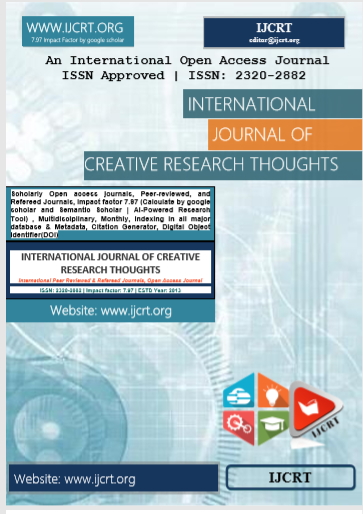
3) Front Page 3) Front Page
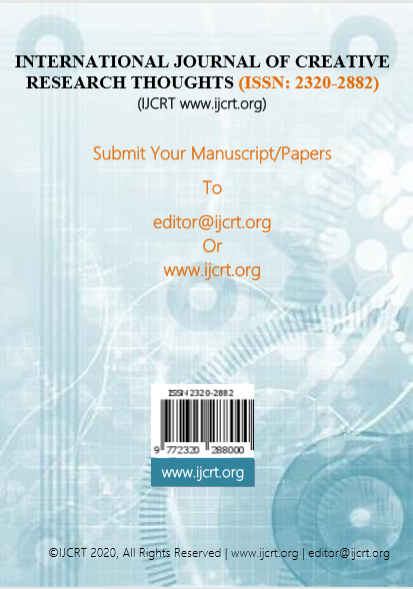
4) Back Page 4) Back Page
5) Editor Board Member 5)Editor Board Member
6) OLD Style Issue 6) OLD Style Issue
 |
 |
|---|---|
| IJCRT Journal front page | IJCRT Journal Back Page |
Paper Title: Designing The User Experience On A Decentralized Social Media Network: Openwave
Publisher Journal Name: IJCRT
Your Paper Publication Details:
Published Paper ID: - IJCRT2407554
Register Paper ID - 265797
Title: DESIGNING THE USER EXPERIENCE ON A DECENTRALIZED SOCIAL MEDIA NETWORK: OPENWAVE
Author Name(s): K Akshay Rao, RASHMI M S
Publisher Journal name: IJCRT
Volume: 12
Issue: 7
Pages: e799-e808
Year: July 2024
Downloads: 215
Abstract
The implementation of blockchain technology to decentralize social media networks (DSN) is causing a substantial shift in online interactions. This study looks into the user experience and design concepts underlying DSN, with a focus on OpenWave, a novel platform recently developed. DSN eliminates intermediaries and distributes data across multiple nodes, resulting in improved privacy, transparency, and greater control for users. However, this creates distinct complications. such as complex user interfaces, limited features to promote usability, and steep learning curves that impede their widespread adoption. To improve overall user interaction within decentralized social media platforms despite the obstacles identified above, this research identifies commonplace problems faced alongside personal preferences uniquely designed towards producing tailored principles aimed at crafting more engaging but simplified UI/UX experiences toward achieving optimal benefits from using DSN structures while creating new block-chain based solutions crafted through integrating novel UX paradigms able to revolutionize traditional norms associated with typical usage patterns frequently attributed digital innovations combining essential human-centered designs conjoined around analyzing existing approaches so far employed concerning blockchain-based systems optimizing vital changes promoting exceptional user experience outcomes leading to better adoption rates encouraging developers to adopt sustainable standards aiding continued improvement whenever implementing the conventions advanced herein providing holistic approach guidelines planed out comprehensive procedures championing strategic action plans fashioned towards actualizations intended goals specializing advantages inherent in resilient self-owned infrastructure shown capable growth, OpenWave's suggested design and implementation encapsulate key principles by demonstrating DSN ability to provide a secure, user-centric alternative to traditional social media platforms. The findings provide a hopeful picture for the future of DSN, highlighting opportunities for increased privacy functions, scalability solutions, greater correlation with emerging technologies, and increasing interoperability.
Licence: creative commons attribution 4.0
License
Creative Commons Attribution 4.0 and The Open Definition

Keywords
Decentralized Social Media, User Experience Ethereum, Smart Contracts, Blockchain, Dapp, IPFS.
License
Creative Commons Attribution 4.0 and The Open Definition
Paper Title: A Review of Machine Learning Algorithms for Detection of Cyberbullying on Social Media Networks
Publisher Journal Name: IJCRT
Your Paper Publication Details:
Published Paper ID: - IJCRT2407553
Register Paper ID - 266001
Title: A REVIEW OF MACHINE LEARNING ALGORITHMS FOR DETECTION OF CYBERBULLYING ON SOCIAL MEDIA NETWORKS
Author Name(s): Ankita V. Rachh, Dr. Yagnesh Shukla
Publisher Journal name: IJCRT
Volume: 12
Issue: 7
Pages: e792-e798
Year: July 2024
Downloads: 239
Abstract
Cyberbullying, the use of electronic devices to bully others, has become a prevalent issue globally. Identifying and preventing cyberbullying is crucial to protect individuals from its harmful effects. Cyberbullying is a pervasive and harmful phenomenon, causing significant emotional distress and psychological damage to victims. Cyberbullying has become a major issue in today's society, especially among young individuals who are constantly using social media platforms. Machine learning (ML) algorithms offer a powerful tool for automating cyberbullying detection to mitigate this issue effectively. This paper explores the potential of machine learning algorithms to automatically detect cyberbullying in online platforms. In order to address this problem, this paper proposes a machine learning-based approach for detecting instances of cyberbullying in online platforms. By leveraging the power of machine learning algorithms, we aim to accurately identify and classify cyberbullying behaviour, leading to more effective mitigation strategies and interventions. We discuss various algorithms and their applications in text analysis, focusing on their strengths and weaknesses in identifying cyberbullying content. We also delve into the challenges and ethical considerations associated with employing machine learning for this purpose. We propose a method for detecting cyberbullying using machine learning algorithms. We discuss the challenges associated with accurately identifying cyberbullying behaviour and how machine learning can be leveraged to effectively detect and prevent such behaviour. We present an experimental evaluation of our proposed method and demonstrate its effectiveness in detecting cyberbullying.
Licence: creative commons attribution 4.0
License
Creative Commons Attribution 4.0 and The Open Definition
Keywords
Cyberbullying, SVM, NB, Random Forest, Machine Learning
License
Creative Commons Attribution 4.0 and The Open Definition
Paper Title: COVID-19 and Health Communication: A Study of Telangana's Print Media
Publisher Journal Name: IJCRT
Your Paper Publication Details:
Published Paper ID: - IJCRT2407552
Register Paper ID - 265708
Title: COVID-19 AND HEALTH COMMUNICATION: A STUDY OF TELANGANA'S PRINT MEDIA
Author Name(s): Ragula Devendar, Dr. Pradosh Kumar Rath, Dr. Talat Jahan Begum, Sujata, Ragula Mounika
Publisher Journal name: IJCRT
Volume: 12
Issue: 7
Pages: e783-e791
Year: July 2024
Downloads: 215
Abstract
Coronavirus first emerged in a man on December 31, 2019, in Wuhan, China. Authorities identified the virus as being transmitted through a seafood market in Wuhan. As the virus spread to nearly all countries worldwide, the World Health Organization classified COVID-19 as a pandemic on 11 March 2020. This contagious virus caused severe distress among people globally. During this time, effective risk communication became the utmost significant challenge for health officials to contain and prevent the virus's spread. Many believe that newspapers in India play a crucial role during such crises. Therefore, newspapers should provide facts and figures and information on how to prevent infection and avoid spreading the virus. This research explores how Telugu newspapers in Telangana covered the news about the coronavirus pandemic and whether they provided preventive measures to help prevent its spread. We analysed the coverage of the coronavirus pandemic in Telugu newspapers using content analysis of 1,633 articles published in two Telugu newspapers between 25 March 2020 and 14 April 2020. The articles consistently published facts and figures about coronavirus-positive cases, deaths, and active cases. These newspapers often used government authorities as sources of information and published significant news on preventive and control measures. This content analysis revealed that Telugu newspapers published many articles on preventive and control measures. However, they tended to focus more on the activities of officials, politicians, and celebrities rather than emphasising the impact on marginalised sections of society.
Licence: creative commons attribution 4.0
License
Creative Commons Attribution 4.0 and The Open Definition
Keywords
Content analysis, COVID-19, Telugu newspapers, Articles, Health risk communication.
License
Creative Commons Attribution 4.0 and The Open Definition
Paper Title: NANOTECHNOLOGY AND FOOD SAFETY: EXTENDING SHELF LIFE AND REDUCING PATHOGEN RISKS
Publisher Journal Name: IJCRT
Your Paper Publication Details:
Published Paper ID: - IJCRT2407551
Register Paper ID - 266031
Title: NANOTECHNOLOGY AND FOOD SAFETY: EXTENDING SHELF LIFE AND REDUCING PATHOGEN RISKS
Author Name(s): Dr. Sofia I. Hussain
Publisher Journal name: IJCRT
Volume: 12
Issue: 7
Pages: e778-e782
Year: July 2024
Downloads: 212
Abstract
The convergence of nanotechnology and food safety marks a cutting-edge advancement with transformative potential. This paper delves into the integration of nanotechnology within the food safety sector, highlighting innovations with significant impacts on food manufacturing, processing, and packaging. Central to this integration is the manipulation of materials at the nano-scale, particularly the incorporation of nanoparticles with antimicrobial properties into food packaging materials. Silver and copper nanoparticles, in particular, exhibit remarkable antimicrobial effects, actively inhibiting pathogen growth and thereby extending the shelf life of food products. As consumer concerns about food quality and health benefits increase, the demand for nanoparticle-based materials in the food industry has surged due to their stability at high temperatures, proven non-toxicity, and versatile applications in additives, nutrient delivery, and packaging enhancement. This paper categorizes nanotechnology applications in the food sector into two primary groups: food nano-structured ingredients and food nano-sensing. The former includes additives, nutrient carriers, anti-caking agents, antimicrobial agents, and packaging material improvements, while the latter is used for quality and safety evaluation.
Licence: creative commons attribution 4.0
License
Creative Commons Attribution 4.0 and The Open Definition
Keywords
Nanotechnology, Nanoparticles, Food packaging, Antimicrobial properties, Food safety
License
Creative Commons Attribution 4.0 and The Open Definition
Paper Title: Enhancing Robotic Process Automation (RPA) With Machine Learning
Publisher Journal Name: IJCRT
Your Paper Publication Details:
Published Paper ID: - IJCRT2407550
Register Paper ID - 265940
Title: ENHANCING ROBOTIC PROCESS AUTOMATION (RPA) WITH MACHINE LEARNING
Author Name(s): B. Teja Swaroop, K.T.Krishna Kumar
Publisher Journal name: IJCRT
Volume: 12
Issue: 7
Pages: e767-e777
Year: July 2024
Downloads: 213
Abstract
Robotic Process Automation (RPA), implemented through UiPath, offers a transformative solution for automating data entry tasks into dynamic webpages. This abstract explores the integration of RPA technology to streamline data input processes, particularly focusing on scenarios where webpages exhibit dynamic elements such as changing fields or layouts. UiPath's capabilities enable efficient automation through robust features like advanced selectors, dynamic input handling, and error management protocols. By leveraging UiPath's intuitive design interface and automation workflows, organizations can achieve significant operational efficiencies, reduce manual errors, and enhance data accuracy in dynamic web environments this Abstract underscores the strategic advantages of RPA in overcoming complexities associated with data entry into dynamic webpages, ultimately contributing to improved productivity and enhanced business outcomes. This abstract highlights the transformative potential of RPA in streamlining data entry processes across dynamic web interfaces, ultimately fostering improved business agility and performance
Licence: creative commons attribution 4.0
License
Creative Commons Attribution 4.0 and The Open Definition
Keywords
Selectors, Data Scraping, Screen Scraping, Dynamic Selectors, Web Automation, Data Entry Automation, Anchor Base Activity, Type into Activity, Click Activity
License
Creative Commons Attribution 4.0 and The Open Definition
Paper Title: Influences Of Mulching And Pre- Emergence Herbicides On Performance Of Wheat (Triticum aestivum L.)
Publisher Journal Name: IJCRT
Your Paper Publication Details:
Published Paper ID: - IJCRT2407549
Register Paper ID - 265489
Title: INFLUENCES OF MULCHING AND PRE- EMERGENCE HERBICIDES ON PERFORMANCE OF WHEAT (TRITICUM AESTIVUM L.)
Author Name(s): Md Junaid, Dr. Manoj Kumar Shukla, Tapor Pakpu, Anjana Chauhan, Md Hasnain Raza
Publisher Journal name: IJCRT
Volume: 12
Issue: 7
Pages: e760-e766
Year: July 2024
Downloads: 191
Abstract
Licence: creative commons attribution 4.0
License
Creative Commons Attribution 4.0 and The Open Definition
Keywords
Mulching, Pre-Emergence Herbicide, Wheat Performance, Growth attributes
License
Creative Commons Attribution 4.0 and The Open Definition
Paper Title: Article 21 Jurisprudence and the Influence of External Factors on Judicial Independence in India
Publisher Journal Name: IJCRT
Your Paper Publication Details:
Published Paper ID: - IJCRT2407548
Register Paper ID - 265671
Title: ARTICLE 21 JURISPRUDENCE AND THE INFLUENCE OF EXTERNAL FACTORS ON JUDICIAL INDEPENDENCE IN INDIA
Author Name(s): Deepti Ukas, Dr Neelesh Sharma
Publisher Journal name: IJCRT
Volume: 12
Issue: 7
Pages: e724-e759
Year: July 2024
Downloads: 243
Abstract
This research analyses survey data from 384 respondents to understand perceptions of the judiciary's role in interpreting and enforcing Article 21 of the Indian Constitution, examining differences based on gender, age, professional background, and experience. Key findings reveal significant variations across demographic groups. For instance, 57 males and 45 females strongly agreed that the Maneka Gandhi v. Union of India judgment expanded Article 21's scope. Respondents under 20 years old showed 18 agreements and 15 strong agreements on the alignment with international norms, while the 20-30 age group had 25 strong disagreements, indicating mixed views within this age group. The right to privacy was deemed the most significant judicial development under Article 21, with law students (25), academics (25), and legal researchers (33) predominantly agreeing on its importance. The influence of international norms on Article 21 was strongly agreed upon by 24 law students and 18 practicing lawyers. The Navtej Singh Johar v. Union of India case was notably recognized by 20 respondents with over 10 years of experience as a key instance of judicial independence. Recent judgments on Article 21 have greatly influenced Indian jurisprudence, with males showing 51 agreements and 41 strong agreements, while females displayed 40 agreements and 40 strong agreements. Public interest litigation was highly regarded by respondents under 20 years old, with 19 strongly agreeing on its significance. This study highlights the diverse perspectives on the judiciary's role in shaping the interpretation and enforcement of Article 21 across different demographic groups.
Licence: creative commons attribution 4.0
License
Creative Commons Attribution 4.0 and The Open Definition
Keywords
Article 21, Judiciary Perception, Indian Constitution, Legal Interpretation, Survey Analysis
License
Creative Commons Attribution 4.0 and The Open Definition
Paper Title: A LEGAL STUDY OF SURROGASY IN INDIA
Publisher Journal Name: IJCRT
Your Paper Publication Details:
Published Paper ID: - IJCRT2407547
Register Paper ID - 265458
Title: A LEGAL STUDY OF SURROGASY IN INDIA
Author Name(s): Dr.G.Adinarayana
Publisher Journal name: IJCRT
Volume: 12
Issue: 7
Pages: e716-e723
Year: July 2024
Downloads: 226
Abstract
Surrogacy is a promising treatment for infertility. It can potentially solve several intolerable difficulties which the infertile couples and their families face. Although initially frowned upon, evidence shows that the surrogacy arrangements are more acceptable now than when it was first introduced. Nevertheless, changes in the attitude in decision making about surrogacy can also be seen in some countries, but there are still indications of the degree of divergence between discourse and the actual practice of different forms of surrogacy around the world. Social, ethical and legal problems are subject to major debates and disagreements in natural or partial surrogacy or genetically unrelated full surrogacy. Genetic gestation surrogacy may largely free from social, legal and moral complications. It is a great choice of infertility treatment if the couple want their own genetic baby, but it still requires more thoughts and discussion. The paper presents surrogacy, its types, laws, acts and judgements given by courts.
Licence: creative commons attribution 4.0
License
Creative Commons Attribution 4.0 and The Open Definition
Keywords
Key Words: Surrogacy, Types, Laws, Acts, Provisions and way forward
License
Creative Commons Attribution 4.0 and The Open Definition
Paper Title: AN EXPERIMENTAL STUDY ON CONCRETE OF GRADE M20, M25 AND M60 BY USING OF RICE HUSK ASH AND WASTE GRANITE POWDER
Publisher Journal Name: IJCRT
Your Paper Publication Details:
Published Paper ID: - IJCRT2407546
Register Paper ID - 266051
Title: AN EXPERIMENTAL STUDY ON CONCRETE OF GRADE M20, M25 AND M60 BY USING OF RICE HUSK ASH AND WASTE GRANITE POWDER
Author Name(s): D CHANDRASEKHAR, G GOWRI SHANKARA RAO
Publisher Journal name: IJCRT
Volume: 12
Issue: 7
Pages: e699-e715
Year: July 2024
Downloads: 233
Abstract
AN EXPERIMENTAL STUDY ON CONCRETE OF GRADE M20, M25 AND M60 BY USING OF RICE HUSK ASH AND WASTE GRANITE POWDER
Licence: creative commons attribution 4.0
License
Creative Commons Attribution 4.0 and The Open Definition
Keywords
Concrete, rice husk ash, waste granite powder, partial replacement, sustainable construction, strength, durability.
License
Creative Commons Attribution 4.0 and The Open Definition
Paper Title: Sustainability of An Interest-Free Banking System: A Study of Islamic Banking in the Middle-East Countries
Publisher Journal Name: IJCRT
Your Paper Publication Details:
Published Paper ID: - IJCRT2407545
Register Paper ID - 265945
Title: SUSTAINABILITY OF AN INTEREST-FREE BANKING SYSTEM: A STUDY OF ISLAMIC BANKING IN THE MIDDLE-EAST COUNTRIES
Author Name(s): Afsha Khan, Dr. Jyotirmoy Koley
Publisher Journal name: IJCRT
Volume: 12
Issue: 7
Pages: e687-e698
Year: July 2024
Downloads: 271
Abstract
This study examines the sustainability of an interest-free banking system, with a specific focus on Islamic banking in the Middle-East Countries. Islamic banking is an unknown concept in most part of the world and is only associated with a dislike to interest, but Islamic banking contains much more than just prohibition of interest. Islamic banking governed by the Sharia Law does not only focus on an interest-free banking system but it also focuses on aspects like risk-sharing, profit-making, asset-backed financing etc., Islamic banking stress on the concept that society can be served with ethics and finance. The main motive behind this banking system is to eradicate injustice in the society. Islamic banking is different from conventional banking, because of its close ties with religion. Islamic banking was an unknown concept in non-Islamic countries but in recent times it has gain a very huge popularity in many parts and countries of the world. Islamic banking has been always practiced in the Islamic world, but because of political influences, the implementation of Islamic banking system varies in different Islamic country. As the implementation of Islamic banking varies to some extent between Islamic countries, it is very crucial for the banks activities to be controlled by a Religious Supervisory Board to harmonised the implementation and govern it according to the sharia law. This study focuses on how does this system of an interest-free, asset-backed financing system sustains itself, and how does these principles help in the growth and sustainability of Islamic banks in the Arab and Muslim world. It concludes with its effort to harmonize rules and regulations for achieving more growth in the Islamic world and beyond.
Licence: creative commons attribution 4.0
License
Creative Commons Attribution 4.0 and The Open Definition
Keywords
Interest-Free Banking System, Islamic Baking, Islamic country Middle-East Countries and Sustainability etc
License
Creative Commons Attribution 4.0 and The Open Definition
Paper Title: Usge of Panpuththogai in Kurinjippaattu
Publisher Journal Name: IJCRT
Your Paper Publication Details:
Published Paper ID: - IJCRT2407544
Register Paper ID - 266035
Title: USGE OF PANPUTHTHOGAI IN KURINJIPPAATTU
Author Name(s): J. Balasaranya, Saravanajothi Seetharaman
Publisher Journal name: IJCRT
Volume: 12
Issue: 7
Pages: e678-e686
Year: July 2024
Downloads: 216
Abstract
In Tamil grammatical tradition, there are divisions such as letter, word, meaning, prosody, and style. Among these, the grammar of words is an indispensable aspect. A single letter cannot convey meaning on its own; it is the combination of letters that forms language. Therefore, language operates through words. These words are used by people in prose and poetry. Words used in prose convey a direct meaning. However, when used by poets, they convey hidden meanings through poetry. Ordinary people might not understand these poetic expressions. Only learned poets can interpret these hidden meanings. Even though literary words are employed in Tamil grammar, in some nuanced contexts, compound sentences are used to denote concise meanings. These compound words are employed to delve into the depths of the poetic meaning, and they are categorized into six types. These categories are used for the profundity of the poem's meaning, known as "Thogai." In Tamil grammatical tradition, there is a custom of classifying into 'Vagai' (type), 'Thogai' (compound), and 'Vari' (verse). Among these three categories, "Thogai" refers to collecting classified items. Generally, collecting is referred to as "Thogai," but in the tradition of word grammar, "Thogai" signifies hiding or coming together subtly. To articulate extensively while maintaining the poetic quality, "Thogai" has been used to express concisely. Among the six types of compounds ('Vetrumaith thogai' (case compound), 'Uvamaith thogai' (simile compound), 'Vinaith thogai' (verb compound), 'Panbuth thogai' (quality compound), 'Ummaith thogai' (reciprocal compound), and 'Anmozhith thogai' (descriptive compound)), this article will discuss the quality compound as found in the Kurinji poetry.
Licence: creative commons attribution 4.0
License
Creative Commons Attribution 4.0 and The Open Definition
Keywords
Quality compound, Kurinji poetry, Grammatical tradition, Verse, Compound sentences, Thogai
License
Creative Commons Attribution 4.0 and The Open Definition
Paper Title: Formulation and Development of Herbal Sunscreen Cream.
Publisher Journal Name: IJCRT
Your Paper Publication Details:
Published Paper ID: - IJCRT2407543
Register Paper ID - 266042
Title: FORMULATION AND DEVELOPMENT OF HERBAL SUNSCREEN CREAM.
Author Name(s): Mr.Sachin Suresh pansare, Miss. Arti Kishanrao Uchale., Proff. Pallavi S. Kandalkar
Publisher Journal name: IJCRT
Volume: 12
Issue: 7
Pages: e659-e677
Year: July 2024
Downloads: 275
Abstract
Sunscreen is a chemical compound that help protect you from UV rays sunburn is caused by ultraviolet B radiation but ultraviolet a may be more damaging to the skin. Sunscreen should ideally block both wavebands. Sunscreen should ideally block both wavebands. The aim of this study was to develop a topical sunscreen formulation based on some fixed oils, in combination with some medical plants. Regular use of sunscreen reduces the development of actinic keratosis, squamous cell carcinoma and melanoma. Sunscreen may be organic or inorganic chemicals. Sunscreen is also known as sunblock lotion. The sunlight includes dangerous radiations which influence the skin health. Herbal sunscreens resource the body's protection mechanisms to shield against harmful UV radiation from the sun. In the present study, sunscreen creams were formulated with Turmeric extract and Aloe vera extract. Physico-chemical evaluations and in-vitro evaluation was done and of Sun Protection Factor (SPF) were also performed for the formulations. The SPF calculation of prepared cream was done using Mansur equation and was compared with a marketed herbal product. The formulated cream was having good physicoche mical characteristics. The SPF evaluation results (SPF-24.888) indicated that the prepared herbal sunscreen has promising sun protection
Licence: creative commons attribution 4.0
License
Creative Commons Attribution 4.0 and The Open Definition
Keywords
Classification, Mechanism of photo protection,
License
Creative Commons Attribution 4.0 and The Open Definition
Paper Title: SCRIPT USED IN BODO LANGUAGE
Publisher Journal Name: IJCRT
Your Paper Publication Details:
Published Paper ID: - IJCRT2407542
Register Paper ID - 265994
Title: SCRIPT USED IN BODO LANGUAGE
Author Name(s): Dr. Manaj Kumar Brahma
Publisher Journal name: IJCRT
Volume: 12
Issue: 7
Pages: e650-e658
Year: July 2024
Downloads: 402
Abstract
Bodo language is one of the most prominent languages of north-east India among the tribal people. The language is originally derived from Sino-Tibetan language family under the TibetoBurman group. It is closely related to Dimasa, Garo, and Kokborok languages of Assam, Meghalaya and Tripura. This language speakers are residing in the north eastern part of India, in North-Bengal area of the state of West Bengal and in the neighbouring country Nepal. Regarding its origin, Bodo language has no any particular record. They use Devanagari Script for the writing purpose but earlier they used Roman Script for writing the language. The Bodo language is one of the 22 languages recognized by the government of India and included in the eight schedule of the Indian constitution. Bodo language was introduced as the medium of instruction in the primary level in 1963. Presently, this language is being used as medium of instruction in educational institutions up to the secondary level. In 1994, the Gauhati University introduced a diploma course in this language and in 1996, the Bodo language has attained a position of pride with the opening of post-graduate course in Bodo language and literature in the Gauhati University. There are numerous famous books on poetry, novel, drama, short story, biography, travelogue, children literature and literary criticism written in Bodo language.
Licence: creative commons attribution 4.0
License
Creative Commons Attribution 4.0 and The Open Definition
Keywords
Language, Roman Script, Devanagiri, Recognised, Eight Schedule
License
Creative Commons Attribution 4.0 and The Open Definition
Paper Title: REMOTE ACCESS IN THE ACADEMIC LIBRARIES IN KERALA-AFTER THE EPIDEMIC: A USER POINT OF VIEW
Publisher Journal Name: IJCRT
Your Paper Publication Details:
Published Paper ID: - IJCRT2407541
Register Paper ID - 266048
Title: REMOTE ACCESS IN THE ACADEMIC LIBRARIES IN KERALA-AFTER THE EPIDEMIC: A USER POINT OF VIEW
Author Name(s): Dr.A.Vijayakumar
Publisher Journal name: IJCRT
Volume: 12
Issue: 7
Pages: e645-e649
Year: July 2024
Downloads: 204
Abstract
The Covid-19 Pandemic has resulted in extraordinary situations where global economies have been shut down using lockdown procedures to prevent the spread of this disease. Information has become the most valuable asset in the emerging world. Hence, information has become one of the major driving forces that lead a country towards sustainable development. So this study based upon the kinds of services provided by the academic libraries during and after the pandemic and the challenges faced by them. Also the studies discuss the measures taken to overcome the problems are examined and also the changes adapted by the libraries to manage the situation. The data was collected from the library staffs of University and College libraries of Kerala using Google form. The study shows that most of the academic libraries have started new online services and have been using social media new online software's to communicate with their users after this pandemic period. The results indicated that effective use of electronic resources requires library users possess skills to use the access equipment such as computers and Internet facilities. The findings further indicated that there is need for the library staff to create awareness of the available resources among library users.
Licence: creative commons attribution 4.0
License
Creative Commons Attribution 4.0 and The Open Definition
Keywords
Remote Access; Covid-19; Pandemic; Academic libraries; Kerala; Library services; College Libraries
License
Creative Commons Attribution 4.0 and The Open Definition
Paper Title: Cleanliness Awareness and Performance of Ngopa, Mizoram: An Exploratory Study
Publisher Journal Name: IJCRT
Your Paper Publication Details:
Published Paper ID: - IJCRT2407540
Register Paper ID - 266027
Title: CLEANLINESS AWARENESS AND PERFORMANCE OF NGOPA, MIZORAM: AN EXPLORATORY STUDY
Author Name(s): Dr. Janet Vanlalhlimpuii, Dr. Ramthanpuia Pachuau
Publisher Journal name: IJCRT
Volume: 12
Issue: 7
Pages: e639-e644
Year: July 2024
Downloads: 223
Abstract
The biggest sanitation initiative the Indian government has ever launched, the "Swachh Bharat Abhiyan" (SBA) was introduced on October 2, 2014, by the current prime minister of the country. The campaign's objective is to increase sanitation, hygiene, and cleanliness nationwide, with an emphasis on rural and urban slums. Among the main objectives of the Swachh Bharat Abhiyan are the elimination of open defecation, improved solid waste management, promotion of safe and sustainable sanitation practices, and increased public awareness of the importance of hygiene and cleanliness. Ngopa town was adjudged as the 'best performer' under the Urban Towns category in the Mizoram Cleanliness Competition-2022 conducted by the Urban Development and Poverty Alleviation Department, Government of Mizoram. This exploratory study examines cleanliness awareness and performance in Ngopa, Mizoram. Utilizing a mixed-method approach, the research aims to evaluate the impact of local cleanliness initiatives, community participation, and government policies on the overall sanitation standards. Data was collected through surveys, interviews, and field observations, highlighting the community's engagement and challenges faced in maintaining hygiene. The findings reveal a moderate level of awareness and participation among residents, emphasizing the need for enhanced educational campaigns and infrastructural support to achieve sustainable cleanliness and hygiene in the region.
Licence: creative commons attribution 4.0
License
Creative Commons Attribution 4.0 and The Open Definition
Keywords
Cleanliness, Government, Community, Awareness, Participation
License
Creative Commons Attribution 4.0 and The Open Definition
Paper Title: Evaluation Of Hypertension And Its Risk Factors Among The Adult Population In Urban Area Ranjeet Nagar, West Delhi
Publisher Journal Name: IJCRT
Your Paper Publication Details:
Published Paper ID: - IJCRT2407539
Register Paper ID - 266010
Title: EVALUATION OF HYPERTENSION AND ITS RISK FACTORS AMONG THE ADULT POPULATION IN URBAN AREA RANJEET NAGAR, WEST DELHI
Author Name(s): Seerat Rahman Fazli, Dr. Abhishek Gupta, Dr. Pankaj Kaul
Publisher Journal name: IJCRT
Volume: 12
Issue: 7
Pages: e630-e638
Year: July 2024
Downloads: 227
Abstract
Hypertension is a major global public health concern and primary cause of strokes, cardiovascular illnesses, and early mortality. This study uses a mixed-methods approach to provide a comprehensive understanding of the prevalence, determinants and socio-economic implications of hypertension in the urban area of Ranjeet Nagar, West Delhi. The methods included quantitative surveys, clinical examinations and qualitative interviews. Data was collected on socio-demographic characteristics and various risk factors increasing the prevalence of Hypertension. Standard operating protocols were followed for taking blood pressure and anthropometric measures. To discover chance variables connected to hypertension, numerous calculated relapses were utilized in the consideration and chances proportions with 95% certainty interims were computed.A total of 400 patients were surveyed within the age range of 30-60 years, among them 171 male patients 27.8% were hypertensive and out of 229 female patients 27.1% were hypertensive. The prevalence of the hypertension among current smoking (n=93) and alcohol consumption (n=280) was 32.3% and 29.9% respectively. Nearly half of the patients were overweight and obese (BMI >=25 to <=29.9 kg/m2) and 32-36% were found to be hypertensive. Occupation, marital status, education levels, BMI, weight, functional capacity, and diet were each associated with hypertension. When fit in a multivariable logistic regression model, occupation (AOR=0.5), marital status (AOR=3.12), education levels (AOR=1.43), functional capacity (AOR=1.13) and diet (AOR=0.6), all remained significantly associated with hypertension. Additionally, it was discovered that the statistical data's p value was statistically significant in the information gathered. At least one in three persons between the ages of 30 and 60 in metropolitan areas suffer from hypertension, a public health hazard. Patient's age, occupation, marital status, education, weight, BMI, food, alcohol use, smoking and functional ability are all significant risk factors for hypertension. To stop hypertension and its increasing effects, preventative strategies that target the modifiable risk factors linked with hypertension are necessary.
Licence: creative commons attribution 4.0
License
Creative Commons Attribution 4.0 and The Open Definition
Keywords
Hypertension,Risk factors,Urbanization,Obesity,BMI
License
Creative Commons Attribution 4.0 and The Open Definition
Paper Title: A Study Of Prevalence Of Low Back Pain Related Disability Among Coal Based (Thermal) Power Plant Engineers And Workers In Jamnagar : an observational study
Publisher Journal Name: IJCRT
Your Paper Publication Details:
Published Paper ID: - IJCRT2407538
Register Paper ID - 266032
Title: A STUDY OF PREVALENCE OF LOW BACK PAIN RELATED DISABILITY AMONG COAL BASED (THERMAL) POWER PLANT ENGINEERS AND WORKERS IN JAMNAGAR : AN OBSERVATIONAL STUDY
Author Name(s): Dr. Vandana kishorkumar Pandya, Dr. Rucha N Acharya
Publisher Journal name: IJCRT
Volume: 12
Issue: 7
Pages: e615-e629
Year: July 2024
Downloads: 214
Abstract
BACKGROUND - Very few studies have evaluated the association between occupational factors and Low back pain among coal based thermal power plant engineers and workers. The epidemiological data on LBP in India-Gujarat-Jamnagar are limited. OBJECTIVE - The aim of this study was to measure the prevalence of LBP in coal based thermal power plant engineers and workers of Jamnagar-Gujarat-India and to investigate the role of occupational factors. METHODOLOGY - Participants in this online cross-sectional study were engineers and workers in coal based thermal power plant at Jamnagar-Gujarat-India. The questionnaire and Oswestry disability index were sent through a social media platform. SPSS was used to analyze the data with a significant level of p<0.05 RESULT -The data of 107 power plant workers and engineers were evaluated, most participants were male (n=107, 100%), 25 to 65 years old, 57.9% no need of pain killers, 70.1% persona care is not affected, 48.6% able to lift heavy weights, 61.7% can walk any distance without extra pain, 58.9% can sit in any chair for long time, 57.9% can stand for longtime without extra pain, 75.7% can sleep well without any pain, 80.4% social life is not affected, 67.3% can travel without extra pain, 73.8% able to do home / job activities without pain, more than 60% (n=107) of engineers and workers had no disability per the Oswestry disability index. CONCLUSION - LBP was highly prevalent among coal based thermal power plant engineers and workers. LBP was associated with weight lifting, walking, prolonged sitting and standing, travelling. HR department should raise awareness of LBP among the workers and engineers and methods to improve their life styles and behaviors.
Licence: creative commons attribution 4.0
License
Creative Commons Attribution 4.0 and The Open Definition
Keywords
Prevalence, Low back pain, Risk factors, Coal based power plant engineers and workers, Jamnagar.
License
Creative Commons Attribution 4.0 and The Open Definition
Paper Title: Comparative Perspectives on Soft Skills Development: Higher Education and Industry
Publisher Journal Name: IJCRT
Your Paper Publication Details:
Published Paper ID: - IJCRT2407537
Register Paper ID - 266011
Title: COMPARATIVE PERSPECTIVES ON SOFT SKILLS DEVELOPMENT: HIGHER EDUCATION AND INDUSTRY
Author Name(s): Ms.Gunjan Vasistha, Bishal Debnath, Dr. Sunita Rani
Publisher Journal name: IJCRT
Volume: 12
Issue: 7
Pages: e608-e614
Year: July 2024
Downloads: 230
Abstract
Soft skills are increasingly important in modern workplaces, yet the methods for fostering them differ between higher education and industry. This study conducts a comparative evaluation of soft skills development in both sectors, drawing on existing literature and empirical research to assess the strategies, challenges, and outcomes of programs that enhance these skills. By investigating the teaching and assessment approaches for soft skills in both sectors, the research aims to trigger individuals' possibility for the workplace. While formal instruction and extracurricular activities are emphasized in higher education, industry places a stronger focus on practical experience and mentorship. Recognizing these differences is crucial for improving soft skills training and narrowing the gap between academic education and professional achievement.
Licence: creative commons attribution 4.0
License
Creative Commons Attribution 4.0 and The Open Definition
Keywords
Industry Perspectives, Assessment Approaches, Practical Experience, Mentorship, Formal Instruction, Extracurricular Activities, Skill Enhancement, Professional Preparedness, Workforce Readiness, Bridging the Gap
License
Creative Commons Attribution 4.0 and The Open Definition
Paper Title: ANALYSIS OF FOOD SECURITY ON ECONOMIC GROWTH IN INDONESIA
Publisher Journal Name: IJCRT
Your Paper Publication Details:
Published Paper ID: - IJCRT2407536
Register Paper ID - 266024
Title: ANALYSIS OF FOOD SECURITY ON ECONOMIC GROWTH IN INDONESIA
Author Name(s): Setiadi Darma Putra, SEBASTIANA VIPHINDRARTIN, Endah Kurnia Lestari
Publisher Journal name: IJCRT
Volume: 12
Issue: 7
Pages: e601-e607
Year: July 2024
Downloads: 215
Abstract
This study aims to determine the relationship between three factors that affect economic growth in Indonesia. The determinants of food security are food security index, government revenue for health services and population. The food security index was chosen as the first variable in this study, because the food security index is a measuring tool in describing food availability in Indonesia. Meanwhile, the variable of government income for health services was chosen because it is thought to have a close relationship with food distribution. And the last independent variable is the population variable or the number of people per region which was chosen because this variable is thought to contribute to the value of the increase in economic growth in Indonesia. This study uses secondary data from several major websites, so it is concluded that only the Food Security Index variable and the Population variable have a positive effect on economic growth and have a significant effect.
Licence: creative commons attribution 4.0
License
Creative Commons Attribution 4.0 and The Open Definition
Keywords
Economic Growth, Food Security Index, Health Services, Population
License
Creative Commons Attribution 4.0 and The Open Definition
Paper Title: A Role of Physical Geography in Climate Change in Western India
Publisher Journal Name: IJCRT
Your Paper Publication Details:
Published Paper ID: - IJCRT2407534
Register Paper ID - 265095
Title: A ROLE OF PHYSICAL GEOGRAPHY IN CLIMATE CHANGE IN WESTERN INDIA
Author Name(s): Prof. Uttam Nivrutti Sangale
Publisher Journal name: IJCRT
Volume: 12
Issue: 7
Pages: e592-e595
Year: July 2024
Downloads: 244
Abstract
Physical geography plays a crucial role in understanding and addressing climate change in western India. This region, characterized by diverse landforms, climatic conditions, and ecosystems, faces unique challenges due to climate change. This research article explores the intricate relationship between physical geography and climate change in western India, examining how geomorphological features, coastal dynamics, and arid and semi-arid landscapes influence and are influenced by climatic variations. It highlights the impact of climate change on natural resources, agriculture, and human settlements and the importance of sustainable practices in mitigating these effects. The study underscores the need for integrated geographic and environmental management strategies to enhance resilience against climate change in western India.
Licence: creative commons attribution 4.0
License
Creative Commons Attribution 4.0 and The Open Definition
Keywords
Physical Geography, Climate Change, Western India, Geomorphology, Coastal Dynamics, Arid Landscapes, Natural Resources, Environmental Management
License
Creative Commons Attribution 4.0 and The Open Definition
All Published Paper Details Search Through Above Search Option.
About IJCRT
The International Journal of Creative Research Thoughts (IJCRT) aims to explore advances in research pertaining to applied, theoretical and experimental Technological studies. The goal is to promote scientific information interchange between researchers, developers, engineers, students, and practitioners working in and around the world.
Indexing In Google Scholar, ResearcherID Thomson Reuters, Mendeley : reference manager, Academia.edu, arXiv.org, Research Gate, CiteSeerX, DocStoc, ISSUU, Scribd, and many more International Journal of Creative Research Thoughts (IJCRT) ISSN: 2320-2882 | Impact Factor: 7.97 | 7.97 impact factor and ISSN Approved. Provide DOI and Hard copy of Certificate. Low Open Access Processing Charges. 1500 INR for Indian author & 55$ for foreign International author. Call For Paper (Volume 14 | Issue 3 | Month- March 2026)
Call For Paper March 2026
Call For Papers
March 2026
Volume 14 | Issue 3
Last Date :
30-Apr-2026
Submit Manuscript Online Impact Factor: 7.97 Review Results : Within 02-03 Days Paper Publication : Within 02-03 Days
March 2026
Volume 14 | Issue 3
Last Date :
30-Apr-2026
Submit Manuscript Online Impact Factor: 7.97 Review Results : Within 02-03 Days Paper Publication : Within 02-03 Days
Published Issue Details
For Authors
Forms / Downloads
Other IMP Links
Indexing Partner
Research Area
LICENSE





ISSN and 7.97 Impact Factor Details
ISSN: 2320-2882 Impact Factor: 7.97 and ISSN APPROVED Journal Starting Year (ESTD) : 2013


ISSN and 7.97 Impact Factor Details
ISSN: 2320-2882 Impact Factor: 7.97 and ISSN APPROVED Journal Starting Year (ESTD) : 2013
DOI Details
CONFERENCE
CONFERENCE MANAGMENT & PUBLICATION CONFERENCE PROPOSAL
RECENT CONFERENCE

CONFERENCE PROPOSAL CONFERENCE PROCEEDINGS
CONFERENCE PROPOSAL CONFERENCE PROCEEDINGS
For Reviewer /Referral (RMS) Earn 500 per paper
Important Links
NEWS & Conference
Digital Library
IJCRT RMS | Earn 500 Per Paper.

Open Access


LICENSE
Indexing Partner
Scholarly open access journals, Peer-reviewed, and Refereed Journals, Impact factor 7.97 (Calculate by google scholar and Semantic Scholar | AI-Powered Research Tool) , Multidisciplinary, Monthly, Indexing in all major database & Metadata, Citation Generator, Digital Object Identifier(DOI)