Important Details
IJCRT - International Peer Reviewed, Open Access Journal, Multidisciplinary, Monthly, Nominal(Low) Fees for Professional Research Services International Journal of Creative Research Thoughts - IJCRT Peer Review Journal, Refereed Journal, Peer Reviewed Journal , Referred Journal and Indexed Journal, Open access, Online and Print Journal,international Journal Open Access, Accepted by Indian and foreign university ,IJCRT Followed Norms, guidelines, requirement, listing criteria and methodology of score/point also applied from: Scopus , Web of Science , UGC Approved , UGC CARE, UGC-CARE .
UGC Approved Journal No: 49023 (18)
UGC approval Link
https://ijcrt.org/ugc%20approval.jpg
All Policy and Approval
Please Like Our Facebook Page | CrossRef DOI and Hard copy of Certificate Provide if required. | www.IJCRT.org | editor@IJCRT.org | IJCRT WhatsApp +91 94294 58311
Publication Details:
- Paper Submission : 30-Sep-2026. Call For Paper (Volume 14 | Issue 8 | Month- August 2026)
- Acceptance/Rejection Notification: Within 02-04 Days.
- Paper Publish: Within 02-04 Days after submitting all documents.
-
Submit Your Paper Any time There No deadline.
-
Publication fees : 1570 INR for Indian author & 59$ for foreign International author.
Please Like Our Facebook Page | CrossRef DOI and Hard copy of Certificate Provide if required.
Licence and Indexing
Indexing In Google Scholar, SSRN, ResearcherID-Publons, Semantic Scholar | AI-Powered Research Tool, Microsoft Academic, Academia.edu, arXiv.org, Research Gate, CiteSeerX, ResearcherID Thomson Reuters, Mendeley : reference manager, DocStoc, ISSUU, Scribd, and many more | High Impact Factor: 7.97 | Digital object identifier (DOI) and Hard Copy of certificate Provided.




























Licence
DOI
ISSN Approved impact factor: 7.97 
Creative Common 
Valid as per new UGC Gazette regulations 

INTERNATIONAL JOURNAL OF CREATIVE RESEARCH THOUGHTS - IJCRT (IJCRT.ORG)
International Peer Reviewed & Refereed Journals, Open Access Journal
IJCRT Peer-Reviewed (Refereed) Journal as Per New UGC Rules.
ISSN Approved Journal No: 2320-2882 | Impact factor: 7.97 | ESTD Year: 2013
Call For Paper - Volume 14 | Issue 8 | Month- August 2026
Scholarly open access journals, Peer-reviewed, and Refereed Journals, Impact factor 7.97 (Calculate by google scholar and Semantic Scholar | AI-Powered Research Tool) , Multidisciplinary, Monthly, Indexing in all major database & Metadata, Citation Generator, Digital Object Identifier(CrossRef DOI)
IJCRT WhatsApp Contact
IJCRT Search Xplore - Search all paper by Paper Name , Author Name, and Title
Volume 14 | Issue 2
Volume 14 | Issue 2 | Month
Downlaod After Publication 1) Table of content index in PDF
2) Table of content index in HTML 2)Table of content index in HTML
3) Front Page 3) Front Page
4) Back Page 4) Back Page
5) Editor Board Member 5)Editor Board Member
6) OLD Style Issue 6) OLD Style Issue
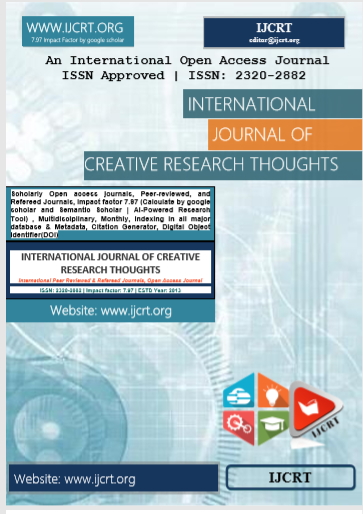 |
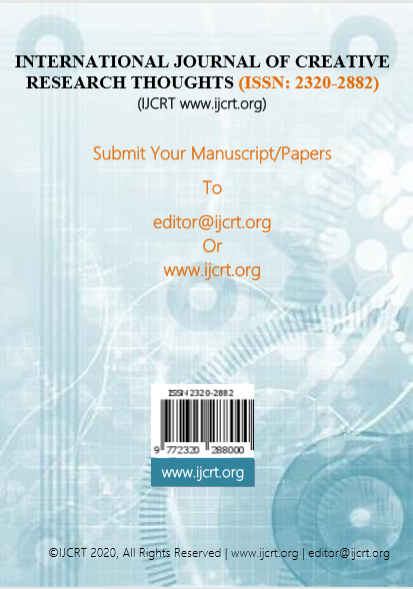 |
|---|---|
| IJCRT Journal front page | IJCRT Journal Back Page |
Paper Title: ARTIFICIAL INTELLIGENCE ALGORITHMS FOR ADAPTIVE POWER CONTROL AND IMPROVED ALIGNMENT DETECTION
Publisher Journal Name: IJCRT
Your Paper Publication Details:
Published Paper ID: - IJCRT2602726
Register Paper ID - 302092
Title: ARTIFICIAL INTELLIGENCE ALGORITHMS FOR ADAPTIVE POWER CONTROL AND IMPROVED ALIGNMENT DETECTION
Author Name(s): AKHIL P M, Dr. PRAMOD K
Publisher Journal name: IJCRT
Volume: 14
Issue: 2
Pages: g308-g316
Year: February 2026
Downloads: 115
Abstract
Directional wireless communication systems require efficient power control and accurate alignment to ensure reliable connectivity and optimal energy usage. Conventional optimization-based methods struggle in highly dynamic environments with mobility and channel uncertainty. This paper presents an Artificial Intelligence (AI)-driven framework for adaptive power control and alignment detection. Reinforcement learning is employed to dynamically regulate transmission power, while deep learning models are used to detect alignment states directly from received signal features. Simulation results demonstrate im proved energy efficiency, higher throughput, and robust alignment performance compared to traditional techniques, highlighting the effectiveness of AI-based solutions in next-generation wireless networks Reinforcement learning is utilized to continuously learn optimal transmis sion power policies based on real-time channel conditions and interference levels, enabling improved energy efficiency without relying on explicit channel models. In parallel, deep learning models are employed to identify alignment states directly from received signal fea tures such as signal strength, phase variations, and mobility patterns, thereby reducing beam training overhead and alignment latency. The joint optimization of power control and alignment detection allows the system to adapt more effectively to dynamic wireless envi ronments. Simulation-based evaluations demonstrate that the proposed AI-driven approach achieves higher throughput, lower power consumption, and improved alignment robustness when compared to traditional methods. The results highlight the potential of AI algorithms as a key enabler for next-generation wireless networks, including millimeter-wave and mas sive MIMOsystems, where adaptability and efficiency are critical performance requirements.
Licence: creative commons attribution 4.0
License
Creative Commons Attribution 4.0 and The Open Definition

Keywords
Artificial Intelligence, Adaptive Power Control, Alignment De tection, Reinforcement Learning
License
Creative Commons Attribution 4.0 and The Open Definition
Paper Title: Multilingual Education and the Dynamics of Learning Outcomes in Modern India
Publisher Journal Name: IJCRT
Your Paper Publication Details:
Published Paper ID: - IJCRT2602725
Register Paper ID - 302189
Title: MULTILINGUAL EDUCATION AND THE DYNAMICS OF LEARNING OUTCOMES IN MODERN INDIA
Author Name(s): Ratna Pandey, Shashank Shekhar Pandey
Publisher Journal name: IJCRT
Volume: 14
Issue: 2
Pages: g297-g307
Year: February 2026
Downloads: 157
Abstract
The paper will explore the connection between multilingual education and learning outcomes in contemporary India and the thesis that language is at the center of defining how students learn, engage and succeed in classrooms. Based on the studies conducted in the cognitive field, sociolinguistics and recent debates around educational policies, the paper examines the ways in which teaching using familiar languages can promote conceptual clarity and lower cognitive barriers in the early learning process. It also examines how language plays part in classroom inclusion and provides an analysis of how linguistic recognition affects student confidence and engagement. As multilingual education is gaining promotion in the policy sector, the article reveals the disjuncture between the policy vision and classroom practice especially on how teachers are prepared, availability of resources, and social expectations of English-mediated education. The discussion does not make English an antithesis of multilingualism, but an opportunity that will be more effective when it is established with proper base learning in common languages. The paper proposes a balanced multilingual approach by reinventing understanding of learning outcomes to be based on more than examination scores, to encompass understanding, involvement and linguistic confidence, in order to match the reality of language-linguistic experience of the students. The paper has concluded that multilingual education provides a viable avenue to more significant and fair learning outcomes in the given case that the implementation is underpinned by consistent pedagogical ideas.
Licence: creative commons attribution 4.0
License
Creative Commons Attribution 4.0 and The Open Definition
Keywords
Multilingual Education and the Dynamics of Learning Outcomes in Modern India
License
Creative Commons Attribution 4.0 and The Open Definition
Paper Title: Prajamandal Movement in Sonepur Estate of western Odisha
Publisher Journal Name: IJCRT
Your Paper Publication Details:
Published Paper ID: - IJCRT2602724
Register Paper ID - 302174
Title: PRAJAMANDAL MOVEMENT IN SONEPUR ESTATE OF WESTERN ODISHA
Author Name(s): Dr. Kishore Chandra Mishra, Miss Gayatree Padhan
Publisher Journal name: IJCRT
Volume: 14
Issue: 2
Pages: g289-g296
Year: February 2026
Downloads: 124
Abstract
The Prajamandal Movement in Sonepur Estate of Western Odisha emerged as a powerful expression of popular resistance against the autocratic rule of the Garjat princely states under British paramountcy. In Sonepur, the peasantry suffered under oppressive land revenue systems, arbitrary taxation, and forced labour practices such as Bethi, Rasad, and Salami. Civil liberties were absent, and the rulers exercised unchecked authority in internal administration. The situation worsened during the reign of Maharaja Sudhansu Sekhar Singh Deo (1937-1947), when illegal exactions and administrative repression intensified. Inspired by the spread of nationalist ideas and the activities of the States Peoples' Conference, local leaders like Dolamani Dash of Turum village mobilized the rural population to organize resistance against feudal oppression. In October 1938, the Sonepur Prajamandal was formally established to demand responsible government, abolition of forced labour, reduction of unjust taxes, and the recognition of basic civil rights. The movement quickly gained momentum through public meetings, delegations, and mass participation. However, the state authorities responded with arrests, false prosecutions, bans, and intimidation to suppress the agitation. Despite severe repression, the Prajamandal workers continued their struggle with determination. The renewed phase of agitation in 1947 further weakened princely authority, ultimately leading to the merger of Sonepur with the Province of Orissa in December 1947. The movement thus marked a decisive step toward the end of feudal rule and the establishment of democratic governance in the region.
Licence: creative commons attribution 4.0
License
Creative Commons Attribution 4.0 and The Open Definition
Keywords
Prajamandal Movement, Sonepur Estate, Garjat States, Maharaja Sudhansu Sekhar Singh Deo, Political Awakening in Princely States.
License
Creative Commons Attribution 4.0 and The Open Definition
Paper Title: The Heart of the Matter: A Critical Examination of Religious Integrity and the Saviour Complex
Publisher Journal Name: IJCRT
Your Paper Publication Details:
Published Paper ID: - IJCRT2602723
Register Paper ID - 302282
Title: THE HEART OF THE MATTER: A CRITICAL EXAMINATION OF RELIGIOUS INTEGRITY AND THE SAVIOUR COMPLEX
Author Name(s): Noksangmenla Jamir
Publisher Journal name: IJCRT
Volume: 14
Issue: 2
Pages: g284-g288
Year: February 2026
Downloads: 103
Abstract
Psychology and philosophy work hand-in-hand in the institution of society and the quality of man as an individual. This can be best manifested in the relationship between religion and man in society. Graham Greene's The Heart of the Matter is such a novel, diving into the complexities of religion established by the paradox of man's faith. This novel focuses on the fears and conflicts that unnerve the human spirit and drive them to their highest peaks as well as their downfalls. This paper explores the plot and central characters of the novel to expand on the theme of religion, particularly on Scobie's sense of responsibility that is rooted in his saviour complex. Concluding with the infallible dogma of one's spirit which is both vast and varied, this study reveals the religious hypocrisy of man under a guise of forgiveness while succumbing to temptation, reflected in Scobie's guilt and avoidance of confrontation.
Licence: creative commons attribution 4.0
License
Creative Commons Attribution 4.0 and The Open Definition
Keywords
Graham Greene, fiction, literary criticism, Catholicism, salvation, saviour complex.
License
Creative Commons Attribution 4.0 and The Open Definition
Paper Title: GENERATIONAL DESIGN: A STUDY OF HOW AGE MAY SHAPE INTERIOR DESIGN APPROACHES AND PERSPECTIVES
Publisher Journal Name: IJCRT
Your Paper Publication Details:
Published Paper ID: - IJCRT2602722
Register Paper ID - 301102
Title: GENERATIONAL DESIGN: A STUDY OF HOW AGE MAY SHAPE INTERIOR DESIGN APPROACHES AND PERSPECTIVES
Author Name(s): Deepjoy Banik, Maulik Hajarnis
Publisher Journal name: IJCRT
Volume: 14
Issue: 2
Pages: g277-g283
Year: February 2026
Downloads: 159
Abstract
Abstract The paper discusses the effect of generational differences on interior design styles and views of four generations of Baby Boomers, Generation Y, Millennies, and Generation Z. By examining the secondary data of various sources such as Pew Research Center, industry reports, and other scholarly works, this study examines the difference in design preferences, the use of space, color preferences, furniture preferences, and the integration of technology. The results show that Baby Boomers prefer comfortable conventional and formal environments, Generation X is focused on functionality and unconventional pairings, Millennials are minimalist and eco-friendly, and Generation Z are more daring self-expressive and digitally driven. The paper is also an analysis of the growing trend of multigenerational co-existence, which grew since 12% in 1980 to 18% in 2021, which impacts the residential design needs. These generation differences have immense effects to interior designers, architects and stakeholders in designing space that supports various needs and preferences, related to age, in the modern society.
Licence: creative commons attribution 4.0
License
Creative Commons Attribution 4.0 and The Open Definition
Keywords
Keywords: generational design, interior design preferences, Baby Boomers, Generation X, Millennials, Generation Z
License
Creative Commons Attribution 4.0 and The Open Definition
Paper Title: Skill Forge: Threshold-Unlocked Video-Curated Roadmaps with Multilingual Leaderboard Gamification for Placement Readiness
Publisher Journal Name: IJCRT
Your Paper Publication Details:
Published Paper ID: - IJCRT2602721
Register Paper ID - 302293
Title: SKILL FORGE: THRESHOLD-UNLOCKED VIDEO-CURATED ROADMAPS WITH MULTILINGUAL LEADERBOARD GAMIFICATION FOR PLACEMENT READINESS
Author Name(s): T Ramya, S Teja Sri, P Sai Kiran, K Siddarda
Publisher Journal name: IJCRT
Volume: 14
Issue: 2
Pages: g268-g276
Year: February 2026
Downloads: 125
Abstract
The rising competitiveness of campus placements has heralded the need to develop systematic and structured preparation mechanisms. Digital platforms have become largely educational but students face difficulties because they are not applied in sequence, and any tracking is not measurable. The classic method is to follow random tutorials of various sources, and the resulting knowledge is incomplete and disjointed in the preparation. Coaching institutes are structured, but not personalized and also they are not financially viable. In addition, the current systems lack an automated analysis and competition in an integrated ecosystem. Towards that end, Skill Path aims to remove such constraints by providing a learning architecture built on centralization and roadmap. The system is combined with curated high quality learning content, automated assessment validation of quizzes, real time dashboards and leaderboard ranking systems. The design focuses on the validation of mastery, where students have to know enough before advancing to the next stage. This method is scalable and technology-oriented at closing the knowledge gap between the academic and industry preparation.
Licence: creative commons attribution 4.0
License
Creative Commons Attribution 4.0 and The Open Definition
Keywords
Subject to a progressive learning procedure, Placement-focused preparation, As a learning strategy, quiz-based learning advances, Performance dashboard student, Features Ranking and leaderboard, Properly structured learning system.
License
Creative Commons Attribution 4.0 and The Open Definition
Paper Title: GST 2.0 Impact on Indian Automobile Industry: A Descriptive Analysis Using Secondary Data
Publisher Journal Name: IJCRT
Your Paper Publication Details:
Published Paper ID: - IJCRT2602720
Register Paper ID - 302063
Title: GST 2.0 IMPACT ON INDIAN AUTOMOBILE INDUSTRY: A DESCRIPTIVE ANALYSIS USING SECONDARY DATA
Author Name(s): Dr. Priyanka Jhamnani
Publisher Journal name: IJCRT
Volume: 14
Issue: 2
Pages: g253-g267
Year: February 2026
Downloads: 133
Abstract
The Indian automotive sector, contributing 7.1% to national GDP, experienced prolonged stagnation between 2019 and 2024 due to prohibitive taxation. In September 2025, GST 2.0 restructured automotive taxes from 28% plus cess (up to 22%) to a simplified 18% for mass-market vehicles and 40% for premium segments. This descriptive analysis uses secondary data from SIAM, FADA, and corporate filings (September 2024-December 2025) to document post-reform market patterns without econometric testing. The four-month observation reveals substantial market reorientation coinciding with reform implementation. Passenger vehicle wholesales shifted from -8.8% year-on-year in August 2025 to +26.8% in December 2025. Geographic divergence emerged, with rural retail registrations growing 32.4% versus 22.9% urban growth, consistent with higher price elasticity in cost-sensitive segments. Mass-market categories benefiting from the 18% tax rate showed stronger expansion, while major OEMs maintained or expanded EBITDA margins above 13% despite price reductions, reflecting operating leverage from higher volumes. Dealer inventory normalized from stressed levels (53-55 days) to healthy ranges (37-39 days), validating demand authenticity. Three unintended consequences emerged: the EV tax advantage narrowed from 24 to 13 percentage points, coinciding with stagnating EV market share; stranded compensation cess credits created estimated INR2,500 crore in dealership working capital challenges; and the sharp 350cc threshold in two-wheelers created artificial market bifurcation affecting product design decisions.This analysis is bounded by a four-month window that captures immediate response but not long-term sustainability, concurrent favorable macroeconomic conditions (deflating inflation, rate cuts), and reliance on secondary sources without primary data collection. The study documents temporal associations without establishing causal relationships, providing baseline insights for future longitudinal research on GST 2.0's sustained impacts.
Licence: creative commons attribution 4.0
License
Creative Commons Attribution 4.0 and The Open Definition
Keywords
GST 2.0, Automotive Industry, Tax Reform, India, Market Response, Descriptive Analysis
License
Creative Commons Attribution 4.0 and The Open Definition
Paper Title: NEONATAL SEPSIS: CURRENT CONCEPTS IN DIAGNOSIS AND MANAGEMENT
Publisher Journal Name: IJCRT
Your Paper Publication Details:
Published Paper ID: - IJCRT2602719
Register Paper ID - 302014
Title: NEONATAL SEPSIS: CURRENT CONCEPTS IN DIAGNOSIS AND MANAGEMENT
Author Name(s): DR.AMIT P CHOUGULE
Publisher Journal name: IJCRT
Volume: 14
Issue: 2
Pages: g247-g252
Year: February 2026
Downloads: 104
Abstract
Abstract Neonatal sepsis remains a major cause of morbidity and mortality worldwide, particularly in low- and middle-income countries. Despite advances in neonatal intensive care, early diagnosis is challenging due to nonspecific clinical features and limitations of laboratory tests. Emerging diagnostic biomarkers, antimicrobial stewardship strategies, and infection-prevention practices have significantly influenced outcomes. This review discusses epidemiology, pathogenesis, clinical presentation, diagnostic approaches, current management strategies, and preventive measures in neonatal sepsis.
Licence: creative commons attribution 4.0
License
Creative Commons Attribution 4.0 and The Open Definition
Keywords
Neonatal sepsis, Neonatal infection, Neonatal morbidity and mortality
License
Creative Commons Attribution 4.0 and The Open Definition
Paper Title: Land- Centered Narratives to Blue Humanities: The Rise of Sea as a Central Setting in Literature
Publisher Journal Name: IJCRT
Your Paper Publication Details:
Published Paper ID: - IJCRT2602718
Register Paper ID - 301914
Title: LAND- CENTERED NARRATIVES TO BLUE HUMANITIES: THE RISE OF SEA AS A CENTRAL SETTING IN LITERATURE
Author Name(s): S. K. Aashika, Dr. P. Sudhalakshmi
Publisher Journal name: IJCRT
Volume: 14
Issue: 2
Pages: g238-g246
Year: February 2026
Downloads: 191
Abstract
Literature has meticulously recorded several geographical spaces, capturing their essence within its preponderance of narratives. It carries the prints of the most fickle elements like time and tide. Time and tide waits to be read and felt in the pleats of the paper. A deep dive into the creases of literature brings out the evolution of land-centred narratives to ocean-centred stories into the limelight. Understanding this transitionary evolution is as necessary as culture and history. Ancient literature is mostly terrestrial stories of heroic courage, where the sea functioned as a realtime challenge and unpredictable danger roaring at the margins of the narratives. From the eighteenth century onward, significant developments in maritime expansion and trade placed the sea at the centre of the narration. The sea has flooded the postcolonial narratives with its tides carrying the painful memories of slavery, migration and diaspora in its ebb and flow. Writers surfaced with impressive stories of maritime history and culture, beautified with the natural elements. All this gradual effort of centuries resulted in the emergence of Blue Humanities as an interdisciplinary framework connecting humanities with science. This paper reviews the literature to trace out the changes in the representation of seas across literary periods in order to reflect the evolving human relationship with sea, moving from territorial fixity to fluid relationality. Keywords: sea narratives, therapeutic sea, postcolonial literature, children literature, environmental degradation, sea as central setting, non- human relationship, anthropocene sea, ecological concern
Licence: creative commons attribution 4.0
License
Creative Commons Attribution 4.0 and The Open Definition
Keywords
Keywords: sea narratives, therapeutic sea, postcolonial literature, children literature, environmental degradation, sea as central setting, non- human relationship, anthropocene sea, ecological concern
License
Creative Commons Attribution 4.0 and The Open Definition
Paper Title: Decentralized E-Voting System Using Blockchain for Secure Elections
Publisher Journal Name: IJCRT
Your Paper Publication Details:
Published Paper ID: - IJCRT2602717
Register Paper ID - 302151
Title: DECENTRALIZED E-VOTING SYSTEM USING BLOCKCHAIN FOR SECURE ELECTIONS
Author Name(s): Gudavalli Sonali Florence, Vivek Kumar Soni, Adireddy Deep Tejaswi, Ashish Kumar Rana
Publisher Journal name: IJCRT
Volume: 14
Issue: 2
Pages: g227-g237
Year: February 2026
Downloads: 111
Abstract
Electronic voting has emerged as a promising alternative to traditional ballot systems; however, concerns related to voter identity verification, vote tampering, and result manipulation continue to hinder widespread adoption. This paper presents a Blockchain-Based Secure Voting System that integrates decentralized ledger technology with multi-factor authentication to enhance election transparency, integrity, and trust. The proposed system leverages Ethereum-compatible smart contracts to enforce immutability and prevent double voting, while Twilio's OTP verification bridges real-world identity with blockchain wallet authorization. A structured election state machine governs the lifecycle of voting, ensuring controlled participation and result publication. Security mechanisms such as access control modifiers, reentrancy protection, and gas-optimized data structures further strengthen the system. The architecture demonstrates how decentralized governance combined with off-chain identity verification can deliver a secure, transparent, and auditable digital voting framework suitable for institutional and organizational elections.
Licence: creative commons attribution 4.0
License
Creative Commons Attribution 4.0 and The Open Definition
Keywords
Blockchain Voting, Smart Contracts, OTP Authentication, Election Security, Decentralized Identity, Ethereum, E-Governance, Multi-Factor Verification, Immutable Ledger, Digital Ballot
License
Creative Commons Attribution 4.0 and The Open Definition
Paper Title: Hostel Management System
Publisher Journal Name: IJCRT
Your Paper Publication Details:
Published Paper ID: - IJCRT2602716
Register Paper ID - 301981
Title: HOSTEL MANAGEMENT SYSTEM
Author Name(s): Pawar Namrata Aravind, Jadhav Ankita Ananata, Khedekar Ishwari Dhananjay, Asabe Anushka Popat, Kulkani Vrunda Jayant
Publisher Journal name: IJCRT
Volume: 14
Issue: 2
Pages: g220-g226
Year: February 2026
Downloads: 127
Abstract
The Hostel Management System is a software application developed to efficiently manage and automate hostel operations in educational institutions. It provides a centralised platform to handle essential tasks such as student registration, room allocation, attendance tracking, complaint management, and medical record maintenance. By automating these processes, the system reduces manual work and paperwork, ensures accurate and up-to-date records, and minimise errors. It also provides role-based access, allowing administrators and students to use the system securely according to their privileges. Administrators can monitor hostel activities, manage rooms, track attendance, and handle complaints efficiently, while students can register, view room availability, and submit requests or complaints easily. Overall, the Hostel Management System improves operational efficiency, saves time, and enhances communication between staff and students. It replaces traditional manual methods with a digital, organized, and reliable system, ensuring smooth hostel management and better overall administration.
Licence: creative commons attribution 4.0
License
Creative Commons Attribution 4.0 and The Open Definition
Keywords
Hostel Management System, Student Registration, Room allocation, Attendance monitoring, compliant management and medical registration
License
Creative Commons Attribution 4.0 and The Open Definition
Paper Title: Preparing Teacher Educators for Pedagogy of ITEP Content-Pedagogy Course "World Around Us" at the Preparatory Stage
Publisher Journal Name: IJCRT
Your Paper Publication Details:
Published Paper ID: - IJCRT2602715
Register Paper ID - 302289
Title: PREPARING TEACHER EDUCATORS FOR PEDAGOGY OF ITEP CONTENT-PEDAGOGY COURSE "WORLD AROUND US" AT THE PREPARATORY STAGE
Author Name(s): Dr. Priyanka Varshney
Publisher Journal name: IJCRT
Volume: 14
Issue: 2
Pages: g213-g219
Year: February 2026
Downloads: 115
Abstract
The four-year Integrated Teacher Education Programme (ITEP) introduced under the National Education Policy 2020 represents a paradigm shift in teacher education by integrating disciplinary knowledge with pedagogy and practice to prepare professionally competent teachers for different school stages. Within this framework, the Content cum Pedagogy course on World Around Us (TWAU) at the preparatory stage is an important course that integrates environmental, social, cultural, and scientific understandings through experiential and multidisciplinary learning. The preparatory stage emphasises activity-based, discovery-oriented, and contextually grounded learning processes, requiring teachers to design developmentally appropriate and inquiry-driven classroom experiences. This paper systematically analyses the professional preparedness and needs of teacher educators for the effective teaching of the ITEP Content-Pedagogy course on TWAU at the preparatory stage. Drawing upon policy guidelines, curriculum frameworks, and research insights on teacher education, the paper identifies the required competencies, knowledge domains and pedagogical orientations among teacher educators for effective teacher preparation and proposes a conceptual framework highlighting three interrelated dimensions- deeper curricular understanding, pedagogical expertise, and professional preparation of teacher educators. The paper contributes by integrating research insights with curriculum expectations and strengthening teacher education discourse by providing a roadmap for preparing competent teachers and teacher educators.
Licence: creative commons attribution 4.0
License
Creative Commons Attribution 4.0 and The Open Definition
Keywords
ITEP, Teacher Educator Preparation, World Around Us, Content-Pedagogy Integration, Preparatory Stage, Experiential Learning, Multidisciplinary Learning
License
Creative Commons Attribution 4.0 and The Open Definition
Paper Title: Hard Power Rivalry and Soft Power Outreach: Nuclear Strategy and Health Diplomacy in India, China and Japan
Publisher Journal Name: IJCRT
Your Paper Publication Details:
Published Paper ID: - IJCRT2602714
Register Paper ID - 302110
Title: HARD POWER RIVALRY AND SOFT POWER OUTREACH: NUCLEAR STRATEGY AND HEALTH DIPLOMACY IN INDIA, CHINA AND JAPAN
Author Name(s): Layba Choudhary, Muskan Thakur, Vidhi Gupta
Publisher Journal name: IJCRT
Volume: 14
Issue: 2
Pages: g202-g212
Year: February 2026
Downloads: 144
Abstract
This paper investigates how hard power competition and soft power initiatives influence regional diplomacy in Asia, particularly involving India, China, and Japan. It starts by defining neighbourhood diplomacy as the strategic management of relationships with neighbouring states using security, political, and developmental tools. The paper then presents hard power and soft power as complementary strategies rather than oppositional ones. The next section focuses on nuclear strategy as a key element of hard power, which helps shape deterrence relationships, convey credibility, and affect regional perceptions of threats. This is followed by an examination of health diplomacy as a means of soft power, emphasizing its role in building trust, establishing legitimacy, and fostering cooperation through medical aid, vaccine collaborations, and humanitarian efforts. The final part assesses how the combination of deterrence and diplomatic engagement influences neighbourhood relations, arguing that both coercive power and normative actions are critical to shaping regional stability and influence. The study concludes that effective neighbourhood leadership increasingly relies on finding a balance between strategic restraint and the provision of regional public goods.
Licence: creative commons attribution 4.0
License
Creative Commons Attribution 4.0 and The Open Definition
Keywords
Hard Power, Soft Power, Neighbourhood Diplomacy, Nuclear Policy, Health Diplomacy
License
Creative Commons Attribution 4.0 and The Open Definition
Paper Title: Haunted by Memory: Trauma in Shirley Jackson's The Haunting of Hill House and Laura Purcell's The Silent Companions
Publisher Journal Name: IJCRT
Your Paper Publication Details:
Published Paper ID: - IJCRT2602713
Register Paper ID - 302126
Title: HAUNTED BY MEMORY: TRAUMA IN SHIRLEY JACKSON'S THE HAUNTING OF HILL HOUSE AND LAURA PURCELL'S THE SILENT COMPANIONS
Author Name(s): Sanskriti Chauhan, Dr Gibu Sabu
Publisher Journal name: IJCRT
Volume: 14
Issue: 2
Pages: g186-g201
Year: February 2026
Downloads: 108
Abstract
Haunted by Memory: Trauma in Shirley Jackson's The Haunting of Hill House and Laura Purcell's The Silent Companions
Licence: creative commons attribution 4.0
License
Creative Commons Attribution 4.0 and The Open Definition
Keywords
Haunted by Memory: Trauma in Shirley Jackson's The Haunting of Hill House and Laura Purcell's The Silent Companions
License
Creative Commons Attribution 4.0 and The Open Definition
Paper Title: Blockchain-Enabled Secure And Transparent Digital Voting System Using Smart Contracts
Publisher Journal Name: IJCRT
Your Paper Publication Details:
Published Paper ID: - IJCRT2602712
Register Paper ID - 302176
Title: BLOCKCHAIN-ENABLED SECURE AND TRANSPARENT DIGITAL VOTING SYSTEM USING SMART CONTRACTS
Author Name(s): Yellamelli Sunil, Suravarapu Kushal Kumar, Chukka Charan Kumar, Shaik Sameer, Mr. Y. Durga Prasad
Publisher Journal name: IJCRT
Volume: 14
Issue: 2
Pages: g178-g185
Year: February 2026
Downloads: 131
Abstract
The integrity of democratic elections relies heavily on secure, transparent, and trustworthy voting mechanisms. Conventional voting systems, including paper-based and electronic voting machines, suffer from challenges such as centralized control, limited transparency, and vulnerability to manipulation. These limitations reduce public confidence in electoral outcomes and highlight the need for a secure digital alternative. This paper introduces a blockchain-enabled digital voting system that ensures transparency, security, and decentralization through the use of smart contracts. The proposed approach records votes on an immutable blockchain, preventing unauthorized modifications and enforcing election rules such as voter eligibility and single-vote constraints. Voter privacy is preserved by allowing public verification of transactions without revealing individual identities. The system adopts a hybrid architecture that combines on-chain vote validation with off-chain user interaction to improve scalability and performance. Experimental results indicate enhanced security, reliable vote counting, and improved trust compared to traditional voting systems. CRYPTOBALLOT demonstrates the effectiveness of blockchain technology in enabling secure and transparent digital elections.
Licence: creative commons attribution 4.0
License
Creative Commons Attribution 4.0 and The Open Definition
Keywords
Blockchain-based digital voting; Smart contracts; Decentralized elections; Secure voting systems; Transparency and integrity; Electronic voting.
License
Creative Commons Attribution 4.0 and The Open Definition
Paper Title: Study of the relation between Scientific Knowledge, Aptitude and Environmental Awareness
Publisher Journal Name: IJCRT
Your Paper Publication Details:
Published Paper ID: - IJCRT2602711
Register Paper ID - 302112
Title: STUDY OF THE RELATION BETWEEN SCIENTIFIC KNOWLEDGE, APTITUDE AND ENVIRONMENTAL AWARENESS
Author Name(s): Dr. Chandra Mukherjee
Publisher Journal name: IJCRT
Volume: 14
Issue: 2
Pages: g143-g177
Year: February 2026
Downloads: 152
Abstract
The objective of the present study is to ascertain the relationship among scientific knowledge, aptitude and environmental awareness which include environmental awareness for judgement (EAJ) and environmental awareness for action (EAA). Hypotheses states that the environmental awareness is positively and significantly corelated to scientific knowledge and aptitude, i.e. knowledge and aptitude for life science and total test (H1-H4). Scientific knowledge was considered as independent variable and environment awareness was considered as dependant variable simultaneously aptitude is delineated as innate ability to acquire knowledge or to perform any task. Five ninety-three samples of class 11 standard were collected randomly from the districts of North and South 24 Parganas of West Bengal and from the district of Kolkata, undergone the same courses of study and passed out Madhyamik Examination (10+ public examination conducted by the West Bengal Board of Secondary Education. The tool for measuring environmental awareness consists of 48 items (EAA-27 items and EAJ=21 items) developed by Dr. Chakraborty and Mrs. Sengupta in 1999 and scientific knowledge and aptitude test of 100 items (Life Science= 30, Physical Science= 40 items and Mathematics= 30 items), developed by Mrs. C. Mukherjee and Dr. Chakraborty in 1999 used in this study. Descriptive analysis, correlational analysis, and regression analysis were the mode of analysis in this study. In Inter-correlation matrix shows that Environmental awareness was positively and significantly corelated to knowledge and aptitude in Life Science, Physical Science and total test and EAA and EAJ. However, the summary of the results showing the levels of regression by groups of rural male, rural female, urban male urban female and all groups - (rural+urban)+(male+female) on environmental awareness reveals the fact that the knowledge of life science and total scientific knowledge and aptitude test necessarily ensure environmental awareness.
Licence: creative commons attribution 4.0
License
Creative Commons Attribution 4.0 and The Open Definition
Keywords
Keywords : Scientific knowledge, aptitude, environmental awareness judgement, action , Life science, Physical science, Mathematics, descriptive analysis, correlational analysis, regressional analysis
License
Creative Commons Attribution 4.0 and The Open Definition
Paper Title: Smart and Sustainable Fashion: Integrating Digital Security and Transparency in Sustainable Clothing Supply Chains
Publisher Journal Name: IJCRT
Your Paper Publication Details:
Published Paper ID: - IJCRT2602710
Register Paper ID - 302273
Title: SMART AND SUSTAINABLE FASHION: INTEGRATING DIGITAL SECURITY AND TRANSPARENCY IN SUSTAINABLE CLOTHING SUPPLY CHAINS
Author Name(s): Maloth Surender Naik, Gandham Hima Bindu, Bhaskar Teja
Publisher Journal name: IJCRT
Volume: 14
Issue: 2
Pages: g128-g142
Year: February 2026
Downloads: 112
Abstract
The fashion industry faces growing scrutiny over its environmental and social impacts while simultaneously experiencing rapid digitalisation of its supply chains. Sustainable and circular fashion models are widely promoted, yet consumer scepticism regarding the authenticity of sustainability claims remains high, fuelled by information asymmetries and concerns about greenwashing. This paper develops an integrated conceptual framework that links sustainable fashion practices, digital traceability technologies, and cybersecurity mechanisms to explain how these elements jointly influence transparency and consumer trust in clothing supply chains. Drawing on secondary data from academic literature, industry, and ESG reports, technology case studies, and cybersecurity studies, the analysis synthesises current knowledge on sustainable and circular fashion strategies, digital tracking and authentication tools, and security risks in digital supply networks. The proposed framework argues that secure digital traceability is essential to transform internal sustainability initiatives into credible, externally verifiable information that can reduce information asymmetry and support consumer trust. The paper outlines managerial implications for fashion firms seeking to align sustainability, digital transformation, and security agendas, and identifies directions for future empirical research to test and refine the framework. In particular, managers are advised to prioritise security-by-design, cross-functional governance, and consumer-centric disclosure to build robust, trustworthy, sustainable supply chains.
Licence: creative commons attribution 4.0
License
Creative Commons Attribution 4.0 and The Open Definition
Keywords
Sustainable fashion Circular fashion Smart fashion Supply chain transparency Supply chain traceability Digital product passport Blockchain technology Radio Frequency Identification (RFID) Internet of Things (IoT) Digital supply chains Cybersecurity Information security Data integrity Consumer trust Greenwashing Ethical sourcing Sustainable supply chain management Digital transformation Fashion industry Sustainability framework
License
Creative Commons Attribution 4.0 and The Open Definition
Paper Title: Experimental Investigation on Optimization of Sustainable Materials & Mechanical Properties in M20 Grade Self Compacting
Publisher Journal Name: IJCRT
Your Paper Publication Details:
Published Paper ID: - IJCRT2602709
Register Paper ID - 302183
Title: EXPERIMENTAL INVESTIGATION ON OPTIMIZATION OF SUSTAINABLE MATERIALS & MECHANICAL PROPERTIES IN M20 GRADE SELF COMPACTING
Author Name(s): K. Vamsi Krishna, T.Venkata Sashank, K. Suma Sree, Ch.Rajesh Kumar Varma, M. Suresh, A.Devi Prasad
Publisher Journal name: IJCRT
Volume: 14
Issue: 2
Pages: g116-g127
Year: February 2026
Downloads: 142
Abstract
Self-Compacting Concrete (SCC) is an innovative concrete that possesses the ability to flow under its own weight and completely fill form work without the need for mechanical vibration. This project investigates the development of Self-Compacting Concrete of M20 grade by partially replacing cement with fly ash, an industrial by-product, to improve work-ability and promote sustainable construction practices. Fly ash was used as a partial replacement of cement in different proportions, and its influence on the fresh and hardened properties of SCC was studied. The fresh properties of SCC were evaluated using standard tests such as slump flow test, T50 time, V-funnel test, and L-box test to ensure conformity with SCC guidelines. The hardened properties were assessed by conducting compressive strength tests at 7 and 28 days. The experimental results indicate that the inclusion of fly ash enhances the flow-ability, filling ability, and passing ability of SCC while achieving the required strength for M20 grade concrete. An optimum percentage of fly ash replacement was observed to provide a good balance between strength and work-ability. The study concludes that fly ash can be effectively utilized as a partial replacement of cement in Self-Compacting Concrete, resulting in economical, durable, and environmentally friendly concrete suitable for structural applications.
Licence: creative commons attribution 4.0
License
Creative Commons Attribution 4.0 and The Open Definition
Keywords
Self-Compacting Concrete (SCC), Fly Ash, PPC based Cement, Flowability, Superplasticizer
License
Creative Commons Attribution 4.0 and The Open Definition
Paper Title: Women's Empowerment, Financial Inclusion, and Inclusive Banking Systems: A Bibliometric Review of Global Research Trends
Publisher Journal Name: IJCRT
Your Paper Publication Details:
Published Paper ID: - IJCRT2602708
Register Paper ID - 302026
Title: WOMEN'S EMPOWERMENT, FINANCIAL INCLUSION, AND INCLUSIVE BANKING SYSTEMS: A BIBLIOMETRIC REVIEW OF GLOBAL RESEARCH TRENDS
Author Name(s): Aiswarya Cherian, Dr. Arun Kumar. T.T
Publisher Journal name: IJCRT
Volume: 14
Issue: 2
Pages: g99-g115
Year: February 2026
Downloads: 145
Abstract
Women's empowerment through financial inclusion has emerged as a critical development priority, particularly in emerging and developing economies. Despite the expanding body of literature, research remains fragmented across conceptual, institutional, and regional dimensions. This study conducts a comprehensive bibliometric analysis of 871 publications indexed in the Scopus database from 2000 to 2025 to map the intellectual structure, thematic evolution, and collaborative patterns in the field. Using co-citation, keyword co-occurrence, thematic mapping, and collaboration network analyses, the study identifies poverty alleviation and financial inclusion as dominant motor themes, while empowerment-related constructs remain conceptually broad. Findings reveal a clear transition from microfinance-centered research toward digital financial inclusion, gender equality, and sustainability-oriented frameworks aligned with the Sustainable Development Goals. India emerges as the leading contributor, reflecting the context-driven nature of the research domain. The analysis highlights significant gaps, particularly in longitudinal assessments, digital gender divides, and the role of small finance and niche banks in sustaining empowerment outcomes. The study provides an integrated knowledge framework to guide future research, policy formulation, and inclusive banking strategies.
Licence: creative commons attribution 4.0
License
Creative Commons Attribution 4.0 and The Open Definition
Keywords
Women's Empowerment; Financial Inclusion; Inclusive Banking; Microfinance; Small Finance Banks; Digital Financial Inclusion; Poverty Alleviation; Gender Equality; Bibliometric Analysis; Co-citation Analysis; Thematic Evolution.
License
Creative Commons Attribution 4.0 and The Open Definition
Paper Title: Behavioral Problem of Preschool Children Due To Smart Phone Usage - A Systematic Review
Publisher Journal Name: IJCRT
Your Paper Publication Details:
Published Paper ID: - IJCRT2602707
Register Paper ID - 302040
Title: BEHAVIORAL PROBLEM OF PRESCHOOL CHILDREN DUE TO SMART PHONE USAGE - A SYSTEMATIC REVIEW
Author Name(s): Pratiksha Dwivedi, Ms. Biradar Gayatri, Dr V Kavitha Kiran
Publisher Journal name: IJCRT
Volume: 14
Issue: 2
Pages: g93-g98
Year: February 2026
Downloads: 116
Abstract
Children aged from 3 to 5, also known as preschool children, are in a developmental stage where abilities like cognitive, social, emotional, etc., will be developed. This study aims to reveal the impact of smartphone usage on the preschool children's behavior. In recent years it is noticed that usage of smartphones is increasing at a rapid speed in every age group, including the preschool age group. Due to excess use, children are becoming hyperactive, attention deficient, and irritable, and factors like parental phone usage, lack of supervision, and lack of limitation are providing fuel to this. Various research provides knowledge on the problems that are seen in the development of preschool children due to smartphone usage. From this perspective the current review study mostly focuses on the studies that revealed the behavioral problem that is seen among preschool children due to smartphone use. Studies revealed that higher screen time is associated with language delays, behavioral problems, and poor sleep in the preschool children. Parental interaction also contributed to the problematic use of children. These findings reinforced the importance of consistent parental monitoring and a controlled digital habit.
Licence: creative commons attribution 4.0
License
Creative Commons Attribution 4.0 and The Open Definition
Keywords
Preschool Children, Behavioral Problem, Smart phone usage
License
Creative Commons Attribution 4.0 and The Open Definition
All Published Paper Details Search Through Above Search Option.
About IJCRT
The International Journal of Creative Research Thoughts (IJCRT) aims to explore advances in research pertaining to applied, theoretical and experimental Technological studies. The goal is to promote scientific information interchange between researchers, developers, engineers, students, and practitioners working in and around the world.
Indexing In Google Scholar, ResearcherID Thomson Reuters, Mendeley : reference manager, Academia.edu, arXiv.org, Research Gate, CiteSeerX, DocStoc, ISSUU, Scribd, and many more International Journal of Creative Research Thoughts (IJCRT) ISSN: 2320-2882 | Impact Factor: 7.97 | 7.97 impact factor and ISSN Approved. Provide DOI and Hard copy of Certificate. Low Open Access Processing Charges. 1500 INR for Indian author & 55$ for foreign International author. Call For Paper (Volume 14 | Issue 8 | Month- August 2026)
Call For Paper August 2026
Call For Papers
August 2026
Volume 14 | Issue 8
Last Date :
30-Sep-2026
Submit Manuscript Online Impact Factor: 7.97 Review Results : Within 02-03 Days Paper Publication : Within 02-03 Days
August 2026
Volume 14 | Issue 8
Last Date :
30-Sep-2026
Submit Manuscript Online Impact Factor: 7.97 Review Results : Within 02-03 Days Paper Publication : Within 02-03 Days
Published Issue Details
For Authors
Forms / Downloads
Other IMP Links
Indexing Partner
Research Area
LICENSE





ISSN and 7.97 Impact Factor Details
ISSN: 2320-2882 Impact Factor: 7.97 and ISSN APPROVED Journal Starting Year (ESTD) : 2013


ISSN and 7.97 Impact Factor Details
ISSN: 2320-2882 Impact Factor: 7.97 and ISSN APPROVED Journal Starting Year (ESTD) : 2013
DOI Details
CONFERENCE
CONFERENCE MANAGMENT & PUBLICATION CONFERENCE PROPOSAL
RECENT CONFERENCE

CONFERENCE PROPOSAL CONFERENCE PROCEEDINGS
CONFERENCE PROPOSAL CONFERENCE PROCEEDINGS
For Reviewer /Referral (RMS) Earn 500 per paper
Important Links
NEWS & Conference
Digital Library
IJCRT RMS | Earn 500 Per Paper.

Open Access


LICENSE
Indexing Partner
Scholarly open access journals, Peer-reviewed, and Refereed Journals, Impact factor 7.97 (Calculate by google scholar and Semantic Scholar | AI-Powered Research Tool) , Multidisciplinary, Monthly, Indexing in all major database & Metadata, Citation Generator, Digital Object Identifier(DOI)