Important Details
IJCRT - International Peer Reviewed, Open Access Journal, Multidisciplinary, Monthly, Nominal(Low) Fees for Professional Research Services International Journal of Creative Research Thoughts - IJCRT Peer Review Journal, Refereed Journal, Peer Reviewed Journal , Referred Journal and Indexed Journal, Open access, Online and Print Journal,international Journal Open Access, Accepted by Indian and foreign university ,IJCRT Followed Norms, guidelines, requirement, listing criteria and methodology of score/point also applied from: Scopus , Web of Science , UGC Approved , UGC CARE, UGC-CARE .
UGC Approved Journal No: 49023 (18)
UGC approval Link
https://ijcrt.org/ugc%20approval.jpg
All Policy and Approval
Please Like Our Facebook Page | CrossRef DOI and Hard copy of Certificate Provide if required. | www.IJCRT.org | editor@IJCRT.org | IJCRT WhatsApp +91 94294 58311
Publication Details:
- Paper Submission : 31-Aug-2026. Call For Paper (Volume 14 | Issue 8 | Month- August 2026)
- Acceptance/Rejection Notification: Within 02-04 Days.
- Paper Publish: Within 02-04 Days after submitting all documents.
-
Submit Your Paper Any time There No deadline.
-
Publication fees : 1570 INR for Indian author & 59$ for foreign International author.
Please Like Our Facebook Page | CrossRef DOI and Hard copy of Certificate Provide if required.
Licence and Indexing
Indexing In Google Scholar, SSRN, ResearcherID-Publons, Semantic Scholar | AI-Powered Research Tool, Microsoft Academic, Academia.edu, arXiv.org, Research Gate, CiteSeerX, ResearcherID Thomson Reuters, Mendeley : reference manager, DocStoc, ISSUU, Scribd, and many more | High Impact Factor: 7.97 | Digital object identifier (DOI) and Hard Copy of certificate Provided.




























Licence
DOI
ISSN Approved impact factor: 7.97 
Creative Common 
Valid as per new UGC Gazette regulations 

INTERNATIONAL JOURNAL OF CREATIVE RESEARCH THOUGHTS - IJCRT (IJCRT.ORG)
International Peer Reviewed & Refereed Journals, Open Access Journal
IJCRT Peer-Reviewed (Refereed) Journal as Per New UGC Rules.
ISSN Approved Journal No: 2320-2882 | Impact factor: 7.97 | ESTD Year: 2013
Call For Paper - Volume 14 | Issue 8 | Month- August 2026
Scholarly open access journals, Peer-reviewed, and Refereed Journals, Impact factor 7.97 (Calculate by google scholar and Semantic Scholar | AI-Powered Research Tool) , Multidisciplinary, Monthly, Indexing in all major database & Metadata, Citation Generator, Digital Object Identifier(CrossRef DOI)
IJCRT WhatsApp Contact
IJCRT Search Xplore - Search all paper by Paper Name , Author Name, and Title
Volume 13 | Issue 10
Volume 13 | Issue 10 | Month
Downlaod After Publication 1) Table of content index in PDF
2) Table of content index in HTML 2)Table of content index in HTML
3) Front Page 3) Front Page
4) Back Page 4) Back Page
5) Editor Board Member 5)Editor Board Member
6) OLD Style Issue 6) OLD Style Issue
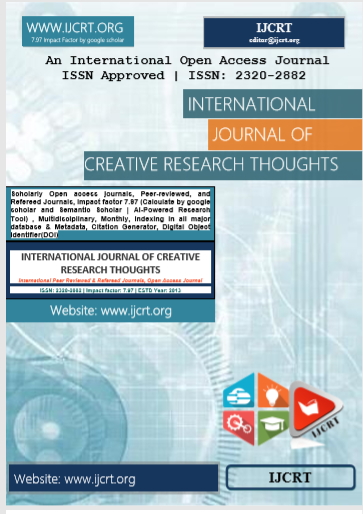 |
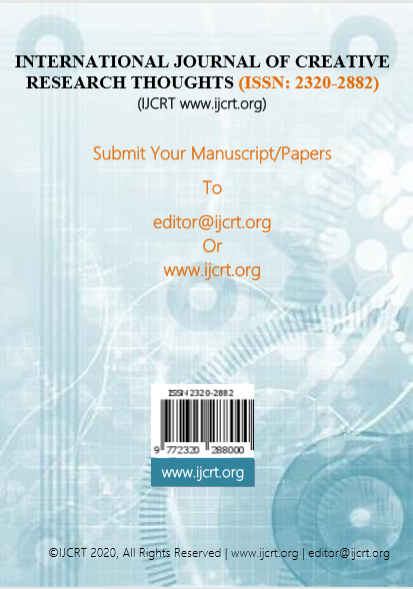 |
|---|---|
| IJCRT Journal front page | IJCRT Journal Back Page |
Paper Title: FORMULATION AND IN VITRO EVALUATION OF CLARITHROMYCIN EXTENDED-RELEASE MUCOADHESIVE GRANULES PREPARED VIA SPRAY DRYING
Publisher Journal Name: IJCRT
Your Paper Publication Details:
Published Paper ID: - IJCRT2510811
Register Paper ID - 295343
Title: FORMULATION AND IN VITRO EVALUATION OF CLARITHROMYCIN EXTENDED-RELEASE MUCOADHESIVE GRANULES PREPARED VIA SPRAY DRYING
Author Name(s): Nagam Tanuja, Ch Taraka Rama Rao
Publisher Journal name: IJCRT
Volume: 13
Issue: 10
Pages: g958-g963
Year: October 2025
Downloads: 162
Abstract
Clarithromycin, a macrolide antibiotic used for respiratory and Helicobacter pylori infections, exhibits poor acid stability, short half-life, and variable bioavailability, leading to frequent dosing and poor patient compliance. This study aimed to develop extended-release mucoadhesive granules of clarithromycin using spray-drying technology to enhance gastric retention and sustain drug release. Formulations were prepared with mucoadhesive and controlled-release polymers including Carbopol 971P, HPMC, HPC, and polyethylene oxide. The granules were evaluated for micromeritic properties, drug content, swelling index, mucoadhesive strength, and in vitro release behavior. Polymer composition significantly affected release kinetics and adhesion characteristics. The optimized formulation exhibited sustained release following zero-order and Higuchi models, along with strong mucoadhesive properties ensuring prolonged gastric residence. Comparative evaluation with a marketed extended-release product confirmed therapeutic equivalence, indicating clinical relevance. The developed spray-dried mucoadhesive granules provide a promising, scalable approach to overcome limitations of conventional clarithromycin therapy, improving compliance and reducing dosing frequency
Licence: creative commons attribution 4.0
License
Creative Commons Attribution 4.0 and The Open Definition

Keywords
Clarithromycin, Carbopol 971P, Mucoadhesive granules
License
Creative Commons Attribution 4.0 and The Open Definition
Paper Title: CUSTODIAL DEATH: LEGAL FRAMEWORK OF INDIA AND USA
Publisher Journal Name: IJCRT
Your Paper Publication Details:
Published Paper ID: - IJCRT2510810
Register Paper ID - 295918
Title: CUSTODIAL DEATH: LEGAL FRAMEWORK OF INDIA AND USA
Author Name(s): Shobha, Dr. Amritpal Kaur
Publisher Journal name: IJCRT
Volume: 13
Issue: 10
Pages: g936-g957
Year: October 2025
Downloads: 201
Abstract
Custodial violence is one of the most persistent and disturbing issues to the rule of law, safeguarding human rights, and the sanctity of constitutional governance. The issue of torture, deaths, and abuse within the confines of custody still occurs even with constitutional protections, statutory bans, and judicial policies, to demonstrate how weak the state accountability systems remain. This paper gives a comparative law study on the issue of custodial violence and state responsibility in the United States and India, two democracies that, though having different constitutional traditions, share similarities of individual rights and due process. Using constitutional provisions, statutory frameworks and case law leading judicial precedents, the paper will explore how each jurisdiction conceptualises and applies state responsibility to custodial abuse. It also determines the efficiency of domestic remedy, checks and balances on compliance with international human rights duties through instruments like the United Nations Convention against Torture. The study provides systemic deficits, institutional cultures and enforcement asymmetries as the drivers of impunity through doctrinal, comparative and empirical lenses. The paper is concluded by recommendations on legal and policy changes that can be made to increase accountability, promote transparency and make custodial environments indicative of democratic principles of dignity, justice and inviolability of human life.
Licence: creative commons attribution 4.0
License
Creative Commons Attribution 4.0 and The Open Definition
Keywords
State responsibility, Custodial violence, Comparative legal analysis, Human rights, Police accountability, Constitutional law, Torture prevention, Rule of law.
License
Creative Commons Attribution 4.0 and The Open Definition
Paper Title: "A REVIEW OF MOUTH DISSOLVING TABLET FORMULATIONS USING VARIOUS COSOLVENTS"
Publisher Journal Name: IJCRT
Your Paper Publication Details:
Published Paper ID: - IJCRT2510809
Register Paper ID - 295920
Title: "A REVIEW OF MOUTH DISSOLVING TABLET FORMULATIONS USING VARIOUS COSOLVENTS"
Author Name(s): Sejal Pravin Kadam, Anwesha Lovlin Garnaik
Publisher Journal name: IJCRT
Volume: 13
Issue: 10
Pages: g921-g935
Year: October 2025
Downloads: 169
Abstract
Mouth dissolving tablets are those tablets which when placed in mouth get dissolved rapidly in saliva without the need of liquid and can be swallowed. Conventional dosage form such as tablets and capsules are the most popular among all dosage forms existing today because of its convenience of self adminstration, compactness and easy manufacturing. To overcome these problems, mouth dissolving tablets have been developed, which having a good hardness, dose uniformity, easy administration and serves as a first choice of dosage forms for pediatrics, geriatrics and travelling patients. Some tablets are designed to dissolve in saliva remarkably fast,within a few seconds,and are true fast dissolving tablets. This tablets format is designed to allow adminstration of an oral solid dose form in absence of water or fluid intake.Such tablet readily dissolve or disintegrate in saliva generally within < 60 seconds.
Licence: creative commons attribution 4.0
License
Creative Commons Attribution 4.0 and The Open Definition
Keywords
pholorogucinol, mouth dissolving tablets,cosolvents, experimental design, disintegrate, fast dissolving traditional dosage form.
License
Creative Commons Attribution 4.0 and The Open Definition
Paper Title: Vasantrao Naik Mahavidyalaya Institutional Repository: Best Practice for Encouraging Self Archiving
Publisher Journal Name: IJCRT
Your Paper Publication Details:
Published Paper ID: - IJCRT2510808
Register Paper ID - 295875
Title: VASANTRAO NAIK MAHAVIDYALAYA INSTITUTIONAL REPOSITORY: BEST PRACTICE FOR ENCOURAGING SELF ARCHIVING
Author Name(s): Ashwini Akkalchand Kasure, Dr. Veena M. Kamble
Publisher Journal name: IJCRT
Volume: 13
Issue: 10
Pages: g909-g920
Year: October 2025
Downloads: 187
Abstract
Information technology has facilitated preservation of the documents, i.e. digital preservation. Institutional repositories are becoming responsible for scholarly content in new ways. This paper highlights some of the initiatives taken in Vasant Rao Naik College for the digital preservation of Rare Book. The article offers suggestions for how your library might best preserve local content.
Licence: creative commons attribution 4.0
License
Creative Commons Attribution 4.0 and The Open Definition
Keywords
Digital Preservation, Institutional Repository, Digital Library, Open Source, D-Space.
License
Creative Commons Attribution 4.0 and The Open Definition
Paper Title: A STUDY OF AGGRESSION AND PSYCHOLOGICAL HARDINESS OF SCHOOL STUDENTS IN RELATION TO THEIR GENDER AND LOCALE
Publisher Journal Name: IJCRT
Your Paper Publication Details:
Published Paper ID: - IJCRT2510807
Register Paper ID - 295686
Title: A STUDY OF AGGRESSION AND PSYCHOLOGICAL HARDINESS OF SCHOOL STUDENTS IN RELATION TO THEIR GENDER AND LOCALE
Author Name(s): Rakesh Kumar, Dr. Pushkrit Gupta
Publisher Journal name: IJCRT
Volume: 13
Issue: 10
Pages: g901-g908
Year: October 2025
Downloads: 164
Abstract
The objective of this paper is to study and find out the difference between aggression and psychological hardiness among 200 school students of Barnala district. Aggression Inventory by Sultania (2006) and Psychological Hardiness Scale by Singh (2011) were used. Descriptive statistics and t-test were employed. The results of the study showed that there is no significant gender and locale difference among school students on aggression. The results of the study also depicted that there is no significant gender and locale difference among school students on psychological hardiness. Moreover, there was a positive and significant relationship between aggression and psychological hardiness of school students.
Licence: creative commons attribution 4.0
License
Creative Commons Attribution 4.0 and The Open Definition
Keywords
Aggression, Psychological Hardiness and School Students
License
Creative Commons Attribution 4.0 and The Open Definition
Paper Title: Thiruvalluvar's Social Philosophy and Its Contemporary Relevance: An Analytical Exploration
Publisher Journal Name: IJCRT
Your Paper Publication Details:
Published Paper ID: - IJCRT2510806
Register Paper ID - 295917
Title: THIRUVALLUVAR'S SOCIAL PHILOSOPHY AND ITS CONTEMPORARY RELEVANCE: AN ANALYTICAL EXPLORATION
Author Name(s): Jesmina Khatun
Publisher Journal name: IJCRT
Volume: 13
Issue: 10
Pages: g896-g900
Year: October 2025
Downloads: 200
Abstract
Thiruvalluvar's social philosophy, as articulated in the "Thirukkural", is characterized by its advocacy for universal human dignity, compassion and social justice, which remain profoundly relevant in contemporary society. The "Thirukkural" promotes ethical values such as equality, charity, non-violence and co-operation, urging individuals and rulers alike to act with responsibility toward the common good. Thiruvalluvar strongly denounces structural inequalities such as caste discrimination and upholds merit and virtue as superior to birth, emphasizing an inclusive social vision where everyone is given equal opportunities. His call for ethical leadership, integrity and fairness in governance resonates with modern demands for transparency and moral accountability in public administration. Furthermore, Thiruvalluvar's focus on self-control, family values and mutual respect within social relationships provides a timeless framework for nurturing social harmony and personal well-being. He extends the principle of compassion to all sentient beings, anticipating contemporary concerns such as environmental ethics and humanitarianism. The "Thirukkural"'s pragmatic yet ideal approach centered on virtue (Aram), material prosperity (Porul) and enjoyment (Inbam) grounds moral philosophy in wordly existence, making it universally applicable across cultures and eras. In today's world of increasing social fragmentation, environmental crises and rising inequality, Thiruvalluvar's teachings on justice, co-operation and the welfare of the marginalized offer valuable ethical guidance for building inclusive, resilient and peaceful communities. His wisdom continues to inspire global audiences and affirm the enduring relevance of ancient ethical thought in addressing modern social challenges.
Licence: creative commons attribution 4.0
License
Creative Commons Attribution 4.0 and The Open Definition
Keywords
Thiruvalluvar, "Thirukkural", social philosophy, justice, compassion, governance, equality, virtue.
License
Creative Commons Attribution 4.0 and The Open Definition
Paper Title: GI & WTO- Expanding protection for non- agriculture products.
Publisher Journal Name: IJCRT
Your Paper Publication Details:
Published Paper ID: - IJCRT2510805
Register Paper ID - 295911
Title: GI & WTO- EXPANDING PROTECTION FOR NON- AGRICULTURE PRODUCTS.
Author Name(s): Rohit Luthra
Publisher Journal name: IJCRT
Volume: 13
Issue: 10
Pages: g889-g895
Year: October 2025
Downloads: 211
Abstract
Geographical Indications (GIs) serve as pivotal tool in identifying goods originating from specific regions, reflecting the unique qualities, reputation, or characteristics attributable to that origin. While the World Trade Organisation's (WTO) agreement on Trade-Related Aspect of Intellectual Property Right (TRIPS) provides a foundational framework for GI protection, its application predominantly favor's agricultural products. Historically, GI protection has focused agriculture products and foodstuffs (wine, cheese, tea, rice) but many non-agricultural goods (handicrafts, textiles, ceramics, metalware, industrial design-linked products) also prosses qualities intimately tied to place of origin and local known knowledge. This paper tries to examines the doctrinal footing of GI protection under TRIPS, analyses key disputes and national practices (with emphasis on WTO disputes and notable national/regional developments), evaluates doctrinal and practical obstacles to expanding heightened protection to non-agriculture products, and proposes legal and policy pathways for expanding protection while balancing trademark and trade interests.
Licence: creative commons attribution 4.0
License
Creative Commons Attribution 4.0 and The Open Definition
Keywords
GI, WTO, Protection, Non agricultural products
License
Creative Commons Attribution 4.0 and The Open Definition
Paper Title: A STUDY TO ASSESS THE EFFECTIVENESS OF KANGAROO MOTHER CARE ON MATERNAL AND NEONATAL PARAMETERS AMONG POSTNATAL MOTHERS OF PRETERM BABIES AT SVRR GGH, TIRUPATI
Publisher Journal Name: IJCRT
Your Paper Publication Details:
Published Paper ID: - IJCRT2510804
Register Paper ID - 295876
Title: A STUDY TO ASSESS THE EFFECTIVENESS OF KANGAROO MOTHER CARE ON MATERNAL AND NEONATAL PARAMETERS AMONG POSTNATAL MOTHERS OF PRETERM BABIES AT SVRR GGH, TIRUPATI
Author Name(s): Mrs K Varalakshmi, Dr C Usha Kiran, Mrs Tatapudi Rani
Publisher Journal name: IJCRT
Volume: 13
Issue: 10
Pages: g886-g888
Year: October 2025
Downloads: 149
Abstract
The study aimed to assess the effectiveness of Kangaroo Mother Care (KMC) on maternal and neonatal parameters among postnatal mothers of preterm babies admitted to the NICU at SVRR Government General Hospital, Tirupati. A pre-experimental, one-group pre-test post-test design was used. Data were collected from 50 postnatal mothers using a non-probability convenient sampling technique. Maternal parameters such as uterine height, lactation, blood pressure, stress, pain, and breastfeeding attachment were analyzed, along with neonatal parameters like weight gain, vital signs, feeding pattern, and bonding. The findings indicated significant improvement in maternal and neonatal outcomes after four days of KMC, with statistical significance at p<0.05 and p<0.01 levels. The study concluded that KMC is an effective, low-cost nursing intervention that improves both maternal and neonatal parameters and enhances bonding.
Licence: creative commons attribution 4.0
License
Creative Commons Attribution 4.0 and The Open Definition
Keywords
Kangaroo Mother Care, Neonatal Parameters, Maternal Parameters, Preterm Infants, Nursing Intervention
License
Creative Commons Attribution 4.0 and The Open Definition
Paper Title: CRIMINALIZING MARITAL RAPE: A COMPARATIVE STUDY OF INDIA AND DEVELOPED NATIONS
Publisher Journal Name: IJCRT
Your Paper Publication Details:
Published Paper ID: - IJCRT2510803
Register Paper ID - 295885
Title: CRIMINALIZING MARITAL RAPE: A COMPARATIVE STUDY OF INDIA AND DEVELOPED NATIONS
Author Name(s): Uttkarsh GANDHARV
Publisher Journal name: IJCRT
Volume: 13
Issue: 10
Pages: g872-g885
Year: October 2025
Downloads: 191
Abstract
The criminalization of marital rape remains one of the most crucial yet unresolved aspects of gender justice in contemporary legal discourse. While many developed nations have taken definitive steps to recognize non-consensual sexual acts within marriage as a serious offence, India continues to uphold the marital exemption under Exception 2 of Section 375 of the Indian Penal Code. This exemption, which implies perpetual consent by a wife to sexual intercourse with her husband, stands in stark contrast to constitutional principles of equality, dignity, and personal liberty. This research paper provides a comprehensive examination of the evolution of marital rape laws, focusing on the Indian context and comparing it with legal developments in countries such as the United Kingdom, the United States, Australia, and select European jurisdictions. The study employs a doctrinal and analytical methodology, drawing on statutory provisions, judicial decisions, and international human rights instruments such as the Convention on the Elimination of All Forms of Discrimination Against Women (CEDAW). It investigates how developed nations have moved away from patriarchal doctrines of implied consent and embraced consent-based sexual offence laws that safeguard individual autonomy within marriage. The analysis also highlights the socio-cultural barriers, evidentiary challenges, and institutional resistance that have hindered reform efforts in India. The paper concludes that the non-recognition of marital rape as a criminal offence in India not only perpetuates gender inequality but also undermines the State's obligation to protect women from violence in all spheres of life . It argues for the urgent repeal of the marital rape exemption, adoption of a consent-centric legal framework, and implementation of survivor-sensitive policies and support mechanisms. Ultimately, criminalizing marital rape is not merely a legislative reform but a necessary step toward fulfilling India's constitutional promises and aligning its legal system with international standards of justice, equality, and human rights.
Licence: creative commons attribution 4.0
License
Creative Commons Attribution 4.0 and The Open Definition
Paper Title: FORTIFICATION OF HONEY BY ADDING ALOE VERA GEL AND OPTIMIZE IT
Publisher Journal Name: IJCRT
Your Paper Publication Details:
Published Paper ID: - IJCRT2510802
Register Paper ID - 295915
Title: FORTIFICATION OF HONEY BY ADDING ALOE VERA GEL AND OPTIMIZE IT
Author Name(s): Aswajith vp, Prashant Sagar, Neetu singh
Publisher Journal name: IJCRT
Volume: 13
Issue: 10
Pages: g865-g871
Year: October 2025
Downloads: 153
Abstract
Aloe vera, scientifically known as Aloe barbadensis, has a rich history based on scientific studies. The plant's numerous chemical compounds have been investigated for their possible health advantages ( Sonawane et al., 2020). Scientists discovered that aloe vera's leaves contain a gel-like substance rich in bioactive substances like polysaccharides, vitamins, minerals, and antioxidants. These components help the plant's medicinal qualities. According to research, aloe vera gel possesses anti-inflammatory, antibacterial, and wound-healing qualities. It has also been used in Ayurveda as an appetite stimulant and purgative, as well as to treat coughs, colds, piles, debility, dyspnea, asthma, and jaundice (Priyanka Sharma et al., 2014).). Raw "gel" resembles colorless gelatin with hair-like connective matrices and is also known as juice (Baby Joseph and S.Justin Raj,2010). Aloe vera (Aloe barbadensis Miller) was utilized for its bioactive polysaccharides, vitamins, and antioxidant compounds, while honey served as a natural sweetener and preservative, contributing phenolic compounds and antimicrobial activity. Different concentrations of Aloe vera gel (10-40%) were blended with honey to determine an optimal formulation based on palatability, stability, and nutrient retention. Physicochemical parameters including pH, total soluble solids (TSS), viscosity, and antioxidant activity (DPPH assay) were analyzed, alongside microbial and sensory evaluations using a semi-trained child panel. The optimized formulation (Aloe vera 25% : honey 75%) exhibited favorable pH stability, enhanced antioxidant capacity, and high sensory scores for taste, aroma, and color. The product demonstrated extended shelf life and maintained microbial safety under refrigerated storage for 30 days. These results indicate that Aloe vera fortified with honey represents a promising functional food product for children, combining therapeutic benefits with natural sweetness and consumer acceptability. Further studies are recommended to assess bioavailability and long-term health impacts in pediatric populations. Aloe vera Latex (Aloin, a bitter-tasting purgative that is harmful to healthy tissue and cells) is derived from specialized cells called pericyclictubules found just beneath the epidermis or rind of the leaves (V. K. CHANDEGARA and A. K. VARSHNEY 2013).
Licence: creative commons attribution 4.0
License
Creative Commons Attribution 4.0 and The Open Definition
Keywords
FORTIFICATION OF HONEY BY ADDING ALOE VERA GEL AND OPTIMIZE IT
License
Creative Commons Attribution 4.0 and The Open Definition
Paper Title: The Role of AI Creating Positive Attitude Towards Student Habit in Blended Classroom Environment
Publisher Journal Name: IJCRT
Your Paper Publication Details:
Published Paper ID: - IJCRT2510801
Register Paper ID - 295811
Title: THE ROLE OF AI CREATING POSITIVE ATTITUDE TOWARDS STUDENT HABIT IN BLENDED CLASSROOM ENVIRONMENT
Author Name(s): Sutapa Kar, Dr.Kalitoli k Chishi, Ruchira Ray
Publisher Journal name: IJCRT
Volume: 13
Issue: 10
Pages: g858-g864
Year: October 2025
Downloads: 171
Abstract
Abstract: The combination of Artificial Intelligence (AI) into blended learning environments has revolutionized modern education by promoting personalized instruction, interactive engagement, and improved study habits. This study explores the role of AI in fostering a positive attitude toward study habits among higher secondary students in blended classrooms. AI tools, such as adaptive learning systems and smart teaching applications, provide individualized learning experiences by analysing students' needs, strengths, and progress. These technologies enhance motivation, concentration, and participation while offering instant feedback that supports both students and teachers in achieving better academic outcomes. The research was conducted among 11th and 12th standard students from science and arts streams to examine variations in AI usage and study habits. Findings indicate no significant differences between the groups, suggesting that both grade levels and academic streams exhibit similar levels of adaptability and positive attitudes toward AI-based learning. The correlation analysis revealed a weak negative relationship between AI use and study habits, implying that while AI assists in learning, it does not directly determine students' study discipline. Overall, the study concludes that AI serves as a supportive tool that complements traditional learning by improving engagement and awareness, though its influence on study habits remains limited. Effective teacher guidance, structured digital literacy programs, and balanced AI integration are essential to ensure that technology enhances not replaces students' intrinsic motivation and self-regulated study habits.
Licence: creative commons attribution 4.0
License
Creative Commons Attribution 4.0 and The Open Definition
Keywords
Artificial Intelligence, Student Engagement, Blended Classroom, Study Habits.
License
Creative Commons Attribution 4.0 and The Open Definition
Paper Title: Aadishakti The Primordial Divine Energy in Hindu Cosmology and Spiritual Philosophy
Publisher Journal Name: IJCRT
Your Paper Publication Details:
Published Paper ID: - IJCRT2510800
Register Paper ID - 295438
Title: AADISHAKTI THE PRIMORDIAL DIVINE ENERGY IN HINDU COSMOLOGY AND SPIRITUAL PHILOSOPHY
Author Name(s): Aditi Karmakar
Publisher Journal name: IJCRT
Volume: 13
Issue: 10
Pages: g853-g857
Year: October 2025
Downloads: 214
Abstract
The concept of Aadishakti, or the Primordial Divine Energy, occupies a central and foundational place in Sanatana Dharma (Hinduism). Revered as the first cause of creation, Aadishakti transcends the boundaries of gender, form, and duality to represent the cosmic creative force that brings the universe into existence, sustains it, and ultimately dissolves it. She is not merely a goddess or a symbol but the dynamic aspect of Brahman, the Absolute Reality, manifesting in myriad forms including Durga, Kali, Parvati, Lakshmi, and Saraswati. This thesis explores the multidimensional aspects of Aadishakti by integrating scriptural analysis, philosophical interpretations, and contemporary spiritual discourse. Drawing from primary sources such as the Devi Mahatmya, Upanishads, Puranas, and the Tantras, it delves into the evolution of her worship, the metaphysical significance of her energy, and her role in the balance of cosmic order (Rta). Furthermore, the study investigates the Shakta tradition, the ritualistic and meditative practices that invoke her presence, and her relevance in modern spiritual feminism. The research argues that Aadishakti is not a static symbol of divinity but a living, experiential truth. She is the kundalini energy within, the consciousness without, and the eternal mother from whom all emanates and returns. Thus, understanding Aadishakti is tantamount to understanding the deepest dimensions of existence and consciousness itself.
Licence: creative commons attribution 4.0
License
Creative Commons Attribution 4.0 and The Open Definition
Keywords
Aadishakti, Shakti, Divine Feminine, Hindu Cosmology, Devi Mahatmya, Kundalini, Tantra, Shaktism, Brahman, Primordial Energy
License
Creative Commons Attribution 4.0 and The Open Definition
Paper Title: REVIEW ON ORAL MUCOSAL DRUG DELIVERY SYSTEM
Publisher Journal Name: IJCRT
Your Paper Publication Details:
Published Paper ID: - IJCRT2510799
Register Paper ID - 295871
Title: REVIEW ON ORAL MUCOSAL DRUG DELIVERY SYSTEM
Author Name(s): VAISHNAVI DHORE, TEJAL NIKAM, GODAVARI KULKARNI, SUKANYA KAMANE, SHADMA SIKILKAR
Publisher Journal name: IJCRT
Volume: 13
Issue: 10
Pages: g844-g852
Year: October 2025
Downloads: 140
Abstract
Oral mucosal drug delivery systems have emerged as an effective alternative for delivering drugs into the body. They avoid issues like the liver breaking down drugs before they can work. This method offers better absorption and a faster effect. The oral mucosa, which has a rich supply of blood vessels, is a good surface for both local and systemic delivery. However, several challenges exist. Limited permeability, the breakdown of drugs by enzymes, and continuous saliva production can hinder how well drugs are absorbed and retained. Recent developments in mucoadhesive polymers and penetration enhancers have greatly improved the effectiveness of oral mucosal systems. These advances allow for controlled and targeted delivery of various therapeutic agents. This review discusses the physiology of the oral cavity, theories and mechanisms of mucoadhesion, factors that affect drug delivery, and the latest developments in formulation technologies aimed at enhancing therapeutic effectiveness.
Licence: creative commons attribution 4.0
License
Creative Commons Attribution 4.0 and The Open Definition
Keywords
Buccal delivery, Mucoadhesive polymers, Permeation enhancers, Formulation design.
License
Creative Commons Attribution 4.0 and The Open Definition
Paper Title: elasticity of demand in goods
Publisher Journal Name: IJCRT
Your Paper Publication Details:
Published Paper ID: - IJCRT2510798
Register Paper ID - 295902
Title: ELASTICITY OF DEMAND IN GOODS
Author Name(s): Bhavya mohnani
Publisher Journal name: IJCRT
Volume: 13
Issue: 10
Pages: g841-g843
Year: October 2025
Downloads: 138
Abstract
the concept of price elasticity of demand explains how the quantity of a demand of a good changes when its price changes. if a small price causes a large change in demand, it is elastic; if demand changes very little it is inelastic.
Licence: creative commons attribution 4.0
License
Creative Commons Attribution 4.0 and The Open Definition
Keywords
price elasticity of demand, price change, quantity demanded, elastic, inelastic.
License
Creative Commons Attribution 4.0 and The Open Definition
Paper Title: Rani In Arms: Women, Militarized Agency And The Indian National Army In The 1940s
Publisher Journal Name: IJCRT
Your Paper Publication Details:
Published Paper ID: - IJCRT2510797
Register Paper ID - 295914
Title: RANI IN ARMS: WOMEN, MILITARIZED AGENCY AND THE INDIAN NATIONAL ARMY IN THE 1940S
Author Name(s): PRIYA RANI JAISWARA
Publisher Journal name: IJCRT
Volume: 13
Issue: 10
Pages: g836-g840
Year: October 2025
Downloads: 170
Abstract
This study examines the development of militant femininity within Subhas Chandra Bose's Indian National Army (INA) during the 1940s. It explores how Bose's concept of total mobilization transformed women's roles in India's anti-colonial movement by incorporating them as disciplined fighters through the formation of the Rani of Jhansi Regiment in 1943. Drawing on archival intelligence reports, INA propaganda, Azad Hind Radio broadcasts, and memoirs such as Captain Lakshmi Sahgal's, the research demonstrates how militarization functioned as both a tactical and symbolic strategy, challenging colonial perceptions of women as passive and the limitations imposed by prevailing patriarchal norms. By analyzing Bose's speeches and INA training manuals, the study details women's recruitment, training, and command structures, situating them within broader transnational networks across Southeast Asia. The findings reveal that the regiment intertwined the ideals of Shakti with modern militarism, turning the female body into a symbol of ideological resistance and reshaping nationalism, gender, and political agency in late-colonial India.
Licence: creative commons attribution 4.0
License
Creative Commons Attribution 4.0 and The Open Definition
Keywords
Indian National Army (INA), Subhas Chandra Bose, Rani of Jhansi Regiment, Militant Femininity, Total Mobilization, Gender and Nationalism, Women Empowerment, Feminist Historiography, Anti-Colonial Resistance, Indian Freedom Movement.
License
Creative Commons Attribution 4.0 and The Open Definition
Paper Title: Analysis of accident prevention and avoidance of congestion using machine learning
Publisher Journal Name: IJCRT
Your Paper Publication Details:
Published Paper ID: - IJCRT2510796
Register Paper ID - 295489
Title: ANALYSIS OF ACCIDENT PREVENTION AND AVOIDANCE OF CONGESTION USING MACHINE LEARNING
Author Name(s): Spoorthi S N, Nisarga R, Namitha H N, Shivakumara B K, Monika M
Publisher Journal name: IJCRT
Volume: 13
Issue: 10
Pages: g831-g835
Year: October 2025
Downloads: 146
Abstract
The Dynamic Traffic Allotment Module uses a laptop-powered computer vision system to count vehicles in real-time from four traffic lanes. Using the Haar Cascade classifier for vehicle detection, the system calculates the traffic density on each road. It then dynamically allocates the green signal time from a fixed cycle time of 120 seconds, proportional to the density of vehicles on each lane, ensuring optimal traffic flow. The Accident Notification Module employs an IR sensor-based mechanism. IR transmitters are embedded in the road, and a receiver is mounted on a dummy car model. When an "accident" is simulated (i.e., the car stops over a transmitter), the IR link is established, triggering an alert on an LCD and a buzzer inside the car model.
Licence: creative commons attribution 4.0
License
Creative Commons Attribution 4.0 and The Open Definition
Keywords
Arduino UNO,USB Webcamera,IR densor,LCD Display,Python,Haar cascade classifier
License
Creative Commons Attribution 4.0 and The Open Definition
Paper Title: LEVERAGING GEOSPATIAL TECHNOLOGY FOR SPATIOTEMPORAL ANALYSIS OF AIR QUALITY
Publisher Journal Name: IJCRT
Your Paper Publication Details:
Published Paper ID: - IJCRT2510795
Register Paper ID - 294763
Title: LEVERAGING GEOSPATIAL TECHNOLOGY FOR SPATIOTEMPORAL ANALYSIS OF AIR QUALITY
Author Name(s): Lalruatfela
Publisher Journal name: IJCRT
Volume: 13
Issue: 10
Pages: g813-g830
Year: October 2025
Downloads: 224
Abstract
Swidden agriculture, locally known as Jhum cultivation, is a prevalent traditional slash-and-burn farming method in the region. This practice, involving seasonal land clearing and burning, particularly between February and March, leads to significant environmental and societal consequences, causing seasonal increases in air pollution in an otherwise 'clean and green' state. The state of Mizoram imposes yearly, a strict and specific timeframe for swidden agriculture burning to take place. The study addresses a notable gap in existing literature concerning the environmental ramifications of swidden agriculture within the Mizoram context. The methodology employed geospatial technology, specifically Sentinel 5P TROPOMI and Landsat 8 OLI datasets, to meticulously evaluate the repercussions of periodic land burning on ambient air pollution levels. Google Earth Engine (GEE) and QGIS were extensively utilised for processing and thematic map creation, primarily leveraging Level 3 Offline (OFFL) Near-Real Time products from Sentinel 5P. The study's objectives are to highlight the utility of active remote sensing in air quality monitoring, assessing the effects of seasonal burning, determining links between swidden agriculture and air quality changes. The analysis focused on data from February to March 2023. The findings reveal a marked escalation in the atmospheric concentrations of hazardous pollutants, including formaldehyde (HCHO), carbon monoxide (CO), and nitrogen dioxide (NO2), directly coinciding with the peak seasonal burning period of Jhum cultivation from February to March 2023. In contrast, aerosol (UVAI), methane (CH4), and sulfur dioxide (SO2) showed minimal or negligible changes in emission levels, or data was inconclusive due to technical limitations for CH4. Interestingly, tropospheric ozone (O3) exhibited a slight dip during this period. This research reinforces the importance of integrating satellite-derived data with terrestrial observations for a more active approach to air quality surveillance. The implications of this study are wide-ranging, extending beyond Mizoram to other areas where swidden agriculture is still practiced.
Licence: creative commons attribution 4.0
License
Creative Commons Attribution 4.0 and The Open Definition
Keywords
Swidden agriculture, Geospatial technology, Air pollution, Mizoram, Satellite monitoring
License
Creative Commons Attribution 4.0 and The Open Definition
Paper Title: Role Of Ayurvedic Management Of Tinea Corporis (Dadru Kushtha) With Secondary Eczematization: A Case Study
Publisher Journal Name: IJCRT
Your Paper Publication Details:
Published Paper ID: - IJCRT2510794
Register Paper ID - 295821
Title: ROLE OF AYURVEDIC MANAGEMENT OF TINEA CORPORIS (DADRU KUSHTHA) WITH SECONDARY ECZEMATIZATION: A CASE STUDY
Author Name(s): Dr. Soumya S Chinta, Dr.Datt Bapardekar, Dr. Pankaj P Tathed
Publisher Journal name: IJCRT
Volume: 13
Issue: 10
Pages: g804-g812
Year: October 2025
Downloads: 174
Abstract
Skin, known as Twacha in Ayurveda, is considered the outer protective covering of the body and an indicator of overall systemic health, reflecting physical, mental, and emotional well-being. Ayurvedic texts classify skin disorders under the broad category of Kushtha. Acharya Charaka describes seven types of Maha Kushtha and eleven types of Kshudra Kushtha, with Dadru falling under the latter group, primarily involving an imbalance of Kapha and Pitta dosha. Clinically, the presentation of Dadru corresponds to dermatophytosis (Tinea corporis), a common superficial fungal infection characterised by annular erythematous plaques, pruritus, and scaling. Persistent dermatophytic infections may lead to secondary eczematous changes due to disruption of the skin barrier and heightened immune responses. Ayurveda attributes these chronic pathological features to aggravated Pitta and Kapha, along with Ama deposition in peripheral tissues. Therapeutic strategies emphasise both Shamana (pacification) and Shodhana (purification) approaches to restore dosha equilibrium and skin homeostasis. Integrative management incorporating Virechana Karma (purgation), Jalaukavacharana (leech therapy), and targeted topical herbal formulations such as Nimba Taila may improve local circulation, promote tissue repair, and provide antimicrobial action. Modern diagnostic techniques, including KOH microscopy and fungal culture support accurate identification and antifungal selection. This article evaluates a multimodal Ayurvedic approach involving Jalaukavacharana, Virechana, and Nimba Taila in managing Tinea corporis (Dadru Kushtha) with secondary eczematization, highlighting their potential role in enhancing skin barrier function and achieving sustainable clinical outcomes.
Licence: creative commons attribution 4.0
License
Creative Commons Attribution 4.0 and The Open Definition
Keywords
Tinea corporis, Dadru Kushtha, Virechana Karma, Nimba Taila, Ayurveda, Secondary eczematization, Antifungal, Shodhana, Krimighna
License
Creative Commons Attribution 4.0 and The Open Definition
Paper Title: The Need for Risk-Based Vulnerability and Asset Management in BFSI Sector
Publisher Journal Name: IJCRT
Your Paper Publication Details:
Published Paper ID: - IJCRT2510793
Register Paper ID - 295558
Title: THE NEED FOR RISK-BASED VULNERABILITY AND ASSET MANAGEMENT IN BFSI SECTOR
Author Name(s): Harsh Ajay Varma, Swapna Mergu
Publisher Journal name: IJCRT
Volume: 13
Issue: 10
Pages: g791-g803
Year: October 2025
Downloads: 161
Abstract
Cyber dangers to the Banking, Financial Services, and Insurance (BFSI) industry are ever-evolving. Vulnerabilities are frequently not ranked by actual risk in traditional vulnerability management techniques. Inefficiencies and potential regulatory problems may result from this circumstance. The function of Risk-Based Vulnerability and Asset Management (RBAVM) technologies in the BFSI industry is examined in this study. It evaluates the ways in which automation and artificial intelligence might enhance vulnerability identification, prioritization, and remediation. The study also examines adherence to guidelines such as the RBI Cybersecurity Framework and PCI-DSS. The results are intended to provide suggestions for RBAVM implementation in BFSI institutions in order to increase cybersecurity resilience.
Licence: creative commons attribution 4.0
License
Creative Commons Attribution 4.0 and The Open Definition
Keywords
Vulnerability Management, Risk-Based Security, BFSI, Cybersecurity, AI in Security, Compliance.
License
Creative Commons Attribution 4.0 and The Open Definition
Paper Title: A COMPARATIVE STUDY OF PRIORITY SECTOR LENDING BY THE REGIONAL RURAL BANKS(RRBs) AND THE COMMERCIAL BANKS
Publisher Journal Name: IJCRT
Your Paper Publication Details:
Published Paper ID: - IJCRT2510792
Register Paper ID - 295894
Title: A COMPARATIVE STUDY OF PRIORITY SECTOR LENDING BY THE REGIONAL RURAL BANKS(RRBS) AND THE COMMERCIAL BANKS
Author Name(s): Thilagam m, Dr. M.Syed Ibrahim
Publisher Journal name: IJCRT
Volume: 13
Issue: 10
Pages: g783-g790
Year: October 2025
Downloads: 211
Abstract
Priority Sector Lending (PSL) is a mandate by the Reserve Bank of India (RBI) requiring all commercial banks are required to allocate a specific portion of their lending to those sectors which are all deemed to be a vital for the economic development of our country. In the priority sector lending, the Regional Rural Banks (RRBs) also join hands, and in India the goal of establishing RRBs was to provide credit and other financial services to the rural populace, especially the economically disadvantaged segments. The aim of this paper is to investigate and analyse how the Commercial Banks (CBs) and Regional Rural Banks (RRBs) are contributing to the society in terms of lending to the specific sectors like agriculture, micro, small and medium enterprises, education, housing, etc. The study found that both the banks are performing well, and specifically the commercial banks are dominating their role in the area of priority sector lending. The study also statistically found that there is no significant difference in the performance during the study period.
Licence: creative commons attribution 4.0
License
Creative Commons Attribution 4.0 and The Open Definition
Keywords
Priority Sector Lending (PSL), Agriculture, Micro, Small and Medium Enterprises (MSME's), and Reserve Bank of India, Regional Rural Banks (RRBs), Commercial Banks (CBs).
License
Creative Commons Attribution 4.0 and The Open Definition
All Published Paper Details Search Through Above Search Option.
About IJCRT
The International Journal of Creative Research Thoughts (IJCRT) aims to explore advances in research pertaining to applied, theoretical and experimental Technological studies. The goal is to promote scientific information interchange between researchers, developers, engineers, students, and practitioners working in and around the world.
Indexing In Google Scholar, ResearcherID Thomson Reuters, Mendeley : reference manager, Academia.edu, arXiv.org, Research Gate, CiteSeerX, DocStoc, ISSUU, Scribd, and many more International Journal of Creative Research Thoughts (IJCRT) ISSN: 2320-2882 | Impact Factor: 7.97 | 7.97 impact factor and ISSN Approved. Provide DOI and Hard copy of Certificate. Low Open Access Processing Charges. 1500 INR for Indian author & 55$ for foreign International author. Call For Paper (Volume 14 | Issue 8 | Month- August 2026)
Call For Paper August 2026
Call For Papers
August 2026
Volume 14 | Issue 8
Last Date :
31-Aug-2026
Submit Manuscript Online Impact Factor: 7.97 Review Results : Within 02-03 Days Paper Publication : Within 02-03 Days
August 2026
Volume 14 | Issue 8
Last Date :
31-Aug-2026
Submit Manuscript Online Impact Factor: 7.97 Review Results : Within 02-03 Days Paper Publication : Within 02-03 Days
Published Issue Details
For Authors
Forms / Downloads
Other IMP Links
Indexing Partner
Research Area
LICENSE





ISSN and 7.97 Impact Factor Details
ISSN: 2320-2882 Impact Factor: 7.97 and ISSN APPROVED Journal Starting Year (ESTD) : 2013


ISSN and 7.97 Impact Factor Details
ISSN: 2320-2882 Impact Factor: 7.97 and ISSN APPROVED Journal Starting Year (ESTD) : 2013
DOI Details
CONFERENCE
CONFERENCE MANAGMENT & PUBLICATION CONFERENCE PROPOSAL
RECENT CONFERENCE

CONFERENCE PROPOSAL CONFERENCE PROCEEDINGS
CONFERENCE PROPOSAL CONFERENCE PROCEEDINGS
For Reviewer /Referral (RMS) Earn 500 per paper
Important Links
NEWS & Conference
Digital Library
IJCRT RMS | Earn 500 Per Paper.

Open Access


LICENSE
Indexing Partner
Scholarly open access journals, Peer-reviewed, and Refereed Journals, Impact factor 7.97 (Calculate by google scholar and Semantic Scholar | AI-Powered Research Tool) , Multidisciplinary, Monthly, Indexing in all major database & Metadata, Citation Generator, Digital Object Identifier(DOI)