Important Details
IJCRT - International Peer Reviewed, Open Access Journal, Multidisciplinary, Monthly, Nominal(Low) Fees for Professional Research Services International Journal of Creative Research Thoughts - IJCRT Peer Review Journal, Refereed Journal, Peer Reviewed Journal , Referred Journal and Indexed Journal, Open access, Online and Print Journal,international Journal Open Access, Accepted by Indian and foreign university ,IJCRT Followed Norms, guidelines, requirement, listing criteria and methodology of score/point also applied from: Scopus , Web of Science , UGC Approved , UGC CARE, UGC-CARE .
UGC Approved Journal No: 49023 (18)
UGC approval Link
https://ijcrt.org/ugc%20approval.jpg
All Policy and Approval
Please Like Our Facebook Page | CrossRef DOI and Hard copy of Certificate Provide if required. | www.IJCRT.org | editor@IJCRT.org | IJCRT WhatsApp +91 7990172303
Publication Details:
- Paper Submission : 30-Jun-2026. Call For Paper (Volume 14 | Issue 6 | Month- June 2026)
- Acceptance/Rejection Notification: Within 02-04 Days.
- Paper Publish: Within 02-04 Days after submitting all documents.
-
Submit Your Paper Any time There No deadline.
-
Publication fees : 1570 INR for Indian author & 59$ for foreign International author.
Please Like Our Facebook Page | CrossRef DOI and Hard copy of Certificate Provide if required.
Licence and Indexing
Indexing In Google Scholar, SSRN, ResearcherID-Publons, Semantic Scholar | AI-Powered Research Tool, Microsoft Academic, Academia.edu, arXiv.org, Research Gate, CiteSeerX, ResearcherID Thomson Reuters, Mendeley : reference manager, DocStoc, ISSUU, Scribd, and many more | High Impact Factor: 7.97 | Digital object identifier (DOI) and Hard Copy of certificate Provided.




























Licence
DOI
ISSN Approved impact factor: 7.97 
Creative Common 
Valid as per new UGC Gazette regulations 

INTERNATIONAL JOURNAL OF CREATIVE RESEARCH THOUGHTS - IJCRT (IJCRT.ORG)
International Peer Reviewed & Refereed Journals, Open Access Journal
IJCRT Peer-Reviewed (Refereed) Journal as Per New UGC Rules.
ISSN Approved Journal No: 2320-2882 | Impact factor: 7.97 | ESTD Year: 2013
Call For Paper - Volume 14 | Issue 6 | Month- June 2026
Scholarly open access journals, Peer-reviewed, and Refereed Journals, Impact factor 7.97 (Calculate by google scholar and Semantic Scholar | AI-Powered Research Tool) , Multidisciplinary, Monthly, Indexing in all major database & Metadata, Citation Generator, Digital Object Identifier(CrossRef DOI)
IJCRT WhatsApp Contact
IJCRT Search Xplore - Search all paper by Paper Name , Author Name, and Title
Volume 14 | Issue 3 |
Volume 14 | Issue 3 | Month
Downlaod After Publication 1) Table of content index in PDF
2) Table of content index in HTML 2)Table of content index in HTML
3) Front Page 3) Front Page
4) Back Page 4) Back Page
5) Editor Board Member 5)Editor Board Member
6) OLD Style Issue 6)OLD Style Issue
 |
 |
|---|---|
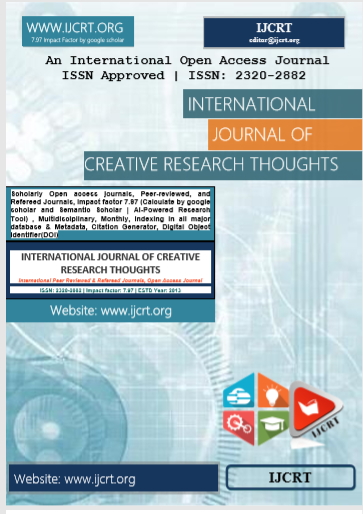
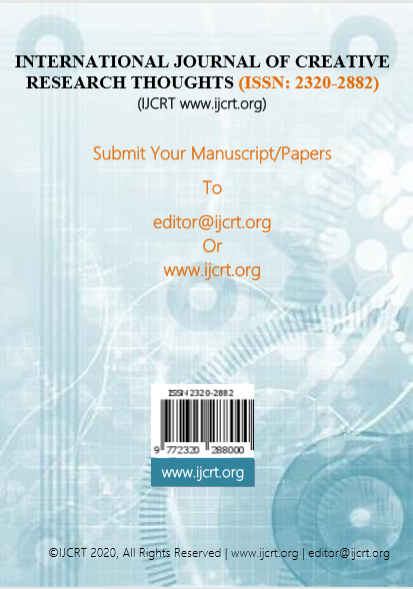
| IJCRT Journal front page | IJCRT Journal Back Page |
Paper Title: The Visionary Lead of Sardar Patel in Annexation of Hyderabad: Analysing the Possibility of an Operation Polo/ Similar Intervention in the 21st Century
Author Name(s): Pilladi S S S Sriharshavardhini,
Published Paper ID: - IJCRTBO02062
Register Paper ID - 304348
Publisher Journal Name: IJPUBLICATION, IJCRT
DOI Member ID: 10.6084/m9.doi.one.IJCRTBO02062 and DOI :
Author Country : Indian Author, India, - , -, - , | Research Area: Science and Technology Published Paper URL: http://ijcrt.org/viewfull.php?&p_id=IJCRTBO02062 Published Paper PDF: download.php?file=IJCRTBO02062 Published Paper PDF: http://www.ijcrt.org/papers/IJCRTBO02062.pdf
Your Paper Publication Details:
Title: THE VISIONARY LEAD OF SARDAR PATEL IN ANNEXATION OF HYDERABAD: ANALYSING THE POSSIBILITY OF AN OPERATION POLO/ SIMILAR INTERVENTION IN THE 21ST CENTURY
DOI (Digital Object Identifier) :
Pubished in Volume: 14 | Issue: 3 | Year: March 2026
Publisher Name : IJCRT | www.ijcrt.org | ISSN : 2320-2882
Subject Area: Science and Technology
Author type: Indian Author
Pubished in Volume: 14
Issue: 3
Pages: 314-317
Year: March 2026
Downloads: 140
E-ISSN Number: 2320-2882
Abstract
The integration of princely states post-1947 was pivotal to India's nation-building, with Operation Polo--the 1948 military annexation of Hyderabad--standing out as a bold assertion of sovereignty under Sardar Vallabhbhai Patel. Amid post-Partition fragility, it quelled internal unrest from Razakar militias and secured a landlocked state's accession, preventing balkanization. Yet this use of force sparks debate: in today's constitutional democracies, international law, and human rights era, could such an intervention recur? This paper employs a comparative historical lens to assess feasibility. It details Hyderabad's crisis--feudal inequalities, communal tensions, and strategic risks--contrasting 1948's permissive context (weak UN enforcement, colonial transitions) with modern barriers: federal judiciaries, UN Charter prohibitions on force (Article 2(4)), media scrutiny, and economic interdependence. Findings reveal structural shifts rendering Polo-style actions improbable. India's Constitution mandates judicial oversight; global norms favor sanctions or arbitration (e.g., Ukraine 2022). While Patel's decisiveness forged unity, today's toolkit emphasizes negotiation, as in recent Indo- China pacts. Operation Polo's legacy endures as crisis statecraft, but 21st-century constraints prioritize legality over unilateralism, ensuring stability through dialogue rather than division.
Licence: creative commons attribution 4.0
License
Creative Commons Attribution 4.0 and The Open Definition

Keywords
Operation Polo, Hyderabad Integration, Princely States, Nation-Building, International Law, Sovereignty, Sardar Patel, 21st-Century Interventions
License
Creative Commons Attribution 4.0 and The Open Definition
Paper Title: HYDERABAD'S LIBERATION AND ITS SOCIO-POLITICAL CONSEQUENCES: A HISTORICAL ANALYSIS
Author Name(s): Kursenga Kavitha
Published Paper ID: - IJCRTBO02061
Register Paper ID - 304077
Publisher Journal Name: IJPUBLICATION, IJCRT
DOI Member ID: 10.6084/m9.doi.one.IJCRTBO02061 and DOI :
Author Country : Indian Author, India, - , -, - , | Research Area: Arts1 All Published Paper URL: http://ijcrt.org/viewfull.php?&p_id=IJCRTBO02061 Published Paper PDF: download.php?file=IJCRTBO02061 Published Paper PDF: http://www.ijcrt.org/papers/IJCRTBO02061.pdf
Your Paper Publication Details:
Title: HYDERABAD'S LIBERATION AND ITS SOCIO-POLITICAL CONSEQUENCES: A HISTORICAL ANALYSIS
DOI (Digital Object Identifier) :
Pubished in Volume: 14 | Issue: 3 | Year: March 2026
Publisher Name : IJCRT | www.ijcrt.org | ISSN : 2320-2882
Subject Area: Arts1 All
Author type: Indian Author
Pubished in Volume: 14
Issue: 3
Pages: 310-313
Year: March 2026
Downloads: 123
E-ISSN Number: 2320-2882
Abstract
The liberation of Hyderabad on 17 September 1948, through Operation Polo, represents a decisive turning point in the political and social history of the Deccan region. The integration of the Hyderabad princely state into the Indian Union not only brought an end to the Nizam's autocratic and feudal regime but also initiated a process of political transformation characterized by the introduction of democratic governance and centralized administration. However, this transition was neither smooth nor uniform in its outcomes.
Licence: creative commons attribution 4.0
License
Creative Commons Attribution 4.0 and The Open Definition
Keywords
Hyderabad Liberation, Operation Polo, Nizam, Telangana, Socio-Political Change, Integration, Identity Politics
License
Creative Commons Attribution 4.0 and The Open Definition
Paper Title: From Subjects to Citizens: A Literary and Stylistic Study of the Narrative Transition in Hyderabad's Liberation Literature
Author Name(s): Dr. P. Susmitha Rajani
Published Paper ID: - IJCRTBO02060
Register Paper ID - 304078
Publisher Journal Name: IJPUBLICATION, IJCRT
DOI Member ID: 10.6084/m9.doi.one.IJCRTBO02060 and DOI :
Author Country : Indian Author, India, - , -, - , | Research Area: Arts1 All Published Paper URL: http://ijcrt.org/viewfull.php?&p_id=IJCRTBO02060 Published Paper PDF: download.php?file=IJCRTBO02060 Published Paper PDF: http://www.ijcrt.org/papers/IJCRTBO02060.pdf
Your Paper Publication Details:
Title: FROM SUBJECTS TO CITIZENS: A LITERARY AND STYLISTIC STUDY OF THE NARRATIVE TRANSITION IN HYDERABAD'S LIBERATION LITERATURE
DOI (Digital Object Identifier) :
Pubished in Volume: 14 | Issue: 3 | Year: March 2026
Publisher Name : IJCRT | www.ijcrt.org | ISSN : 2320-2882
Subject Area: Arts1 All
Author type: Indian Author
Pubished in Volume: 14
Issue: 3
Pages: 305-309
Year: March 2026
Downloads: 130
E-ISSN Number: 2320-2882
Abstract
The liberation of Hyderabad in September 1948 stands as one of the most decisive political transformations in the history of independent India. While historians often emphasize military operations and diplomatic negotiations, the event also produced a profound transformation in language, literature, and public discourse. This paper examines the narrative transition in Hyderabad's liberation literature through a stylistic and linguistic analysis of speeches delivered by Sardar Vallabhbhai Patel and English translations of regional literary works emerging from the Telangana resistance movement. By applying approaches from Narrative Theory, Stylistics, and Critical Discourse Analysis, the study identifies how the liberation moment produced a shift in literary vocabulary and rhetorical structure. The discourse moved from the language of feudal submission--where people were described as subjects of a ruler--to the language of democratic participation in which individuals emerged as citizens of a nation-state. Patel's public addresses, characterized by brevity, firmness, and moral authority, contributed to constructing the image of the "Iron Man" as a stabilizing archetype in the national narrative. Simultaneously, translated poetry and prose from Telangana introduced the voices of peasants, workers, and marginalized communities into the broader literary sphere. The paper argues that Hyderabad's integration into the Indian Union was not merely a territorial achievement but also a transformation in narrative consciousness. Language, rhetoric, and literary representation collectively enabled communities to imagine themselves as participants in democratic governance. In this sense, the liberation of Hyderabad illustrates how political change is deeply intertwined with linguistic and literary transformation.
Licence: creative commons attribution 4.0
License
Creative Commons Attribution 4.0 and The Open Definition
Keywords
Hyderabad Liberation, Narrative Transition, Sardar Vallabhbhai Patel, Stylistics, Telangana Literature, Subaltern Voices, Democratic Discourse, Operation Polo
License
Creative Commons Attribution 4.0 and The Open Definition
Paper Title: INDIAN GOVERNMENT'S ACTION - FROM NEGOTIATION TO OPERATION POLO: A HISTORICAL ANALYSIS
Author Name(s): J. Shiva Kumar
Published Paper ID: - IJCRTBO02059
Register Paper ID - 304079
Publisher Journal Name: IJPUBLICATION, IJCRT
DOI Member ID: 10.6084/m9.doi.one.IJCRTBO02059 and DOI :
Author Country : Indian Author, India, - , -, - , | Research Area: Arts All Published Paper URL: http://ijcrt.org/viewfull.php?&p_id=IJCRTBO02059 Published Paper PDF: download.php?file=IJCRTBO02059 Published Paper PDF: http://www.ijcrt.org/papers/IJCRTBO02059.pdf
Your Paper Publication Details:
Title: INDIAN GOVERNMENT'S ACTION - FROM NEGOTIATION TO OPERATION POLO: A HISTORICAL ANALYSIS
DOI (Digital Object Identifier) :
Pubished in Volume: 14 | Issue: 3 | Year: March 2026
Publisher Name : IJCRT | www.ijcrt.org | ISSN : 2320-2882
Subject Area: Arts All
Author type: Indian Author
Pubished in Volume: 14
Issue: 3
Pages: 301-304
Year: March 2026
Downloads: 117
E-ISSN Number: 2320-2882
Abstract
The Hyderabad accession crisis of 1947-48 represents one of the most critical challenges faced by the Indian Government in the immediate aftermath of independence. This study examines the transformation of Indian policy from diplomatic negotiation to military intervention, culminating in Operation Polo. Initially, the Government of India adopted a conciliatory approach, engaging in negotiations with the Nizam of Hyderabad to secure accession while ensuring internal autonomy and protection of political rights. However, the persistence of the Nizam's refusal to accede, combined with the rise of the Razakars and increasing internal repression, altered the political landscape significantly.
Licence: creative commons attribution 4.0
License
Creative Commons Attribution 4.0 and The Open Definition
Keywords
Operation Polo, Hyderabad Accession, Nizam, Razakars, Indian Policy, Negotiation, National Security
License
Creative Commons Attribution 4.0 and The Open Definition
Paper Title: The Architect of Integration: Sardar Patel's Instrumental Role in Consolidating the Indian Nation-State
Author Name(s): Dr. Dudekonda Ramanjineyulu
Published Paper ID: - IJCRTBO02058
Register Paper ID - 304080
Publisher Journal Name: IJPUBLICATION, IJCRT
DOI Member ID: 10.6084/m9.doi.one.IJCRTBO02058 and DOI :
Author Country : Indian Author, India, - , -, - , | Research Area: Arts All Published Paper URL: http://ijcrt.org/viewfull.php?&p_id=IJCRTBO02058 Published Paper PDF: download.php?file=IJCRTBO02058 Published Paper PDF: http://www.ijcrt.org/papers/IJCRTBO02058.pdf
Your Paper Publication Details:
Title: THE ARCHITECT OF INTEGRATION: SARDAR PATEL'S INSTRUMENTAL ROLE IN CONSOLIDATING THE INDIAN NATION-STATE
DOI (Digital Object Identifier) :
Pubished in Volume: 14 | Issue: 3 | Year: March 2026
Publisher Name : IJCRT | www.ijcrt.org | ISSN : 2320-2882
Subject Area: Arts All
Author type: Indian Author
Pubished in Volume: 14
Issue: 3
Pages: 292-300
Year: March 2026
Downloads: 141
E-ISSN Number: 2320-2882
Abstract
The political integration of post-independent India in 1947 was a key role played by Sardar Vallabhbhai Patel, as discussed in this paper. Patel, the first Deputy Prime Minister and Home Affairs Minister of India, masterminded the process of unifying 562 princely states into the Indian Union, which was a historic move that established a unified nation-state out of a divided political map. This paper seeks to examine the diplomatic skills of Patel, his vision, and realism as a tactic to integration through archival analysis and historical study. The study examines the tactics that were used by Patel and his colleagues, such as negotiation, persuasion, and selective use of force, to unite territories that constituted about 48 percent of the geographical India. Major integration achievements, such as the integration of Junagadh, Hyderabad, and Kashmir, are examined to show the strategic mind and political mastery of Patel. The issues encountered during integration that are discussed in the paper are the resistance of the princely rulers, communal tensions, and the complexity of geopolitics. This study discusses that the work of Patel was indispensable in the territorial integrity and political stability of India by synthesizing primary historical materials and current literature. The reason why he is known as the Iron Man of India is not just a dictatorial determination, but a complex statecraft that was firm and flexible at the same time, forming the framework of the federal system in modern India.
Licence: creative commons attribution 4.0
License
Creative Commons Attribution 4.0 and The Open Definition
Keywords
Sardar Vallabhbhai Patel, Indian integration, princely states, nation-building, political consolidation, post-colonial India, statecraft, territorial integrity.
License
Creative Commons Attribution 4.0 and The Open Definition
Paper Title: VISIONARY LEADERSHIP AND MASS MOBILIZATION: THE 'IRON MAN' AS CATALYST IN HYDERABAD'S LIBERATION
Author Name(s): Dr. G. Madhu
Published Paper ID: - IJCRTBO02057
Register Paper ID - 304081
Publisher Journal Name: IJPUBLICATION, IJCRT
DOI Member ID: 10.6084/m9.doi.one.IJCRTBO02057 and DOI :
Author Country : Indian Author, India, - , -, - , | Research Area: Arts All Published Paper URL: http://ijcrt.org/viewfull.php?&p_id=IJCRTBO02057 Published Paper PDF: download.php?file=IJCRTBO02057 Published Paper PDF: http://www.ijcrt.org/papers/IJCRTBO02057.pdf
Your Paper Publication Details:
Title: VISIONARY LEADERSHIP AND MASS MOBILIZATION: THE 'IRON MAN' AS CATALYST IN HYDERABAD'S LIBERATION
DOI (Digital Object Identifier) :
Pubished in Volume: 14 | Issue: 3 | Year: March 2026
Publisher Name : IJCRT | www.ijcrt.org | ISSN : 2320-2882
Subject Area: Arts All
Author type: Indian Author
Pubished in Volume: 14
Issue: 3
Pages: 288-291
Year: March 2026
Downloads: 122
E-ISSN Number: 2320-2882
Abstract
The integration of Hyderabad into the Indian Union in September 1948 remains one of the most decisive episodes in the political consolidation of independent India. At the center of this historic process stood Sardar Vallabhbhai Patel, whose visionary leadership, strategic foresight, and administrative acumen played a crucial role in resolving the Hyderabad crisis. This paper examines Patel's leadership as a catalyst that combined diplomatic negotiation, mass mobilization, and strategic preparedness to achieve national integration. Patel recognized early that Hyderabad's geographical position in the heart of India and the presence of armed Razakar militias posed a potential threat to the country's political stability and territorial security. Through careful diplomacy, he attempted to persuade the Nizam to accede to India while simultaneously preparing the state machinery, military leadership, and intelligence networks for decisive intervention. The study also explores how Patel mobilized public opinion, political institutions, and administrative agencies to build a consensus around the necessity of integrating Hyderabad. His leadership style balanced moral conviction with political pragmatism, ensuring that the operation was swift and minimized prolonged conflict. By analyzing historical documents, speeches, and contemporary accounts, this paper highlights how Patel's strategic leadership shaped the successful liberation of Hyderabad. The study concludes that Patel's approach not only resolved the Hyderabad issue but also established a model of decisive leadership that reinforced the principles of national unity, democratic governance, and security in post-independence India.
Licence: creative commons attribution 4.0
License
Creative Commons Attribution 4.0 and The Open Definition
Keywords
Sardar Vallabhbhai Patel, Hyderabad Liberation, Visionary Leadership, Mass Mobilization, Razakars, Operation Polo, National Integration, Political Strategy
License
Creative Commons Attribution 4.0 and The Open Definition
Paper Title: NATION-BUILDING THROUGH SECURITY: SARDAR VALLABHBHAI PATEL'S APPROACH TO BORDER MANAGEMENT AND POLITICAL INTEGRATION
Author Name(s): Sarimalla Satya Rani
Published Paper ID: - IJCRTBO02056
Register Paper ID - 304082
Publisher Journal Name: IJPUBLICATION, IJCRT
DOI Member ID: 10.6084/m9.doi.one.IJCRTBO02056 and DOI :
Author Country : Indian Author, India, - , -, - , | Research Area: Arts All Published Paper URL: http://ijcrt.org/viewfull.php?&p_id=IJCRTBO02056 Published Paper PDF: download.php?file=IJCRTBO02056 Published Paper PDF: http://www.ijcrt.org/papers/IJCRTBO02056.pdf
Your Paper Publication Details:
Title: NATION-BUILDING THROUGH SECURITY: SARDAR VALLABHBHAI PATEL'S APPROACH TO BORDER MANAGEMENT AND POLITICAL INTEGRATION
DOI (Digital Object Identifier) :
Pubished in Volume: 14 | Issue: 3 | Year: March 2026
Publisher Name : IJCRT | www.ijcrt.org | ISSN : 2320-2882
Subject Area: Arts All
Author type: Indian Author
Pubished in Volume: 14
Issue: 3
Pages: 283-287
Year: March 2026
Downloads: 131
E-ISSN Number: 2320-2882
Abstract
The process of nation-building in post-colonial India was deeply intertwined with the imperatives of national security, territorial consolidation, and administrative integration. Among the principal architects of this transformation was Sardar Vallabhbhai Patel (1875-1950), whose leadership combined pragmatic diplomacy, institutional foresight, and strategic realism. As India's first Deputy Prime Minister and Home Minister, Patel undertook the formidable task of integrating more than 560 princely states into the Indian Union, thereby shaping the political geography and internal stability of modern India.
Licence: creative commons attribution 4.0
License
Creative Commons Attribution 4.0 and The Open Definition
Keywords
Sardar Vallabhbhai Patel, National Security, Political Integration, Border Management, Princely States, Nation-Building
License
Creative Commons Attribution 4.0 and The Open Definition
Paper Title: TEALANGANA PEASENT STRUGGLE- A CAUSE OF OPERATION POLO
Author Name(s): Mamidala Venugopal
Published Paper ID: - IJCRTBO02055
Register Paper ID - 304083
Publisher Journal Name: IJPUBLICATION, IJCRT
DOI Member ID: 10.6084/m9.doi.one.IJCRTBO02055 and DOI :
Author Country : Indian Author, India, - , -, - , | Research Area: Others area Published Paper URL: http://ijcrt.org/viewfull.php?&p_id=IJCRTBO02055 Published Paper PDF: download.php?file=IJCRTBO02055 Published Paper PDF: http://www.ijcrt.org/papers/IJCRTBO02055.pdf
Your Paper Publication Details:
Title: TEALANGANA PEASENT STRUGGLE- A CAUSE OF OPERATION POLO
DOI (Digital Object Identifier) :
Pubished in Volume: 14 | Issue: 3 | Year: March 2026
Publisher Name : IJCRT | www.ijcrt.org | ISSN : 2320-2882
Subject Area: Others area
Author type: Indian Author
Pubished in Volume: 14
Issue: 3
Pages: 279-282
Year: March 2026
Downloads: 128
E-ISSN Number: 2320-2882
Abstract
Telangana Peasent Struggle (1946-51) had lead finally to Operation polo.A critical examination of the causes that lead to operation polo tells us that the rebellion of Farmers against th land lords backed by Nizam is the main cause, when we list out the different causes .When the farmers are in unrest no government ruling them could survive longer in rule .This is clearly recorded in the history.We cant separate the Farmers from people in an agrarian society. There is a misconcep -tion that The Farmers struggle against Land lords (Doras) is for Land and Livelyhood (Bhoomi kosam bukthi kosam).But it is against the Exploitation and Robbery. The People's Ambition of freedom from Tenant Farming and bonded labour i.e Forced labour(vetti) finally lead to freedom from Land lords and rulers. (Nizam).
Licence: creative commons attribution 4.0
License
Creative Commons Attribution 4.0 and The Open Definition
Keywords
TEALANGANA PEASENT STRUGGLE- A CAUSE OF OPERATION POLO
License
Creative Commons Attribution 4.0 and The Open Definition
Paper Title: ROLE OF THE PRESS IN THE TELANGANA ARMED STRUGGLE (1946-1951)
Author Name(s): Dr. D. Srinivas
Published Paper ID: - IJCRTBO02054
Register Paper ID - 304084
Publisher Journal Name: IJPUBLICATION, IJCRT
DOI Member ID: 10.6084/m9.doi.one.IJCRTBO02054 and DOI :
Author Country : Indian Author, India, - , -, - , | Research Area: Arts All Published Paper URL: http://ijcrt.org/viewfull.php?&p_id=IJCRTBO02054 Published Paper PDF: download.php?file=IJCRTBO02054 Published Paper PDF: http://www.ijcrt.org/papers/IJCRTBO02054.pdf
Your Paper Publication Details:
Title: ROLE OF THE PRESS IN THE TELANGANA ARMED STRUGGLE (1946-1951)
DOI (Digital Object Identifier) :
Pubished in Volume: 14 | Issue: 3 | Year: March 2026
Publisher Name : IJCRT | www.ijcrt.org | ISSN : 2320-2882
Subject Area: Arts All
Author type: Indian Author
Pubished in Volume: 14
Issue: 3
Pages: 274-278
Year: March 2026
Downloads: 132
E-ISSN Number: 2320-2882
Abstract
The Telangana Armed Struggle (1946-1951) remains one of the most significant peasant uprisings in modern Indian history. Emerging from deep socio-economic inequalities in the princely state of Hyderabad under the rule of the Nizam, the movement was primarily directed against feudal exploitation, forced labour, and political repression. While the armed struggle itself has been extensively studied from political and agrarian perspectives, the role of the press in shaping the movement has received comparatively limited scholarly attention. This paper examines how newspapers, pamphlets, underground publications, and intellectual writings contributed to mobilizing public opinion, exposing feudal oppression, and disseminating revolutionary ideas during the Telangana struggle. The study highlights the role of both regional and national press in documenting atrocities committed by feudal landlords and Razakar militias while simultaneously promoting democratic ideals and agrarian reform. Special attention is given to the activities of underground Communist publications and progressive journalists who played a critical role in educating peasants and strengthening resistance against the Nizam's autocratic regime. The research also analyzes the impact of state censorship, propaganda, and media suppression during this period. By examining the intersection between print culture and political activism, the paper argues that the press functioned as a powerful instrument of resistance and political awakening. Ultimately, the study demonstrates that the printed word became an essential vehicle for shaping public consciousness, mobilizing rural populations, and contributing to the broader struggle for social justice and democratic transformation in Telangana.
Licence: creative commons attribution 4.0
License
Creative Commons Attribution 4.0 and The Open Definition
Keywords
Telangana Armed Struggle, Hyderabad State, Press and Media, Razakars, Agrarian Reform, Communist Movement, Peasant Mobilization, Print Culture, Feudalism, Political Consciousness
License
Creative Commons Attribution 4.0 and The Open Definition
Paper Title: WOMEN'S ROLE IN THE LIBERATION MOVEMENTS OF HYDERABAD STATE UNDER THE NIZAM
Author Name(s): Dr. Nazia Rahaman
Published Paper ID: - IJCRTBO02053
Register Paper ID - 304086
Publisher Journal Name: IJPUBLICATION, IJCRT
DOI Member ID: 10.6084/m9.doi.one.IJCRTBO02053 and DOI :
Author Country : Indian Author, India, - , -, - , | Research Area: Arts All Published Paper URL: http://ijcrt.org/viewfull.php?&p_id=IJCRTBO02053 Published Paper PDF: download.php?file=IJCRTBO02053 Published Paper PDF: http://www.ijcrt.org/papers/IJCRTBO02053.pdf
Your Paper Publication Details:
Title: WOMEN'S ROLE IN THE LIBERATION MOVEMENTS OF HYDERABAD STATE UNDER THE NIZAM
DOI (Digital Object Identifier) :
Pubished in Volume: 14 | Issue: 3 | Year: March 2026
Publisher Name : IJCRT | www.ijcrt.org | ISSN : 2320-2882
Subject Area: Arts All
Author type: Indian Author
Pubished in Volume: 14
Issue: 3
Pages: 270-273
Year: March 2026
Downloads: 116
E-ISSN Number: 2320-2882
Abstract
This study explores the multifaceted and transformative roles played by women in the liberation movements of Hyderabad State during the late colonial and early postcolonial period. Women were not confined to passive or supportive roles; rather, they actively participated in both reformist and militant struggles. Their involvement ranged from educational initiatives, social reform campaigns, and satyagraha movements under the Hyderabad State Congress to armed resistance in the Telangana Peasant Struggle (1946-1951).
Licence: creative commons attribution 4.0
License
Creative Commons Attribution 4.0 and The Open Definition
Keywords
Hyderabad State, Nizam, Women, Telangana Struggle, Razakars, Liberation Movements, Gender, Agrarian Resistance
License
Creative Commons Attribution 4.0 and The Open Definition
Call For Paper June 2026
Call For Papers
June 2026
Volume 14 | Issue 6
Last Date :
30-Jun-2026
Submit Manuscript Online Impact Factor: 7.97 Review Results : Within 02-03 Days Paper Publication : Within 02-03 Days
June 2026
Volume 14 | Issue 6
Last Date :
30-Jun-2026
Submit Manuscript Online Impact Factor: 7.97 Review Results : Within 02-03 Days Paper Publication : Within 02-03 Days
Published Issue Details
For Authors
Forms / Downloads
Other IMP Links
Indexing Partner
Research Area
LICENSE





ISSN and 7.97 Impact Factor Details
ISSN: 2320-2882 Impact Factor: 7.97 and ISSN APPROVED Journal Starting Year (ESTD) : 2013


ISSN and 7.97 Impact Factor Details
ISSN: 2320-2882 Impact Factor: 7.97 and ISSN APPROVED Journal Starting Year (ESTD) : 2013
DOI Details
CONFERENCE
CONFERENCE MANAGMENT & PUBLICATION CONFERENCE PROPOSAL
RECENT CONFERENCE

CONFERENCE PROPOSAL CONFERENCE PROCEEDINGS
CONFERENCE PROPOSAL CONFERENCE PROCEEDINGS
For Reviewer /Referral (RMS) Earn 500 per paper
Important Links
NEWS & Conference
Digital Library
IJCRT RMS | Earn 500 Per Paper.

Open Access


LICENSE
Indexing Partner
Scholarly open access journals, Peer-reviewed, and Refereed Journals, Impact factor 7.97 (Calculate by google scholar and Semantic Scholar | AI-Powered Research Tool) , Multidisciplinary, Monthly, Indexing in all major database & Metadata, Citation Generator, Digital Object Identifier(DOI)