Important Details
IJCRT - International Peer Reviewed, Open Access Journal, Multidisciplinary, Monthly, Nominal(Low) Fees for Professional Research Services International Journal of Creative Research Thoughts - IJCRT Peer Review Journal, Refereed Journal, Peer Reviewed Journal , Referred Journal and Indexed Journal, Open access, Online and Print Journal,international Journal Open Access, Accepted by Indian and foreign university ,IJCRT Followed Norms, guidelines, requirement, listing criteria and methodology of score/point also applied from: Scopus , Web of Science , UGC Approved , UGC CARE, UGC-CARE .
UGC Approved Journal No: 49023 (18)
UGC approval Link
https://ijcrt.org/ugc%20approval.jpg
All Policy and Approval
Please Like Our Facebook Page | CrossRef DOI and Hard copy of Certificate Provide if required. | www.IJCRT.org | editor@IJCRT.org | WhatsApp: 7990172303
Publication Details:
- Paper Submission : 31-Mar-2026. Call For Paper (Volume 14 | Issue 3 | Month- March 2026)
- Acceptance/Rejection Notification: Within 02-04 Days.
- Paper Publish: Within 02-04 Days after submitting all documents.
-
Submit Your Paper Any time There No deadline.
-
Publication fees : 1570 INR for Indian author & 59$ for foreign International author.
Please Like Our Facebook Page | CrossRef DOI and Hard copy of Certificate Provide if required.
Licence and Indexing
Indexing In Google Scholar, SSRN, ResearcherID-Publons, Semantic Scholar | AI-Powered Research Tool, Microsoft Academic, Academia.edu, arXiv.org, Research Gate, CiteSeerX, ResearcherID Thomson Reuters, Mendeley : reference manager, DocStoc, ISSUU, Scribd, and many more | High Impact Factor: 7.97 | Digital object identifier (DOI) and Hard Copy of certificate Provided.




























Licence
DOI
ISSN Approved impact factor: 7.97 
Creative Common 
Valid as per new UGC Gazette regulations 

INTERNATIONAL JOURNAL OF CREATIVE RESEARCH THOUGHTS - IJCRT (IJCRT.ORG)
International Peer Reviewed & Refereed Journals, Open Access Journal
IJCRT Peer-Reviewed (Refereed) Journal as Per New UGC Rules.
ISSN Approved Journal No: 2320-2882 | Impact factor: 7.97 | ESTD Year: 2013
Call For Paper - Volume 14 | Issue 3 | Month- March 2026
Scholarly open access journals, Peer-reviewed, and Refereed Journals, Impact factor 7.97 (Calculate by google scholar and Semantic Scholar | AI-Powered Research Tool) , Multidisciplinary, Monthly, Indexing in all major database & Metadata, Citation Generator, Digital Object Identifier(CrossRef DOI)
Contact Us Click Here
WhatsApp Contact Click Here
IJCRT Search Xplore - Search all paper by Paper Name , Author Name, and Title
Volume 14 | Issue 2 |
Volume 14 | Issue 2 | Month
Downlaod After Publication 1) Table of content index in PDF
2) Table of content index in HTML 2)Table of content index in HTML
3) Front Page 3) Front Page
4) Back Page 4) Back Page
5) Editor Board Member 5)Editor Board Member
6) OLD Style Issue 6)OLD Style Issue
 |
 |
|---|---|
| IJCRT Journal front page | IJCRT Journal Back Page |
Paper Title: Therapeutic Potential of Lodhra in Classical and Contemporary Ayurveda: A Critical Review with Special Reference to Bhaishajya Kalpana
Author Name(s): Dr. Deepika S. Ingle, Dr. Swati Dongre
Published Paper ID: - IJCRT2602584
Register Paper ID - 301958
Publisher Journal Name: IJPUBLICATION, IJCRT
DOI Member ID: 10.6084/m9.doi.one.IJCRT2602584 and DOI :
Author Country : Indian Author, India, - , -, - , | Research Area: Science and Technology Published Paper URL: http://ijcrt.org/viewfull.php?&p_id=IJCRT2602584 Published Paper PDF: download.php?file=IJCRT2602584 Published Paper PDF: http://www.ijcrt.org/papers/IJCRT2602584 .pdf
Your Paper Publication Details:
Title: THERAPEUTIC POTENTIAL OF LODHRA IN CLASSICAL AND CONTEMPORARY AYURVEDA: A CRITICAL REVIEW WITH SPECIAL REFERENCE TO BHAISHAJYA KALPANA
DOI (Digital Object Identifier) :
Pubished in Volume: 14 | Issue: 2 | Year: February 2026
Publisher Name : IJCRT | www.ijcrt.org | ISSN : 2320-2882
Subject Area: Science and Technology
Author type: Indian Author
Pubished in Volume: 14
Issue: 2
Pages: e974-e979
Year: February 2026
Downloads: 13
E-ISSN Number: 2320-2882
Abstract
Background: Lodhra (Symplocos racemosa Roxb.) is a classical Ayurvedic drug used mainly for bleeding disorders, wound healing and gynecological conditions. Modern pharmacology has investigated its phytochemistry and diverse bioactivities. Objective: To critically review classical references, pharmaceutical preparations (Bhaishajya Kalpana), phytochemistry, pharmacology, clinical evidence and safety of Lodhra, and to identify research gaps and future directions. Methods: A structured literature search of PubMed, PMC, Google Scholar and Ayurvedic classical texts (Sushruta, Charaka, Bhaishajya Ratnavali) was performed (see Methods). Studies on phytochemistry, in vitro/in vivo pharmacology, clinical trials, formulations and toxicity were included. Results: Phytochemical investigations reveal tannins, flavonoids, triterpenoids and phenolic glycosides. Experimental studies report antimicrobial, antibiofilm, anti-inflammatory, hemostatic, wound-healing and uterine-modulatory effects. Clinical reports (small trials and classical formulations) indicate benefit in menorrhagia and wound management, with acceptable biosafety at therapeutic doses in animal studies. However, high-quality randomized clinical trials and systematic standardization of Bhaishajya Kalpana are limited. Conclusion: Lodhra shows promising therapeutic potential congruent with classical uses; rigorous clinical trials and standardized pharmaceutical processing (quality control, dose-finding, stability, safety) are needed to support broader clinical adoption.
Licence: creative commons attribution 4.0
License
Creative Commons Attribution 4.0 and The Open Definition

Keywords
Lodhra, Symplocos racemosa, Bhaishajya Kalpana, hemostatic, wound healing, phytochemistry
License
Creative Commons Attribution 4.0 and The Open Definition
Paper Title: Efficacy of mirror visual feedback approaches in peripheral facial nerve palsy rehabilitation: from conventional Mirror Book Therapy to digital mirroring approaches- a narrative review.
Author Name(s): Pooja, Dr Suman Mehra, Dr Surekha Dabla
Published Paper ID: - IJCRT2602583
Register Paper ID - 301971
Publisher Journal Name: IJPUBLICATION, IJCRT
DOI Member ID: 10.6084/m9.doi.one.IJCRT2602583 and DOI :
Author Country : Indian Author, India, - , -, - , | Research Area: Science and Technology Published Paper URL: http://ijcrt.org/viewfull.php?&p_id=IJCRT2602583 Published Paper PDF: download.php?file=IJCRT2602583 Published Paper PDF: http://www.ijcrt.org/papers/IJCRT2602583.pdf
Your Paper Publication Details:
Title: EFFICACY OF MIRROR VISUAL FEEDBACK APPROACHES IN PERIPHERAL FACIAL NERVE PALSY REHABILITATION: FROM CONVENTIONAL MIRROR BOOK THERAPY TO DIGITAL MIRRORING APPROACHES- A NARRATIVE REVIEW.
DOI (Digital Object Identifier) :
Pubished in Volume: 14 | Issue: 2 | Year: February 2026
Publisher Name : IJCRT | www.ijcrt.org | ISSN : 2320-2882
Subject Area: Science and Technology
Author type: Indian Author
Pubished in Volume: 14
Issue: 2
Pages: e966-e973
Year: February 2026
Downloads: 14
E-ISSN Number: 2320-2882
Abstract
Background: Facial nerve palsy causes facial asymmetry, impaired voluntary movements which lead to significant facial motor dysfunction and psychosocial distress. Rehabilitation strategies have traditionally relied on mirror therapy using physical mirrors which provide visual feedback to facilitate motor relearning. Recent advancements like Mirror Book Therapy have emerged as neuroplasticity driven approach enhancing therapy effectiveness and accessibility promoting facial function recovery. Aims and Objectives: The review aimed to evaluate the efficacy of Mirror Book Therapy on facial symmetry in patients with peripheral facial palsy including traditional mirror book and digital mirroring approaches. Materials and methods: The literature was searched for relevant randomised control trials in PubMed, Google Scholar, Research Gate databases using keywords 'mirror book therapy', 'mirror visual feedback', 'peripheral facial palsy' and 'facial symmetry'. The studies from inception to December 2025 were searched. Thirty-two studies were retrieved, out of which six were included in the final review.
Licence: creative commons attribution 4.0
License
Creative Commons Attribution 4.0 and The Open Definition
Keywords
mirror book therapy, mirror visual feedback, peripheral facial palsy and facial symmetry
License
Creative Commons Attribution 4.0 and The Open Definition
Paper Title: BIG DATA AND I2X COMMUNICATION INFRASTRUCTURE FOR TRAFFIC OPTIMIZATION AND ACCIDENT PREVENTION ON AUTOMATED ROADS
Author Name(s): Mr. S. Bhoopalan, K.Ajay, S.SharanKumar, M.Gowtham
Published Paper ID: - IJCRT2602582
Register Paper ID - 302019
Publisher Journal Name: IJPUBLICATION, IJCRT
DOI Member ID: 10.6084/m9.doi.one.IJCRT2602582 and DOI :
Author Country : Indian Author, India, 637408 , Rasipuram, 637408 , | Research Area: Science and Technology Published Paper URL: http://ijcrt.org/viewfull.php?&p_id=IJCRT2602582 Published Paper PDF: download.php?file=IJCRT2602582 Published Paper PDF: http://www.ijcrt.org/papers/IJCRT2602582.pdf
Your Paper Publication Details:
Title: BIG DATA AND I2X COMMUNICATION INFRASTRUCTURE FOR TRAFFIC OPTIMIZATION AND ACCIDENT PREVENTION ON AUTOMATED ROADS
DOI (Digital Object Identifier) :
Pubished in Volume: 14 | Issue: 2 | Year: February 2026
Publisher Name : IJCRT | www.ijcrt.org | ISSN : 2320-2882
Subject Area: Science and Technology
Author type: Indian Author
Pubished in Volume: 14
Issue: 2
Pages: e959-e965
Year: February 2026
Downloads: 13
E-ISSN Number: 2320-2882
Abstract
Traffic congestion is a severe problem in many major cities across the world and it has become a major issue for the commuters in all the cities. The delay of respective light is hardcoded in the traffic light and it is not dependent on traffic. This creates unnecessary waiting for drivers, which could not be endurable in every case, as being in time, is important to everyone. Density, speed, and flow are the three critical parameters for road traffic analysis. As the number of road Users constantly increases, and resources provided by current infrastructures are limited, the control of traffic has become a very important issue in the present. Also, one of the major problems faced by heavy traffic is by Ambulances. The aim of this project is to solve traffic congestion which is a severe problem in many modern cities all over the world. The traffic density is controlled using a microcontroller. This the system contains IR transmitter and IR receiver which are mounted on either side of roads respectively. The IR system gets activated whenever any vehicle passes on the road between IR transmitter and IR receiver. The objective for usage of IR sensor is to detect obstacles. The microcontroller controls the IR system and counts a number of vehicles passing on the road. The microcontroller also stores vehicles count in its memory. Based on different vehicles count, the microcontroller takes a decision and updates the traffic light delays as a result. By measuring the traffic lined up on a particular road the signal timings are adjusted to let that particular way clear out and then the next populated one. It also consists of an emergency override that allows traffic authorities to remotely let go a particular signal in case an ambulance or important vehicle arrives on that way.
Licence: creative commons attribution 4.0
License
Creative Commons Attribution 4.0 and The Open Definition
Keywords
Smart Traffic, IoT, Emergency Vehicle (Ambulance), Autonomous Management.
License
Creative Commons Attribution 4.0 and The Open Definition
Paper Title: SMART SHOPPING TROLLEY BASED ON RADIO FREQUENCE IDENTIFICATION(RFID)
Author Name(s): VENKATESAN.R, LATHA.R, PREETHI.A, THARANI.S, SELVA RAJAN.B
Published Paper ID: - IJCRT2602581
Register Paper ID - 302011
Publisher Journal Name: IJPUBLICATION, IJCRT
DOI Member ID: 10.6084/m9.doi.one.IJCRT2602581 and DOI :
Author Country : Indian Author, India, 637408 , Rasipuram, 637408 , | Research Area: Science and Technology Published Paper URL: http://ijcrt.org/viewfull.php?&p_id=IJCRT2602581 Published Paper PDF: download.php?file=IJCRT2602581 Published Paper PDF: http://www.ijcrt.org/papers/IJCRT2602581.pdf
Your Paper Publication Details:
Title: SMART SHOPPING TROLLEY BASED ON RADIO FREQUENCE IDENTIFICATION(RFID)
DOI (Digital Object Identifier) :
Pubished in Volume: 14 | Issue: 2 | Year: February 2026
Publisher Name : IJCRT | www.ijcrt.org | ISSN : 2320-2882
Subject Area: Science and Technology
Author type: Indian Author
Pubished in Volume: 14
Issue: 2
Pages: e952-e958
Year: February 2026
Downloads: 11
E-ISSN Number: 2320-2882
Abstract
In the present scenario, shopping in supermarkets and shopping malls has become a routine activity in everyday life. However, the traditional shopping system still follows a manual billing process which creates several difficulties for customers. Customers are required to select products, place them in a trolley, and finally wait in long queues at the billing counter for scanning, billing, and payment. This process is time consuming and causes inconvenience, especially during weekends and festival seasons. In addition, customers often find it difficult to keep track of their total expenditure while shopping, which may lead to budget mismanagement. To overcome these limitations, a Smart Shopping Trolley based on RFID technology is proposed. The main objective of this system is to automate the billing process and provide a smooth, efficient, and user-friendly shopping experience. When a customer places a product into the trolley, the RFID reader automatically scans the RFID tag without requiring line-of- sight. The scanned data is processed by the microcontroller, which retrieves the product details such as product name and price from its internal memory. These details are immediately displayed on the LCD screen mounted on the trolley. The final bill information, including product details and total cost, is stored in the microcontroller memory and wirelessly transmitted to the central billing system using ZigBee technology. This wireless data transfer eliminates the need for manual scanning at the billing counter and significantly reduces waiting time. As a result, customers can complete their shopping and payment process much faster compared to the conventional system. The proposed smart shopping trolley system not only reduces human effort and billing time but also improves accuracy and transparency in the shopping process. It helps customers manage their budget effectively and enhances overall customer satisfaction.
Licence: creative commons attribution 4.0
License
Creative Commons Attribution 4.0 and The Open Definition
Keywords
RFID Technology, Smart Shopping Trolley, Automated Billing, Microcontroller, LCD Display, ZigBee Communication, Wireless Transmission, Retail Automation
License
Creative Commons Attribution 4.0 and The Open Definition
Paper Title: Attribution Styles in Adolescents: Family Structure Differences and Psychological Implications
Author Name(s): Shreya Shukla, Seshagiri Rao Joshi
Published Paper ID: - IJCRT2602580
Register Paper ID - 301992
Publisher Journal Name: IJPUBLICATION, IJCRT
DOI Member ID: 10.6084/m9.doi.one.IJCRT2602580 and DOI :
Author Country : Indian Author, India, 500029 , Hyderabad, 500029 , | Research Area: Social Science All Published Paper URL: http://ijcrt.org/viewfull.php?&p_id=IJCRT2602580 Published Paper PDF: download.php?file=IJCRT2602580 Published Paper PDF: http://www.ijcrt.org/papers/IJCRT2602580.pdf
Your Paper Publication Details:
Title: ATTRIBUTION STYLES IN ADOLESCENTS: FAMILY STRUCTURE DIFFERENCES AND PSYCHOLOGICAL IMPLICATIONS
DOI (Digital Object Identifier) :
Pubished in Volume: 14 | Issue: 2 | Year: February 2026
Publisher Name : IJCRT | www.ijcrt.org | ISSN : 2320-2882
Subject Area: Social Science All
Author type: Indian Author
Pubished in Volume: 14
Issue: 2
Pages: e946-e951
Year: February 2026
Downloads: 13
E-ISSN Number: 2320-2882
Abstract
It is seen that Single Parenthood affects children on a variety of dimension for example, their psychosocial development, their self-esteem, stress, maladjustment in peer-relations etc. This study aims to measure the differences in children who come from broken homes as opposed to intact households on "attribution styles". A comparative cross-sectional design was used with 40 adolescents (20 from single-parent families and 20 from intact families), assessed using the Attribution Style Assessment Test and analyzed using matched-pairs t-tests. The results indicated negative attribution style on all 4 dimensions of globality, locus, control, stability.
Licence: creative commons attribution 4.0
License
Creative Commons Attribution 4.0 and The Open Definition
Keywords
Keywords: Attribution style, single-parent children, Family structure,
License
Creative Commons Attribution 4.0 and The Open Definition
Paper Title: Drivers Drowsiness Detection For Analysis Eye Movement Using Machine Learning
Author Name(s): Karthikeyani.T, Dr.R. Vadivel
Published Paper ID: - IJCRT2602579
Register Paper ID - 301947
Publisher Journal Name: IJPUBLICATION, IJCRT
DOI Member ID: 10.6084/m9.doi.one.IJCRT2602579 and DOI : https://doi.org/10.56975/ijcrt.v14i2.301947
Author Country : Indian Author, India, - , -, - , | Research Area: Science and Technology Published Paper URL: http://ijcrt.org/viewfull.php?&p_id=IJCRT2602579 Published Paper PDF: download.php?file=IJCRT2602579 Published Paper PDF: http://www.ijcrt.org/papers/IJCRT2602579.pdf
Your Paper Publication Details:
Title: DRIVERS DROWSINESS DETECTION FOR ANALYSIS EYE MOVEMENT USING MACHINE LEARNING
DOI (Digital Object Identifier) : https://doi.org/10.56975/ijcrt.v14i2.301947
Pubished in Volume: 14 | Issue: 2 | Year: February 2026
Publisher Name : IJCRT | www.ijcrt.org | ISSN : 2320-2882
Subject Area: Science and Technology
Author type: Indian Author
Pubished in Volume: 14
Issue: 2
Pages: e935-e945
Year: February 2026
Downloads: 16
E-ISSN Number: 2320-2882
Abstract
Distracted and drowsy driving has turned into a serious safety problem in the world, with serious injuries and deaths occurring as a result. The drivers have a tendency to indulge themselves in risky behaviours like using the mobile phone, yawning, eating, drinking or checking other things besides the road hence, putting themselves at risk of accidents. A proposed paper is a Driver Dangerous Behaviour Detection System (based on an intelligent driver and dangerous behaviour detection system). It is made on Python, open CV, MediaPipe, and YOLO to track the driver behaviour on a web camera in real-time. MediaPipe Face Mesh identifies facial landmarks to identify how closed the eyes are, the rate of blinking, yawning and head position as a sign of drowsiness. YOLO singles out some of the distracting behaviours such as eating and using a mobile phone. In case of unsafe behaviour, real-time warnings and alarm notifications are produced to alert a driver. Remote monitoring is done by sending email notices to registered users using automated email. It is possible to integrate into Django web application to securely authenticate and maintain users. The solution suggested will offer a cost-efficient, low-cost and real-time safety system that enhances driver awareness, mitigates the risk of accidents, and adds to intelligent transportation systems.
Licence: creative commons attribution 4.0
License
Creative Commons Attribution 4.0 and The Open Definition
Keywords
Driver Monitoring, Drowsiness Detection, YOLO, MediaPipe, Computer Vision, Deep Learning, OpenCV, Real-Time Detection, Driver Safety, Intelligent Transportation.
License
Creative Commons Attribution 4.0 and The Open Definition
Paper Title: Against Interpretive Urgency: Terminal Cancer, Caregiver Suffering, and the Ethics of Silence in A Very Easy Death
Author Name(s): NIKITA NARUKA
Published Paper ID: - IJCRT2602578
Register Paper ID - 301961
Publisher Journal Name: IJPUBLICATION, IJCRT
DOI Member ID: 10.6084/m9.doi.one.IJCRT2602578 and DOI : https://doi.org/10.56975/ijcrt.v14i2.301961
Author Country : Indian Author, India, 110045 , NEW DELHI, 110045 , | Research Area: Medical Science All Published Paper URL: http://ijcrt.org/viewfull.php?&p_id=IJCRT2602578 Published Paper PDF: download.php?file=IJCRT2602578 Published Paper PDF: http://www.ijcrt.org/papers/IJCRT2602578.pdf
Your Paper Publication Details:
Title: AGAINST INTERPRETIVE URGENCY: TERMINAL CANCER, CAREGIVER SUFFERING, AND THE ETHICS OF SILENCE IN A VERY EASY DEATH
DOI (Digital Object Identifier) : https://doi.org/10.56975/ijcrt.v14i2.301961
Pubished in Volume: 14 | Issue: 2 | Year: February 2026
Publisher Name : IJCRT | www.ijcrt.org | ISSN : 2320-2882
Subject Area: Medical Science All
Author type: Indian Author
Pubished in Volume: 14
Issue: 2
Pages: e928-e934
Year: February 2026
Downloads: 16
E-ISSN Number: 2320-2882
Abstract
Illness narratives have become central to literary and medical humanities scholarship, offering insight into how disease reshapes subjectivity, relationships, and ethical responsibility. Yet this field has largely privileged narratives of articulation--stories where illness speaks, reveals, or transforms--while marginalising experiences marked by exhaustion, incoherence, and silence. Terminal cancer, in particular, is frequently approached through metaphors of struggle, revelation, or dignity, leaving little room for forms of suffering that resist narrativisation. This paper argues that A Very Easy Death offers a crucial intervention by refusing interpretive mastery over terminal illness. Through its restrained depiction of cancer, caregiving, and counsel, the text foregrounds the suffering of caregivers and allows the dying patient's silences to remain ethically opaque. Drawing on illness narrative theory, feminist ethics of care, and critiques of metaphor, this paper proposes ethical restraint as a critical method--one that recognises when interpretation itself becomes a form of appropriation. Rather than reading silence as a sign to be decoded, the paper argues for attending to suffering as it is lived in everyday time, without forcing it into symbolic meaning.
Licence: creative commons attribution 4.0
License
Creative Commons Attribution 4.0 and The Open Definition
Keywords
terminal cancer, silence, caregiving, illness narratives, ethical restraint, medical humanities
License
Creative Commons Attribution 4.0 and The Open Definition
Paper Title: Women as Decisive Political Actors: Feminist Democratic Transformation and the Reshaping of India's Electoral Map
Author Name(s): Jyothi S
Published Paper ID: - IJCRT2602577
Register Paper ID - 301975
Publisher Journal Name: IJPUBLICATION, IJCRT
DOI Member ID: 10.6084/m9.doi.one.IJCRT2602577 and DOI : https://doi.org/10.56975/ijcrt.v14i2.301975
Author Country : Indian Author, India, 572104 , Tumakuru, 572104 , | Research Area: Medical Science All Published Paper URL: http://ijcrt.org/viewfull.php?&p_id=IJCRT2602577 Published Paper PDF: download.php?file=IJCRT2602577 Published Paper PDF: http://www.ijcrt.org/papers/IJCRT2602577.pdf
Your Paper Publication Details:
Title: WOMEN AS DECISIVE POLITICAL ACTORS: FEMINIST DEMOCRATIC TRANSFORMATION AND THE RESHAPING OF INDIA'S ELECTORAL MAP
DOI (Digital Object Identifier) : https://doi.org/10.56975/ijcrt.v14i2.301975
Pubished in Volume: 14 | Issue: 2 | Year: February 2026
Publisher Name : IJCRT | www.ijcrt.org | ISSN : 2320-2882
Subject Area: Medical Science All
Author type: Indian Author
Pubished in Volume: 14
Issue: 2
Pages: e924-e927
Year: February 2026
Downloads: 10
E-ISSN Number: 2320-2882
Abstract
The steady rise of women as decisive voters in Indian elections marks one of the most significant yet under-theorized transformations in contemporary democracy. Electoral patterns in Bihar (2025), Karnataka (2023), and states such as Odisha, Madhya Pradesh, and West Bengal demonstrate that women's turnout has not only increased but, in many regions, surpassed that of men. This paper argues that women's electoral behaviour represents a structural shift from identity-based vote bank politics to performance-oriented democratic evaluation grounded in lived experience. Drawing upon feminist political theory, participatory democratic models, and empirical electoral trends, the study conceptualizes this phenomenon as a "silent democratic restructuring." Women voters prioritize safety, economic autonomy, education, health, and dignity--issues that compel political parties to reconfigure policy agendas. The analysis situates this transformation within the constitutional vision articulated by B. R. Ambedkar and contemporary jurisprudential observations of the Supreme Court of India regarding substantive equality. The paper concludes that women's electoral agency is deepening Indian democracy by shifting its axis from symbolic representation to experiential justice.
Licence: creative commons attribution 4.0
License
Creative Commons Attribution 4.0 and The Open Definition
Keywords
Women voters; Feminist political theory; Electoral democracy; Substantive equality; Bihar elections 2025; Karnataka elections 2023; Participatory democracy; Gendered citizenship; Welfare politics; Democratic transformation.
License
Creative Commons Attribution 4.0 and The Open Definition
Paper Title: Growth and Structural Transformation of Public Expenditure in India: An Elasticity-Based Analysis
Author Name(s): Prasad S P
Published Paper ID: - IJCRT2602576
Register Paper ID - 301956
Publisher Journal Name: IJPUBLICATION, IJCRT
DOI Member ID: 10.6084/m9.doi.one.IJCRT2602576 and DOI :
Author Country : Indian Author, India, 641008 , Coimbatore, 641008 , | Research Area: Arts1 All Published Paper URL: http://ijcrt.org/viewfull.php?&p_id=IJCRT2602576 Published Paper PDF: download.php?file=IJCRT2602576 Published Paper PDF: http://www.ijcrt.org/papers/IJCRT2602576.pdf
Your Paper Publication Details:
Title: GROWTH AND STRUCTURAL TRANSFORMATION OF PUBLIC EXPENDITURE IN INDIA: AN ELASTICITY-BASED ANALYSIS
DOI (Digital Object Identifier) :
Pubished in Volume: 14 | Issue: 2 | Year: February 2026
Publisher Name : IJCRT | www.ijcrt.org | ISSN : 2320-2882
Subject Area: Arts1 All
Author type: Indian Author
Pubished in Volume: 14
Issue: 2
Pages: e913-e923
Year: February 2026
Downloads: 12
E-ISSN Number: 2320-2882
Abstract
This study examines the trends and structural composition of public expenditure in India from 2000-01 to 2025-26 using data from the Budget Documents of the Government of India. The analysis covers revenue expenditure, capital expenditure, total expenditure, defence spending, interest payments, and subsidies. The study further evaluates per capita expenditure growth and measures expenditure elasticity with respect to Net National Product (NNP) using the log-log (arc elasticity) approach. The findings indicate a substantial expansion in total expenditure over the study period, with notable acceleration during crisis periods such as the COVID-19 pandemic. While revenue expenditure continues to dominate the expenditure structure, capital expenditure has shown significant growth in recent years, reflecting a strategic shift toward infrastructure-led development. Elasticity estimates suggest that total and capital expenditures are income-elastic, indicating increasing fiscal responsiveness to economic growth. The study provides insights into evolving fiscal priorities and their implications for sustainable public finance management in India.
Licence: creative commons attribution 4.0
License
Creative Commons Attribution 4.0 and The Open Definition
Keywords
Public Expenditure, Revenue Expenditure, Capital Expenditure, Fiscal Policy, Elasticity of Public Expenditure
License
Creative Commons Attribution 4.0 and The Open Definition
Paper Title: Administrative Policies of Akbar
Author Name(s): Zorintluanga
Published Paper ID: - IJCRT2602575
Register Paper ID - 301152
Publisher Journal Name: IJPUBLICATION, IJCRT
DOI Member ID: 10.6084/m9.doi.one.IJCRT2602575 and DOI :
Author Country : Indian Author, India, 201303 , Noida, 201303 , | Research Area: Social Science All Published Paper URL: http://ijcrt.org/viewfull.php?&p_id=IJCRT2602575 Published Paper PDF: download.php?file=IJCRT2602575 Published Paper PDF: http://www.ijcrt.org/papers/IJCRT2602575.pdf
Your Paper Publication Details:
Title: ADMINISTRATIVE POLICIES OF AKBAR
DOI (Digital Object Identifier) :
Pubished in Volume: 14 | Issue: 2 | Year: February 2026
Publisher Name : IJCRT | www.ijcrt.org | ISSN : 2320-2882
Subject Area: Social Science All
Author type: Indian Author
Pubished in Volume: 14
Issue: 2
Pages: e905-e912
Year: February 2026
Downloads: 29
E-ISSN Number: 2320-2882
Abstract
Akbar (1556-1605) was a prominent Mughal king of India, ascending to the throne at age 13 after his father, Humayun's death. His reign is characterized by the establishment of a stable and efficient administrative structure aimed at unifying India and promoting peaceful governance. Unlike his predecessors, Akbar exhibited remarkable religious tolerance, uplifting various faiths under his Muslim rule. He effectively abolished the jizya tax on non-Muslims, thereby promoting justice and peace through his policy of Sulh-i-kul, which encouraged harmony among diverse religions such as Christianity, Hinduism, Jainism, and Buddhism. Akbar's central government featured a distinct hierarchy with him at the apex, supported by capable officials. Key departments included the Diwan for revenue management, the Mir Bakshi for military and officer compensation, Sadr-us-Sudur for charitable matters, and the Wazir as chief minister, enabling efficient administration. A significant achievement was the Zabt revenue system, devised by Raja Todar Mal, which based taxation on the average crop yield over a decade and facilitated cash tax collection, benefiting farmers and state revenue alike. Furthermore, Akbar implemented the Mansabdari system to organize his army and bureaucracy, where Mansabdars held ranks according to their status and were responsible for maintaining a specified number of soldiers. The empire was divided into Subas (provinces) governed by Subedars, with further administrative divisions into Parganas and Sarkars, ensuring tight control from the central government and highlighting Akbar's effective administrative strategies.
Licence: creative commons attribution 4.0
License
Creative Commons Attribution 4.0 and The Open Definition
Keywords
1.Sulh-i-Kul 2.Centralised Administration 3.Zabt System 4.Mansabdari System 5.Suba System
License
Creative Commons Attribution 4.0 and The Open Definition
Call For Paper March 2026
Call For Papers
March 2026
Volume 14 | Issue 3
Last Date :
31-Mar-2026
Submit Manuscript Online Impact Factor: 7.97 Review Results : Within 02-03 Days Paper Publication : Within 02-03 Days
March 2026
Volume 14 | Issue 3
Last Date :
31-Mar-2026
Submit Manuscript Online Impact Factor: 7.97 Review Results : Within 02-03 Days Paper Publication : Within 02-03 Days
Published Issue Details
For Authors
Forms / Downloads
Other IMP Links
Indexing Partner
Research Area
LICENSE





ISSN and 7.97 Impact Factor Details
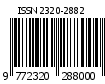
ISSN: 2320-2882 Impact Factor: 7.97 and ISSN APPROVED Journal Starting Year (ESTD) : 2013


ISSN and 7.97 Impact Factor Details
ISSN: 2320-2882 Impact Factor: 7.97 and ISSN APPROVED Journal Starting Year (ESTD) : 2013
DOI Details
CONFERENCE
CONFERENCE MANAGMENT & PUBLICATION CONFERENCE PROPOSAL
RECENT CONFERENCE

CONFERENCE PROPOSAL CONFERENCE PROCEEDINGS
CONFERENCE PROPOSAL CONFERENCE PROCEEDINGS
For Reviewer /Referral (RMS) Earn 500 per paper
Important Links
NEWS & Conference
Digital Library
IJCRT RMS | Earn 500 Per Paper.

Open Access


LICENSE
Indexing Partner
Scholarly open access journals, Peer-reviewed, and Refereed Journals, Impact factor 7.97 (Calculate by google scholar and Semantic Scholar | AI-Powered Research Tool) , Multidisciplinary, Monthly, Indexing in all major database & Metadata, Citation Generator, Digital Object Identifier(DOI)