Important Details
IJCRT - International Peer Reviewed, Open Access Journal, Multidisciplinary, Monthly, Nominal(Low) Fees for Professional Research Services International Journal of Creative Research Thoughts - IJCRT Peer Review Journal, Refereed Journal, Peer Reviewed Journal , Referred Journal and Indexed Journal, Open access, Online and Print Journal,international Journal Open Access, Accepted by Indian and foreign university ,IJCRT Followed Norms, guidelines, requirement, listing criteria and methodology of score/point also applied from: Scopus , Web of Science , UGC Approved , UGC CARE, UGC-CARE .
UGC Approved Journal No: 49023 (18)
UGC approval Link
https://ijcrt.org/ugc%20approval.jpg
All Policy and Approval
Please Like Our Facebook Page | CrossRef DOI and Hard copy of Certificate Provide if required. | www.IJCRT.org | editor@IJCRT.org | WhatsApp: 7990172303
Publication Details:
- Paper Submission : 31-Mar-2026. Call For Paper (Volume 14 | Issue 3 | Month- March 2026)
- Acceptance/Rejection Notification: Within 02-04 Days.
- Paper Publish: Within 02-04 Days after submitting all documents.
-
Submit Your Paper Any time There No deadline.
-
Publication fees : 1570 INR for Indian author & 59$ for foreign International author.
Please Like Our Facebook Page | CrossRef DOI and Hard copy of Certificate Provide if required.
Licence and Indexing
Indexing In Google Scholar, SSRN, ResearcherID-Publons, Semantic Scholar | AI-Powered Research Tool, Microsoft Academic, Academia.edu, arXiv.org, Research Gate, CiteSeerX, ResearcherID Thomson Reuters, Mendeley : reference manager, DocStoc, ISSUU, Scribd, and many more | High Impact Factor: 7.97 | Digital object identifier (DOI) and Hard Copy of certificate Provided.




























Licence
DOI
ISSN Approved impact factor: 7.97 
Creative Common 
Valid as per new UGC Gazette regulations 

INTERNATIONAL JOURNAL OF CREATIVE RESEARCH THOUGHTS - IJCRT (IJCRT.ORG)
International Peer Reviewed & Refereed Journals, Open Access Journal
IJCRT Peer-Reviewed (Refereed) Journal as Per New UGC Rules.
ISSN Approved Journal No: 2320-2882 | Impact factor: 7.97 | ESTD Year: 2013
Call For Paper - Volume 14 | Issue 3 | Month- March 2026
Scholarly open access journals, Peer-reviewed, and Refereed Journals, Impact factor 7.97 (Calculate by google scholar and Semantic Scholar | AI-Powered Research Tool) , Multidisciplinary, Monthly, Indexing in all major database & Metadata, Citation Generator, Digital Object Identifier(CrossRef DOI)
Contact Us Click Here
WhatsApp Contact Click Here
IJCRT Search Xplore - Search all paper by Paper Name , Author Name, and Title
Volume 14 | Issue 1 |
Volume 14 | Issue 1 | Month
Downlaod After Publication 1) Table of content index in PDF
2) Table of content index in HTML 2)Table of content index in HTML
3) Front Page 3) Front Page
4) Back Page 4) Back Page
5) Editor Board Member 5)Editor Board Member
6) OLD Style Issue 6)OLD Style Issue
 |
 |
|---|---|
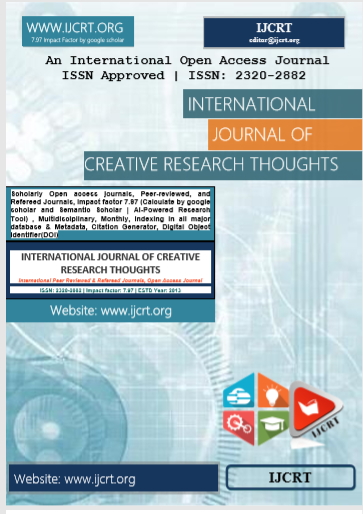
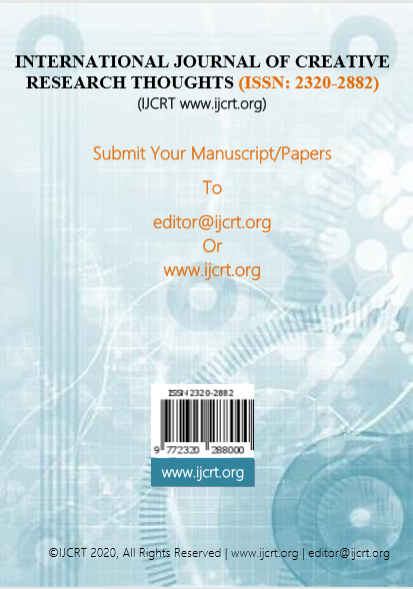
| IJCRT Journal front page | IJCRT Journal Back Page |
Paper Title: The Skills Based Organisation
Author Name(s): AR Ravirajan
Published Paper ID: - IJCRT2601466
Register Paper ID - 300572
Publisher Journal Name: IJPUBLICATION, IJCRT
DOI Member ID: 10.6084/m9.doi.one.IJCRT2601466 and DOI :
Author Country : Indian Author, India, 636402 , Salem, 636402 , | Research Area: Management All Published Paper URL: http://ijcrt.org/viewfull.php?&p_id=IJCRT2601466 Published Paper PDF: download.php?file=IJCRT2601466 Published Paper PDF: http://www.ijcrt.org/papers/IJCRT2601466.pdf
Your Paper Publication Details:
Title: THE SKILLS BASED ORGANISATION
DOI (Digital Object Identifier) :
Pubished in Volume: 14 | Issue: 1 | Year: January 2026
Publisher Name : IJCRT | www.ijcrt.org | ISSN : 2320-2882
Subject Area: Management All
Author type: Indian Author
Pubished in Volume: 14
Issue: 1
Pages: d809-d813
Year: January 2026
Downloads: 51
E-ISSN Number: 2320-2882
Abstract
For more than a century, jobs have served as the primary unit of work, shaping organizational structures, career paths, and reward systems. While effective in stable environments, this job-centric model is increasingly misaligned with today's dynamic, digital, and skills-intensive context. This article examines the limitations of traditional job-based work and argues for a transition toward skills-based organizations. It explores the principles, cultural implications, and practical pathways of adopting a skills-led approach, and introduces skill velocity as a critical factor in enabling agility, equity, and long-term workforce resilience.
Licence: creative commons attribution 4.0
License
Creative Commons Attribution 4.0 and The Open Definition

Keywords
Human Resource Management (HRM), HR Strategy, Skill Mapping, Talent Development, Succession Planning, Employee Retention, Employee Engagement, Performance Management, HR Best Practices
License
Creative Commons Attribution 4.0 and The Open Definition
Paper Title: Power BI-Driven Decision Support Framework for Strategic Financial Planning
Author Name(s): Shravanthi Ashwin kumar
Published Paper ID: - IJCRT2601465
Register Paper ID - 300255
Publisher Journal Name: IJPUBLICATION, IJCRT
DOI Member ID: 10.6084/m9.doi.one.IJCRT2601465 and DOI : https://doi.org/10.56975/ijcrt.v14i1.300255
Author Country : Indian Author, India, - , -, - , | Research Area: Science and Technology Published Paper URL: http://ijcrt.org/viewfull.php?&p_id=IJCRT2601465 Published Paper PDF: download.php?file=IJCRT2601465 Published Paper PDF: http://www.ijcrt.org/papers/IJCRT2601465.pdf
Your Paper Publication Details:
Title: POWER BI-DRIVEN DECISION SUPPORT FRAMEWORK FOR STRATEGIC FINANCIAL PLANNING
DOI (Digital Object Identifier) : https://doi.org/10.56975/ijcrt.v14i1.300255
Pubished in Volume: 14 | Issue: 1 | Year: January 2026
Publisher Name : IJCRT | www.ijcrt.org | ISSN : 2320-2882
Subject Area: Science and Technology
Author type: Indian Author
Pubished in Volume: 14
Issue: 1
Pages: d796-d808
Year: January 2026
Downloads: 47
E-ISSN Number: 2320-2882
Abstract
In today's increasingly volatile financial landscape, organizations are turning to business intelligence (BI) tools such as Microsoft Power BI to enhance their strategic financial planning capabilities. This review synthesizes current literature, theoretical models, and experimental results to present a Power BI-driven Decision Support Framework tailored for strategic financial planning. The model integrates core functionalities of Power BI--including real-time dashboards, predictive analytics, and data integration--to streamline decision-making processes across the financial value chain. Empirical evidence supports Power BI's effectiveness in improving forecast accuracy, reducing planning cycles, and enhancing decision lead time. However, challenges persist regarding data governance, system integration, and skill gaps. This paper concludes by highlighting future research directions, emphasizing the role of artificial intelligence, deeper machine learning integration, and collaborative financial intelligence systems. The review provides a roadmap for academics and practitioners seeking to optimize strategic financial outcomes using data-driven approaches.
Licence: creative commons attribution 4.0
License
Creative Commons Attribution 4.0 and The Open Definition
Keywords
Power BI; Strategic Financial Planning; Business Intelligence; Decision Support Systems; Forecasting; Predictive Analytics; Data Visualization; Financial Technology; Budgeting; Performance Monitoring
License
Creative Commons Attribution 4.0 and The Open Definition
Paper Title: Posa System: A Case Study of Akas of Arunachal Pradesh
Author Name(s): Miss Dopu Doke
Published Paper ID: - IJCRT2601464
Register Paper ID - 300563
Publisher Journal Name: IJPUBLICATION, IJCRT
DOI Member ID: 10.6084/m9.doi.one.IJCRT2601464 and DOI : https://doi.org/10.56975/ijcrt.v14i1.300563
Author Country : Indian Author, India, 791112 , Basar, Arunachal Pradesh, 791112 , | Research Area: Social Science All Published Paper URL: http://ijcrt.org/viewfull.php?&p_id=IJCRT2601464 Published Paper PDF: download.php?file=IJCRT2601464 Published Paper PDF: http://www.ijcrt.org/papers/IJCRT2601464.pdf
Your Paper Publication Details:
Title: POSA SYSTEM: A CASE STUDY OF AKAS OF ARUNACHAL PRADESH
DOI (Digital Object Identifier) : https://doi.org/10.56975/ijcrt.v14i1.300563
Pubished in Volume: 14 | Issue: 1 | Year: January 2026
Publisher Name : IJCRT | www.ijcrt.org | ISSN : 2320-2882
Subject Area: Social Science All
Author type: Indian Author
Pubished in Volume: 14
Issue: 1
Pages: d790-d795
Year: January 2026
Downloads: 59
E-ISSN Number: 2320-2882
Abstract
The posa system was introduced by Ahoms during the reign of King Pratap Singha to reconcile the hill tribes living on the frontier of their kingdom, which was later on continued by the British Government after its annexation of Assam in 1826, with substantial changes. The posa was paid in terms of articles that were not available in the hills. For this purpose, the Ahom kings used to assign some paiks or sections of the Assamese cultivators, to take responsibility for posa payment. The British government stopped the direct collection of the dues by the tribes themselves from the ryots for it sometimes led to disagreement; instead, began to pay them some cash. This arrangement cut off direct contact between the ryots and the tribes. The British used the posa as means and tools to pressurize the Aka offenders to surrender to the authority whenever the latter created outrages in their territory.
Licence: creative commons attribution 4.0
License
Creative Commons Attribution 4.0 and The Open Definition
Keywords
Posa, Blocked, Duars, Raids, Ryots, Paiks, Aka, Outrages, Expedition
License
Creative Commons Attribution 4.0 and The Open Definition
Paper Title: ONLINE PERSONAL CARE PRODUCT SHOPPING BEHAVIOUR AMONG MILLENNIALS IN GUJARAT
Author Name(s): S.Subhashree, Dr. Ankur Amin
Published Paper ID: - IJCRT2601463
Register Paper ID - 300554
Publisher Journal Name: IJPUBLICATION, IJCRT
DOI Member ID: 10.6084/m9.doi.one.IJCRT2601463 and DOI :
Author Country : Indian Author, India, 388120 , Anand , 388120 , | Research Area: Commerce All Published Paper URL: http://ijcrt.org/viewfull.php?&p_id=IJCRT2601463 Published Paper PDF: download.php?file=IJCRT2601463 Published Paper PDF: http://www.ijcrt.org/papers/IJCRT2601463.pdf
Your Paper Publication Details:
Title: ONLINE PERSONAL CARE PRODUCT SHOPPING BEHAVIOUR AMONG MILLENNIALS IN GUJARAT
DOI (Digital Object Identifier) :
Pubished in Volume: 14 | Issue: 1 | Year: January 2026
Publisher Name : IJCRT | www.ijcrt.org | ISSN : 2320-2882
Subject Area: Commerce All
Author type: Indian Author
Pubished in Volume: 14
Issue: 1
Pages: d780-d789
Year: January 2026
Downloads: 48
E-ISSN Number: 2320-2882
Abstract
This study examines online personal care product shopping behaviour through cross-tabulation analysis of 652 Gujarat millennials. Primary data were collected via structured questionnaires using Excel and SPSS for descriptive analysis. Younger cohort shows highest purchase frequency while self-employed and service professionals lead due to occupational flexibility. Females dominate both frequent and rare purchases, favouring Nykaa. Amazon maintains universal dominance across demographics. Value factors--discounts, reviews, pricing--drive decisions, with skincare leading. Findings recommend Amazon-centric youth campaigns, gender-specific platforms, and occupation-tailored promotions to optimise conversions in this digitally active regional market.This study examines online personal care product shopping behaviour through cross-tabulation analysis of 652 Gujarat millennials. Primary data were collected via structured questionnaires using Excel and SPSS for descriptive analysis. Younger cohort shows highest purchase frequency while self-employed and service professionals lead due to occupational flexibility. Females dominate both frequent and rare purchases, favouring Nykaa. Amazon maintains universal dominance across demographics. Value factors--discounts, reviews, pricing--drive decisions, with skincare leading. Findings recommend Amazon-centric youth campaigns, gender-specific platforms, and occupation-tailored promotions to optimise conversions in this digitally active regional market.
Licence: creative commons attribution 4.0
License
Creative Commons Attribution 4.0 and The Open Definition
Keywords
Personal care Products, Online shopping, Millennials
License
Creative Commons Attribution 4.0 and The Open Definition
Paper Title: Development of Assessment Rubrics for measuring Hindi Language Competencies among Middle Stage Students
Author Name(s): Sayantan Mitra, Dr. Samson R Victor, Dr. KV Sridevi
Published Paper ID: - IJCRT2601462
Register Paper ID - 300556
Publisher Journal Name: IJPUBLICATION, IJCRT
DOI Member ID: 10.6084/m9.doi.one.IJCRT2601462 and DOI : https://doi.org/10.56975/ijcrt.v14i1.300556
Author Country : Indian Author, India, 484887 , Amarkantak, 484887 , | Research Area: Arts1 All Published Paper URL: http://ijcrt.org/viewfull.php?&p_id=IJCRT2601462 Published Paper PDF: download.php?file=IJCRT2601462 Published Paper PDF: http://www.ijcrt.org/papers/IJCRT2601462.pdf
Your Paper Publication Details:
Title: DEVELOPMENT OF ASSESSMENT RUBRICS FOR MEASURING HINDI LANGUAGE COMPETENCIES AMONG MIDDLE STAGE STUDENTS
DOI (Digital Object Identifier) : https://doi.org/10.56975/ijcrt.v14i1.300556
Pubished in Volume: 14 | Issue: 1 | Year: January 2026
Publisher Name : IJCRT | www.ijcrt.org | ISSN : 2320-2882
Subject Area: Arts1 All
Author type: Indian Author
Pubished in Volume: 14
Issue: 1
Pages: d771-d779
Year: January 2026
Downloads: 69
E-ISSN Number: 2320-2882
Abstract
Assessing language competency is a crucial component of the educational process, particularly at the middle stage, when learners undergo significant linguistic and cognitive development. In the Indian context, Hindi occupies a central position as both a major language and a medium of instruction in many schools, making the assessment of Hindi language competencies an important academic concern. The present study focuses on the development and validation of assessment rubrics for evaluating Hindi language competencies of middle-stage students, with specific reference to the four core language skills--Listening, Speaking, Reading, and Writing (LSRW). The study adopts a developmental and descriptive research approach. A comprehensive review of literature was followed by expert consultations to identify relevant dimensions and indicators for each language skill. Initially, forty indicators were proposed and subjected to content validation using the Content Validity Ratio (CVR) technique with the help of ten subject experts from the fields of education, linguistics, Hindi pedagogy, and school teaching. Based on CVR analysis, the rubric was refined to twenty-three essential indicators across the four language skills. The reliability of the finalized rubric was established using Cronbach's alpha, which yielded a value of 0.837, indicating high internal consistency. The finalized rubric was pilot tested on a sample of fifty eighth-grade students from Kendriya Vidyalaya, Amarkantak, Madhya Pradesh, using a self-developed Hindi Language Competency Test. The findings suggest that the rubric is a reliable, valid, and practical tool for assessing Hindi language competencies in a systematic and objective manner. The study highlights the usefulness of rubric-based, competency-oriented assessment in identifying students' strengths and areas for improvement. Aligned with the objectives of the National Education Policy 2020, the developed rubrics support continuous assessment, learner-centered evaluation, and qualitative improvement in Hindi language teaching and learning at the middle stage.
Licence: creative commons attribution 4.0
License
Creative Commons Attribution 4.0 and The Open Definition
Keywords
Hindi Language Competencies, Rubrics, LSRW Skills, Middle Stage Education, NEP 2020
License
Creative Commons Attribution 4.0 and The Open Definition
Paper Title: Why Do We Believe Lies? Unreliable Narrators and Reader Response Theory in Contemporary Literature
Author Name(s): Deeksha Chhatwani, Swarali Joshi
Published Paper ID: - IJCRT2601461
Register Paper ID - 300391
Publisher Journal Name: IJPUBLICATION, IJCRT
DOI Member ID: 10.6084/m9.doi.one.IJCRT2601461 and DOI :
Author Country : Indian Author, India, 411003 , Pune, 411003 , | Research Area: Medical Science All Published Paper URL: http://ijcrt.org/viewfull.php?&p_id=IJCRT2601461 Published Paper PDF: download.php?file=IJCRT2601461 Published Paper PDF: http://www.ijcrt.org/papers/IJCRT2601461.pdf
Your Paper Publication Details:
Title: WHY DO WE BELIEVE LIES? UNRELIABLE NARRATORS AND READER RESPONSE THEORY IN CONTEMPORARY LITERATURE
DOI (Digital Object Identifier) :
Pubished in Volume: 14 | Issue: 1 | Year: January 2026
Publisher Name : IJCRT | www.ijcrt.org | ISSN : 2320-2882
Subject Area: Medical Science All
Author type: Indian Author
Pubished in Volume: 14
Issue: 1
Pages: d766-d770
Year: January 2026
Downloads: 44
E-ISSN Number: 2320-2882
Abstract
Licence: creative commons attribution 4.0
License
Creative Commons Attribution 4.0 and The Open Definition
Keywords
unreliable narration; reader-response theory; contemporary fiction; digital communication; therapeutic discourse; media skepticism
License
Creative Commons Attribution 4.0 and The Open Definition
Paper Title: Review of AI Driven Autonomous Cyber Attacks
Author Name(s): Neetu
Published Paper ID: - IJCRT2601460
Register Paper ID - 300464
Publisher Journal Name: IJPUBLICATION, IJCRT
DOI Member ID: 10.6084/m9.doi.one.IJCRT2601460 and DOI :
Author Country : Indian Author, India, 132103 , Panipat, 132103 , | Research Area: Science and Technology Published Paper URL: http://ijcrt.org/viewfull.php?&p_id=IJCRT2601460 Published Paper PDF: download.php?file=IJCRT2601460 Published Paper PDF: http://www.ijcrt.org/papers/IJCRT2601460.pdf
Your Paper Publication Details:
Title: REVIEW OF AI DRIVEN AUTONOMOUS CYBER ATTACKS
DOI (Digital Object Identifier) :
Pubished in Volume: 14 | Issue: 1 | Year: January 2026
Publisher Name : IJCRT | www.ijcrt.org | ISSN : 2320-2882
Subject Area: Science and Technology
Author type: Indian Author
Pubished in Volume: 14
Issue: 1
Pages: d760-d765
Year: January 2026
Downloads: 35
E-ISSN Number: 2320-2882
Abstract
The emergence of Autonomous Cyber-Attacks (ACAs) represents a fundamental paradigm shift in digital warfare, moving away from human-mediated exploits toward self-evolving, machine-speed offensive agents. This review paper systematically analyzes the transition from traditional scripted attacks to AI-driven methodologies--specifically leveraging Reinforcement Learning for adaptive exploit discovery and Large Language Models for automated polymorphic malware generation--which significantly compress the time between vulnerability identification and system compromise. By synthesizing current research on the "automation of the OODA loop," the paper explores the technical mechanisms that allow these agents to bypass modern defenses, while simultaneously addressing the profound ethical crisis of the Attribution Paradox, where the complexity of neural networks prevents clear legal and political accountability. Ultimately, this study evaluates the widening gap between offensive AI agility and stagnant regulatory frameworks, arguing that the rise of autonomous digital threats necessitates a robust "AI vs. AI" defensive posture and a global re-evaluation of algorithmic liability to prevent unmanaged escalation in critical infrastructure.
Licence: creative commons attribution 4.0
License
Creative Commons Attribution 4.0 and The Open Definition
Keywords
Cyber Security, Artificial Intelligence, Machine Learning
License
Creative Commons Attribution 4.0 and The Open Definition
Paper Title: V. S. Naipaul's Search for Roots in 'Finding the Centre'
Author Name(s): Akash Mishra, Shashwat Pandey
Published Paper ID: - IJCRT2601459
Register Paper ID - 300461
Publisher Journal Name: IJPUBLICATION, IJCRT
DOI Member ID: 10.6084/m9.doi.one.IJCRT2601459 and DOI :
Author Country : Indian Author, India, - , -, - , | Research Area: Science and Technology Published Paper URL: http://ijcrt.org/viewfull.php?&p_id=IJCRT2601459 Published Paper PDF: download.php?file=IJCRT2601459 Published Paper PDF: http://www.ijcrt.org/papers/IJCRT2601459.pdf
Your Paper Publication Details:
Title: V. S. NAIPAUL'S SEARCH FOR ROOTS IN 'FINDING THE CENTRE'
DOI (Digital Object Identifier) :
Pubished in Volume: 14 | Issue: 1 | Year: January 2026
Publisher Name : IJCRT | www.ijcrt.org | ISSN : 2320-2882
Subject Area: Science and Technology
Author type: Indian Author
Pubished in Volume: 14
Issue: 1
Pages: d752-d759
Year: January 2026
Downloads: 29
E-ISSN Number: 2320-2882
Abstract
V. S. Naipaul's "Finding the Centre" delves deep into the intricate quest for identity and belonging in a post-colonial world. This seminal work showcases Naipaul's personal and literary journey as he grapples with the complexities of his ancestral homeland, Trinidad, and the broader diasporic Indian experience. Through a blend of memoir, history, and cultural critique, Naipaul meticulously examines the tensions between tradition and modernity, colonial legacies, and the search for authentic selfhood. "Finding the Centre" thus emerges as a profound exploration of displacement, cultural dislocation, and the relentless pursuit of understanding one's roots in a fragmented global landscape. The characters in the novel often embark on journeys, both physical and metaphorical, to explore their cultural roots. He emphasizes the importance of understanding one's roots to make sense of the present. In this novel, the search for roots becomes a way to reconcile with their histories and find a sense of belonging. Eventually, the book often depicts the search for roots, in the past, an attempt to navigate their tensions and forge a cohesive sense of self.
Licence: creative commons attribution 4.0
License
Creative Commons Attribution 4.0 and The Open Definition
Keywords
Roots, History, Centre, Belongings, Displacement, Tensions, Diaspora.
License
Creative Commons Attribution 4.0 and The Open Definition
Paper Title: CHALLENGE PERCEPTIONS AMONG WOMEN MICRO ENTREPRENEURS IN GARMENT MICRO ENTERPRISES OF ERODE DISTRICT
Author Name(s): VISWAPRIYA C, Dr. S. MAYILVAGANAN
Published Paper ID: - IJCRT2601458
Register Paper ID - 300560
Publisher Journal Name: IJPUBLICATION, IJCRT
DOI Member ID: 10.6084/m9.doi.one.IJCRT2601458 and DOI :
Author Country : Indian Author, India, 609305 , Mayiladuthurai, 609305 , | Research Area: Commerce All Published Paper URL: http://ijcrt.org/viewfull.php?&p_id=IJCRT2601458 Published Paper PDF: download.php?file=IJCRT2601458 Published Paper PDF: http://www.ijcrt.org/papers/IJCRT2601458.pdf
Your Paper Publication Details:
Title: CHALLENGE PERCEPTIONS AMONG WOMEN MICRO ENTREPRENEURS IN GARMENT MICRO ENTERPRISES OF ERODE DISTRICT
DOI (Digital Object Identifier) :
Pubished in Volume: 14 | Issue: 1 | Year: January 2026
Publisher Name : IJCRT | www.ijcrt.org | ISSN : 2320-2882
Subject Area: Commerce All
Author type: Indian Author
Pubished in Volume: 14
Issue: 1
Pages: d744-d751
Year: January 2026
Downloads: 46
E-ISSN Number: 2320-2882
Abstract
The Indian technical textile industry offers vast opportunities for Micro Small and Medium Enterprises which plays an important role in Indian economy in terms of development, employment and growth. Micro and small scale sectors have enormous opportunities since they require less capital, adding more to their benefits are factors like government support, reservation for exclusive manufacture by small scale sector and exclusive purchase by the government, finance and subsidies, raw material and machinery procurement, manpower training, export promotion etc. Textile industry in India is also the only industry that has employed women since a very long time. Moreover, in India, from beginning garment manufacturing has always been one of the most women oriented sectors. Entrepreneurship among women can help them to overcome their vulnerability within the family and the society as a whole. Women micro entrepreneurs face lot of challenges like shortage of finance, high competition, conflict between work and domestic commitments, etc. In this paper an attempt has been made to analyze the challenge perceptions among women micro entrepreneurs in garment micro enterprises of Erode District.
Licence: creative commons attribution 4.0
License
Creative Commons Attribution 4.0 and The Open Definition
Keywords
Women Entrepreneur, Perception, Entrepreneurship, Micro Entrepreneurs
License
Creative Commons Attribution 4.0 and The Open Definition
Paper Title: ResuMatch: Resume Screening System Using AI
Author Name(s): Kumkum solanki, Aditya Dorwal, Piyush Rai, Arpit Awasthi, Mohammad Haris
Published Paper ID: - IJCRT2601457
Register Paper ID - 300414
Publisher Journal Name: IJPUBLICATION, IJCRT
DOI Member ID: 10.6084/m9.doi.one.IJCRT2601457 and DOI :
Author Country : Indian Author, India, 201310 , Gautam Buddha Nagar, 201310 , | Research Area: Science and Technology Published Paper URL: http://ijcrt.org/viewfull.php?&p_id=IJCRT2601457 Published Paper PDF: download.php?file=IJCRT2601457 Published Paper PDF: http://www.ijcrt.org/papers/IJCRT2601457.pdf
Your Paper Publication Details:
Title: RESUMATCH: RESUME SCREENING SYSTEM USING AI
DOI (Digital Object Identifier) :
Pubished in Volume: 14 | Issue: 1 | Year: January 2026
Publisher Name : IJCRT | www.ijcrt.org | ISSN : 2320-2882
Subject Area: Science and Technology
Author type: Indian Author
Pubished in Volume: 14
Issue: 1
Pages: d736-d743
Year: January 2026
Downloads: 28
E-ISSN Number: 2320-2882
Abstract
The rapid adoption of Applicant Tracking Systems (ATS) has transformed the recruitment process by automating the initial screening of resumes. Although these systems improve efficiency, they often reject qualified candidates due to poor keyword matching, improper formatting, and lack of alignment between resumes and job descriptions. This paper presents ResuMatch, an AI-based resume screening and enhancement system designed to assist job seekers in optimizing their resumes according to ATS and industry requirements. The proposed system uses Natural Language Processing techniques to analyze resumes and job descriptions, compute an ATS compatibility score, identify missing skills and keywords, and perform skill gap analysis. It further provides personalized recommendations including suitable projects, relevant online courses, and alternative career paths, along with spelling and grammatical correction to improve resume quality. The integrated framework of ResuMatch offers a comprehensive solution for resume optimization and career guidance, helping candidates improve their chances of shortlisting in an increasingly competitive job market.
Licence: creative commons attribution 4.0
License
Creative Commons Attribution 4.0 and The Open Definition
Keywords
Resume Screening, Applicant Tracking System (ATS), Natural Language Processing, Skill Gap Analysis, Career Recommendation, Resume Optimization, Machine Learning.
License
Creative Commons Attribution 4.0 and The Open Definition
Call For Paper March 2026
Call For Papers
March 2026
Volume 14 | Issue 3
Last Date :
31-Mar-2026
Submit Manuscript Online Impact Factor: 7.97 Review Results : Within 02-03 Days Paper Publication : Within 02-03 Days
March 2026
Volume 14 | Issue 3
Last Date :
31-Mar-2026
Submit Manuscript Online Impact Factor: 7.97 Review Results : Within 02-03 Days Paper Publication : Within 02-03 Days
Published Issue Details
For Authors
Forms / Downloads
Other IMP Links
Indexing Partner
Research Area
LICENSE





ISSN and 7.97 Impact Factor Details
ISSN: 2320-2882 Impact Factor: 7.97 and ISSN APPROVED Journal Starting Year (ESTD) : 2013


ISSN and 7.97 Impact Factor Details
ISSN: 2320-2882 Impact Factor: 7.97 and ISSN APPROVED Journal Starting Year (ESTD) : 2013
DOI Details
CONFERENCE
CONFERENCE MANAGMENT & PUBLICATION CONFERENCE PROPOSAL
RECENT CONFERENCE

CONFERENCE PROPOSAL CONFERENCE PROCEEDINGS
CONFERENCE PROPOSAL CONFERENCE PROCEEDINGS
For Reviewer /Referral (RMS) Earn 500 per paper
Important Links
NEWS & Conference
Digital Library
IJCRT RMS | Earn 500 Per Paper.

Open Access


LICENSE
Indexing Partner
Scholarly open access journals, Peer-reviewed, and Refereed Journals, Impact factor 7.97 (Calculate by google scholar and Semantic Scholar | AI-Powered Research Tool) , Multidisciplinary, Monthly, Indexing in all major database & Metadata, Citation Generator, Digital Object Identifier(DOI)