Important Details
IJCRT - International Peer Reviewed, Open Access Journal, Multidisciplinary, Monthly, Nominal(Low) Fees for Professional Research Services International Journal of Creative Research Thoughts - IJCRT Peer Review Journal, Refereed Journal, Peer Reviewed Journal , Referred Journal and Indexed Journal, Open access, Online and Print Journal,international Journal Open Access, Accepted by Indian and foreign university ,IJCRT Followed Norms, guidelines, requirement, listing criteria and methodology of score/point also applied from: Scopus , Web of Science , UGC Approved , UGC CARE, UGC-CARE .
UGC Approved Journal No: 49023 (18)
UGC approval Link
https://ijcrt.org/ugc%20approval.jpg
All Policy and Approval
Please Like Our Facebook Page | CrossRef DOI and Hard copy of Certificate Provide if required. | www.IJCRT.org | editor@IJCRT.org | WhatsApp: 7990172303
Publication Details:
- Paper Submission : 31-May-2026. Call For Paper (Volume 14 | Issue 5 | Month- May 2026)
- Acceptance/Rejection Notification: Within 02-04 Days.
- Paper Publish: Within 02-04 Days after submitting all documents.
-
Submit Your Paper Any time There No deadline.
-
Publication fees : 1570 INR for Indian author & 59$ for foreign International author.
Please Like Our Facebook Page | CrossRef DOI and Hard copy of Certificate Provide if required.
Licence and Indexing
Indexing In Google Scholar, SSRN, ResearcherID-Publons, Semantic Scholar | AI-Powered Research Tool, Microsoft Academic, Academia.edu, arXiv.org, Research Gate, CiteSeerX, ResearcherID Thomson Reuters, Mendeley : reference manager, DocStoc, ISSUU, Scribd, and many more | High Impact Factor: 7.97 | Digital object identifier (DOI) and Hard Copy of certificate Provided.




























Licence
DOI
ISSN Approved impact factor: 7.97 
Creative Common 
Valid as per new UGC Gazette regulations 

INTERNATIONAL JOURNAL OF CREATIVE RESEARCH THOUGHTS - IJCRT (IJCRT.ORG)
International Peer Reviewed & Refereed Journals, Open Access Journal
IJCRT Peer-Reviewed (Refereed) Journal as Per New UGC Rules.
ISSN Approved Journal No: 2320-2882 | Impact factor: 7.97 | ESTD Year: 2013
Call For Paper - Volume 14 | Issue 5 | Month- May 2026
Scholarly open access journals, Peer-reviewed, and Refereed Journals, Impact factor 7.97 (Calculate by google scholar and Semantic Scholar | AI-Powered Research Tool) , Multidisciplinary, Monthly, Indexing in all major database & Metadata, Citation Generator, Digital Object Identifier(CrossRef DOI)
Contact Us Click Here
WhatsApp Contact Click Here
IJCRT Search Xplore - Search all paper by Paper Name , Author Name, and Title
Volume 14 | Issue 3
Volume 14 | Issue 3 | Month
Downlaod After Publication 1) Table of content index in PDF
2) Table of content index in HTML 2)Table of content index in HTML
3) Front Page 3) Front Page
4) Back Page 4) Back Page
5) Editor Board Member 5)Editor Board Member
6) OLD Style Issue 6) OLD Style Issue
 |
 |
|---|---|
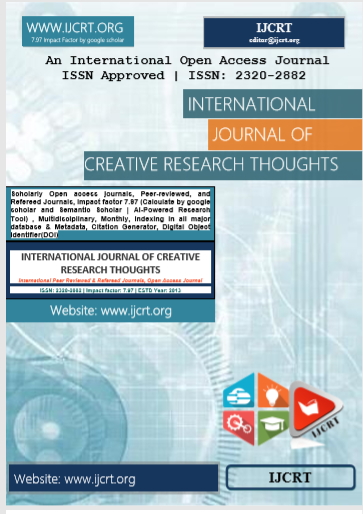
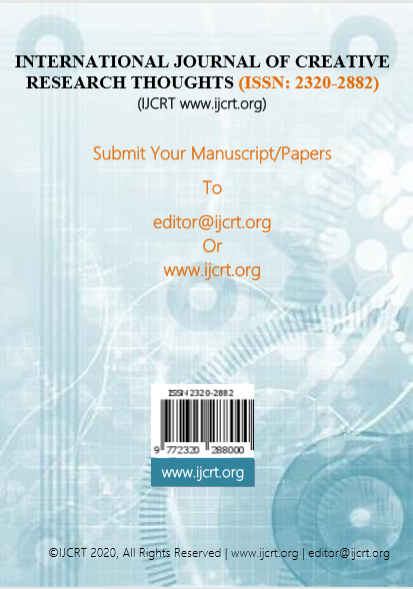
| IJCRT Journal front page | IJCRT Journal Back Page |
Paper Title: Sabha, Samiti, and Vidath: Governance and Decision Making in the Vedic Period
Publisher Journal Name: IJCRT
Your Paper Publication Details:
Published Paper ID: - IJCRT2603425
Register Paper ID - 303063
Title: SABHA, SAMITI, AND VIDATH: GOVERNANCE AND DECISION MAKING IN THE VEDIC PERIOD
Author Name(s): MR. RAJESH KUMAR
Publisher Journal name: IJCRT
Volume: 14
Issue: 3
Pages: d564-d576
Year: March 2026
Downloads: 85
Abstract
The political institutions of the Vedic period provide valuable insight into the early evolution of governance, collective decision-making, and social organization in the Indian subcontinent. Vedic literature particularly the hymns of the Rigveda contains references to assemblies such as the Sabha, Samiti, and Vidath, which functioned as important forums for consultation, deliberation, and communal participation.These institutions demonstrate that political authority in early Indo-Aryan society was not exercised solely by the ruler but was moderated through collective discussion and institutional guidance. The Samiti appears to have represented the broader tribal community and provided a space for public deliberation on issues related to leadership, warfare, and communal welfare, while the Sabha functioned as a smaller council of elders responsible for advisory consultation, dispute resolution, and maintaining social order. The Vidath, on the other hand, combined ritual, intellectual, and social functions and contributed to shaping the ethical and cultural foundations of governance within Vedic society.When examined together, these assemblies reveal an interconnected institutional framework in which political authority was influenced by consultation, collective participation, and moral oversight. Such arrangements suggest that early Indian political traditions incorporated elements of participatory governance and deliberative decisionmaking within a tribal socio-political environment. This study analyzes the structure, functions, and interrelationship of these institutions to understand how they collectively contributed to governance in the Vedic period. It further explores the conceptual parallels between these ancient assemblies and certain features of modern governance, such as legislative deliberation, judicial consultation, and intellectual advisory mechanisms. Although Vedic institutions operated within a context shaped by kinship relations and customary traditions, their emphasis on consultation, consensus, and ethical responsibility reveals important intellectual foundations of Indian political thought.1 By situating the Sabha, Samiti, and Vidath within the broader trajectory of governance traditions in South Asia, the study highlights their significance for understanding the historical roots of participatory political culture in the region. The analysis demonstrates that the principles underlying these institutions collective deliberation, accountability of leadership, and the integration of ethical norms in governance continue to hold enduring relevance for contemporary discussions on democratic participation and institutional responsibility.
Licence: creative commons attribution 4.0
License
Creative Commons Attribution 4.0 and The Open Definition

Keywords
Vedic Political Institutions, Sabha, Samiti, Vidath, Vedic Governance, Governance in Vedic Society
License
Creative Commons Attribution 4.0 and The Open Definition
Paper Title: Digital payment adoption and Impact on spending behavior and perceived value of money: An Empirical Study Among adults
Publisher Journal Name: IJCRT
Your Paper Publication Details:
Published Paper ID: - IJCRT2603424
Register Paper ID - 303105
Title: DIGITAL PAYMENT ADOPTION AND IMPACT ON SPENDING BEHAVIOR AND PERCEIVED VALUE OF MONEY: AN EMPIRICAL STUDY AMONG ADULTS
Author Name(s): S.manjula, Dr.S.krithiga Maheswari
Publisher Journal name: IJCRT
Volume: 14
Issue: 3
Pages: d554-d563
Year: March 2026
Downloads: 77
Abstract
The rapid growth of digital payment technologies has significantly transformed the financial transaction system in modern economies. Digital payment methods such as Unified Payments Interface (UPI), mobile wallets, debit and credit cards, and internet banking have reduced the dependence on physical cash and improved the speed, convenience, and accessibility of financial transactions. While these systems provide numerous advantages, their influence on consumer spending behavior and the perceived value of money has become an important area of study. The shift from tangible cash transactions to intangible digital payments may reduce the psychological awareness associated with spending, often referred to as the "pain of paying," which may influence individuals' financial discipline. The primary objective of this study is to examine the level of digital payment usage among adults and analyze its impact on spending behavior and the perceived value of money. The study adopts a descriptive research design and follows a quantitative research approach. Primary data were collected from 150 adult respondents using a structured questionnaire. A non-probability convenience sampling method was used for selecting the respondents. The collected data were analyzed using statistical tools such as frequency analysis, percentage analysis, measures of central tendency, and the Chi-square test. The findings of the study indicate that a majority of respondents frequently use digital payment methods for their daily transactions. The results suggest that the convenience and speed of digital payments encourage frequent purchases and may increase spending tendencies. The study also reveals that digital transactions can reduce the perceived value of money compared to physical cash. Overall, the research highlights the need for financial awareness and responsible spending practices in an increasingly digital payment environment.
Licence: creative commons attribution 4.0
License
Creative Commons Attribution 4.0 and The Open Definition
Keywords
Digital Payment, Spending Behavior, Perceived Value of Money, Consumer Behavior, Financial Transactions, UPI, Mobile Wallets, Cashless Economy, Financial Discipline, Digital Payment Adoption.
License
Creative Commons Attribution 4.0 and The Open Definition
Paper Title: Impact Of Human Resources Planning On The Actualization Of Organizational Goal
Publisher Journal Name: IJCRT
Your Paper Publication Details:
Published Paper ID: - IJCRT2603423
Register Paper ID - 303029
Title: IMPACT OF HUMAN RESOURCES PLANNING ON THE ACTUALIZATION OF ORGANIZATIONAL GOAL
Author Name(s): Subash gokul K, Mr.S.Vinoithkumar
Publisher Journal name: IJCRT
Volume: 14
Issue: 3
Pages: d549-d553
Year: March 2026
Downloads: 71
Abstract
This research focuses on the effects that Human Resources Planning (HRP) has on achieving organizational objectives. It discusses how strategic HRP integrates the capabilities of the workforce with business goals and responds to fluctuating market requirements. The study summarizes the development of HRP theories and models, outlining the strategic significance of an effective alignment between HR strategies and business demands. It outlines different HRP models including Contingency Model and Resource-Based View, emphasizing their contribution towards improving organizational performance. Using a secondary data analysis method, the study relies on available datasets and SPSS for quantitative data analysis. It evaluates such variables as Employee Turnover Rate, Training Hours, Employee Satisfaction Score, HR Investment and Organizational Performance Score in various organizations. The results show that there are quite high differences in HRP metrics between different organizations hence the need for tailor-made HR strategies. Poor relationships between these variables and organizational performance suggest that the direct effect of HRP elements is complicated, and not always straightforward.
Licence: creative commons attribution 4.0
License
Creative Commons Attribution 4.0 and The Open Definition
Keywords
Keywords: Human Resource Planning, Organizational Goals, Workforce Planning, Employee Performance, Strategic HRM, Organizational Effectiveness, Manpower Planning, Employee Productivity, Talent Management, Organizational Performance.
License
Creative Commons Attribution 4.0 and The Open Definition
Paper Title: Buthur Labaniyya: Classical Concepts and Therapeutic Approaches in Unani Medicine
Publisher Journal Name: IJCRT
Your Paper Publication Details:
Published Paper ID: - IJCRT2603422
Register Paper ID - 303050
Title: BUTHUR LABANIYYA: CLASSICAL CONCEPTS AND THERAPEUTIC APPROACHES IN UNANI MEDICINE
Author Name(s): ASIA KHANAM, JAVED ALI KHAN, RAJESH, ASHOK KUMAR, TAUSEEF AHMAD
Publisher Journal name: IJCRT
Volume: 14
Issue: 3
Pages: d540-d546
Year: March 2026
Downloads: 67
Abstract
Acne vulgaris, known in Unani medicine as Buth?r Laban?yya, is a common chronic inflammatory disorder of the pilosebaceous unit that mainly affects adolescents and young adults. It is characterized by the presence of comedones, papules, pustules, nodules and cystic lesions that commonly appear on the face, chest and back. Classical Unani literature describes Buth?r Laban?yya as small whitish eruptions resembling drops of milk caused by the accumulation of thick morbid material within the sebaceous glands. According to Unani concepts, the disease develops due to humoral imbalance, particularly excessive heat and the movement of morbid matter toward the skin.Various etiological factors such as improper diet, digestive disturbances, hormonal changes and environmental influences have also been described by Unani physicians. The management of Buth?r Laban?yya in Unani medicine focuses on correction of humoral imbalance, purification of blood and evacuation of morbid matter from the body. Different therapeutic approaches including Il?j bi'l Tadbeer, Il?j bi'l Daw? and Il?j bi'l Ghidh? are recommended for its management. Several medicinal plants possessing anti-inflammatory, antimicrobial and blood-purifying properties are widely used in Unani therapeutics. This review highlights the Unani concept, etiopathogenesis and therapeutic approaches for the management of acne vulgaris.
Licence: creative commons attribution 4.0
License
Creative Commons Attribution 4.0 and The Open Definition
Keywords
Laban?yya, Acne vulgaris, Unani medicine, Unani therapeutics
License
Creative Commons Attribution 4.0 and The Open Definition
Paper Title: Role of Nutraceuticals in Clinical Manifestation and Control of Hypertension
Publisher Journal Name: IJCRT
Your Paper Publication Details:
Published Paper ID: - IJCRT2603421
Register Paper ID - 302954
Title: ROLE OF NUTRACEUTICALS IN CLINICAL MANIFESTATION AND CONTROL OF HYPERTENSION
Author Name(s): Hemal S. Nehete
Publisher Journal name: IJCRT
Volume: 14
Issue: 3
Pages: d519-d539
Year: March 2026
Downloads: 73
Abstract
Cardiovascular Disease (CVD) is a major adjustable risk factor linked to Hypertension, which is the primary cause of death globally. Although antihypertensive medications are available, blood pressure management remains inadequate in many demographics. This review examines the significance of dietary methods and nutraceuticals in hypertension management, highlighting their potential as complementary treatments. Nutritional strategies include reducing sodium intake, and increasing magnesium, vitamin C, calcium, garlic, L-arginine, omega-3 fatty acids, and beetroot consumption, among others. These elements function through various mechanisms, such as improving endothelial function, diminishing oxidative stress, and regulating vascular tone.
Licence: creative commons attribution 4.0
License
Creative Commons Attribution 4.0 and The Open Definition
Keywords
Hypertension, Inflammation, Nutraceuticals, Antioxidents, Diet.
License
Creative Commons Attribution 4.0 and The Open Definition
Paper Title: Evolution and Development of Repertory: Theoretical Basis for Rubric Classification and Selection of Simillimum in Homoeopathy
Publisher Journal Name: IJCRT
Your Paper Publication Details:
Published Paper ID: - IJCRT2603420
Register Paper ID - 302992
Title: EVOLUTION AND DEVELOPMENT OF REPERTORY: THEORETICAL BASIS FOR RUBRIC CLASSIFICATION AND SELECTION OF SIMILLIMUM IN HOMOEOPATHY
Author Name(s): Shruti Sandeep Ahirkar, Trupti Prashant Hiwase
Publisher Journal name: IJCRT
Volume: 14
Issue: 3
Pages: d515-d518
Year: March 2026
Downloads: 86
Abstract
The Homoeopathic Repertory is serving as a vital tool for the selection of Remedy by systematically organizing and indexing symptoms of the homoeopathic materia medica. This theoretical research explores the historical evolution, Chronological Development, epistemological foundations, and philosophical reasoning behind the classification of Rubrics and selection of remedy in the homeopathic system of medicine. This study deeply scrutinizes the evolution in the structure of Repertory, from early repertories by Dr. Hahnemann, Dr. Boenninghausen, Dr. Boger, and Dr. Kent to modern Repertory Software such as Radar Opus and HOMPATH. This study examines the theoretical challenges ingrained in the formation of rubric, Symptom standardization, and the individuality of clinical data interpretation during Case taking or Drug Proving. Finally, this study proposes a theoretical model intended to enhance the rubric classification and remedy selection, integrating evidence-based data, stochastic approaches, and an algorithmic decision support system with the help of AI to reconcile the homoeopathic practice with scientific rigor without interrupting the concept of individualization in homoeopathy.
Licence: creative commons attribution 4.0
License
Creative Commons Attribution 4.0 and The Open Definition
Keywords
Homoeopathic Repertory, Rubric classification, individualization.
License
Creative Commons Attribution 4.0 and The Open Definition
Paper Title: Impact of Test-Taking Strategies on High School Academic Success: An Analysis Using the TTSS.
Publisher Journal Name: IJCRT
Your Paper Publication Details:
Published Paper ID: - IJCRT2603419
Register Paper ID - 302981
Title: IMPACT OF TEST-TAKING STRATEGIES ON HIGH SCHOOL ACADEMIC SUCCESS: AN ANALYSIS USING THE TTSS.
Author Name(s): Bhavana Kajjam, Dr. Rithuma Oruganti, Seshagiri Rao Joshi
Publisher Journal name: IJCRT
Volume: 14
Issue: 3
Pages: d508-d514
Year: March 2026
Downloads: 78
Abstract
Test-taking strategies are essential for academic success, particularly in high school where students face increased academic pressure and diverse assessment formats. This article explores the role of the Test-Taking Strategy Scale (TTSS) in assessing students' strategic behaviors before, during, and after tests. By understanding these strategies, educators can design interventions to improve performance and reduce test anxiety. A sample of 30 students (age range 13-15years) participated in the assessment. Raw scores were calculated, and descriptive statistics such as mean and standard deviation were derived. Results revealed that female students demonstrated higher scores in Item analysis, after test, distractor selectin criteria. The study concludes that although students exhibit equal time management skills, improvements are needed in planning and test taking strategies and awareness programs and skill- building interventions are discussed.
Licence: creative commons attribution 4.0
License
Creative Commons Attribution 4.0 and The Open Definition
Keywords
Test-taking strategies are essential for academic success, particularly in high school where students face increased academic pressure and diverse assessment formats. This article explores the role of the Test-Taking Strategy Scale (TTSS) in assessing students' strategic behaviors before, during, and after tests. By understanding these strategies, educators can design interventions to improve performance and reduce test anxiety. A sample of 30 students (age range 13-15years) participated in
License
Creative Commons Attribution 4.0 and The Open Definition
Paper Title: AUTOMATED DATA INTEGRITY AND EXTRACTION ENGINE FOR BUSINESS OPERATIONS
Publisher Journal Name: IJCRT
Your Paper Publication Details:
Published Paper ID: - IJCRT2603418
Register Paper ID - 303006
Title: AUTOMATED DATA INTEGRITY AND EXTRACTION ENGINE FOR BUSINESS OPERATIONS
Author Name(s): Harini N, Bhavana N, Divya G, Goma E
Publisher Journal name: IJCRT
Volume: 14
Issue: 3
Pages: d492-d507
Year: March 2026
Downloads: 66
Abstract
Modern recruitment systems require efficient screening and evaluation to handle large volumes of applications. This study presents a Recruitment Automation System that automates the hiring process through intelligent resume analysis. Candidates upload resumes via a web portal, where AI and NLP extract key details such as skills, qualifications and experience. The system compares this data with job descriptions and generates an ATS score to measure candidate suitability. Eligible applicants proceed to role-based assessments, while HR can monitor results through a centralized dashboard. Automated interview scheduling via Google Meet and email notifications further streamline the process, ensuring a faster, accurate and transparent recruitment workflow.
Licence: creative commons attribution 4.0
License
Creative Commons Attribution 4.0 and The Open Definition
Keywords
Recruitment automation, resume screening, Artificial Intelligence (AI), Natural Language Processing (NLP), Applicant Tracking System (ATS), resume parsing, job matching, automated interview scheduling, Google Meet integration, HR dashboard, email notifications, data privacy, secure authentication.
License
Creative Commons Attribution 4.0 and The Open Definition
Paper Title: A Study on Pre-Service Teachers' Perception towards Activity Based Learning and its Impact on Students' Classroom Participation
Publisher Journal Name: IJCRT
Your Paper Publication Details:
Published Paper ID: - IJCRT2603417
Register Paper ID - 302951
Title: A STUDY ON PRE-SERVICE TEACHERS' PERCEPTION TOWARDS ACTIVITY BASED LEARNING AND ITS IMPACT ON STUDENTS' CLASSROOM PARTICIPATION
Author Name(s): Ms. Devika Muralidharan, Dr. Smriti Malhotra
Publisher Journal name: IJCRT
Volume: 14
Issue: 3
Pages: d481-d491
Year: March 2026
Downloads: 103
Abstract
Student participation plays a major role in meaningful learning. Still many classrooms rely on traditional teaching methods that limit student interaction and engagement. Activity-based Learning (ABL) can break the conventional classroom dynamics and provide an engaging and experiential one. This study tries to find out the perception of pre-service teachers toward Activity-Based Learning (ABL) and examines how it impacts students' classroom participation. The research was conducted in two stages. First, a survey was conducted to understand the level of awareness and attitude of pre-service teachers in using activity-based learning strategies. The second stage looked at the impact of activity-based learning through classroom observation made during school internship where student participation was observed before and after introducing activity-based activities in English lessons. The study also shows some gaps that exist in implementation of this theory into practical application in classrooms. The study as a whole looks at looks at the ability of activity-based learning in creating a more interactive classroom environment along with drawing attention to the importance of better teacher preparation and support for its effective implementation.
Licence: creative commons attribution 4.0
License
Creative Commons Attribution 4.0 and The Open Definition
Keywords
Activity-Based Learning, Experiential Learning, Pre-service Teachers, Perception, Student Participation, Classroom Implementation, Challenges
License
Creative Commons Attribution 4.0 and The Open Definition
Paper Title: The psychology of cultural identity in The Namesake
Publisher Journal Name: IJCRT
Your Paper Publication Details:
Published Paper ID: - IJCRT2603416
Register Paper ID - 302866
Title: THE PSYCHOLOGY OF CULTURAL IDENTITY IN THE NAMESAKE
Author Name(s): Jiya Kawatra
Publisher Journal name: IJCRT
Volume: 14
Issue: 3
Pages: d473-d480
Year: March 2026
Downloads: 155
Abstract
This research paper discusses the psychological aspect of the cultural identity of The Namesake by Jhumpa Lahiri. The novel narrates the life of Gogol Ganguli, a second-generation immigrant that is brought up in the United States of America, with a father and a mother of Indian descent. Although most works deal with the theme of migration, naming, and generational conflict, this paper will look into the underlying psychological conflict that the protagonist in the story is undergoing. The cultural identity of the novel is not a social state alone, but also an inner emotional process that influences the life of the main hero.
Licence: creative commons attribution 4.0
License
Creative Commons Attribution 4.0 and The Open Definition
Keywords
The psychology of cultural identity in The Namesake
License
Creative Commons Attribution 4.0 and The Open Definition
Paper Title: Fathoming Psychological References In Assamese Cinema
Publisher Journal Name: IJCRT
Your Paper Publication Details:
Published Paper ID: - IJCRT2603415
Register Paper ID - 302278
Title: FATHOMING PSYCHOLOGICAL REFERENCES IN ASSAMESE CINEMA
Author Name(s): Devanggona Lahkar
Publisher Journal name: IJCRT
Volume: 14
Issue: 3
Pages: d468-d472
Year: March 2026
Downloads: 106
Abstract
Cinema has been a powerful medium for raising awareness and educating the public about various psychological issues and societal taboos. Recently, Assamese cinema has transitioned from a focus on romance to a broader range of genres, such as horror, comedy, action, thriller, satire, and drama. This change has led to the emergence of films that tackle psychological concepts, particularly within the experimental genre. Over the years, numerous filmmakers have produced impactful Assamese films that delve into psychological themes, earning recognition both nationally and internationally and bringing accolades to the state. This research paper seeks to analyze the psychological motifs, references, issues, and taboos presented in Assamese cinema. The findings indicate that filmmakers have explored significant psychological disorders and themes, including empty nest syndrome, vorarephilia, gender dysphoria, schizophrenia, loneliness, hope, resilience, stress, toxic masculinity, suicide, alcohol addiction, gambling, acceptance, conformity, social support, and quality of life, portraying them in creative and thought-provoking ways.
Licence: creative commons attribution 4.0
License
Creative Commons Attribution 4.0 and The Open Definition
Keywords
Assamese cinema, Psychology
License
Creative Commons Attribution 4.0 and The Open Definition
Paper Title: The Military Dynamics of the Qandahar Conflict: A Comparative Study of Mughal and Safavid Warfare (16th and 17th Centuries)
Publisher Journal Name: IJCRT
Your Paper Publication Details:
Published Paper ID: - IJCRT2603414
Register Paper ID - 302841
Title: THE MILITARY DYNAMICS OF THE QANDAHAR CONFLICT: A COMPARATIVE STUDY OF MUGHAL AND SAFAVID WARFARE (16TH AND 17TH CENTURIES)
Author Name(s): Mudasir Ahmad
Publisher Journal name: IJCRT
Volume: 14
Issue: 3
Pages: d457-d467
Year: March 2026
Downloads: 86
Abstract
This article examines the Mughal Safavid conflict over Qandahar between 1595 and 1653, a prolonged contest that revealed how two early modern empires adapted their institutions, technologies and strategies to frontier war. Qandahar, situated at the crossroads of Iran, Central Asia and India was far more than a fortress. For the Mughals it was a defensive glacis protecting Kabul and Lahore. For the Safavids it was a patrimony unjustly alienated. Using chronicles, memoirs, travelogues and the work of modern scholars. This study argues that the conflict turned less on shared gunpowder technology than on divergent institutional frameworks, logistical capacities and styles of leadership. Mughal artillery and the Mansabdari system flourished in the plains of Hindustan but proved fragile in Afghanistan. Safavid reforms under Shah Abbas I and Shah Abbas II, though sustained by fewer resources created a disciplined army well suited to siege warfare and defence. By 1653 the fate of Qandahar was sealed in favour of Iran, illustrating the central role of geography, supply and cohesion in early modern imperial rivalry.
Licence: creative commons attribution 4.0
License
Creative Commons Attribution 4.0 and The Open Definition
Keywords
Qandahar, Mughal Empire, Gunpowder Empires, Siege craft, Logistics
License
Creative Commons Attribution 4.0 and The Open Definition
Paper Title: Successful Conception in a 38-Year-Old Primary Infertility Patient Through Ayurvedic Management: A Case Study
Publisher Journal Name: IJCRT
Your Paper Publication Details:
Published Paper ID: - IJCRT2603413
Register Paper ID - 302950
Title: SUCCESSFUL CONCEPTION IN A 38-YEAR-OLD PRIMARY INFERTILITY PATIENT THROUGH AYURVEDIC MANAGEMENT: A CASE STUDY
Author Name(s): Dr. Vishakha Nagoshe
Publisher Journal name: IJCRT
Volume: 14
Issue: 3
Pages: d450-d456
Year: March 2026
Downloads: 76
Abstract
Infertility is a growing reproductive health issue affecting many couples worldwide. In Ayurveda, infertility is correlated with Vandhyatva, which occurs due to imbalance of Dosha, Dhatu and Artava. The present case study highlights the successful management of a 38-year-old female with primary infertility through Ayurvedic treatment. The patient had been trying to conceive for several years without success. After detailed Ayurvedic assessment, treatment including Shodhana and Shamana chikitsa along with lifestyle and dietary modifications was administered. Within three months of Ayurvedic treatment, the patient conceived naturally. This case demonstrates the potential effectiveness of Ayurvedic management in improving fertility outcomes.
Licence: creative commons attribution 4.0
License
Creative Commons Attribution 4.0 and The Open Definition
Keywords
Primary infertility, Vandhyatva, Ayurveda, Artava Dushti, Ayurvedic management.
License
Creative Commons Attribution 4.0 and The Open Definition
Paper Title: Biosmart Materials In Pediatric Dentistry- A Narrative Review
Publisher Journal Name: IJCRT
Your Paper Publication Details:
Published Paper ID: - IJCRT2603412
Register Paper ID - 302738
Title: BIOSMART MATERIALS IN PEDIATRIC DENTISTRY- A NARRATIVE REVIEW
Author Name(s): Dr.Kavya, Dr.Bala Anusha D, Dr.Rangeeth Bollam Nammalwar, Dr.Sruthi O.K, Dr.Rishitha Nithyanandam , Dr.Arjun Thomas, Dr.Rajakumar Sekar.
Publisher Journal name: IJCRT
Volume: 14
Issue: 3
Pages: d442-d449
Year: March 2026
Downloads: 106
Abstract
Bio-smart materials represent an advanced category of biomimetic restorative materials designed to imitate the structure and function of natural dental tissues while responding dynamically to changes in the oral environment. In Pediatric Dentistry, these materials exhibit properties such as fluoride and calcium ion release, remineralization potential, pH responsiveness, and adaptive mechanical behavior, thereby supporting minimally invasive and preventive treatment strategies. Their integration into restorative, preventive, orthodontic, and endodontic procedures enhances biocompatibility, clinical longevity, and overall treatment outcomes in children.
Licence: creative commons attribution 4.0
License
Creative Commons Attribution 4.0 and The Open Definition
Keywords
Biomimetics, Bio-smart materials, Pediatric dentistry, Remineralization, Smart restorative materials, minimally invasive dentistry.
License
Creative Commons Attribution 4.0 and The Open Definition
Paper Title: Manusmriti and Misogyny: Deconstructing Ancient Hindu Law through Feminist Lens
Publisher Journal Name: IJCRT
Your Paper Publication Details:
Published Paper ID: - IJCRT2603411
Register Paper ID - 302767
Title: MANUSMRITI AND MISOGYNY: DECONSTRUCTING ANCIENT HINDU LAW THROUGH FEMINIST LENS
Author Name(s): Sarbani Sarkar, Ashaduzzaman Khan
Publisher Journal name: IJCRT
Volume: 14
Issue: 3
Pages: d434-d441
Year: March 2026
Downloads: 118
Abstract
One of the most important ancient Hindu legal texts, the Manusmriti, has been at the center of arguments about gender, morals, and social order in India for a long time. Many people respect it as an important dharma??stra, but feminist research has shown that it is based on patriarchy and supports the idea that women should be subordinate to men. Using a feminist view, this paper looks at the misogynistic parts of Manusmriti by breaking down its rules on women's rights, behavior, and choice. It says that the text not only supports the idea that men should be in charge of women and women should rely on men, but it also makes it normal for women to be denied education, property rights, and independence. The study shows how the Manusmriti was used to make gender inequality official in religious and law systems by using feminist ideas about patriarchy, power, and resistance. At the same time, the paper looks at these rules in the context of their time and asks whether they were based on normative goals or social realities. The goal of this critical deconstruction is to show how the text has shaped gender discourse in South Asia for a long time and to make room for reinterpreting tradition in ways that question and break down misogynistic structures. In the end, the paper stresses how important it is to use feminist hermeneutics when reading classic texts again to question their authority and how they apply to current battles for gender justice.
Licence: creative commons attribution 4.0
License
Creative Commons Attribution 4.0 and The Open Definition
Keywords
Manusmriti, Misogyny, Feminist Critique, Patriarchy, Hindu Law, Gender Inequality, Women's Agency, Dharma??stra, Feminist Hermeneutics, Tradition and Modernity.
License
Creative Commons Attribution 4.0 and The Open Definition
Paper Title: Representation of Gender Fluidity in Contemporary Fiction
Publisher Journal Name: IJCRT
Your Paper Publication Details:
Published Paper ID: - IJCRT2603410
Register Paper ID - 302742
Title: REPRESENTATION OF GENDER FLUIDITY IN CONTEMPORARY FICTION
Author Name(s): Bhawna bajaj
Publisher Journal name: IJCRT
Volume: 14
Issue: 3
Pages: d413-d433
Year: March 2026
Downloads: 81
Abstract
This study looks at how gender fluidity is portrayed in modernist and contemporary fiction, redefining subjectivity, altering narrative form, and upending temporal structures. The study makes the case that gender fluidity serves not only as thematic representation but also as a structural principle that alters narrative logic through a thorough comparative analysis of Orlando by Virginia Woolf, Freshwater by Akwaeke Emezi, and Detransition, Baby by Torrey Peters. This study shows that fluid identities necessitate formal experimentation in time, voice, and relational structure, drawing on theories of gender performativity, queer temporality, and trans embodiment. Peters places fluid gender within neoliberal realism and modern kinship politics, Emezi undermines Western individualism through plural consciousness rooted in Igbo cosmology, and Woolf foreshadows later gender theory through temporal elasticity and androgyny. This paper uses close reading as its main methodology and combines textual analysis and theory to show how narrative form itself becomes a site of gender negotiation. In the end, the study suggests that literature actively contributes to the creative reconstruction of identity and social possibility rather than merely reflecting evolving conceptions of gender.
Licence: creative commons attribution 4.0
License
Creative Commons Attribution 4.0 and The Open Definition
Keywords
performativity, gender fluidity, queer temporality, trans embodiment, narrative form, modernism, and comparative literature
License
Creative Commons Attribution 4.0 and The Open Definition
Paper Title: Evaluation of Bone Marrow Aspiration in Pancytopenia
Publisher Journal Name: IJCRT
Your Paper Publication Details:
Published Paper ID: - IJCRT2603409
Register Paper ID - 302703
Title: EVALUATION OF BONE MARROW ASPIRATION IN PANCYTOPENIA
Author Name(s): Dr Mansi Ramani, Dr. Priya Bansal, Dr. Jasmin Jasani
Publisher Journal name: IJCRT
Volume: 14
Issue: 3
Pages: d404-d412
Year: March 2026
Downloads: 71
Abstract
Background: Pancytopenia is not a disease entity but a triad of findings that may result from various disease processes, primarily or secondarily involving the bone marrow. Bone marrow aspiration plays an important role in identifying the various causes of pancytopenia. Hence the present study was undertaken to evaluate bone marrow findings in pancytopenia cases and causes of pancytopenia on the basis of bone marrow findings. Method: Total 50 patients of aged between 18-70 years presented with pancytopenia in the Department of Pathology, at SBKS MI&RC, Piparia during a period from September 2025 to December 2025 were enrolled and evaluated for physical findings, primary hematological investigation and bone marrow aspirations. Results: Commonest age group affected was 41-50 years (28%) with male predominance (68%). General weakness (90%) was the chief complaint and pallor (96%) was commonest physical finding. Megaloblastic anemia (48%) was the common cause of pancytopenia, followed by dimorphic anemia (18%). Lowest hemoglobin range was 3gms/dl-3.5gms/dl noted in case of nutritional and megaloblastic anemia. Lowest leukocyte count was 570cells/mm3 and noted inmegaloblastic anemia. Lowest platelet count was 10,000cells/mm3and noted in nutritional anemia. Hypercellular marrow was found in 41(82%) patients and common cause was megaloblastic anemia. Hypocellular marrow was seen in 4(8%) cases and normocellular marrow was seen in 5(10%) cases. Conclusion: Detailed primary hematological investigations along with bone marrow aspiration and biopsy in cytopenic patients is helpful for understanding of the disease process, to diagnose or to rule out the causes of cytopenia and helpful in planning further investigations and management of cytopenic patients.
Licence: creative commons attribution 4.0
License
Creative Commons Attribution 4.0 and The Open Definition
Keywords
Pancytopenia; Bone marrow aspiration; Pallor; Megaloblastic; Anemia; Dimorphic; Hypercellular; Hypocellular
License
Creative Commons Attribution 4.0 and The Open Definition
Paper Title: Homosocial Intensity and Queer Ambivalence in Hannibal
Publisher Journal Name: IJCRT
Your Paper Publication Details:
Published Paper ID: - IJCRT2603408
Register Paper ID - 302296
Title: HOMOSOCIAL INTENSITY AND QUEER AMBIVALENCE IN HANNIBAL
Author Name(s): Aahana Tripathi
Publisher Journal name: IJCRT
Volume: 14
Issue: 3
Pages: d396-d403
Year: March 2026
Downloads: 83
Abstract
This paper explores Hannibal Lecter and Will Graham's friendship in Hannibal, emphasising how the show presents their relationship. The article makes the case that the show's queer potential is revealed through the framework of deep homosocial closeness, rather than arguing over whether it confirms, rejects, or only suggests a gay relationship. It implies that their connection is in an unstable region between competitiveness, mentoring, confession, and romantic attachment, drawing on Eve Kosofsky Sedgwick's notion of male homosocial desire. Though it never settles their connection inside a defined sexual identity, the series frequently stages emotional vulnerability in ways that mimic a love story, such as private therapy sessions, betrayal as anguish, and the climax cliff side embrace. This uncertainty is a literary technique rather than an absence. Despite the fact that both characters are matched with women, their emotional depth seems to take precedence over those relationships. Confession, acknowledgement, and mutual development are at the center of the show. Hannibal generates queer potential through ambiguity by letting connection develop through emotion, desire, and quiet rather than overt confession. The show shows how narrative ambiguity in high-end television may serve as a purposeful area where queerness circulates without being formally identified rather than as a means of avoidance.
Licence: creative commons attribution 4.0
License
Creative Commons Attribution 4.0 and The Open Definition
Keywords
This paper explores Hannibal Lecter and Will Graham's friendship in Hannibal, emphasising how the show presents their relationship.
License
Creative Commons Attribution 4.0 and The Open Definition
Paper Title: REVIEW PAPER ON GEOCELL REINFORCEMENT
Publisher Journal Name: IJCRT
Your Paper Publication Details:
Published Paper ID: - IJCRT2603407
Register Paper ID - 301811
Title: REVIEW PAPER ON GEOCELL REINFORCEMENT
Author Name(s): Sarang Kadawe, Mahesh Bawankule, Aryan Mude, Devyani Wakde, Govind Pawar
Publisher Journal name: IJCRT
Volume: 14
Issue: 3
Pages: d390-d395
Year: March 2026
Downloads: 73
Abstract
Geocell is defined as a three-dimensional, cost-effective, and sustainable material made from high-strength polymers, used to enhance the performance of soft soils by providing all-round confinement to the encapsulated soil, thereby improving the performance of foundation beds and various geotechnical applications.
Licence: creative commons attribution 4.0
License
Creative Commons Attribution 4.0 and The Open Definition
Keywords
Consequently: Result, Segment: Product, Geosynthetics, geocell reinforcement, flexible pavement, construction cost
License
Creative Commons Attribution 4.0 and The Open Definition
Paper Title: Role of tourism in sustainable development of mountainous areas: An analytical study in the context of Chamoli district
Publisher Journal Name: IJCRT
Your Paper Publication Details:
Published Paper ID: - IJCRT2603406
Register Paper ID - 303086
Title: ROLE OF TOURISM IN SUSTAINABLE DEVELOPMENT OF MOUNTAINOUS AREAS: AN ANALYTICAL STUDY IN THE CONTEXT OF CHAMOLI DISTRICT
Author Name(s): Deepak kumar
Publisher Journal name: IJCRT
Volume: 14
Issue: 3
Pages: d379-d389
Year: March 2026
Downloads: 71
Abstract
Role of tourism in sustainable development of mountainous areas: An analytical study in the context of Chamoli district
Licence: creative commons attribution 4.0
License
Creative Commons Attribution 4.0 and The Open Definition
Keywords
Role of tourism in sustainable development of mountainous areas: An analytical study in the context of Chamoli district
License
Creative Commons Attribution 4.0 and The Open Definition
All Published Paper Details Search Through Above Search Option.
About IJCRT
The International Journal of Creative Research Thoughts (IJCRT) aims to explore advances in research pertaining to applied, theoretical and experimental Technological studies. The goal is to promote scientific information interchange between researchers, developers, engineers, students, and practitioners working in and around the world.
Indexing In Google Scholar, ResearcherID Thomson Reuters, Mendeley : reference manager, Academia.edu, arXiv.org, Research Gate, CiteSeerX, DocStoc, ISSUU, Scribd, and many more International Journal of Creative Research Thoughts (IJCRT) ISSN: 2320-2882 | Impact Factor: 7.97 | 7.97 impact factor and ISSN Approved. Provide DOI and Hard copy of Certificate. Low Open Access Processing Charges. 1500 INR for Indian author & 55$ for foreign International author. Call For Paper (Volume 14 | Issue 5 | Month- May 2026)
Call For Paper May 2026
Call For Papers
May 2026
Volume 14 | Issue 5
Last Date :
31-May-2026
Submit Manuscript Online Impact Factor: 7.97 Review Results : Within 02-03 Days Paper Publication : Within 02-03 Days
May 2026
Volume 14 | Issue 5
Last Date :
31-May-2026
Submit Manuscript Online Impact Factor: 7.97 Review Results : Within 02-03 Days Paper Publication : Within 02-03 Days
Published Issue Details
For Authors
Forms / Downloads
Other IMP Links
Indexing Partner
Research Area
LICENSE





ISSN and 7.97 Impact Factor Details

ISSN: 2320-2882 Impact Factor: 7.97 and ISSN APPROVED Journal Starting Year (ESTD) : 2013


ISSN and 7.97 Impact Factor Details
ISSN: 2320-2882 Impact Factor: 7.97 and ISSN APPROVED Journal Starting Year (ESTD) : 2013
DOI Details
CONFERENCE
CONFERENCE MANAGMENT & PUBLICATION CONFERENCE PROPOSAL
RECENT CONFERENCE

CONFERENCE PROPOSAL CONFERENCE PROCEEDINGS
CONFERENCE PROPOSAL CONFERENCE PROCEEDINGS
For Reviewer /Referral (RMS) Earn 500 per paper
Important Links
NEWS & Conference
Digital Library
IJCRT RMS | Earn 500 Per Paper.

Open Access


LICENSE
Indexing Partner
Scholarly open access journals, Peer-reviewed, and Refereed Journals, Impact factor 7.97 (Calculate by google scholar and Semantic Scholar | AI-Powered Research Tool) , Multidisciplinary, Monthly, Indexing in all major database & Metadata, Citation Generator, Digital Object Identifier(DOI)