Important Details
IJCRT - International Peer Reviewed, Open Access Journal, Multidisciplinary, Monthly, Nominal(Low) Fees for Professional Research Services International Journal of Creative Research Thoughts - IJCRT Peer Review Journal, Refereed Journal, Peer Reviewed Journal , Referred Journal and Indexed Journal, Open access, Online and Print Journal,international Journal Open Access, Accepted by Indian and foreign university ,IJCRT Followed Norms, guidelines, requirement, listing criteria and methodology of score/point also applied from: Scopus , Web of Science , UGC Approved , UGC CARE, UGC-CARE .
UGC Approved Journal No: 49023 (18)
UGC approval Link
https://ijcrt.org/ugc%20approval.jpg
All Policy and Approval
Please Like Our Facebook Page | CrossRef DOI and Hard copy of Certificate Provide if required. | www.IJCRT.org | editor@IJCRT.org | WhatsApp: 7990172303
Publication Details:
- Paper Submission : 31-Dec-2025. Call For Paper (Volume 13 | Issue 12 | Month- December 2025)
- Acceptance/Rejection Notification: Within 02-04 Days.
- Paper Publish: Within 02-04 Days after submitting all documents.
-
Submit Your Paper Any time There No deadline.
-
Publication fees : 1570 INR for Indian author & 59$ for foreign International author.
Please Like Our Facebook Page | CrossRef DOI and Hard copy of Certificate Provide if required.
Licence and Indexing
Indexing In Google Scholar, SSRN, ResearcherID-Publons, Semantic Scholar | AI-Powered Research Tool, Microsoft Academic, Academia.edu, arXiv.org, Research Gate, CiteSeerX, ResearcherID Thomson Reuters, Mendeley : reference manager, DocStoc, ISSUU, Scribd, and many more | High Impact Factor: 7.97 | Digital object identifier (DOI) and Hard Copy of certificate Provided.




























Licence
DOI
ISSN Approved impact factor: 7.97 
Creative Common 
Valid as per new UGC Gazette regulations 

INTERNATIONAL JOURNAL OF CREATIVE RESEARCH THOUGHTS - IJCRT (IJCRT.ORG)
International Peer Reviewed & Refereed Journals, Open Access Journal
IJCRT Peer-Reviewed (Refereed) Journal as Per New UGC Rules.
ISSN Approved Journal No: 2320-2882 | Impact factor: 7.97 | ESTD Year: 2013
Call For Paper - Volume 13 | Issue 12 | Month- December 2025
Scholarly open access journals, Peer-reviewed, and Refereed Journals, Impact factor 7.97 (Calculate by google scholar and Semantic Scholar | AI-Powered Research Tool) , Multidisciplinary, Monthly, Indexing in all major database & Metadata, Citation Generator, Digital Object Identifier(CrossRef DOI)
Contact Us Click Here
WhatsApp Contact Click Here
IJCRT Search Xplore - Search all paper by Paper Name , Author Name, and Title
Volume 13 | Issue 11 |
Volume 13 | Issue 11 | Month
Downlaod After Publication 1) Table of content index in PDF
2) Table of content index in HTML 2)Table of content index in HTML
3) Front Page 3) Front Page
4) Back Page 4) Back Page
5) Editor Board Member 5)Editor Board Member
6) OLD Style Issue 6)OLD Style Issue
 |
 |
|---|---|
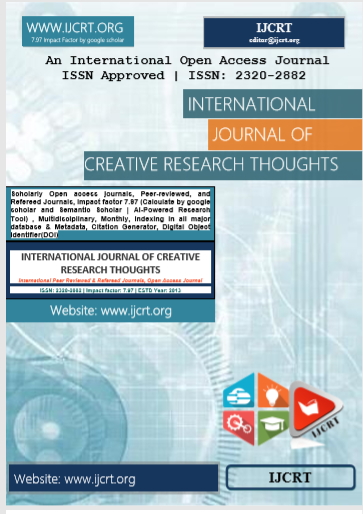
| IJCRT Journal front page | IJCRT Journal Back Page |
Paper Title: The Rise of Artificial Intelligence Ethics: Safeguarding Human Values in a Digital Era
Author Name(s): Rituparna Roy
Published Paper ID: - IJCRT2511937
Register Paper ID - 297067
Publisher Journal Name: IJPUBLICATION, IJCRT
DOI Member ID: 10.6084/m9.doi.one.IJCRT2511937 and DOI :
Author Country : Indian Author, India, - , -, - , | Research Area: Science and Technology Published Paper URL: http://ijcrt.org/viewfull.php?&p_id=IJCRT2511937 Published Paper PDF: download.php?file=IJCRT2511937 Published Paper PDF: http://www.ijcrt.org/papers/IJCRT2511937.pdf
Your Paper Publication Details:
Title: THE RISE OF ARTIFICIAL INTELLIGENCE ETHICS: SAFEGUARDING HUMAN VALUES IN A DIGITAL ERA
DOI (Digital Object Identifier) :
Pubished in Volume: 13 | Issue: 11 | Year: November 2025
Publisher Name : IJCRT | www.ijcrt.org | ISSN : 2320-2882
Subject Area: Science and Technology
Author type: Indian Author
Pubished in Volume: 13
Issue: 11
Pages: h940-h945
Year: November 2025
Downloads: 9
E-ISSN Number: 2320-2882
Abstract
Artificial Intelligence (AI) is reshaping modern societies through its growing use in education, healthcare, governance, security, and daily life. Along with its rapid expansion, ethical concerns around fairness, transparency, accountability, and privacy have gained global attention. This paper provides a comprehensive analysis of the foundations of AI ethics, the theoretical principles guiding responsible AI development, and the need for robust regulatory frameworks. Drawing on global trends and international guidelines, the study explores challenges such as algorithmic bias, data misuse, surveillance, and social inequality. It also highlights strategies for promoting ethical and trustworthy AI systems through transparency mechanisms, diverse datasets, stakeholder participation, and continuous monitoring. The paper aims to support researchers, policymakers, and educators in understanding the significance of ethical principles in the digital era and the importance of aligning technological progress with human rights, social justice, and long-term public welfare.
Licence: creative commons attribution 4.0
License
Creative Commons Attribution 4.0 and The Open Definition

Keywords
Artificial Intelligence, Ethics, Algorithmic Bias, Transparency, Accountability, Responsible Technology, Digital Governance
License
Creative Commons Attribution 4.0 and The Open Definition
Paper Title: ????? ?? ?????????????? ?? ??. ??????? ?? ????? ??????: ????????? ??? ?????????? ?????? ?? ?? ?????-???????? ????????? ?? ????????? ??????
Author Name(s): Amol Bhaurao Satpute, Dr. Vikas Jambhulakar
Published Paper ID: - IJCRT2511936
Register Paper ID - 297646
Publisher Journal Name: IJPUBLICATION, IJCRT
DOI Member ID: 10.6084/m9.doi.one.IJCRT2511936 and DOI :
Author Country : Indian Author, India, 441904 , Bhandara, (Maharashtra), 441904 , | Research Area: Medical Science All Published Paper URL: http://ijcrt.org/viewfull.php?&p_id=IJCRT2511936 Published Paper PDF: download.php?file=IJCRT2511936 Published Paper PDF: http://www.ijcrt.org/papers/IJCRT2511936.pdf
Your Paper Publication Details:
Title: ????? ?? ?????????????? ?? ??. ??????? ?? ????? ??????: ????????? ??? ?????????? ?????? ?? ?? ?????-???????? ????????? ?? ????????? ??????
DOI (Digital Object Identifier) :
Pubished in Volume: 13 | Issue: 11 | Year: November 2025
Publisher Name : IJCRT | www.ijcrt.org | ISSN : 2320-2882
Subject Area: Medical Science All
Author type: Indian Author
Pubished in Volume: 13
Issue: 11
Pages: h934-h939
Year: November 2025
Downloads: 7
E-ISSN Number: 2320-2882
Abstract
?????? ?????????????? ?? ????? ?????? ????? ?? ???? ?? ?????, ????????? ?????????? ??? ?????????-?????????? ???????? ?? ????-????? ????? ??? ?????? ?? ??? ?? ???? ????? ?? ??. ????????? ??????? ?? ??????? ?????? ?? ????? ?? ?????? ????? ??? ?? ???? ???? ??? ???????? ??? ??? ????? ?? ???? ?????? ????? ??????? ?? ??????? ?? ????? ???????? ?????????????? ?? ?? ????? ?? ????? ?? ?? ?????????-?????????? ?????? ?? ???? ?? ????? ????? ? ???????? ??????? ?? ?????????? ????? ?? ?? ??? ?????? ???? ?? '???? ??????? ?? ?????????' ?? ?????? ??? ?? ?????? ??? ?? ?? ???? ??????? ?????? ????????-????????? ?????? ??? ????? "?????? ??????" ?? ????? ??????? ?? ??????? ?? ???????? ???? ?? ?? ????? ?? ?? ????? ?????????? ?? (third term) ?? ??? ??? ???????? ???? ??, ?? ????????????? ?? ??????? ????? ?? ?????????? ?? ???? ???? ???? ????? ?? ??? ?????????????? ?? ???? ???? ?? ????????? ???? ?? ????? ???? ???? ????? ??? ?????? ?? ????? ????? ?? ??????? ?? ??????????? ?????? ??? ????????? ???? ?? ???????????? ??????? ?? ???? ?? ??????? ?? ??????? ???? ??? ?? ????????? ???? ?? ???? ?? ?????? ????????? ?? ????????? ?? ??? ???? ????? ???? ????? ?? ???? ???? ?? ????? ?? ?? ???? ??? ??????? ?? ???? ???? ??? ???? ?????? ??????? ?? ??? ????????? ????? ?? ??, ????? ???? ????? ??, ?? ????????? ?????? ?? ???????? ?? ????, ????? ???? ???????? ?? ???????? ????????????, ???? ???????? ?? ??????? ? ?????? ??????? ???? ???? ???? ????????? ?????? ?? ?????? ??? ?? ????????? ??? ?????????? ????? ?? ???????? ?????, ????? ???? ?? ??? ??? ????? ???? ?????? ?? ?????? ?????? ?? ????? ?? ????????? ????? ??? ?????? ?? ??? ???? ???????? ???????????? ?? ?????? ?? ???? ???? ????
Licence: creative commons attribution 4.0
License
Creative Commons Attribution 4.0 and The Open Definition
Keywords
??????????????, ?????????-??????????, ????????? ?????, ?????????????.
License
Creative Commons Attribution 4.0 and The Open Definition
Paper Title: India's New Labour Codes: A Shift Toward Simplification, Social Security and Sustainable Economic Progress
Author Name(s): Prof. P. Srinivasa Rao
Published Paper ID: - IJCRT2511935
Register Paper ID - 297645
Publisher Journal Name: IJPUBLICATION, IJCRT
DOI Member ID: 10.6084/m9.doi.one.IJCRT2511935 and DOI :
Author Country : Indian Author, India, 506009 , Warangal, 506009 , | Research Area: Medical Science All Published Paper URL: http://ijcrt.org/viewfull.php?&p_id=IJCRT2511935 Published Paper PDF: download.php?file=IJCRT2511935 Published Paper PDF: http://www.ijcrt.org/papers/IJCRT2511935.pdf
Your Paper Publication Details:
Title: INDIA'S NEW LABOUR CODES: A SHIFT TOWARD SIMPLIFICATION, SOCIAL SECURITY AND SUSTAINABLE ECONOMIC PROGRESS
DOI (Digital Object Identifier) :
Pubished in Volume: 13 | Issue: 11 | Year: November 2025
Publisher Name : IJCRT | www.ijcrt.org | ISSN : 2320-2882
Subject Area: Medical Science All
Author type: Indian Author
Pubished in Volume: 13
Issue: 11
Pages: h929-h933
Year: November 2025
Downloads: 14
E-ISSN Number: 2320-2882
Abstract
India's labour reforms consolidated into four major labour codes to represent one of the most comprehensive restructurings of labour governance since independence. Designed to simplify compliance, expand social security, and modernize industrial relations, these reforms are expected to improve both business efficiency and worker welfare. This article critically examines the objectives, structural changes, anticipated benefits, implementation challenges, and the long-term implications of the labour reforms for sustainable economic growth. The analysis indicates that while the reforms hold substantial promise in enabling formalization and productivity, their success depends on effective execution, digital readiness, inter-state cooperation, and stakeholder awareness. Recommendations for strengthening implementation and maximizing socio-economic outcomes are also presented.
Licence: creative commons attribution 4.0
License
Creative Commons Attribution 4.0 and The Open Definition
Keywords
Labour Reforms, Labour Codes, Industrial Relations, Social Security, Wage Code, Economic Growth, Informal Sector, Formalization of Employment, Labour Governance.
License
Creative Commons Attribution 4.0 and The Open Definition
Paper Title: "Smart Nanocarriers for Cancer Treatment: A Comprehensive Insight into Targeting Strategies and Stimuli-Responsive Drug Delivery Systems"
Author Name(s): Waghmare Pranita, Balwan Kumar, Dr. Sameer Shafi, Swami Shivlila
Published Paper ID: - IJCRT2511934
Register Paper ID - 297326
Publisher Journal Name: IJPUBLICATION, IJCRT
DOI Member ID: 10.6084/m9.doi.one.IJCRT2511934 and DOI :
Author Country : Indian Author, India, 413520 , Ausa, Latur., 413520 , | Research Area: Pharmacy All Published Paper URL: http://ijcrt.org/viewfull.php?&p_id=IJCRT2511934 Published Paper PDF: download.php?file=IJCRT2511934 Published Paper PDF: http://www.ijcrt.org/papers/IJCRT2511934.pdf
Your Paper Publication Details:
Title: "SMART NANOCARRIERS FOR CANCER TREATMENT: A COMPREHENSIVE INSIGHT INTO TARGETING STRATEGIES AND STIMULI-RESPONSIVE DRUG DELIVERY SYSTEMS"
DOI (Digital Object Identifier) :
Pubished in Volume: 13 | Issue: 11 | Year: November 2025
Publisher Name : IJCRT | www.ijcrt.org | ISSN : 2320-2882
Subject Area: Pharmacy All
Author type: Indian Author
Pubished in Volume: 13
Issue: 11
Pages: h915-h928
Year: November 2025
Downloads: 25
E-ISSN Number: 2320-2882
Abstract
Cancer remains one of the leading causes of mortality worldwide, and the limitations of conventional therapies including poor drug selectivity, systemic toxicity, and multidrug resistance have accelerated the shift toward advanced nanotechnology-based treatment strategies. Nanomedicine offers remarkable potential to overcome these challenges through the development of smart nanocarriers capable of targeted delivery, improved tumour accumulation, and controlled drug release. This review provides a comprehensive overview of tumour-targeting mechanisms, including passive targeting via the Enhanced Permeability and Retention (EPR) effect and active targeting mediated by ligands such as antibodies, peptides, aptamers, and small molecules. Various nanocarriers including liposomes, dendrimers, polymeric micelles, carbon nanotubes, and gold nanoparticles are examined with respect to their structural features, advantages, and therapeutic applications in cancer treatment. Additionally, the role of endogenous and exogenous stimuli (pH, redox conditions, enzymes, temperature, light, and magnetic fields) in designing smart, stimuli-responsive drug delivery systems is discussed. Beyond therapeutic advances, this review highlights the economic and commercialization challenges faced by nanomedicine, including high production costs and limited large-scale industrial support, while emphasizing the long-term cost-effectiveness and clinical value of nanotherapeutics. Emerging approaches such as DNA-based nanostructures, hybrid nanoparticles, and next-generation cancer immunotherapies including nanoparticle-enabled cancer vaccines underscore the future direction of personalized oncology. Overall, nanotechnology continues to redefine cancer therapy by offering more precise, efficient, and patient-specific treatment options with the potential to greatly improve therapeutic outcomes.
Licence: creative commons attribution 4.0
License
Creative Commons Attribution 4.0 and The Open Definition
Keywords
Nanomedicine, Targeted drug delivery, Stimuli-responsive nanocarriers, Gold nanoparticles, Aptamer-based targeting, Peptide targeting, etc.
License
Creative Commons Attribution 4.0 and The Open Definition
Paper Title: Optimizing Crowd Control With Artificial Intelligence Techniques
Author Name(s): Shivam Yadav, Hayat Ataul Khan, Naqui Hasan Shamsi, Meena Chaudhary
Published Paper ID: - IJCRT2511933
Register Paper ID - 297640
Publisher Journal Name: IJPUBLICATION, IJCRT
DOI Member ID: 10.6084/m9.doi.one.IJCRT2511933 and DOI :
Author Country : Indian Author, India, 121004 , Faridabad, 121004 , | Research Area: Science and Technology Published Paper URL: http://ijcrt.org/viewfull.php?&p_id=IJCRT2511933 Published Paper PDF: download.php?file=IJCRT2511933 Published Paper PDF: http://www.ijcrt.org/papers/IJCRT2511933.pdf
Your Paper Publication Details:
Title: OPTIMIZING CROWD CONTROL WITH ARTIFICIAL INTELLIGENCE TECHNIQUES
DOI (Digital Object Identifier) :
Pubished in Volume: 13 | Issue: 11 | Year: November 2025
Publisher Name : IJCRT | www.ijcrt.org | ISSN : 2320-2882
Subject Area: Science and Technology
Author type: Indian Author
Pubished in Volume: 13
Issue: 11
Pages: h910-h915
Year: November 2025
Downloads: 19
E-ISSN Number: 2320-2882
Abstract
Crowd control is a critical aspect of public safety management, particularly in large gatherings such as festivals, sports events, protests, and transportation hubs. Traditional crowd management methods often rely on manual monitoring and human judgment, which can be prone to error and inefficiency. This research explores how Artificial Intelligence (AI) can be utilized to optimize crowd control by analyzing real-time data, predicting crowd behavior, and automating decision-making processes. The study focuses on integrating AI techniques such as computer vision, machine learning, and predictive analytics to monitor crowd density, detect anomalies, and prevent potential hazards. By leveraging these technologies, authorities can achieve faster response times, improved situational awareness, and enhanced safety outcomes. The proposed framework demonstrates that AI-powered systems can significantly reduce the risks associated with overcrowding and contribute to more efficient crowd management strategies [1]
Licence: creative commons attribution 4.0
License
Creative Commons Attribution 4.0 and The Open Definition
Keywords
Artificial Intelligence, Crowd Control, Machine Learning, Computer Vision, Predictive Analytics
License
Creative Commons Attribution 4.0 and The Open Definition
Paper Title: Assessment and development of anti-acne herbal facial scrub.
Author Name(s): Nikita Gangadhar Thale, Mayuri Balu Mokal, DR.D.K.Vir, Komal Sanjay Sonawane, Sandesh Damodhar Gangale
Published Paper ID: - IJCRT2511932
Register Paper ID - 297618
Publisher Journal Name: IJPUBLICATION, IJCRT
DOI Member ID: 10.6084/m9.doi.one.IJCRT2511932 and DOI :
Author Country : Indian Author, India, - , -, - , | Research Area: Science and Technology Published Paper URL: http://ijcrt.org/viewfull.php?&p_id=IJCRT2511932 Published Paper PDF: download.php?file=IJCRT2511932 Published Paper PDF: http://www.ijcrt.org/papers/IJCRT2511932.pdf
Your Paper Publication Details:
Title: ASSESSMENT AND DEVELOPMENT OF ANTI-ACNE HERBAL FACIAL SCRUB.
DOI (Digital Object Identifier) :
Pubished in Volume: 13 | Issue: 11 | Year: November 2025
Publisher Name : IJCRT | www.ijcrt.org | ISSN : 2320-2882
Subject Area: Science and Technology
Author type: Indian Author
Pubished in Volume: 13
Issue: 11
Pages: h896-h909
Year: November 2025
Downloads: 15
E-ISSN Number: 2320-2882
Abstract
Acne vulgaris is one of the most prevalent dermatological conditions, often associated with excess sebum production, clogged pores, microbial proliferation, and inflammation. Growing concerns regarding the adverse effects of synthetic anti-acne formulations have increased interest in herbal and naturally derived skin-care products. The present study focuses on the assessment and development of an anti-acne herbal facial scrub formulated from plant-based ingredients known for their keratolytic, antimicrobial, anti-inflammatory, and antioxidant properties. Selected herbs such as neem (Azadirachta indica), turmeric (Curcuma longa), green tea (Camellia sinensis), basil (Ocimum sanctum), and natural exfoliants like walnut shell powder or oat granules were incorporated into a mild, gel-based scrub.The formulation was evaluated for key physicochemical parameters including pH, viscosity, spreadability, stability, particle size distribution, and microbial load. Functional assessments such as exfoliating efficiency, sebum-reduction capacity, and anti-acne activity against Propionibacterium acnes and Staphylococcus aureus were performed. Patch testing on volunteers indicated good dermal compatibility with no significant irritation. Results showed that the optimized herbal scrub exhibited effective exfoliation, reduced oiliness, minimized comedone formation, and demonstrated notable antimicrobial activity, validating its potential as a safe, natural, and effective alternative to synthetic acne-care products.This study establishes a scientific basis for the use of herbal ingredients in topical anti-acne formulations and supports the development of eco-friendly, affordable, and consumer-safe skincare solutions.
Licence: creative commons attribution 4.0
License
Creative Commons Attribution 4.0 and The Open Definition
Keywords
Anti-acne, Herbal facial scrub, Acne vulgaris, Herbal extracts, Natural exfoliants, Phytochemicals, Skin care formulation,Antibacterial activity, Anti-inflammatory herbs.
License
Creative Commons Attribution 4.0 and The Open Definition
Paper Title: Understanding Dyslexia: Spreading Awareness Among Parents and Teachers
Author Name(s): Aakash Dadhich, Saloni pareek, Khushal Singh Chouhan, Sunny Kumar, Vansh agarwal
Published Paper ID: - IJCRT2511931
Register Paper ID - 297632
Publisher Journal Name: IJPUBLICATION, IJCRT
DOI Member ID: 10.6084/m9.doi.one.IJCRT2511931 and DOI :
Author Country : Indian Author, India, 303012 , Jaipur , 303012 , | Research Area: Others area Published Paper URL: http://ijcrt.org/viewfull.php?&p_id=IJCRT2511931 Published Paper PDF: download.php?file=IJCRT2511931 Published Paper PDF: http://www.ijcrt.org/papers/IJCRT2511931.pdf
Your Paper Publication Details:
Title: UNDERSTANDING DYSLEXIA: SPREADING AWARENESS AMONG PARENTS AND TEACHERS
DOI (Digital Object Identifier) :
Pubished in Volume: 13 | Issue: 11 | Year: November 2025
Publisher Name : IJCRT | www.ijcrt.org | ISSN : 2320-2882
Subject Area: Others area
Author type: Indian Author
Pubished in Volume: 13
Issue: 11
Pages: h875-h895
Year: November 2025
Downloads: 17
E-ISSN Number: 2320-2882
Abstract
A common learning impairment that affects a child's reading and language processing skills, dyslexia frequently goes undiagnosed in India due to a lack of awareness among educators and caregivers. By defining the symptoms of dyslexia, demonstrating how it affects the brain, and emphasizing the importance of early detection, this research paper aims to increase awareness. The study dispels prevalent misconceptions, such as the notion that dyslexic kids are irresponsible or poor students, by a thorough evaluation of the literature and feedback gathered from parents and educators. The results highlight the significance of knowledgeable counselling, compassionate instruction, and prompt assistance in enhancing learning and mental health.
Licence: creative commons attribution 4.0
License
Creative Commons Attribution 4.0 and The Open Definition
Keywords
Dyslexia, Awareness, Parents, Teachers, Early Intervention, Inclusive Education
License
Creative Commons Attribution 4.0 and The Open Definition
Paper Title: Nutraceuticals and Their Impact on Health
Author Name(s): Vaibhav Haridas Vaidya, Dr. D. K. Vir, Manisha Tukaram Vitekar, Ashish Vinod Ghanbahadur, Payal Ashok Waykos
Published Paper ID: - IJCRT2511930
Register Paper ID - 297596
Publisher Journal Name: IJPUBLICATION, IJCRT
DOI Member ID: 10.6084/m9.doi.one.IJCRT2511930 and DOI :
Author Country : Indian Author, India, 440015 , Nagpur , 440015 , | Research Area: Pharmacy All Published Paper URL: http://ijcrt.org/viewfull.php?&p_id=IJCRT2511930 Published Paper PDF: download.php?file=IJCRT2511930 Published Paper PDF: http://www.ijcrt.org/papers/IJCRT2511930.pdf
Your Paper Publication Details:
Title: NUTRACEUTICALS AND THEIR IMPACT ON HEALTH
DOI (Digital Object Identifier) :
Pubished in Volume: 13 | Issue: 11 | Year: November 2025
Publisher Name : IJCRT | www.ijcrt.org | ISSN : 2320-2882
Subject Area: Pharmacy All
Author type: Indian Author
Pubished in Volume: 13
Issue: 11
Pages: h869-h874
Year: November 2025
Downloads: 18
E-ISSN Number: 2320-2882
Abstract
Nutraceuticals, derived from food sources with proven health benefits, have gained significant attention as complementary agents in disease prevention and overall wellness. These bioactive compounds, including vitamins, minerals, antioxidants, phytochemicals, probiotics, and essential fatty acids, exert multidimensional therapeutic effects through antioxidant, anti-inflammatory, immunomodulatory, cardioprotective, and metabolic-regulating mechanisms. Growing scientific evidence suggests that nutraceuticals play a vital role in reducing the risk of chronic diseases such as cardiovascular disorders, diabetes, metabolic syndrome, arthritis, and neurodegenerative conditions. Their ability to neutralize free radicals, improve lipid profiles, enhance gut microbiota, and support cellular functions positions them as promising preventive and therapeutic tools. Although nutraceuticals have shown substantial potential, challenges remain in standardization, clinical validation, bioavailability, and regulatory oversight. This review highlights the classification, mechanisms, applications, recent advancements, and future prospects of nutraceuticals while assessing their overall impact on human health. Strengthening research and regulatory frameworks will further support their safe and effective integration into modern healthcare.
Licence: creative commons attribution 4.0
License
Creative Commons Attribution 4.0 and The Open Definition
Keywords
Nutraceuticals; Functional foods; Antioxidants; Probiotics; Phytochemicals; Health benefits
License
Creative Commons Attribution 4.0 and The Open Definition
Paper Title: Humanity, Mechanization, and Mythic Renewal: A Study of Isaac Asimov's Robot Narratives through Northrop Frye's Archetypal Criticism
Author Name(s): Nuti Naga Sree Vaibhavi
Published Paper ID: - IJCRT2511929
Register Paper ID - 297604
Publisher Journal Name: IJPUBLICATION, IJCRT
DOI Member ID: 10.6084/m9.doi.one.IJCRT2511929 and DOI :
Author Country : Indian Author, India, 500047 , Hyderabad, 500047 , | Research Area: Languages Published Paper URL: http://ijcrt.org/viewfull.php?&p_id=IJCRT2511929 Published Paper PDF: download.php?file=IJCRT2511929 Published Paper PDF: http://www.ijcrt.org/papers/IJCRT2511929.pdf
Your Paper Publication Details:
Title: HUMANITY, MECHANIZATION, AND MYTHIC RENEWAL: A STUDY OF ISAAC ASIMOV'S ROBOT NARRATIVES THROUGH NORTHROP FRYE'S ARCHETYPAL CRITICISM
DOI (Digital Object Identifier) :
Pubished in Volume: 13 | Issue: 11 | Year: November 2025
Publisher Name : IJCRT | www.ijcrt.org | ISSN : 2320-2882
Subject Area: Languages
Author type: Indian Author
Pubished in Volume: 13
Issue: 11
Pages: h859-h868
Year: November 2025
Downloads: 19
E-ISSN Number: 2320-2882
Abstract
This research article examines Isaac Asimov's foundational robot narratives, I, Robot (1950), The Caves of Steel (1954), The Bicentennial Man (1976), and The Robots of Dawn (1983)- through the lens of Northrop Frye's archetypal criticism. While Asimov is traditionally regarded as a scientifically oriented writer concerned with robotics, rationality, and technological ethics, this paper argues that his narratives are deeply mythic in structure. Asimov's robots enact the roles of romance heroes, tragic Promethean figures, comic agents of social order, and ironic embodiments of mechanized society. Using Frye's mythoi of romance, tragedy, comedy, and irony, as the interpretive framework, this study demonstrates that Asimov transforms robots into archetypal figures that negotiate humanity's fears and aspirations regarding mechanization. The research identifies how robots function as modern equivalents of ancient mythic roles: the guardian, the questing hero, the wise companion, the redeemer, and the sacrificial figure. The analysis argues that Asimov's narratives constitute a mythic renewal wherein mechanization becomes not an agent of dehumanization but a symbolic pathway toward ethical maturity and collective survival. Ultimately, the study positions Asimov within a mythopoetic tradition, revealing the imaginative continuity between ancient mythmaking and modern science fiction.
Licence: creative commons attribution 4.0
License
Creative Commons Attribution 4.0 and The Open Definition
Keywords
Isaac Asimov, Northrop Frye, archetypal criticism, robotics, myth, science fiction studies, mechanization, humanity, robot narratives, Bicentennial Man, Caves of Steel, I, Robot, Robots of Dawn, literary archetypes
License
Creative Commons Attribution 4.0 and The Open Definition
Paper Title: Use of Artificial Intelligence in Drug Design and Drug Discovery
Author Name(s): Payal Ashok Waykos, Dr. D. K. Vir, Aamish Sumair s/o Abdul Hameed, Ashish Vinod Ghanbahadur, Vaibhav Haridas Vaidya
Published Paper ID: - IJCRT2511928
Register Paper ID - 297598
Publisher Journal Name: IJPUBLICATION, IJCRT
DOI Member ID: 10.6084/m9.doi.one.IJCRT2511928 and DOI :
Author Country : Indian Author, India, 431134 , Aurangabad , 431134 , | Research Area: Pharmacy All Published Paper URL: http://ijcrt.org/viewfull.php?&p_id=IJCRT2511928 Published Paper PDF: download.php?file=IJCRT2511928 Published Paper PDF: http://www.ijcrt.org/papers/IJCRT2511928.pdf
Your Paper Publication Details:
Title: USE OF ARTIFICIAL INTELLIGENCE IN DRUG DESIGN AND DRUG DISCOVERY
DOI (Digital Object Identifier) :
Pubished in Volume: 13 | Issue: 11 | Year: November 2025
Publisher Name : IJCRT | www.ijcrt.org | ISSN : 2320-2882
Subject Area: Pharmacy All
Author type: Indian Author
Pubished in Volume: 13
Issue: 11
Pages: h854-h858
Year: November 2025
Downloads: 9
E-ISSN Number: 2320-2882
Abstract
Artificial intelligence (AI) has emerged as a transformative tool in modern drug design and drug discovery, enabling faster, more efficient, and cost-effective identification of new therapeutic candidates. AI-driven approaches such as machine learning, deep learning, natural language processing, and generative modelling support critical stages of drug development including target identification, lead optimization, prediction of pharmacokinetic and toxicity profiles, and virtual screening of large chemical libraries. By analyzing complex biological datasets and recognizing patterns beyond human capability, AI significantly accelerates the early discovery process and improves decision-making accuracy. Despite these advancements, challenges remain, including dataset quality issues, algorithmic bias, lack of interpretability, limited biological understanding, and the need for robust experimental validation. This review provides an in-depth analysis of current AI applications in drug discovery, outlines key advantages and limitations, highlights ethical and regulatory concerns, and discusses future directions required for safe and effective integration of AI technologies in pharmaceutical research.
Licence: creative commons attribution 4.0
License
Creative Commons Attribution 4.0 and The Open Definition
Keywords
Artificial Intelligence; Drug Discovery; Drug Design; Machine Learning; Deep Learning; Computational Chemistry; QSAR; Virtual Screening; Target Identification; Predictive Modelling; Pharmaceutical Technology.
License
Creative Commons Attribution 4.0 and The Open Definition
Call For Paper December 2025
Call For Papers
December 2025
Volume 13 | Issue 12
Last Date :
31-Dec-2025
Submit Manuscript Online Impact Factor: 7.97 Review Results : Within 02-03 Days Paper Publication : Within 02-03 Days
December 2025
Volume 13 | Issue 12
Last Date :
31-Dec-2025
Submit Manuscript Online Impact Factor: 7.97 Review Results : Within 02-03 Days Paper Publication : Within 02-03 Days
Published Issue Details
For Authors
Forms / Downloads
Other IMP Links
Indexing Partner
Research Area
LICENSE





ISSN and 7.97 Impact Factor Details
ISSN: 2320-2882 Impact Factor: 7.97 and ISSN APPROVED Journal Starting Year (ESTD) : 2013


ISSN and 7.97 Impact Factor Details
ISSN: 2320-2882 Impact Factor: 7.97 and ISSN APPROVED Journal Starting Year (ESTD) : 2013
DOI Details
CONFERENCE
CONFERENCE MANAGMENT & PUBLICATION CONFERENCE PROPOSAL
RECENT CONFERENCE

CONFERENCE PROPOSAL CONFERENCE PROCEEDINGS
CONFERENCE PROPOSAL CONFERENCE PROCEEDINGS
For Reviewer /Referral (RMS) Earn 500 per paper
Important Links
NEWS & Conference
Digital Library
IJCRT RMS | Earn 500 Per Paper.

Open Access


LICENSE
Indexing Partner
Scholarly open access journals, Peer-reviewed, and Refereed Journals, Impact factor 7.97 (Calculate by google scholar and Semantic Scholar | AI-Powered Research Tool) , Multidisciplinary, Monthly, Indexing in all major database & Metadata, Citation Generator, Digital Object Identifier(DOI)